


Helsinki Airport has built a reputation as one of Europe’s most efficient and passenger friendly hubs, a key gateway between North America, Europe and Asia. Still, the experience you have at Helsinki Vantaa (HEL) depends a lot on how prepared you are. From changing liquid rules at security to sleep pods, lounges and quick train links into the city, knowing a few details in advance can save time, money and stress. Here is what travelers should understand before they fly through Helsinki Airport in 2026.
Get the latest updates straight to your inbox!
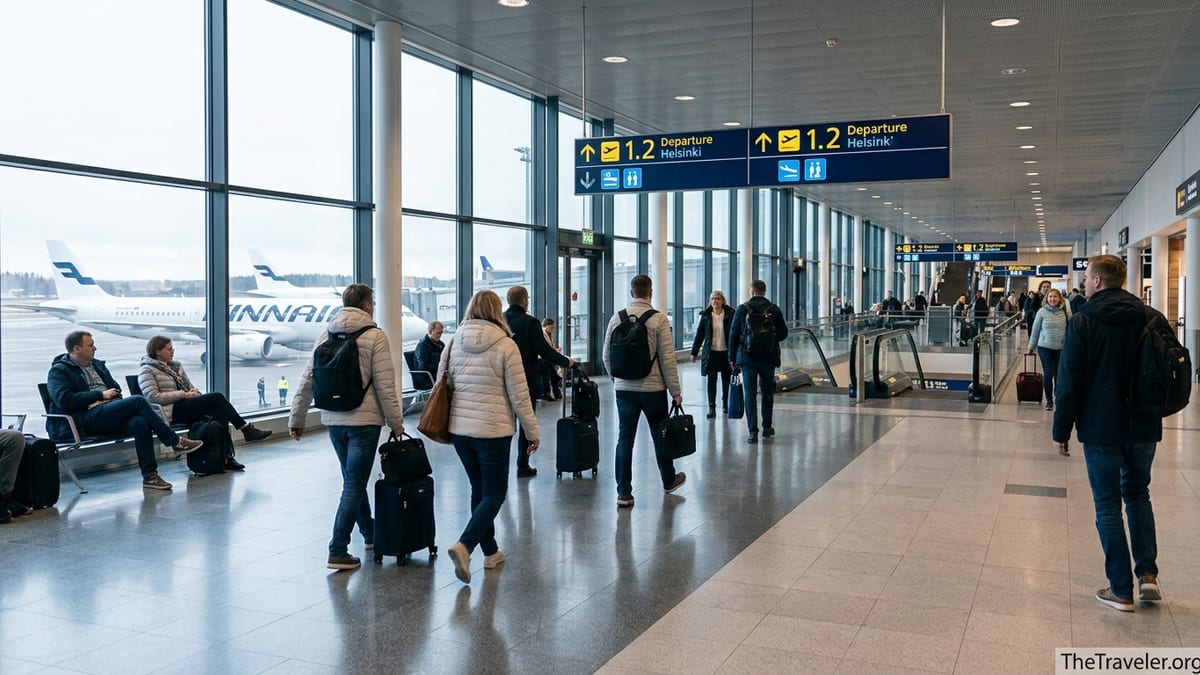
Know the Layout and What Kind of Passenger You Are
Helsinki Airport operates as a single integrated terminal, even though many travelers still talk about the older Terminal 1 and Terminal 2. In practice that means you clear security once and then move between Schengen and non Schengen gate areas airside rather than hopping between separate buildings. Finnair dominates the airport and runs most long haul flights to Asia and North America, while a mix of European carriers such as Lufthansa, KLM and low cost airlines use the same overall terminal complex. Understanding that everything is under one roof is helpful if you are planning a tight connection or meeting someone between flights.
For departing passengers, landside check in halls are arranged roughly by airline groups and alliances, but you can walk between them in just a few minutes. A traveler flying Finnair from Helsinki to Tokyo, for example, may check in at the far end of the hall, while another heading to London on a low cost carrier uses desks closer to the train station entrance. Airside, Schengen gates are generally numbered in the lower ranges while long haul and non Schengen flights use higher gate numbers. Screens are clear and easy to follow, but walking times can still reach 10 to 15 minutes, so factor that into your boarding plans.
Transfer passengers usually stay entirely airside. If you are arriving from New York and connecting to Rovaniemi, you will follow the “Transfers” signs and go through a quick passport control if you are entering the Schengen area, then walk on to your domestic gate without touching your checked baggage. If your connection involves two non Schengen flights, such as London to Helsinki to Bangkok, you normally stay within the non Schengen section, which makes transit relatively fast. Only travelers who need to change airports, head into the city or recheck bags with a separate ticket need to exit to the landside arrivals hall.
The airport is compact compared with major hubs like Frankfurt or Heathrow, but it is busy at morning and late afternoon peaks. Even though walking distances are short, build in time to move between sections, especially if you are traveling with children or mobility issues. Free terminal maps in the Finavia app or on large screens near the central plaza help you visualize how far your gate is from security, lounges, shops and rest areas.
Understand Security, Liquid Rules and How Early to Arrive
Helsinki has invested heavily in upgraded security scanners that are faster and more passenger friendly than older systems. You usually do not need to remove laptops and large electronics from your bag and in many cases you can keep small items like belts on. That said, all passengers must still pass the standard metal detector or body scanner, and security officers are thorough even if the process feels relaxed. Families with strollers and people needing assistance have dedicated lanes that can shorten the experience during peak periods.
One detail that often surprises visitors is the liquid rule. For a couple of years Helsinki allowed passengers to carry up to two liters of liquids through security in almost any size container thanks to new scanners. In September 2024, however, the airport reverted to the familiar European Union limit of liquids in containers no larger than 100 milliliters, all packed into a one liter transparent bag for each passenger. Baby food and prescription medicines are allowed in larger quantities but you should be prepared to show them separately if asked. If you picked up a 500 milliliter bottle of local rye gin in town and try to bring it through security instead of putting it in checked luggage, it will almost certainly be confiscated.
Security waiting times at Helsinki are typically shorter than at many European hubs, but they are not always predictable. At off peak times in the middle of the day, some travelers report moving from check in through security in under 20 minutes. During school holidays and early morning departures around 6 to 8 a.m., queues can be significantly longer. A cautious rule of thumb for international flights is to arrive at least two hours before departure, and three hours if you are checking bags during a busy season or traveling with a group. For early morning flights on weekdays in winter, when icy roads can slow traffic, building in extra buffer time is sensible.
To make security easier, Helsinki’s operator Finavia suggests organizing your baggage at home. Pack all liquids and creams you want in the cabin in 100 milliliter containers in a resealable bag, keep power banks and high capacity batteries accessible for inspection and avoid stacking dense items like books, chocolate boxes and electronics in the same space which can trigger extra screening. A traveler flying to Lapland with a suitcase full of boxed chocolates and vacuum packed salmon, for example, should put most of those in checked luggage rather than their carry on backpack to avoid delays at the scanner.
Make the Most of Layovers: Sleep, Showers and Quiet Corners
Helsinki is frequently used for overnight or long daytime layovers on routes between Asia and North America. The airport has leaned into this role by adding sleep focused services. One of the most distinctive options are GoSleep pods and similar capsule style chairs, which can be booked in blocks of a few hours in selected lounges and rest areas. These pods recline fully and come with a privacy shade, small storage and in some cases a charging point, allowing a solo traveler on a six hour layover from New York to Singapore to get a proper nap without leaving the secure area.
For travelers who prefer a full room, there are several hotels connected to or very close to the terminal. The Hilton Helsinki Airport is connected by a short covered walkway from the terminal side and typically offers day rooms, which can be useful if you have a 10 hour break between flights and need a shower and real bed. Newer budget friendly concepts such as Comfort Hotel Xpress Helsinki Airport inside the terminal let passengers book blocks of four to seven hours, often starting around a modest day rate, without having to go outdoors. Slightly farther away but connected by frequent shuttle or a short taxi ride are standard chain hotels that can work well for families needing two adjoining rooms.
Passengers trying to save money sometimes choose to sleep in the public seating areas. Helsinki is relatively tolerant of quiet overnight sleepers, especially in the airside zones, though you should not expect absolute silence. Many gates have padded benches without armrests and some secluded corners near lesser used gates stay dimly lit overnight. A traveler landing from London at midnight and departing to Oulu at 7 a.m. might stretch out on a bench, use a travel pillow and eye mask and rely on the airport’s generally safe environment rather than pay for a hotel. That approach works best if you are comfortable with light and occasional announcements and can keep your valuables close.
Showers and relaxation areas are another strong point. Several lounges, including airline lounges and the pay in Plaza Premium Lounge, offer shower cabins stocked with basic toiletries, which is ideal if you arrive after an overnight flight and want to freshen up before exploring Helsinki. Day travelers with a six hour gap can realistically clear passport control, store their cabin bag in paid lockers near arrivals and take the train into the city for a sauna and quick lunch before heading back, provided they keep a close eye on the time and train schedules.
Eating, Shopping and Handling Money at HEL
Food and drink options at Helsinki Airport skew toward Nordic flavors mixed with familiar international chains. You will find cafés selling cinnamon buns, rye bread sandwiches and salmon soup alongside global coffee brands and fast food outlets. Prices are in line with Finland’s generally higher cost of living. A simple takeaway latte and pastry can easily approach 8 to 10 euros, while a sit down meal with a main course and soft drink often runs to 20 to 30 euros per person. Travelers on a budget may want to eat in the city before arriving at the airport or pick up snacks from supermarkets in Helsinki or Vantaa to carry in as long as they comply with the liquid rules.
Duty free shops focus heavily on Finnish and Nordic products. You will see wall long displays of local chocolate brands, licorice, designer glassware and Arctic themed souvenirs. While duty free alcohol prices may be attractive for travelers coming from higher tax countries, they are not necessarily cheaper than large city center supermarkets for common brands. A practical approach is to browse for unique Finnish items, such as berry liqueurs, sauna related gifts or local skincare, while buying everyday products like sunscreen or standard spirits in town if you have time. Keep in mind that anything liquid over 100 milliliters bought in the arrivals hall before security cannot be carried through unless sealed under the airport’s specific rules, but liquids bought at duty free after security are packed in tamper evident bags suitable for most transfers.
Cash is increasingly unnecessary at Helsinki Airport. Almost all cafés, shops and ticket machines take major credit and debit cards, and mobile payment methods are widely accepted. If you do want a small amount of euro cash for a taxi or small purchases in town, ATMs are located in the arrivals hall and in some airside areas. Currency exchange counters exist but usually offer less favorable rates than ATMs, so many travelers arriving from outside the eurozone withdraw a modest amount of cash from an ATM and use cards for everything else.
Tax free shopping is available for residents of non EU countries who meet the minimum purchase amount per store. The process requires you to have the retailer issue a tax refund form when you buy goods and then present those forms and items at a refund counter or customs point before departure. If you are a visitor from the United States buying a mid range Finnish design lamp or winter coat worth several hundred euros, the potential refund may justify the extra steps. The key is to allow additional time before your flight, as tax refund desks can have queues, particularly in peak travel seasons.
Getting To and From the City Center
One of Helsinki Airport’s biggest advantages is its straightforward rail connection to the city. The commuter train station sits beneath the terminal and is accessed by escalators and elevators from the arrivals and check in levels. Two circular commuter lines, typically labeled I and P, run between the airport and Helsinki Central Railway Station roughly every 10 to 15 minutes for most of the day. Both routes serve the city center, they just take different directions around the ring, so you can step onto the first arriving train without worrying about heading away from downtown.
Tickets for the airport train are sold as ABC zone tickets by the regional transport authority. As of 2024, a single adult ABC ticket cost a little over 4 euros when bought from station ticket machines or the official mobile app, and allows transfers on buses and trams within its validity time. Travelers arriving from abroad can buy a ticket at blue and white machines near the station entrance using a card, or on their phones before boarding. Inspectors carry out random checks rather than ticket barriers, so you must have a valid ticket even though you can walk directly onto the platform. During summer 2026, some intermediate stations on the western side of the ring have temporary closures for renovation, but the airport to city center journey is still running regularly with minor schedule adjustments.
Airport buses complement the train, though fewer routes now operate since the rail link opened. Regional buses connect the airport to nearby towns and districts, and some long distance coach lines stop at or near the terminal en route to cities such as Tampere, Turku and Kuopio. For example, a traveler landing in the evening and heading directly to Turku might choose a direct coach from the airport rather than taking the train into Helsinki center first. Schedules and ticket purchase methods vary by operator, so checking times in advance is important if you are catching a specific bus.
Taxis are readily available from signed ranks outside arrivals. Official taxis display pricing information clearly on the door or window. A metered ride to central Helsinki typically takes around 30 minutes, depending on traffic and weather, and recent guidance for visitors attending conferences in Helsinki has suggested a typical fare range roughly in the tens of euros. Some companies offer fixed price airport transfers that you can pre book, which can be reassuring if you are arriving late at night with family or large luggage. Ride hailing apps operate in Helsinki as well, but they still pick up in designated areas outside the terminal rather than curbside directly at the doors.
Practical Tips for Different Types of Travelers
Families traveling with young children will find Helsinki Airport comparatively well equipped. There are dedicated play areas with soft flooring and simple climbing toys near several gates in the Schengen section, baby care rooms with changing tables and microwaves for heating food, and most restrooms include at least one larger cubicle for parents. Strollers can usually be checked at the gate on many airlines, and the airport sometimes provides basic loaner strollers in arrivals for use between the gate and baggage claim. A family connecting from Madrid to a domestic flight to Kuopio can realistically let children burn off energy at the play zone near the central plaza, then refuel with kid friendly meals available at most cafés.
Business travelers on tight schedules benefit from the compact layout and good Wi Fi coverage throughout the terminal. Power outlets and USB charging points are scattered around seating areas, and quiet corners near less busy gates can double as informal workspaces. Several lounges accept Priority Pass or sell access regardless of airline, giving you desks, strong coffee and showers during layovers. A consultant flying from Berlin to a meeting in central Helsinki might land at 10 a.m., clear the airport quickly, take the 30 minute train, and comfortably arrive at an office near the railway station before noon.
Travelers with reduced mobility or hidden disabilities should contact their airline or the airport assistance service in advance, as in most European airports. Assistance points are visible in both arrivals and departures, and staff can provide wheelchairs and escort you through check in, security and boarding. The train station under the airport is equipped with elevators and tactile paving, and most platforms in the Helsinki region have level access to commuter trains. Nonetheless, winter weather can affect surfaces outdoors, so if you expect icy conditions and have mobility concerns, a taxi may be more comfortable than public transport when heading into the city.
Winter in Finland brings unique considerations for all travelers. Snow and ice can slow road traffic, though the airport itself is well prepared with de icing and snow clearing. Arriving three hours before an international flight rather than two can be wise during severe weather. Dressing in layers, including a warm base layer and waterproof outer shell, makes transfers between terminal, train and city streets more comfortable. In contrast, summer travelers should factor in nearly continuous daylight, which can disturb sleep during layovers. Eye masks, earplugs and the ability to dim your environment in a sleep pod or hotel room can make a big difference when the sun barely sets.
The Takeaway
Helsinki Airport is often praised for its clean design, calm atmosphere and efficient connections between Europe, Asia and North America, but enjoying those strengths fully requires a bit of planning. Knowing that the airport now follows the standard European 100 milliliter liquid rule again, understanding how the single terminal layout works for Schengen and non Schengen flights, and being aware of realistic security and boarding timelines will help you move through stress free. Long layovers are far more comfortable if you decide in advance whether to invest in a sleep pod, pay in lounge or nearby hotel, or instead take advantage of the quick train ride into central Helsinki for a short city break.
Whether you are a family changing planes on the way to Lapland, a business traveler commuting between Nordic capitals or a long haul passenger connecting between continents, Helsinki offers a balance of practicality and Nordic character. With rail links under the terminal, multilingual signage, widespread card payments and a strong focus on passenger comfort, it is one of the easier European airports to navigate. Take a few minutes before your trip to decide how you will handle security, sleep, meals and ground transport, and Helsinki Vantaa is likely to live up to its reputation as a smooth and surprisingly pleasant gateway.
FAQ
Q1. How early should I arrive at Helsinki Airport before my flight?
For most European and domestic flights, arriving about two hours before departure is usually sufficient. For long haul flights or during peak holiday periods and in winter weather, plan for around three hours, especially if you need to check bags or shop tax free.
Q2. What are the current liquid rules at Helsinki Airport security?
Helsinki Airport follows standard European Union rules, which mean liquids in your hand luggage must be in containers of 100 milliliters or less, packed into a one liter transparent resealable bag per passenger. Baby food and essential medicines are exceptions, but you may be asked to present them separately.
Q3. Can I sleep inside Helsinki Airport during a long layover?
Yes. There are sleep pods and day rooms available for a fee in certain lounges and airport hotels connected to the terminal, and many passengers also rest on benches in quieter gate areas overnight. If you plan an extended layover, booking a pod or hotel block in advance gives you more comfort and privacy.
Q4. How do I get from Helsinki Airport to the city center?
The easiest option is the commuter train from the station beneath the terminal to Helsinki Central Railway Station, with services typically every 10 to 15 minutes. You need an ABC zone ticket, which can be bought from ticket machines or via the local transport app. Taxis and some bus routes are available if you prefer door to door service.
Q5. Is it easy to transfer between flights at Helsinki Airport?
Transfers are generally straightforward thanks to the single terminal layout. Follow the “Transfers” signs, clear passport control if you are entering or leaving the Schengen area, and proceed to your next gate. Under normal conditions a connection of 60 to 90 minutes is manageable, though more time is safer if you are changing from a non Schengen to a Schengen flight with separate tickets.
Q6. Are there showers available for transit passengers?
Several lounges at Helsinki Airport offer shower facilities, which can be accessed either through airline status, lounge memberships or paid entry. Some airport hotels connected to the terminal also offer day use rooms where you can shower and rest between flights.
Q7. Do I need cash at Helsinki Airport, or are cards enough?
Cards are usually enough. Almost all shops, cafés, ticket machines and taxi services accept major credit and debit cards, and mobile payments are widely used. If you want some euros in cash, ATMs are available in arrivals and some airside areas, but many travelers move through the airport without using cash at all.
Q8. Is Helsinki Airport family friendly?
Yes. The airport has children’s play areas, family restrooms with changing tables, baby care rooms and kid friendly food options. Many airlines allow strollers to be checked at the gate, and the compact layout makes it easier to move between security, gates and services with children.
Q9. How safe is it to arrive late at night or sleep in the terminal?
Helsinki Airport is considered safe, with visible security staff and regular patrols. Many passengers with early morning flights choose to rest in gate areas overnight. As always, keep valuables on your person, use a money belt or small daypack, and avoid leaving bags unattended.
Q10. Can I leave the airport during a long layover to visit Helsinki?
If you have sufficient time, a valid visa if required and your bags are checked through, you can take the train into the city center in around 30 minutes. For a layover of six hours or more, it is realistic to enjoy a short walk, a meal or even a quick sauna visit before returning to clear security again, as long as you allow plenty of time to get back for your next flight.