


More news on this day
The city of Hanover in northern Germany is stepping up efforts to secure its light rail power network, launching technical tests and procurement projects aimed at hardening the Stadtbahn system against potential cyberattacks on its operational technology and energy supply.
Get the latest news straight to your inbox!
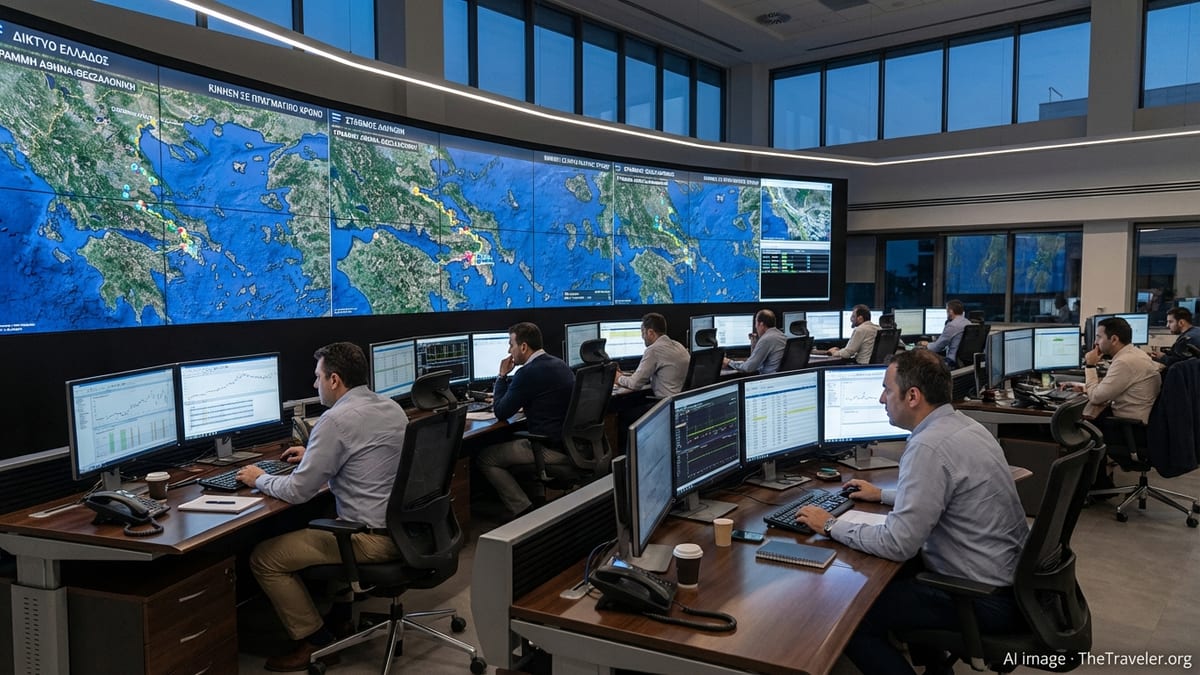
Critical infrastructure under growing digital pressure
Urban light rail systems increasingly depend on networked control, signaling and power technologies that blend traditional engineering with complex IT. Hanover’s Stadtbahn, operated in the wider Greater Hanover transport association, relies on a web of substations, control centers and wayside equipment that must function reliably to keep services running across the region.
Publicly available information shows that the city and regional infrastructure providers have been expanding and modernizing these networks in recent years, including power and control systems that underpin both rail and bus operations. The more tightly integrated these systems become, the more they mirror broader trends in critical infrastructure, where cyber risks now sit alongside classic operational hazards such as power outages, storms or equipment failures.
Specialist analyses of rail cybersecurity point to a sharp increase in incidents targeting signaling, communications and energy systems in Europe, with regulators tightening requirements for operators of essential services. For cities such as Hanover, which depend heavily on electric light rail to move commuters and visitors, this has made the security of the traction power supply and associated control technology a strategic priority rather than a purely technical concern.
Energy researchers and infrastructure agencies across Europe are also experimenting with co-simulation and testbed environments that combine power engineering models with realistic cyber threat scenarios. These approaches are influencing how cities approach the protection of rail power networks, encouraging operators to test vulnerabilities in controlled environments before weaknesses can be exploited in the real world.
Infra Hannover focuses on OT and power-system security
Responsibility for the fixed infrastructure of Hanover’s Stadtbahn, including track and power facilities, lies with infra Infrastrukturgesellschaft Region Hannover, a regional company that leases and develops the light rail network. According to corporate information, infra manages a dense portfolio of rail assets, substations and technical facilities that require continuous monitoring and control.
Over the past months, procurement notices and technical documentation associated with infra have highlighted a sharpened focus on what specialists describe as operational technology security. These systems include the control elements for substations, sectioning switches and other components that ensure traction power is supplied safely and reliably to the Stadtbahn network.
Recent tenders linked to the Hanover rail system describe services for OT security testing in areas such as train control and local interlocking equipment. While these calls relate directly to signaling and train protection, they also illustrate a wider program in which infrastructure operators invite external experts to probe systems for weaknesses and validate protections against malware, unauthorized access or misconfigurations.
By commissioning independent security assessments of core rail control components, infra appears to be extending established IT security practices into the physical layer that keeps trains moving. For the power supply, that approach can include scrutinizing remote access paths to substations, redundancy in communication links and the segregation of administrative networks from safety-relevant control domains.
Test scenarios probe resilience of the Stadtbahn power chain
Although detailed test plans for Hanover’s traction power network are not publicly described, industry practice and available documentation on similar projects provide a picture of how such exercises work. Security specialists typically begin by mapping the entire energy supply chain for a light rail system, from upstream utility connections through substations to the overhead contact lines and return circuits.
Once these dependencies are documented, experts simulate potential cyber incidents that could affect power availability or control, such as a loss of visibility in the control center, the manipulation of setpoints, or the unauthorized switching of feeders. In a controlled test, these scenarios are reproduced either in a lab environment or on segregated systems, allowing engineers to observe how the network reacts and where safeguards might fail.
For Hanover’s Stadtbahn, such testing is likely to involve close coordination between infra’s infrastructure teams, power engineers and IT security specialists. Public documents show that the company operates a significant number of networked devices and control stations that must talk to one another in real time. Simulated attacks and penetration tests can help verify that interlocks, fallback procedures and manual overrides are capable of keeping the system in a safe state even when digital components are under stress.
Insights from these exercises are used to refine security concepts, update configuration standards and, where necessary, plan hardware upgrades. For a power-intensive system like a light rail network, resilience planning typically also extends to scenarios in which cyber incidents coincide with conventional faults, for example a local grid disturbance combined with a communication outage.
European regulation and research drive higher security standards
Hanover’s activities sit within a broader European push to raise cybersecurity baselines for transport and energy operators. New legal frameworks for network and information security have expanded the number of entities classed as operators of essential services, including public transport and critical power infrastructure. Rail infrastructure managers and transport associations are being asked to demonstrate not only robust security measures but also regular testing and continuous improvement.
Specialist reports on the rail sector indicate that cyber incidents have risen markedly in recent years, affecting both mainline and urban systems. Attackers have targeted ticketing platforms, corporate IT and, increasingly, operational systems that manage train movements and electricity flows. This trend has accelerated investment in dedicated OT security teams, security operations centers and training for control-room staff.
In parallel, research institutions and government agencies are rolling out technical platforms to experiment with new defensive technologies for power and transport systems. Recent initiatives in the energy sector, for example, have introduced testbeds that allow operators to evaluate artificial intelligence tools against realistic cyber-physical scenarios in distribution grids. Although developed for wider energy networks, these approaches are directly relevant to light rail traction power, which often relies on similar protection and control philosophies.
For Hanover, alignment with these emerging standards and research findings can guide the design of tests and the selection of technologies used to shield its Stadtbahn power supply. The city’s role as a venue for major industrial and technology fairs has also made it a focal point for demonstrations of cyber-physical security concepts in recent years, underscoring its position at the intersection of transport, energy and digital innovation.
Implications for passengers and urban mobility
For riders using Hanover’s trams and light rail tunnels, the technical work unfolding behind the scenes is largely invisible. The most important outcome of cybersecurity testing for the power supply is continuity of service. By probing the resilience of traction power and control systems now, operators aim to reduce the risk of large-scale disruptions that could ripple across the city’s mobility network.
Publicly accessible planning documents and expert commentary emphasize that preventing incidents is only one part of the task. Equally critical is the ability to detect anomalies quickly, contain their effects and restore normal operations in a controlled manner. For a rail system, that can mean ensuring that even in degraded modes of operation, trains remain in safe positions and passengers receive clear information.
As digitalization accelerates, cities such as Hanover are treating cyber resilience as a core element of sustainable urban transport. The ongoing testing of the Stadtbahn’s power and control infrastructure is an example of how traditional engineering disciplines are blending with modern cybersecurity practice. For residents and visitors, it signals that the region is investing in the unseen layers of technology that keep everyday journeys moving.