


More news on this day
A SkyWest Airlines Embraer E175 operating as Flight SKW5771 between Denver International Airport and Aspen–Pitkin County Airport diverted back to its origin, according to online flight tracking data and publicly available airport information, underscoring the operational challenges of regional jet service into the high-altitude mountain hub.
Get the latest news straight to your inbox!
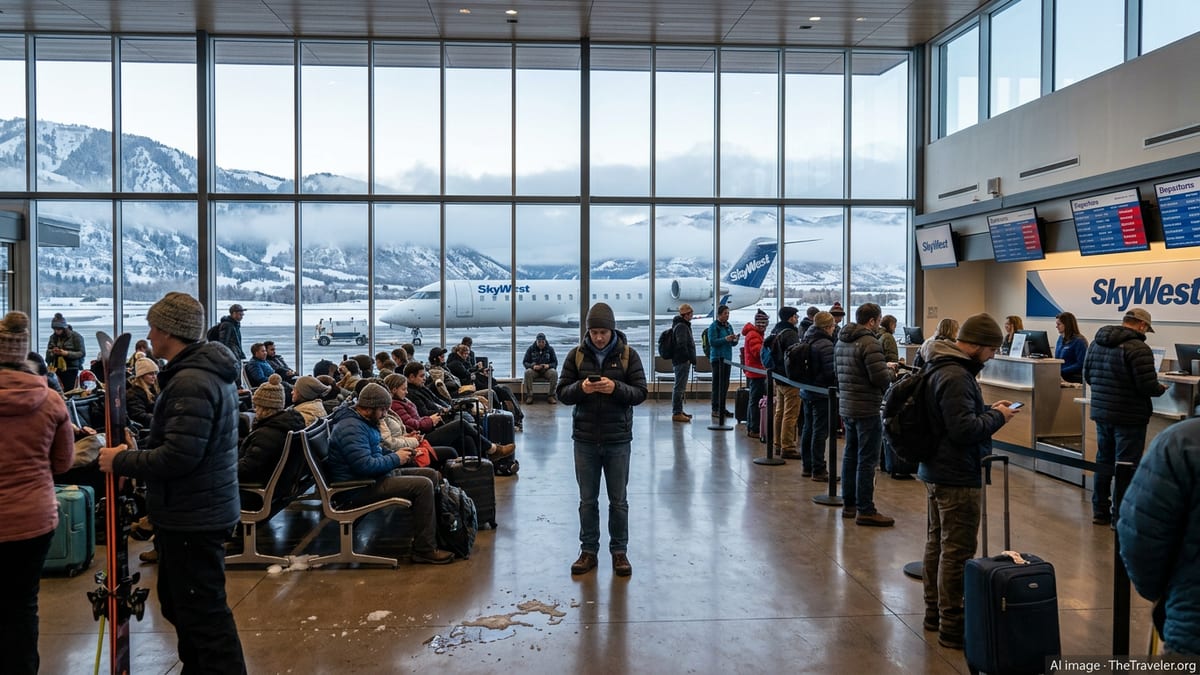
Regional Jet Returns to Denver After Aborted Aspen Run
Flight-tracking platforms and public airport status boards indicate that SkyWest Airlines Flight SKW5771, an Embraer E175 operating on the busy Denver to Aspen corridor, departed Denver but did not complete its scheduled arrival into Aspen, instead returning to Denver. Available data show the aircraft routing changing from the planned Denver to Aspen leg to a flight path consistent with a diversion back to the departure airport.
Information from commercial flight status services for the associated United-coded service on the same route shows at least one recent Denver to Aspen flight on this flight number or pairing logged as diverted, contrasting with other days where the service operated normally or arrived on time. While individual trackers vary in their presentation of callsigns and marketing flight numbers, the data align around an irregular operation on this specific rotation.
As of the latest updates, there were no public indications of injuries or onboard emergencies connected to the diversion. The available information instead points to a precautionary decision consistent with typical airline practice on short regional sectors into terrain-constrained airports.
Weather and Terrain Add Complexity to Aspen Operations
Aspen–Pitkin County Airport is known among pilots and airline planners for its combination of high elevation, surrounding terrain and tightly defined approach and departure procedures. Publicly available airport guidance highlights that commercial service is limited to specific regional jet types that meet performance criteria for the field elevation and runway configuration, with SkyWest currently operating the Embraer 175 and Bombardier regional jets on behalf of major carriers.
Because of these constraints, even modest weather changes can affect the viability of an arrival, particularly for flights coming from Denver that have relatively short airborne times and limited opportunity to hold while conditions fluctuate. Mountain wave activity, rapidly shifting visibility, and wind patterns aligned with the surrounding peaks can all contribute to approach restrictions or tightened landing minima.
Recent travel advisories and historical operational data for the Denver and Aspen region show that the route is especially sensitive to snow, low ceilings and crosswinds during much of the year. Under such circumstances, operators regularly prioritize diversion or return to origin when conditions at Aspen deteriorate, both to preserve fuel margins and to avoid extended holding in airspace that is already tightly managed around the valley.
SkyWest’s Role on the Denver–Aspen Corridor
SkyWest Airlines is one of the largest regional carriers in North America, operating flights under code-share agreements with major airlines including United, Delta, American and Alaska. Company fact sheets and partner airport materials describe SkyWest as the primary operator of United Express and Delta Connection services into Aspen, supported by crews specifically qualified for the airport’s procedures.
On the Denver to Aspen route, SkyWest typically operates multiple daily frequencies using Embraer 175 aircraft configured for mainline partner brands. Airport schedules show a dense pattern of United-coded arrivals and departures between the two cities, many of them operated by SkyWest, reflecting both local demand and the role of Denver as a connecting hub for visitors heading to the Roaring Fork Valley.
Operational dashboards from Denver International Airport and Aspen’s own flight information indicate that, alongside occasional diversions, the majority of SkyWest-operated services on this route complete as scheduled. Diversions such as that involving Flight SKW5771 sit within a broader pattern of regional airline operations into challenging airports where a conservative approach to weather and performance margins is standard practice.
What Diversion Means for Passengers and Scheduling
For passengers, a return to origin on a short regional leg can be disruptive, particularly when the mountain destination has limited alternative air service and surface travel can require several additional hours by road. Public traveler guidance from Aspen–Pitkin County Airport advises passengers affected by irregular operations to work directly with their airline to explore rebooking options, same-day standbys on later flights, or connections through other hubs when seats are available.
In practice, a diversion of one Denver to Aspen flight can have follow-on effects for subsequent rotations, as the aircraft and crew that were scheduled to continue operating in and out of Aspen may need to be repositioned or reassigned. Airline operations centers typically adjust the network in real time, swapping aircraft between routes where possible and prioritizing recovery of peak-time services that link into major banked connections at Denver.
For SkyWest and its major-airline partners, these decisions are shaped by a mix of safety, regulatory and commercial considerations. Flight delay and disruption research on United States domestic operations notes that environmental factors, particularly at geographically constrained airports, play a prominent role in irregular operations and are often beyond the control of carriers.
Mountain Airport Safety Practices Under Spotlight
The diversion of Flight SKW5771 adds to a series of recent operational events involving regional jets serving Aspen and other Rocky Mountain airports, many of which have been documented by aviation tracking communities and traveler reports. While the specifics differ from case to case, a consistent thread is the emphasis on conservative go or no-go decisions in response to weather and terrain-related factors.
Federal and industry analyses of operations at high-altitude mountain airports highlight the importance of stabilized approaches, adherence to published procedures and strict fuel planning that accounts for potential diversions. Aspen, with a single runway aligned tightly within a narrow valley, exemplifies an environment in which even well-established operators build in layers of operational margin.
Publicly available information on SkyWest’s fleet and training programs indicates that the carrier invests in specialized qualification for crews flying into airports such as Aspen. Diversions and returns to origin, while inconvenient, are widely regarded in the aviation safety community as an expected outcome of a system that is designed to favor caution when conditions along a planned route change rapidly.