


More news on this day
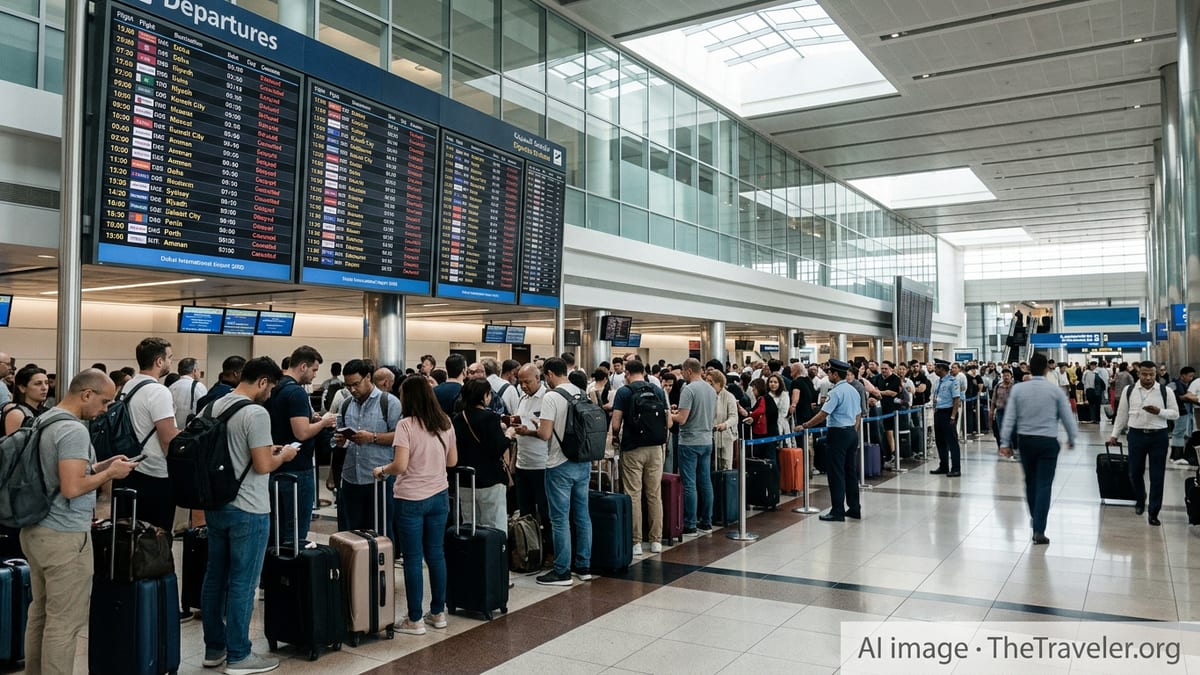
Travelers flying between Sydney and Dubai are confronting a sharp jump in fares and shrinking seat availability as overlapping geopolitical crises squeeze one of the world’s most important long-haul corridors and ripple through global air travel demand.
Get the latest news straight to your inbox!
A Premium Price To Cross A Turbulent Region
On the Sydney to Dubai route, passengers searching for seats in recent weeks have reported significantly higher prices and fewer discounted economy options than a year ago. Publicly available fare data and booking engine snapshots show return tickets that once undercut other Asian or European hubs now frequently price at a premium, especially in peak periods and school holidays.
The shift contrasts with the broader trend of post-pandemic fare normalization. Airlines serving Australia spent much of 2023 and 2024 restoring capacity and trimming the elevated prices that followed border reopenings, helped by additional widebody aircraft returning to service. Industry updates from major carriers indicated average fares on many routes were easing as competition intensified and more seats were added back into the market.
What is now pushing Sydney–Dubai in the opposite direction is a cluster of new costs and risks tied to fast-moving events in the Middle East. Rerouted flight paths around closed or restricted airspace, higher jet fuel prices and increased insurance and security expenditures are all feeding into the fare calculus on a route that depends on traversing some of the world’s most contested skies.
Analysts note that while Emirates and its partners continue to operate multiple daily widebody services linking Sydney with Dubai, each additional hour in the air carries sizeable fuel and crew costs. That cost burden is being recovered, at least in part, through higher ticket prices, particularly on last-minute and high-demand departures.
Airspace Closures, Longer Routes And Fuel Spikes
The air corridor between Australia and the Gulf has long been exposed to regional instability, but the current cycle of disruption is unusually intense. According to published route-tracking analyses, repeated flare-ups in and around the Middle East since 2024 have prompted airlines to avoid stretches of airspace over Iran, Iraq and parts of the eastern Mediterranean, forcing detours either north via Central Asia or south over the Arabian Peninsula and Egypt.
Each diversion adds flight time, fuel burn and complexity. Specialist aviation risk assessments published over the past two years quantify some reroutings around Middle Eastern flashpoints as adding up to three hours to widebody sectors between Asia and Europe. For airlines running finely tuned long-haul schedules, these extra hours reduce aircraft productivity, compress connection windows and may require additional reserve crews or overnighting of aircraft and staff.
The latest conflict in and around Iran in 2026 has compounded these pressures. Economic analyses of the war’s impact describe extensive airspace closures on key corridors linking Africa, Asia and Europe, with several major Middle Eastern hubs temporarily constrained or offline. The same studies highlight a surge in prices for kerosene-based fuels, including jet fuel, after disruptions to crude supplies and refining capacity. For a fuel-intensive route such as Sydney–Dubai, where great-circle distances are already long, cost increases of this kind can rapidly erode margins.
At the same time, maritime disruptions in the Red Sea have pushed more global freight onto longer sea routes, boosting overall fuel demand. Energy market briefings from early 2024 documented record bunker fuel sales in Singapore as ships sailed around southern Africa instead of through the Suez Canal. This broader competition for fuel has kept energy markets tight, further reinforcing the upward pressure on airline operating costs.
From Regional Shock To Global Travel Contraction
What began as a regional security story is now feeding into a wider cooling in long-haul travel appetite. Aviation outlooks released over the past year pointed to a full recovery of global passenger volumes to or beyond 2019 levels, but they also warned that geopolitics, trade tensions and energy volatility could derail the rebound. That risk is now materializing unevenly across the network.
International traffic data compiled for late 2024 and early 2025 shows that while some markets in Asia and Europe continue to expand, several long-haul segments touching the Middle East are slowing or slipping into decline. Industry summaries note that, excluding the most affected conflict zones, global demand would still be growing. Once those corridors are included, however, overall growth rates are dragged down and in some months tip into contraction.
For travelers in Australia, the Sydney–Dubai link is one of the clearest pressure points. Sydney Airport statistics for the year to December 2024 already identified Dubai as one of the busiest international destinations, handling more than 800,000 passengers. Since then, higher fares and rising uncertainty about onward connections through Gulf hubs have prompted some passengers and corporate travel buyers to reduce or defer trips, or to route via Singapore, Hong Kong or other Asian gateways instead.
Economists tracking the sector describe a feedback loop: geopolitical crises increase costs and complexity, airlines pass some of those costs on through higher fares or reduced capacity, and price-sensitive travelers respond by flying less frequently or choosing closer destinations. Over time, this can produce a broad-based contraction in international travel volumes, even if the underlying desire to travel remains strong.
Capacity Squeeze, Corporate Caution And Leisure Sticker Shock
The immediate effects of the airfare shockwave are being felt differently across traveler segments. Corporate travel managers in Australia and the Middle East report tightening policy settings, with more approvals required for premium cabins and last-minute trips on costly long-haul routes. Some multinational firms have introduced explicit guidance to avoid routings that rely on hubs near active conflict zones when practical alternatives exist, which in turn reduces demand for Sydney–Dubai itineraries at the top end of the fare spectrum.
Leisure travelers, by contrast, are encountering the impact through sticker shock. School holiday periods that were once dominated by aggressively priced sale fares to Europe via Dubai are now characterized by higher baseline prices and fewer promotional deals. Families planning once-in-a-decade trips to Europe are increasingly spreading their journeys across multiple carriers and hub cities, or postponing travel into 2027 in the hope that fares will soften.
Airlines appear to be managing capacity cautiously. Publicly released traffic updates show that many carriers remain profitable, but they are finely balancing seat supply against fluctuating demand and volatile costs. On routes where fuel, insurance and operational risks are rising fastest, this often means holding back capacity increases or trimming marginal frequencies rather than flooding the market with new seats that would force fares down.
For Sydney–Dubai specifically, the partnership ecosystem between Gulf and Australian carriers continues to offer connectivity, but the days of reliably cheap long-haul bargains across this corridor have faded for now. Industry observers suggest that only a sustained easing of regional tensions, a stabilization in fuel prices and a clearer macroeconomic outlook are likely to reverse the current trend of elevated prices and selective demand contraction.
A New Map For Long-Haul Travelers
The emerging pattern on Sydney–Dubai is reshaping how travelers think about global routing. Before the latest crises, the Gulf hubs had already become central to the world’s aviation map, serving as a bridge between Australasia, Europe, Africa and the Americas. Now, with parts of the surrounding airspace periodically constrained and costs rising, passengers are rediscovering alternative pathways through Southeast and Northeast Asia, or breaking journeys into shorter segments with regional low-cost carriers.
This re-mapping is not purely a matter of price. Safety perceptions, travel time reliability and the risk of sudden schedule changes also weigh heavily. Travel advisories and industry commentary encourage passengers to build longer connection buffers and to remain flexible about routings, particularly on itineraries that cross or skirt conflict zones. The result is a more cautious, less spontaneous style of long-haul travel that contrasts with the boom-era growth of the late 2010s.
For airlines and airports, the Sydney–Dubai airfare shockwave is a warning signal. It suggests that the next phase of global aviation will be defined less by pandemic recovery and more by chronic geopolitical friction, fragmented trade and energy insecurity. The contraction now visible in select long-haul flows could deepen if new conflicts erupt or existing ones escalate.
For now, travelers contemplating the 14-hour journey between Australia’s largest city and the Gulf’s flagship hub are confronting a new reality: higher baseline fares, heightened operational risk and a network in which the most direct path is no longer guaranteed to be the most affordable or the most stable.