


More news on this day
Fresh government security alerts and tightened travel advisories for the Middle East are rippling through peak summer holiday plans, with travel agencies reporting a sharp rise in calls from anxious travelers seeking to reroute, delay or cancel their trips.
Get the latest news straight to your inbox!
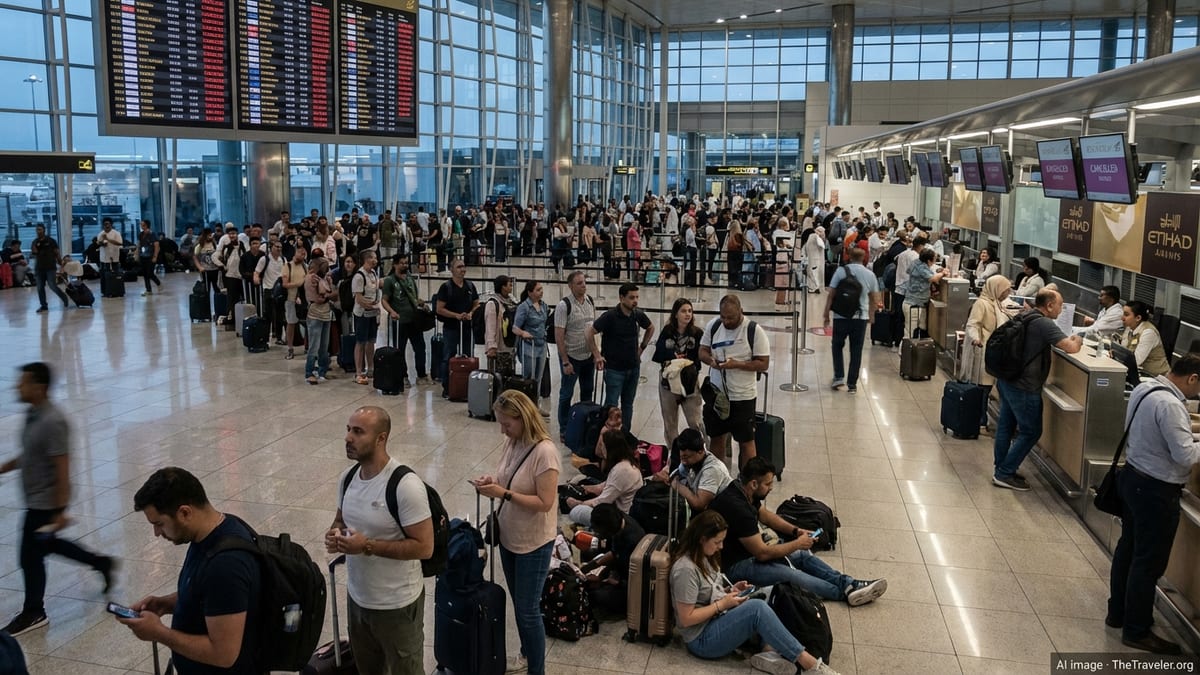
Updated warnings unsettle peak-season travel
In recent days, several Western governments have refreshed security guidance for destinations across the Middle East, urging travelers to closely monitor conditions, reconsider itineraries and prepare for possible disruption. Publicly available information from the United States, United Kingdom and Canada points to an unpredictable security picture in parts of the region and the potential for rapid changes to airspace access and flight schedules.
The United States updated its worldwide caution on July 22, advising citizens to carefully assess risks when traveling to or transiting through the Middle East and to stay alert to changes in airport and airline operations. Country-specific advisories for locations such as Lebanon, Iraq and parts of Israel and the Palestinian territories remain at the highest or near-highest alert levels, reflecting ongoing security concerns and the risk of sudden escalation.
The United Kingdom has also revised its travel advice for several Gulf and Levant destinations, warning that the wider regional situation remains volatile despite diplomatic efforts to ease tensions. Recent guidance from London highlights the possibility of short-notice flight cancellations, temporary airspace closures and broader transport disruption affecting journeys in and out of the region.
Canada and Australia have issued similar alerts, recommending that travelers avoid or reconsider non-essential trips to some countries and be prepared for delays, diversions or limited consular support in the event of a crisis. Together, these notices are reshaping how tour operators and their customers think about itineraries that rely on Middle Eastern gateways and hubs.
Agencies field wave of calls and itinerary changes
As advisories have tightened, travel retailers say incoming inquiries have surged, particularly from clients booked to travel through major Gulf and Levant hubs in July and August. Package-holiday firms and online agencies report that many travelers are not only questioning trips to higher-risk destinations, but are also worried about transiting through regional airports on their way to Europe, Asia or Africa.
Industry briefings and trade coverage indicate that call centers are spending far longer on each case, as agents walk customers through layered government guidance, airline waivers and insurance conditions. Some corporate travel managers describe an immediate uptick in requests to reroute staff via alternative hubs in Europe or South Asia to avoid overflying conflict areas, even when flights remain scheduled.
Smaller independent agencies, particularly those specializing in pilgrimages, cultural tours and cruise extensions in the Eastern Mediterranean and Gulf, are also feeling the impact. Many are juggling last-minute date changes, shifting clients from land-based stays in higher-risk locations to nearby destinations with lower advisory levels, or converting fully customized itineraries into cruise or resort-based trips that avoid border crossings and long overland segments.
While outright cancellations are increasing for a handful of countries at the center of recent conflict, advisers note a larger pattern of diversion. Travelers who remain determined to take long-awaited summer breaks are increasingly opting for Southern European beaches, North African resorts deemed more stable, or Asian city breaks that can be reached without transiting the Gulf.
Airspace uncertainty and airline adjustments deepen concern
Travel hesitation is being compounded by concerns over airspace restrictions and schedule volatility. Earlier phases of the crisis saw multiple Middle Eastern and neighboring countries temporarily close parts of their airspace, forcing long-haul flights to divert or refuel and leaving thousands of travelers stranded when connections did not materialize. Although many routes have since resumed, recent advisories emphasize that renewed closures could occur at short notice.
Airlines have already adjusted some schedules, trimming frequencies to particular cities and rerouting flights to avoid higher-risk corridors. Industry analyses from aviation and risk consultancies describe a patchwork of capacity reductions, longer flight times on certain routes and contingency plans for further disruption should regional tensions intensify again.
For travel agents and tour operators, this uncertainty makes forward planning more complicated. Itineraries that depend on tight connections through regional hubs are being scrutinized, with many advisers building in longer layovers or recommending routings that use alternative transfer points. Groups with complex logistics, such as school trips, incentive travel and cruise land programs, are particularly sensitive to the possibility of last-minute schedule changes.
Some carriers are offering flexible rebooking options for passengers ticketed to or through affected airports, but the availability of alternatives depends heavily on seat capacity elsewhere. As a result, agencies are encouraging travelers who remain committed to trips involving the region to make contingency plans and to monitor their bookings closely in the days before departure.
Insurance gaps and policy fine print come into focus
Alongside calls about safety and routing, travel agencies say clients are increasingly focused on whether their insurance policies would respond to a rapidly changing security situation. Consumer guidance from insurers and regulators generally indicates that standard trip-cancellation coverage may not apply when a traveler simply decides not to go after a government warning, unless the policy specifically lists that trigger.
Instead, coverage often depends on whether airlines cancel flights, tour operators are unable to deliver services, or a traveler is directly affected by an incident. Policies that include cancel-for-any-reason upgrades provide more flexibility but tend to come with higher premiums and stricter purchase timelines, which many travelers only discover when they seek to change plans after a warning has already been issued.
Agencies and corporate travel managers are therefore spending more time guiding customers through policy language, emphasizing the distinction between official advisories and insurance-defined insured events. Industry bodies are also renewing calls for travelers to purchase comprehensive coverage at the time of booking rather than waiting until conflict or instability dominates headlines.
For business travel, risk-management teams are reassessing duty-of-care frameworks, updating internal approval processes for trips touching the region and revisiting evacuation and assistance contracts. Many companies are coordinating closely with security providers and monitoring services to determine when to postpone or reroute journeys, particularly for staff expected to travel frequently through regional hubs.
Tourism outlook clouded but demand remains resilient
The latest wave of travel warnings arrives at a time when destinations across the Middle East had been working to rebuild visitor numbers, promote new cultural sites and host major events following years of pandemic-related disruption. Tourism analysts note that while bookings for certain high-risk countries have fallen sharply, demand for better-connected Gulf hubs and resort destinations remains more resilient, especially among travelers familiar with the region.
Travel trade publications describe a shift from spontaneous, last-minute bookings to more deliberate planning that factors in contingency routes, refundable fares and flexible accommodation options. Travelers with longstanding ties to the region, including those visiting friends and family, often show greater willingness to proceed, while first-time visitors display higher levels of caution.
For now, agencies are balancing short-term operational pressures with a longer-term view that travel demand tends to rebound once perceived risks moderate and air connectivity stabilizes. Much will depend on how the security situation evolves over the coming weeks, whether additional governments revise their advisories and how airlines adjust capacity in response to both safety assessments and shifting consumer confidence.
Until then, phones at travel agencies are likely to keep ringing, as would-be visitors seek clarity on whether and how they can safely navigate a region that remains central to global aviation networks and tourism flows, yet subject to fast-moving geopolitical change.