


More news on this day
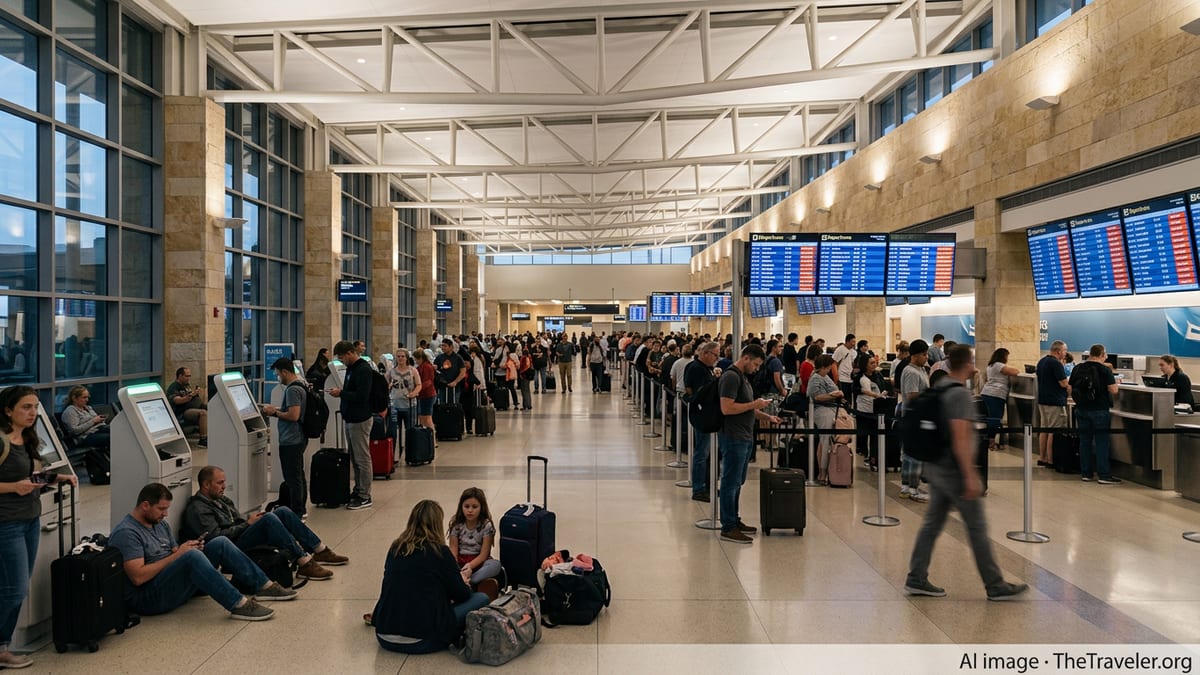
Travelers flying to Austin this Friday are being warned to anticipate delays, with more than 100 flights showing disruptions as major construction projects squeeze capacity at Austin-Bergstrom International Airport and slow movements on the airfield and surrounding roadways.
Get the latest news straight to your inbox!
Construction projects converge on a busy travel day
Flight status dashboards and aviation data indicate that Austin-Bergstrom International Airport is entering the weekend under particular strain, as a series of airfield, terminal and roadway projects converge on one of the busiest travel days of the week. Friday has historically been a peak day for departures and arrivals at the airport, and the added complexity of construction is contributing to elevated delay counts across multiple airlines and routes.
Publicly available information on the Journey With AUS expansion program shows that the airport is in the middle of a multiyear effort to add gates, expand concourses and reconfigure passenger circulation areas. Inside the Barbara Jordan Terminal, work zones, temporary walls and equipment are occupying space that would otherwise be available for seating and queuing, adding friction to the boarding and deplaning process and increasing turnaround times for aircraft.
On the airfield side, notices to air missions and recent construction summaries indicate that portions of taxiways and apron areas are closed or restricted for maintenance and surface painting over the September 9 to 13 window, with additional long term closures in place on certain taxiway segments. These constraints can limit the number of aircraft that can taxi at once, increase the time needed to move between runways and gates, and reduce the airport’s ability to recover quickly from minor disruptions.
Adding to the pressure, a temporary change to the traffic pattern on Presidential Boulevard, the main access road serving the terminal, is in effect in September, connected to the construction of a new parking garage. The closure of a key return loop and lane reductions are slowing vehicle circulation in front of the terminal, which can delay passenger drop offs and pick ups and introduce another potential bottleneck into the day’s operations.
Ground delay program compounds ripple effects
The Friday disruptions build on a ground delay program recently put in place for Austin by federal air traffic authorities in response to construction related capacity limits. According to published coverage summarizing these measures, the program requires certain inbound flights to remain on the ground at their departure airports until a controlled arrival slot is available in Austin, a tool used to prevent excessive airborne holding when an airport’s arrival rate is temporarily reduced.
While the reported ground delay parameters in recent days have generally been measured in minutes rather than hours, the cumulative impact can be significant when layered on top of already tight schedules. Each delayed arrival can push back the next departure using the same aircraft, especially on short haul routes that operate multiple times per day between Austin and regional hubs such as Houston, Dallas, Denver and Phoenix.
Operational data reviewed for this Friday show that delays are distributed across a mix of mainline and regional carriers, with many affected flights departing within 15 to 60 minutes of their scheduled times. Even modest delays, however, can be enough to cause missed connections for travelers using Austin as a connecting point or aiming for time sensitive events in the city, from concerts and conferences to university football games and festivals.
Airport planning documents and federal construction impact assessments have previously noted that runway and taxiway work can require temporary reductions in declared arrival and departure capacity, particularly when equipment is staged near active pavement or when work crews are present during daytime hours. Those capacity adjustments, combined with any weather related slowdowns elsewhere in the national airspace system, can amplify the Friday pattern of stacked afternoon and evening flights into more visible disruption for passengers.
Terminal, airfield and roadway work part of long term expansion
The construction causing near term delays is part of a broader expansion strategy designed to accommodate Austin’s rapid growth in air travel. City planning records and bond documents describe a slate of projects extending through the late 2020s, including additional gates, upgraded baggage systems, expanded security checkpoints, new parking facilities and roadway realignments intended to improve long term traffic flow.
The Journey With AUS program, as outlined in official project summaries, includes an atrium infill in the main terminal, the West Gate expansion that will add several new jet bridges, and a new parking structure adjacent to the existing garages. While these investments are expected to boost capacity, they require years of phased construction in and around spaces that remain in daily use by airlines and travelers.
Recent construction updates highlight that from September 10 to 30, the return loop on Presidential Boulevard is temporarily closed, requiring drivers to use alternate routes such as Hotel Drive when recirculating around the terminal. The change is supported by traffic control devices and updated overhead signs, but it still adds time and complexity for those unfamiliar with the new pattern or traveling during busy evening peaks when many delayed Friday flights are arriving.
Aviation notices also point to restrictions on a maintenance ramp and certain apron areas, limiting operations for aircraft with larger wingspans and concentrating movements in a smaller footprint of available pavement. Though these constraints do not halt operations, they can lengthen taxi times, require atypical routing and increase the likelihood of small backups when multiple flights push back or arrive in tight waves.
What travelers flying to Austin on Friday should expect
For passengers with Friday tickets to Austin, publicly available guidance from the airport and airlines stresses the importance of checking flight status frequently on day of travel. With more than 100 flights already showing delays and the potential for additional disruptions as schedules evolve, same day notifications can provide the earliest warning of gate changes, departure time shifts or rebooking options.
Travel advisories issued ahead of recent busy periods at Austin-Bergstrom emphasize that travelers should allow extra time not only for security screening but also for reaching the terminal itself, given the evolving roadway layout and the possibility of heavy traffic near the construction zones. Those using rideshare or ground transportation services may want to build in additional margin to account for detours and slower traffic through the terminal curbsides.
Once inside the terminal, passengers may encounter narrowed walkways, temporary walls and adjusted queuing setups around security checkpoints and boarding areas. Information screens and public address announcements remain the primary tools for communicating changes in gate assignments and boarding times, so staying near the gate area and monitoring displays can help travelers avoid surprises as airlines adjust to the day’s operating conditions.
For connecting passengers, the combination of modest but widespread delays and a busy Friday schedule means that itineraries with short connection times are particularly vulnerable to disruption. Some travel experts recommend building in longer connection buffers through Austin during peak construction phases or considering earlier flights when possible to create more room to recover if initial segments run late.
Delays likely to persist as construction continues into 2027
Planning documents for Austin-Bergstrom’s master plan and capital program indicate that major elements of the terminal and airfield work are expected to continue into 2027 and beyond. While not every phase will have the same impact on day to day operations, the overall picture points to a multi year period in which travelers can expect periodic construction related constraints.
Federal construction impact reports have previously flagged Austin as an airport with reduced capacity and potential delay risk as projects ramp up, warning that even modest schedule reductions can translate into noticeable effects during peak travel windows. Fridays, Sunday evenings and holiday periods are especially susceptible, when airlines schedule dense banks of departures and arrivals to meet demand.
Airport communications emphasize that the current projects are intended to set the stage for long term growth, with additional gates and improved circulation areas designed to handle higher passenger volumes more efficiently in future years. For now, however, the combination of construction, heavy demand and existing air traffic control programs means that travelers flying to or from Austin on Fridays should factor delays into their plans and remain flexible as conditions evolve through the rest of 2026.