


More news on this day
Australia has eased some of its strictest travel warnings for parts of the Middle East, lowering advice for several key transit and tourism hubs and signalling a cautious reopening of options for Australian travellers while conflict-related risks persist across the region.
Get the latest news straight to your inbox!
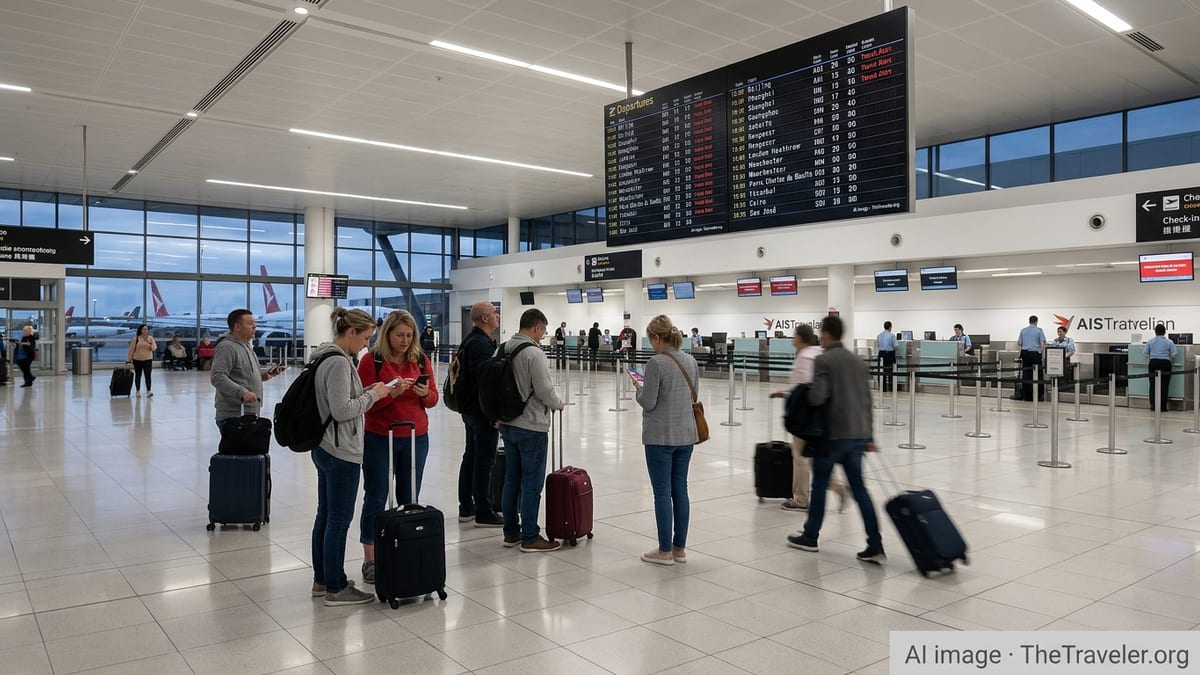
What Has Changed in Australia’s Middle East Travel Advice
Publicly available information from the Department of Foreign Affairs and Trade indicates that on 17 June 2026 the Australian Government lowered its overall travel advice for Bahrain, Israel, Kuwait, Qatar and the United Arab Emirates from “Do Not Travel” (Level 4) to “Reconsider your need to travel” (Level 3). Some specific areas within Israel remain at “Do Not Travel” level, reflecting ongoing security concerns.
Updated Smartraveller destination listings now show Qatar and the United Arab Emirates at “Exercise a high degree of caution” for Australian travellers as at 8 October 2026, a less severe setting than the blanket “Do Not Travel” advisories applied during earlier phases of the regional conflict. Saudi Arabia remains at “Reconsider your need to travel,” underlining that the easing is not uniform across the Middle East and that significant instability is still recognised.
Coverage by Australian media has highlighted that this shift effectively reopens major aviation and stopover gateways for Australians heading to Europe, Africa and other parts of Asia, after months of heavily constrained routing options. However, Smartraveller continues to describe the broader security situation across the Middle East as unpredictable, with the potential for rapid deterioration, airspace closures and short-notice flight disruptions.
Despite the downgrades for some countries, separate Smartraveller pages show that Lebanon and certain parts of the region remain under “Do Not Travel” advice. The mixed picture means Australians planning trips that touch multiple countries must examine each destination individually rather than assuming conditions are now uniform across the region.
What the New Settings Mean for Flights and Stopovers
The lowered warnings are particularly significant for airlines and passengers using Gulf hubs such as Doha and Dubai. These airports handle extensive connecting traffic between Australia and destinations in Europe, North Africa and the United Kingdom. Under the earlier “Do Not Travel” settings, many travellers and insurers treated routings through these hubs as too high risk, even for brief airside transits.
With Qatar and the United Arab Emirates now carrying advice that Australians should exercise a high degree of caution rather than avoid travel altogether, published travel industry commentary indicates a gradual return of itineraries that rely on one-stop connections via the Gulf. Major carriers serving Australia have been rebuilding schedules throughout 2026, although timetables remain subject to change depending on regional airspace restrictions and demand.
Background documents released under freedom-of-information processes show that Australian government assessments continue to flag the possibility of sudden airspace closures in countries such as Iran, Israel and Iraq, with intermittent disruptions also affecting Jordan. Aviation routings may therefore shift at short notice, and travellers are being urged in public advisories to monitor airline notifications closely and keep flexible onward plans where possible.
Travel insurers and state-backed advisory services in Australia also stress that policies may exclude cover for countries or regions subject to “Do Not Travel” warnings. The easing for certain Gulf states improves the prospects for obtaining comprehensive cover on routes that transit their airports, but passengers whose journeys extend into higher-risk countries may still face limitations or additional conditions.
Continuing Hotspots and Uneven Risk Across the Region
While the headline change points to easier travel through parts of the Middle East, Smartraveller’s regional overview continues to emphasise that armed conflict and military strikes have occurred across multiple countries, and that the security environment can deteriorate quickly with little or no warning. A regional advisory published on 1 October 2026 reiterates that Australians should carefully consider the impacts of the conflict on safety, transport and essential services before committing to travel.
Lebanon remains a particular focus of concern. Updated travel advice notes that the level for Lebanon was raised to “Do Not Travel” earlier in 2026 in response to volatile security conditions and the risk of further military action. Travellers are warned that commercial flights could be disrupted if airspace closes and that movement within the country could become difficult or unsafe without notice.
Jordan’s travel advice illustrates the complexity of cross-border movements in the region. Publicly available guidance highlights that while the border with Saudi Arabia is open, crossings to and from Israel and the West Bank can be affected by sudden closures, and there is frequent military activity along frontier areas with Syria and Iraq. Australians contemplating overland journeys in these areas are urged to plan for possible delays, check opening hours for specific border posts and stay alert to local developments.
Other countries, including Saudi Arabia, retain “Reconsider your need to travel” advisories due to broader regional tensions and the risk of attacks on infrastructure and public places. The result is a patchwork of advice levels that can change rapidly, even between neighbouring states, reflecting the fluid nature of the security environment.
Practical Steps for Australians Planning Middle East Trips
For Australians considering travel to or through the Middle East, the easing of some advisories offers more options but also places greater responsibility on individual planning. Smartraveller’s regional pages encourage travellers to read country-specific advice in detail, paying attention not only to the overall level but also to sections on terrorism, civil unrest, border controls and local laws.
Public information from the Victorian Managed Insurance Authority and other Australian agencies underscores the importance of checking the latest updates from airlines, tour operators and airports before departure. Travellers are advised to allow additional time for security screening, remain prepared for potential delays, and carry contingency funds in case routes need to be changed or accommodation extended.
Government advisories also highlight the need for robust travel insurance that explicitly covers travel through the Middle East, including medical treatment and emergency evacuation where possible. Recent notices about changing credit card insurance arrangements in Australia advise travellers not to assume that complimentary policies still offer the same level of protection they did before the conflict escalated.
Australians planning multi-stop itineraries are encouraged by publicly available guidance to register their details on Smartraveller, subscribe to email updates for each destination and ensure that emergency contacts in Australia are aware of their route and accommodation details. This is framed as particularly important for those visiting higher-risk destinations, or travelling to countries where sudden border or airspace closures have occurred in the recent past.
Outlook for Regional Travel and Tourism
Tourism operators and aviation analysts quoted in recent Australian media coverage interpret the downgrading of travel warnings for key Gulf states as an early sign of stabilisation in some parts of the Middle East. Restored confidence in major hubs is viewed as critical for the recovery of long-haul travel flows between Australia and Europe, which rely heavily on one-stop connections.
At the same time, government travel advice across the region remains more restrictive than it was before the most recent escalation of conflict. Some destinations that previously carried routine cautions are still subject to elevated warnings, and Smartraveller’s regional map retains a concentration of “Reconsider your need to travel” and “Do Not Travel” ratings, especially around active conflict zones.
For Australian travellers, the net effect is a more nuanced landscape. Popular transit hubs such as Doha and Dubai are becoming more accessible again from a risk-advice perspective, but side trips into nearby countries require careful evaluation of the latest security assessments and operational conditions. Travel remains possible for those prepared to research, plan conservatively and adapt to change, even as the government signals a modest easing of its most severe warnings.