


More news on this day
Australians planning European holidays are being urged to factor in hours of extra time at passport control, as the European Union’s new biometric Entry/Exit System continues to generate lengthy queues and missed connections across major airports.
Get the latest news straight to your inbox!
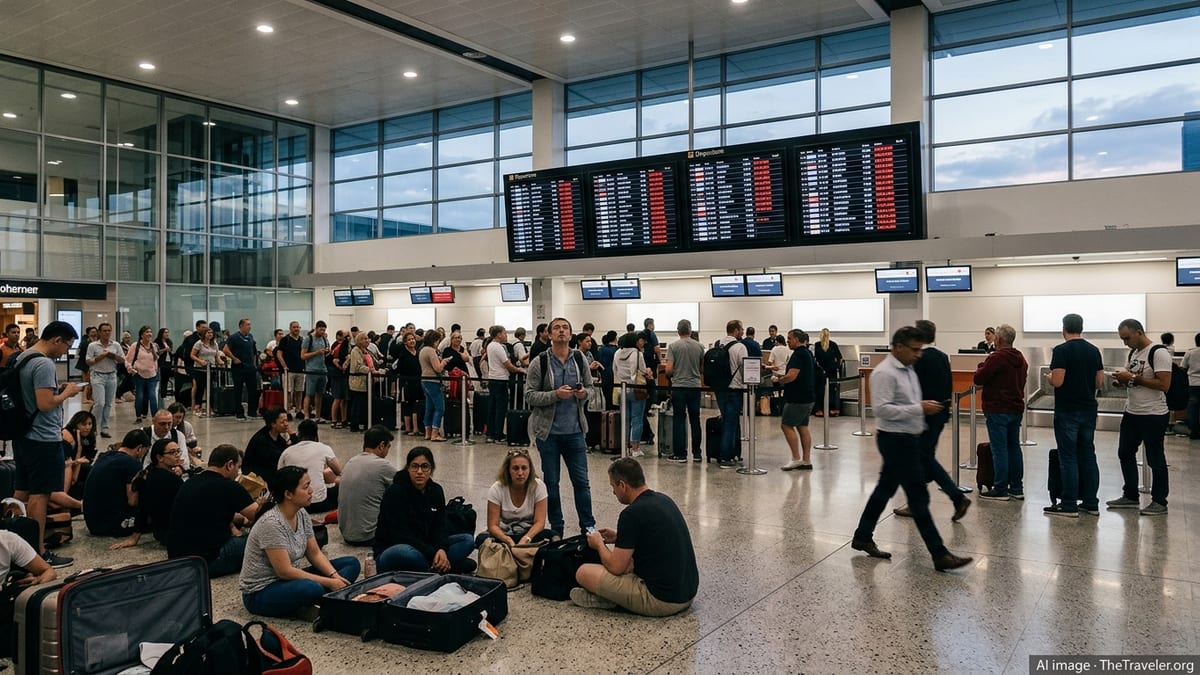
New border system reshapes arrivals for Australian visitors
The EU’s Entry/Exit System, known as EES, is a large-scale border database that records the fingerprints, facial image and travel details of non-EU nationals entering and leaving the Schengen Area for short stays. Publicly available EU documentation describes it as a replacement for manual passport stamping, designed to automate checks and improve security while keeping closer track of overstays.
The system applies to most Australians arriving for tourism or business, whether they are visa-exempt or travelling on a short-stay visa. On their first encounter with EES, passengers are required to enrol biometric data and answer a series of questions at a kiosk or manual desk before proceeding to passport control, a process that has significantly lengthened individual processing times in many locations.
The EES began a phased rollout in late 2025 and became fully operational across participating Schengen states in April 2026. Since then, reports from airports and travel industry groups have highlighted longer queues, with the impact felt most acutely during school holidays and peak summer weekend travel.
While the system is intended to streamline future crossings once travellers are registered, experience from the early months of operation suggests that the initial enrolment step is generating bottlenecks for long-haul passengers arriving from countries such as Australia.
Warnings of four to six-hour queues during peak season
Recent travel industry briefings have warned that wait times for non-EU travellers, including Australians, could reach four to six hours at passport control in the busiest periods of the northern summer. Passenger surveys cited in published coverage indicate that some travellers have already experienced queues of several hours at major hubs as border officers work through first-time biometric registrations.
Airports and airline associations in Europe have publicly called for urgent adjustments to how the system is applied, flagging that processing times for third-country nationals have in some cases doubled or tripled compared with pre-EES manual checks. A joint statement from sector groups earlier this year pointed to instances of queues already stretching beyond two hours under partial rollout, and warned that delays could extend further as the proportion of passengers processed through EES increases.
The Australian government’s Smartraveller advisory for parts of Europe has been updated to reflect the new requirements, encouraging travellers to allow extra time at border control, consider longer connection windows between flights and be prepared for extended periods standing in line. Guidance also notes instances of passengers missing onward flights during the early stages of EES implementation.
Travel insurers and consumer advocates in Australia are beginning to factor the new system into their guidance, recommending that travellers build in ample buffer time when booking self-connect itineraries or separate tickets, particularly when arriving into busy hubs during morning and late-afternoon peaks.
Airports adjust as queues test infrastructure
Airports across the Schengen Area are responding to the new pressures with a mix of additional staffing, revised queuing layouts and, in some cases, temporary suspensions of biometric registration when congestion becomes unmanageable. Reports from European aviation bodies describe a patchwork of approaches, with some airports deploying more automated kiosks and others relying heavily on manual desks.
At several large hubs, airport operators have publicly acknowledged that they are still refining passenger flows, especially where arriving long-haul flights from destinations such as Sydney, Melbourne and Perth coincide with short-haul peaks. Industry analysis suggests that even small slowdowns at border control can quickly cascade into crowded arrival halls and missed onward departures.
Some border agencies have made use of flexibility written into the EES regulations, which permits the temporary easing or suspension of biometric checks at specific crossing points in exceptional circumstances, such as extreme waiting times. Travel industry reports indicate that this tool has been deployed at times to clear backlogs, though it leads to an inconsistent experience between airports and even between different times of day.
Destination countries popular with Australians, including Italy, Greece, Spain and France, are among those highlighted in European media coverage for experiencing strain as the system beds in. The combination of high tourism demand, limited physical space for queueing and the need for extensive passenger explanation during first-time registration has proved challenging in several Mediterranean gateways.
What Australians should expect at the border
Australians arriving in the Schengen Area can expect a longer-than-usual border experience on their first trip under EES. In many airports, passengers are first directed to a kiosk or staffed desk where their passport is scanned, fingerprints and a facial image are taken, and basic entry questions are answered. Only then do they proceed to a border guard or e-gate for final checks.
Once this initial profile is created, subsequent entries within the validity period should in theory be faster, as the system can retrieve existing data. However, early traveller accounts referenced in European media suggest that some passengers have been re-enrolled on repeat trips due to technical or data-matching issues, further contributing to queues.
Families and larger tour groups are likely to feel the impact most. Each adult passenger must complete their own EES registration, and while children may have reduced data requirements, the practicalities of moving groups through a new process can slow lines. Airports have been experimenting with dedicated lanes and staff to help manage these flows, but capacity remains tight at peak times.
For Australians connecting onwards within Europe, longer queues at the first Schengen entry point are particularly important to consider. Travel advisers recommend avoiding tight layovers and, where possible, booking through-tickets with protected connections rather than separate low-cost segments that may not be covered if delays at border control cause a missed departure.
Next steps: ETIAS and ongoing system refinements
The EES is only one part of a broader shift in how Europe manages short-term arrivals from visa-exempt countries such as Australia. A separate travel authorisation scheme, known as ETIAS, is scheduled to follow, introducing an online pre-screening requirement before departure once it comes into effect.
European institutions present these tools as complementary, with ETIAS intended to vet travellers in advance and EES providing a detailed record of entries and exits at the border. Aviation associations and consumer groups, however, have urged policymakers to ensure that lessons from the current rollout are fully addressed before additional layers are added.
For now, the focus remains on stabilising EES operations ahead of the busiest weeks of the northern summer. Airports and airlines continue to press for more staffing, better staff training and, where feasible, technological adjustments that can speed up biometric capture without compromising accuracy.
Australian travellers, meanwhile, are being encouraged by official advisories and industry guidance to stay informed about changing entry procedures, arrive early for departures to Europe and build flexibility into their itineraries. While the new system aims to deliver a more modern and secure border in the long term, the immediate reality for many visitors this year is likely to involve patience and significantly longer waits in line.