


More news on this day
Azerbaijan has issued a series of urgent travel warnings in 2026 as the escalating conflicts in Ukraine and the Middle East create new security risks for its citizens abroad, disrupt air routes across the region and trigger targeted advisories for high-risk destinations.
Get the latest news straight to your inbox!
Fresh Appeal Highlights Global Security Risks
A new appeal published on June 9 by Azerbaijan’s Ministry of Foreign Affairs urges citizens to exercise extreme caution in connection with the ongoing armed conflicts in Ukraine and multiple Middle Eastern states. The statement highlights the rapidly changing security environment, referencing active military operations, missile and drone strikes, and other threats that can affect civilians who travel or reside abroad.
Publicly available information shows that the ministry is warning against travel to active conflict zones and urging Azerbaijanis already in such areas to follow local security guidance, stay in close contact with family members and maintain communication with Azerbaijani diplomatic missions where possible. The notice frames the situation as fluid, with risks that may escalate with little warning.
The appeal sits against a backdrop of sustained hostilities in Ukraine and a sharp regional shock following United States and Israeli strikes on Iran on February 28, which were followed by Iranian missile and drone attacks across the Middle East. Regional analysis notes that these developments have affected not only the directly involved countries but also neighboring states and international transit hubs, reshaping how people move across Eurasia.
Travel security specialists and official advisories from other governments describe a complex environment in which airspace closures, re-routed flights and heightened threat levels have become regular features of long-haul travel, especially on routes that once relied heavily on Gulf and Levant hubs.
Targeted Warnings for Israel, Iran and Wider Middle East
In addition to its general appeal, Azerbaijan has issued targeted travel warnings focused on specific Middle Eastern destinations. On February 28, the Ministry of Foreign Affairs published a dedicated advisory on travel to Israel, urging citizens to refrain from visiting the country due to heightened regional tensions, particularly in connection with Iran. The document indicates concern about potential spillover from the broader confrontation and the possibility that civilian areas could be drawn into hostilities.
Further updates from late February and early March refer to Azerbaijanis in Iran and other regional states, underscoring the risks posed by missile and drone activity and by the possibility of sudden changes in security conditions. Publicly available statements from the ministry indicate that citizens in Iran have been encouraged to leave via land borders with Azerbaijan or Türkiye, depending on their location, and to coordinate closely with consular staff when making onward travel plans.
Regional media coverage reports that Azerbaijani embassies and consulates across the Middle East are operating in what is described as an intensified or enhanced mode, focusing on tracking citizens, updating contact lists and facilitating departures where requested. These measures reflect concerns that airspace restrictions or new strikes could complicate evacuation efforts if conditions deteriorate further.
At the same time, international risk bulletins tracking the Iran-centered conflict highlight that missile and drone exchanges have affected a wide arc of countries, including Israel, the Gulf states and key regional aviation hubs. Such assessments note that even travelers not heading directly to conflict states can face disruptions if their itineraries rely on overflight permissions or transits through affected airspace.
Ukraine War Continues to Shape Azerbaijani Risk Calculus
While the sharpest new guidance has focused on the Middle East, the long-running war in Ukraine remains a central factor in Azerbaijan’s travel posture. Since Russia’s full-scale invasion in 2022, the conflict has generated persistent concerns over civilian safety, infrastructure strikes and the targeting of cities far from the frontline, all of which can affect foreign nationals.
Coverage of recent Ukrainian and international security assessments points to continuing missile and drone attacks on major urban centers and on energy and transport infrastructure. These patterns increase the risk that civilians, including visiting students, workers and tourists, could be caught in the wrong place at the wrong time, even away from front-line areas.
Azerbaijan’s latest appeal reiterates that its citizens should avoid travel to active war zones and regions under heavy bombardment, language that is widely understood to include parts of Ukraine. Other governments’ advisories on Ukraine remain highly restrictive, and Azerbaijani guidance appears to align with that broader international approach.
Analysts note that the intertwining of the Ukraine conflict with the emerging Iran-centered crisis has introduced new layers of unpredictability in Eastern Europe and the wider Black Sea region. This reinforces Baku’s caution about sending or leaving citizens in areas where the security picture can shift rapidly in response to external events.
Airspace Disruptions and Airline Responses
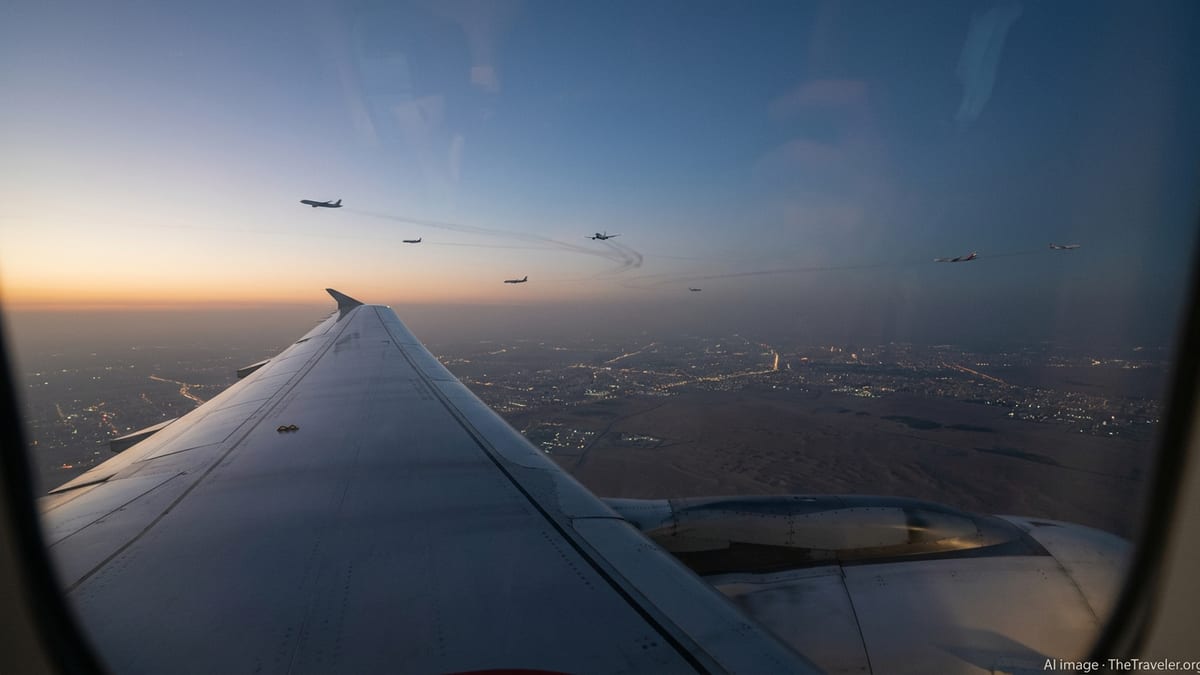
One of the most immediate ways the 2026 crises are affecting Azerbaijani travelers is in the air. Following the escalation between the United States, Israel and Iran in late February, aviation authorities and carriers across the region imposed a series of airspace restrictions and route adjustments that disrupted hundreds of flights and stranded passengers in multiple hubs.
According to local media coverage, Azerbaijan Airlines has suspended services to several Middle Eastern destinations, citing security concerns and limitations on the use of certain air corridors. These suspensions affect both point to point traffic and connecting itineraries that previously used Baku as a bridge between Europe, Asia and the Gulf.
Travel advisories issued by foreign governments, including for trips to and through Azerbaijan, underline that Middle East fighting and associated risks may lead to further short notice suspensions, diversions or cancellations. Some notices stress that even countries not directly involved in the conflict can experience secondary disruption when regional hubs alter their schedules or when overflight routes are closed.
Industry risk assessments suggest that travelers from Azerbaijan, and those transiting via Baku, are increasingly encouraged to build flexibility into their plans, monitor airline updates closely and consider alternative routings that avoid high-risk airspace where possible. The guidance aligns with Azerbaijan’s own emphasis on planning ahead and remaining alert to fast evolving operational constraints.
Global Advisories Reflect Wider Concern for Azerbaijani Citizens
Azerbaijan’s warnings sit within a broader mosaic of international travel advice that underscores how intertwined regional security has become in 2026. Safety notices from countries such as the United Kingdom and Australia acknowledge that the Middle East conflict can have a cascading impact on neighboring states, including those, like Azerbaijan, that are not direct parties to the hostilities.
Recent foreign government advisories on Azerbaijan reference both local security considerations and the potential knock-on effects of wider instability. Some note drone incidents affecting infrastructure in the Nakhchivan exclave and advise travelers to avoid certain border areas or to reconsider non-essential journeys to selected regions.
At the same time, many of these advisories continue to describe central Baku and other major cities as generally calm, while stressing that the main emerging risks for Azerbaijani citizens abroad are linked to travel through or residence in high-threat conflict states. The combined messaging suggests that the most serious dangers currently lie beyond Azerbaijan’s borders, in zones where active combat, airstrikes or political volatility are most intense.
For Azerbaijani nationals, the result is a layered picture: domestic travel that in many cases remains relatively routine, paired with a far more restrictive outlook for journeys to Ukraine, Israel, Iran and parts of the broader Middle East. The government’s latest appeal indicates that, at least for now, Baku intends to keep its guidance under active review as the conflicts evolve, international responses take shape and the security of its citizens abroad remains a central policy priority.