


More news on this day
Bahrain’s recovering air network has encountered fresh turbulence as new ground-service disruptions and at least six flight cancellations involving Air Arabia, Flydubai and EgyptAir again unsettle travel to Dubai, Sharjah, Cairo and other key regional routes.
Get the latest news straight to your inbox!
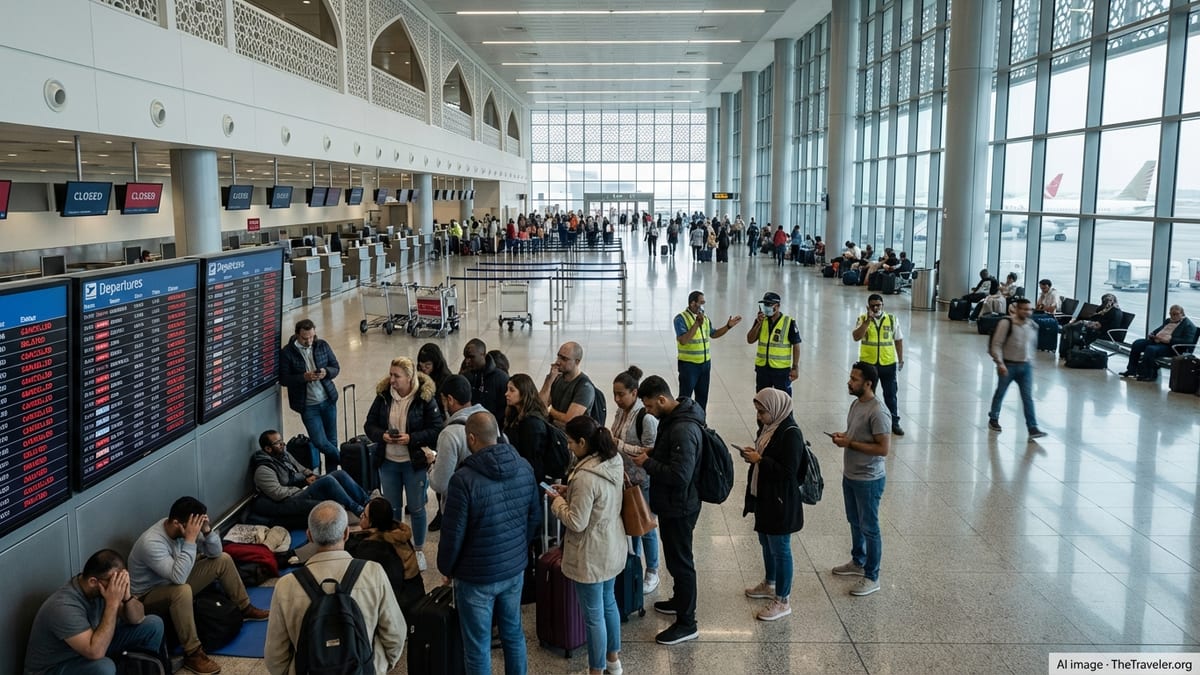
Regional Conflict Keeps Pressure On Bahrain’s Airspace
Publicly available information shows that Bahrain International Airport has been operating under constrained conditions since regional tensions escalated in early 2026, triggering temporary airspace closures and widespread schedule changes across the Gulf. Advisories tracking transport conditions in the Middle East indicate that while Bahrain’s airspace has formally reopened, operations at the country’s main airport remain limited, with airlines still adjusting routings and capacity as security assessments evolve.
Earlier waves of disruption linked to the Iran conflict led to the cancellation or rerouting of thousands of flights across major hubs including Dubai, Abu Dhabi and Bahrain. Flight-tracking data and independent travel reports suggest that some Gulf carriers temporarily relocated aircraft and crew to alternative gateways, such as Dammam in Saudi Arabia, to maintain partial connectivity while Bahrain’s traffic was curtailed. Although those measures helped restore some links, the latest cancellations underscore that stability has not fully returned.
Recent monitoring summaries prepared for maritime and aviation clients describe Bahrain as operational but vulnerable to sudden airline-led schedule changes. These updates note that selected carriers continue to cancel or consolidate flights at short notice, particularly on high-risk or politically sensitive corridors. The renewed issues affecting services by Air Arabia, Flydubai and EgyptAir therefore fit a broader regional pattern of intermittent disruption rather than an isolated incident.
For travelers, the practical effect is that Bahrain’s role as a seamless connector between the Gulf, Egypt and wider Asia remains uneven. Routes to major hubs such as Dubai and Cairo are still running, but the configuration of airlines and frequencies is in flux, leaving passengers facing shifting departure times, longer routings and in some cases outright cancellations.
Ground Services Strain Hits Air Arabia, Flydubai and EgyptAir
The latest complications center on ground-service limitations at Bahrain International Airport that have led to a small cluster of cancellations and schedule changes involving Air Arabia, Flydubai and EgyptAir. Operational advisories and route-monitoring platforms highlight that some services operated by these airlines have been withdrawn or re-timed, contributing to at least six confirmed cancellations affecting Bahrain’s links to Dubai, Sharjah, Cairo and other destinations.
Flydubai, which normally operates multiple weekly flights between Dubai and Bahrain, has already been exposed to significant regional disruption in recent months. Consumer accounts and third-party status trackers point to repeated cancellations on selected Flydubai routes as the carrier adjusts to changing airspace permissions and airport constraints. The additional Bahrain-related cancellations this week extend that pattern, with some passengers reporting that alternative departures were unavailable or heavily delayed.
Air Arabia’s network, centered on Sharjah, has also seen intermittent disruption this spring. Travelers sharing their experiences online describe short-notice cancellations on Sharjah services in early and mid-May, with rebooking and refund processing taking several weeks in some cases. When ground services tighten at Bahrain, Sharjah-bound routes are particularly sensitive, given their reliance on tight connection windows and high load factors during peak travel periods.
EgyptAir, a key operator on the Bahrain to Cairo corridor, has maintained core services to and from Gulf countries even as airlines across the region shuffle schedules. However, industry briefs note that EgyptAir has treated certain Gulf-region flights as higher risk for cancellation during the ongoing instability. The latest Bahrain disruptions, which include Cairo-linked services, reinforce that Egypt-bound travelers remain exposed to last-minute changes despite Egypt’s own airspace being described as fully operational.
Key Routes Affected: Dubai, Sharjah, Cairo and Beyond
The most immediate impact of the current disruption is being felt on Bahrain’s short-haul links to Dubai and Sharjah, along with its pivotal connection to Cairo. Dubai and Sharjah function as critical super-connector hubs, funnelling passengers onward to Europe, South Asia and Southeast Asia, while Cairo offers both origin-and-destination traffic and onward connectivity across Africa and the Middle East. Any reduction in frequencies on these sectors quickly reverberates through the wider network.
On the Bahrain to Dubai route, data from flight-status portals shows a mixture of active and cancelled services involving Gulf Air and Flydubai in mid-May. While many flights continue to operate, cancellations are appearing scattered across the schedule, often with limited advance warning to travelers. For those relying on Dubai for same-day onward connections, even a single cancellation can mean missed long-haul departures and overnight delays.
Sharjah services, dominated by Air Arabia, have similarly been subject to intermittent changes. Travelers booked from Bahrain via Sharjah to destinations such as Southeast Asia have reported uncertainty about flight timings and, in some cases, the removal of specific departures from booking engines. These developments suggest that airlines are still actively calibrating capacity on Bahrain–Sharjah, favoring more robust origin markets while demand and operating conditions in Bahrain remain volatile.
Cairo flights are also feeling the strain. EgyptAir’s long-established presence on the Bahrain–Cairo route has not insulated it from the broader Gulf disruption cycle, and monitoring summaries now flag a heightened risk of cancellations or time changes for certain Egypt-bound services. With Cairo acting as a bridge to North and East Africa, this adds another layer of complexity for travelers using Bahrain as a springboard beyond the Gulf.
What Travelers Through Bahrain Should Expect Right Now
For passengers planning itineraries through Bahrain in the coming days, the latest wave of cancellations highlights the need for extra flexibility and close monitoring of flight status. Airline and airport portals, as well as independent tracking tools, continue to update schedules, but reports from disrupted travelers show that notifications are not always immediate, particularly when changes stem from operational constraints rather than formal airspace closures.
Travel rights organizations and consumer advocates examining the Gulf disruption advise passengers to keep thorough records of any cancellations, including booking confirmations, airline notifications and receipts for additional expenses. Depending on the route, operating carrier and jurisdiction, some travelers may be entitled to refunds, vouchers or partial reimbursement of costs such as accommodation and meals, although regional conflict and airspace restrictions are frequently cited as extraordinary circumstances that can limit compensation.
Rebooking options at short notice may also be constrained. With Bahrain still operating a trimmed schedule and neighboring hubs such as Dubai and Abu Dhabi juggling their own capacity challenges, open seats on alternative flights can be scarce on peak days. In several recent cases shared publicly, passengers stranded by cancellations involving Flydubai or Air Arabia reported having to shift to neighboring airports or accept multi-stop routings that significantly extended total journey times.
Travel advisers recommend that anyone with upcoming travel to or through Bahrain build in additional buffers between connections, consider fully flexible tickets where budgets allow and routinely check for schedule updates in the days and hours before departure. For now, Bahrain’s aviation lifeline is functioning, but the renewed issues involving Air Arabia, Flydubai and EgyptAir confirm that the path back to routine, predictable operations across key Gulf and Egypt routes remains uncertain.
Outlook For Bahrain’s Role As A Gulf Transit Hub
While the latest cancellations represent only a fraction of Bahrain’s typical daily flight volume, they highlight the fragility of the country’s position within the Gulf’s tightly interconnected aviation system. Analysts following the situation suggest that Bahrain is likely to experience a gradual rather than rapid return to pre-crisis frequency levels, as airlines weigh commercial demand against operational risk and resource constraints.
Some carriers have adopted a cautious approach by consolidating flights, deploying larger aircraft on fewer frequencies or temporarily routing passengers through alternative gateways such as Dammam. This strategy helps preserve connectivity while limiting exposure to sudden changes in airspace permissions or airport handling capacity. However, it also means that Bahrain’s direct links to key hubs like Dubai, Sharjah and Cairo may remain thinner and more schedule-sensitive than before the current wave of instability.
For now, publicly available briefings indicate that Bahrain’s airspace remains open and its main airport is functioning with limited but stable operations. The challenge lies less in regulatory closure than in the patchwork of airline-level decisions driven by security, logistics and demand. As long as those conditions persist, travelers can expect occasional episodes like the present one, in which ground-service constraints and airline adjustments combine to produce clusters of cancellations on high-profile routes.
In that context, the grounding of several Air Arabia, Flydubai and EgyptAir services from Bahrain this week is an important signal rather than an isolated incident. It underscores that even as major Gulf hubs strive to normalize their schedules, Bahrain’s connectivity to Dubai, Sharjah, Cairo and beyond will likely continue to fluctuate, requiring passengers and the wider travel industry to plan with resilience and contingency in mind.