


More news on this day
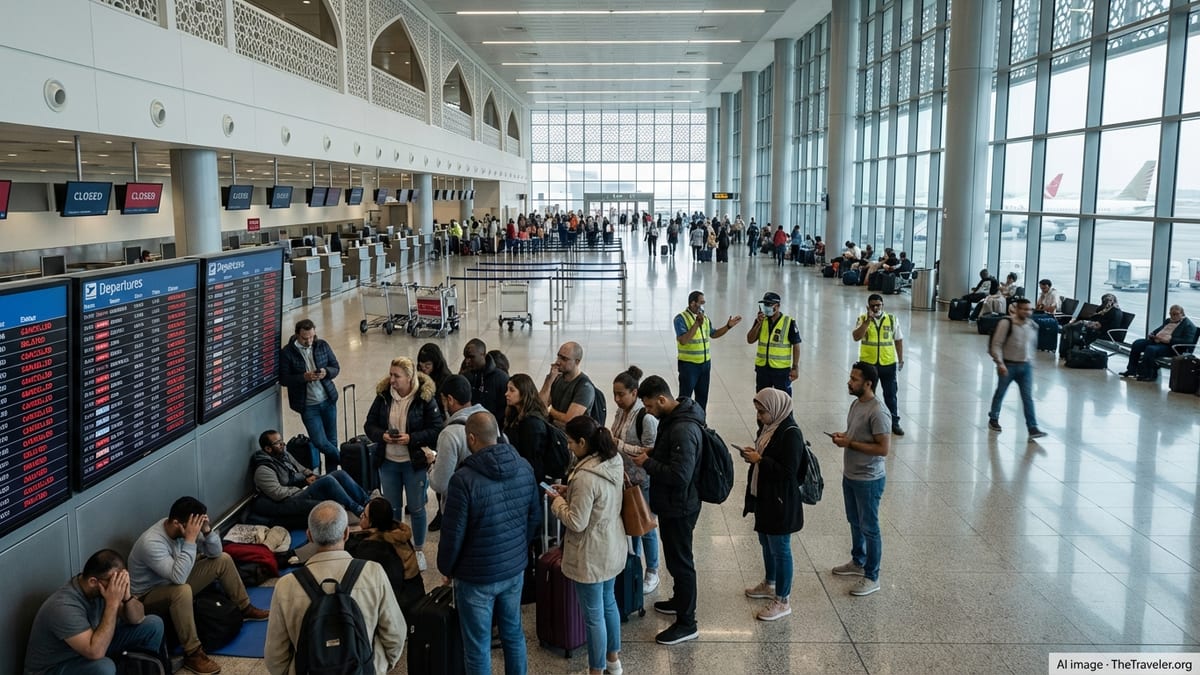
Passengers transiting through Bahrain are facing renewed disruption as fresh cancellations on key Bahrain–Cairo and Bahrain–Dubai services operated under the MSR and FDB codes leave travelers stranded and underscore the continued fragility of Middle East air connectivity.
Get the latest news straight to your inbox!
Fresh Bahrain Cancellations Hit Cairo and Dubai Links
Recent schedule data and traveler reports indicate that at least two key flights serving Cairo and Dubai and operating under the MSR and FDB codes have been withdrawn from service, triggering a new wave of disruption for passengers relying on Bahrain as a transfer point. The affected routes are understood to connect Bahrain with Cairo on an EgyptAir service and with Dubai on a Flydubai-operated flight, both of which are typically important links for traffic between North Africa, the Gulf and onward long haul destinations.
Publicly available flight status information shows that EgyptAir’s Dubai to Cairo service MS902 has recorded repeated cancellations in recent weeks, while Bahrain-linked rotations under the MSR designator continue to face schedule uncertainty. At the same time, Flydubai’s FDB-coded services into and out of Bahrain have seen selective cancellations and frequency cuts as the carrier continues to adapt to volatile flying conditions in the wider region.
For passengers already in Bahrain or attempting to connect via the kingdom’s hub, the withdrawal of these flights has narrowed options for reaching major regional gateways, especially Cairo and Dubai. With alternative routings through other hubs also constrained, even a small number of flight cancellations can translate into long waits, complicated rebookings and forced overnight stays.
Travel forums and social media posts describe travelers in Bahrain struggling to secure seats on remaining departures after late-notice cancellations disrupted their original itineraries. Although some have been rerouted via third-country hubs such as Dammam or Jeddah, others report being told that onward capacity is limited, leaving them temporarily stranded at Bahrain International Airport.
Regional Airspace Tensions Keep Pressure on Schedules
The localized disruption in Bahrain is unfolding against a broader backdrop of instability in Middle East airspace that has persisted since late winter. Publicly available aviation bulletins and industry briefings describe a patchwork of closures and restrictions across parts of the Gulf and surrounding region, following missile and drone activity and wider geopolitical tensions that prompted authorities to limit traffic over key corridors.
Earlier in the year, carriers across the United Arab Emirates, Qatar, Bahrain and neighboring states implemented emergency suspensions or sharp reductions in flying as airspace closures rippled across major hubs. International analysis of flight data pointed to thousands of cancellations across the Middle East in a matter of days, including services touching Dubai, Doha and Bahrain. While many operations have since resumed in some form, schedules remain thinner and more fragile than before the crisis.
For airlines operating under the MSR and FDB codes, the environment has added both operational and commercial complexity. EgyptAir’s network planners have had to adjust Cairo’s role as a north–south and east–west connector at the same time that congestion and disruption at Cairo International Airport have grown more frequent. Separate travel industry coverage in April detailed more than 100 flight delays at Cairo in a single day, with Dubai and other Gulf hubs among the routes most affected.
Flydubai, for its part, has faced repeated interruptions to its Dubai-centered network since March as the city’s airport navigated temporary shutdowns, diverted traffic and rolling schedule changes. Even when Bahrain itself is open for arrivals and departures, upstream disruption in Dubai and other Gulf points can force the airline to trim or cancel individual Bahrain rotations, reducing the predictability of FDB-coded flights for connecting passengers.
Connectivity Squeezed for Transit Passengers
The loss of non-stop Bahrain services to Cairo and Dubai, even on a temporary basis, has outsized consequences because of how tightly integrated those routes are into regional itineraries. Many passengers travel on MSR and FDB codes as part of multi-leg journeys that interline Gulf and North African hubs with Europe, Asia and the Americas, relying on short connections in Bahrain, Cairo or Dubai to keep total travel time manageable.
With MSR and FDB Bahrain services curtailed, passengers who would normally connect Bahrain to Cairo for onward flights into Africa or Europe are being forced to consider circuitous routings through alternative hubs. Similarly, those who expected to step off a Bahrain–Dubai leg and straight onto long haul services now face the prospect of waiting for scarce rebooking options or flying via a third country altogether.
Observers of regional aviation note that Bahrain’s role as a mid-sized transfer point magnifies the impact when even a handful of flights are lost from the timetable. Compared with mega-hubs such as Dubai International, which can sometimes absorb disruption through sheer scale, Bahrain’s more limited daily departures mean that a single canceled MSR or FDB rotation can strand an entire wave of connecting passengers until the next available service.
Reports from travelers affected by the current disruption describe a scramble for seats on remaining departures and frustration at the limited ability of airlines to provide fast alternatives. Some passengers who began their journeys in Europe or Asia now find themselves marooned in Bahrain with onward legs canceled to Cairo or Dubai and only vague indications of when regular connectivity will resume.
What Stranded Passengers Are Experiencing on the Ground
Accounts shared across travel communities suggest that passengers stranded in Bahrain are encountering a mix of long airport waits, repeated queueing at service desks and uncertainty over accommodation and meal arrangements. While some carriers have offered hotel stays or meal vouchers in line with their policies, others appear to be prioritizing operational recovery over comprehensive service recovery, leaving travelers to arrange their own lodging while they wait for new flights.
Anecdotal reports indicate that communication remains a significant pain point. Several travelers describe receiving short-notice cancellation notifications via email or app updates, only to find limited information about rebooking options or expected timelines for restored service. For those with time-sensitive commitments, such as work obligations or onward connections that cannot easily be changed, the lack of clear guidance can be as stressful as the cancellations themselves.
Travelers who arrived in Bahrain on MSR or FDB flights with through tickets to Cairo or Dubai also report that rebooking is complicated by capacity constraints on remaining routes. In some cases, passengers appear to have been shifted to itineraries involving overnight layovers in other Gulf or Saudi airports, or placed on waitlists for later departures where confirmed seat availability is uncertain.
For visitors unfamiliar with Bahrain, extended unplanned stays can carry additional costs, including local transportation, meals and last-minute accommodation. Even for those who are eventually rebooked, these extra expenses can significantly increase the overall cost of the trip, especially when coupled with missed hotel nights or prepaid activities at their intended destinations.
Travel Advice for Upcoming Journeys Through Bahrain
Given the ongoing volatility around Bahrain-connected MSR and FDB services, travel experts and consumer advocates are encouraging passengers with upcoming itineraries to exercise caution and plan additional buffers. Public guidance from travel agencies and aviation analysts generally advises checking flight status repeatedly in the days and hours before departure, as schedules in the region can change with little warning.
Passengers booked on Bahrain–Cairo or Bahrain–Dubai routes under the MSR or FDB codes are also being urged to review ticket conditions, including change and refund rules, before travel. Flexible or semi-flexible fares may provide more options if flights are canceled or heavily delayed, while nonrefundable tickets could limit the ability to switch to alternative routings without incurring fees.
Where possible, some advisers recommend building longer connection times into multi-leg journeys that rely on Bahrain, Cairo or Dubai as transfer points. Extra buffer hours can make it easier to absorb moderate delays without missing onward legs, especially when regional hubs are still working through congestion and operational constraints left by earlier airspace closures.
For travelers yet to book, comparing routings that avoid multiple at-risk hubs may also be worthwhile, even if the headline journey time is longer. As the situation around Bahrain’s connectivity to Cairo and Dubai continues to evolve, new updates from airlines and airports are likely in the days ahead, and passengers are encouraged to monitor official channels closely for changes that could affect their plans.