


More news on this day
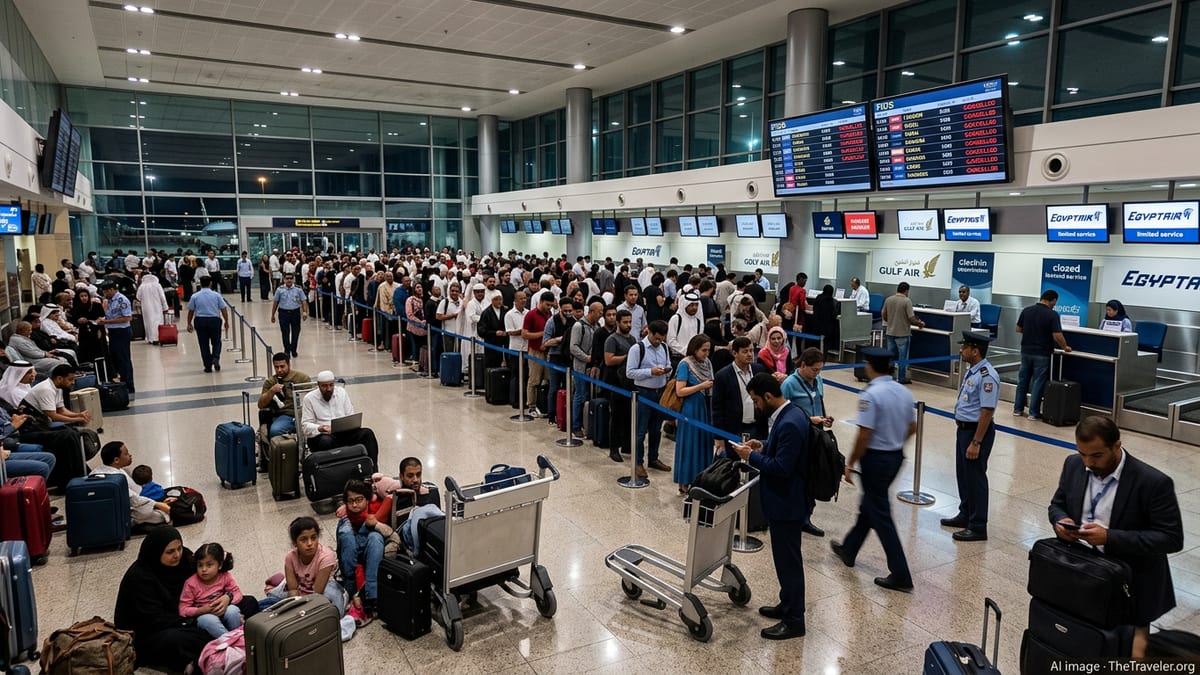
Governments across the Middle East, including Israel, Saudi Arabia, the United Arab Emirates, Qatar, Kuwait, Bahrain, Oman and Jordan, are introducing temporary humanitarian concessions such as visa extensions and emergency re-entry waivers as regional conflict, disrupted airspace and fragile ceasefires leave tens of thousands of travellers stranded abroad.
Get the latest news straight to your inbox!
Israel Extends Validity and Flexibility for Citizens Abroad
Publicly available immigration briefings indicate that Israel has introduced a package of short-term concessions for foreign nationals in the country and for Israelis whose movements have been disrupted by the latest escalation around the Israel–Lebanon front and the wider Iran-related conflict. These steps are framed as humanitarian measures aimed at avoiding inadvertent overstays and maintaining a legal route home for citizens who were caught overseas when flights were cancelled or rerouted.
According to recent immigration analyses, Israel has granted automatic extensions for certain visa categories whose validity was due to expire in late February and March 2026, including work and humanitarian visas. These automatic rollovers are intended to prevent people from falling out of lawful status while commercial schedules remain volatile and land crossings intermittently restricted. In several cases, authorities are reported to be treating the period of disruption as neutral for immigration purposes, effectively pausing the normal countdown of permitted stays.
Separate guidance from Israel’s Population and Immigration Authority shows that citizens who hold an additional foreign passport are being given more time to use that document for travel back to Israel. The window during which Israelis may exit and re-enter on a foreign passport, provided they can also present an Israeli passport or approved electronic travel authorisation at check-in, has been extended through the end of September 2026. The rule is particularly relevant to dual nationals who left the country just before the latest round of fighting and are now seeking the most direct route home.
Regional observers note that these shifts mark a continuation of temporary flexibility introduced during earlier crisis periods, but are now being revisited against the backdrop of ceasefire uncertainty on Israel’s northern border and continuing security alerts affecting airlines and airports throughout the region.
Saudi Arabia Leads Gulf Push on Emergency Visa Extensions
Saudi Arabia has emerged as one of the most active governments in providing formal concessions for visitors and residents whose plans were upended by missile strikes, airspace closures and the knock-on effects of the 2026 Iran war. Official notices and specialist immigration bulletins describe a broad scheme allowing many stranded travellers to extend visit, Umrah and transit visas or leave the kingdom without incurring overstay penalties.
Measures announced in late March grant a penalty-free window through mid-April 2026 for eligible visitors whose documents expired after late February. Within this timeframe, affected travellers can regularise their position by arranging an extension or by departing via designated airports and land borders where streamlined exit procedures have been put in place. Reports indicate that local authorities have been instructed to treat flight cancellations and route suspensions as valid reasons for leniency on overstay fines.
Regional press coverage also highlights a directive to host citizens of other Gulf Cooperation Council states who were left in transit limbo at Saudi airports when adjoining airspace was abruptly closed. The move effectively converted waiting areas and hotel facilities into temporary safe havens for travellers unable to continue to Kuwait, Bahrain, Qatar, Oman or the United Arab Emirates. Analysts describe this step as both a humanitarian gesture and a signal of intra-GCC solidarity at a time of shared security risk.
Legal and mobility advisers say the Saudi response is being closely watched by neighbouring states, in part because the kingdom functions as a major detour hub for emergency repatriation efforts. Overland convoys organised by third countries and international carriers have been routing evacuees to Saudi cities where outbound flights remain more frequent, making local visa policies a critical factor in whether passengers can move onward without becoming overstayers.
Visa Waivers and Fine Relief Across the Wider Gulf
Saudi Arabia’s actions have been mirrored in varying forms by the United Arab Emirates, Qatar, Bahrain, Kuwait and Oman, all of which have had to adapt swiftly to waves of stranded tourists and foreign workers. Travel industry reporting and consular updates describe a patchwork of free extensions, fine waivers and in-country renewals that together amount to an informal humanitarian regime for the period of disrupted travel.
In the UAE, visitors holding short-term tourist visas who were scheduled to depart after the end of February have been allowed to overstay without financial penalties in cases where departures were cancelled due to closed air corridors. Accounts from travellers and local media indicate that immigration authorities have instructed carriers and agents that forced overstays linked to the regional conflict will not attract the usual daily fines, easing pressure on travellers stuck in Dubai and Abu Dhabi while waiting for new flights.
Qatar has opted to automatically extend certain visit visas by one month for those caught mid-trip when services were suspended, while Bahrain has applied its own grace period to visitors whose visas expired after the last week of February, with the waiver reportedly remaining in place for a further month after local airspace fully reopens. Kuwait and Oman have introduced more targeted concessions, focusing on residents and transit passengers who are using their airports as alternative corridors out of the conflict zone.
Immigration advisories compiled by global law and consultancy firms point out that exact eligibility criteria differ between jurisdictions, and that travellers often need to check whether their status is covered by automatic rules or requires an online application. Even so, the general direction across the Gulf has been toward preventing sudden illegality for people whose only infraction was being in the wrong place at the wrong time when missiles, drones and retaliatory strikes disrupted normal timetables.
Jordan and Neighbouring States Balance Security and Mobility
Beyond the Gulf, Jordan and other frontline states are also adapting entry and exit rules as the knock-on effects of the Israel–Lebanon ceasefire and the broader Iran-linked conflict complicate cross-border movement. Jordan’s long-standing role as a transit point for travellers heading to and from the Levant has made its visa regime particularly important for those seeking alternative itineraries when direct flights are unavailable.
Public travel advisories and airline notices suggest that Jordan has granted discretionary extensions and fee waivers in cases where passengers on short-stay visas were unable to depart on schedule. In some instances, authorities have reportedly helped facilitate onward travel by recognising emergency documentation issued by foreign embassies or allowing re-entry for citizens who briefly left the country but were then blocked from returning due to sudden closures elsewhere.
Neighbouring Egypt and Lebanon, though not the focus of the current wave of concessions for citizens abroad, are experiencing similar dilemmas at their borders and airports. Analysts note that each adjustment has to balance humanitarian considerations for stranded travellers with heightened security checks linked to the fragile ceasefires and the risk of renewed hostilities. This interplay between access and control has placed immigration officers and airline staff on the front line of implementing fast-changing policy choices.
Observers add that the scale and speed of the disruptions have tested regional coordination mechanisms, with some inconsistencies emerging between what is announced centrally and how rules are applied on the ground. Nonetheless, the pattern across Jordan and other neighbours shows a clear trend toward using temporary waivers and case-by-case discretion rather than strict enforcement of normal expiry dates.
Uncertain Ceasefires Keep Humanitarian Measures Under Review
The latest concessions come against a backdrop of ceasefires that are significant but not yet fully stabilising. A temporary halt to hostilities between Israel and armed groups across the Lebanese border has been extended, according to United Nations briefings, but remains vulnerable to flare-ups and political setbacks. At the same time, Iranian-linked attacks and retaliatory strikes continue to shape the wider security environment, prompting periodic closures of aviation corridors and rerouting of international services.
Travel analysts say this volatility explains why so many of the new visa policies are explicitly time-limited, with expiry dates clustered around late March and April 2026 but open to renewal. Governments appear keen to signal that these are exceptional, humanitarian responses to a defined emergency, even as they quietly prepare for the possibility that conflict-related disruption could stretch on for months.
For citizens and residents of Israel, Saudi Arabia, the UAE, Qatar, Kuwait, Bahrain, Oman, Jordan and other affected countries, the immediate impact is a modest but important degree of breathing space. Emergency re-entry waivers, automatic extensions and fine-free exits reduce the risk of being trapped abroad without status or stranded in transit hubs with mounting penalties.
Specialists in cross-border mobility note that the crisis is also accelerating longer-term discussions about how regional states handle mass disruption events, from war to pandemics and natural disasters. The current wave of humanitarian concessions may, they suggest, inform future frameworks that build more flexibility into visa systems, making it easier to protect travellers caught at the intersection of geopolitics and global mobility.