


More news on this day
Travellers transiting through Türkiye’s key hubs in Istanbul and Antalya are facing a fresh wave of disruption as a string of last minute flight cancellations by Royal Jordanian, Kuwait Airways, Scandinavian Airlines, Pegasus and other carriers leaves holidaymakers and business passengers stranded across multiple routes.
Get the latest news straight to your inbox!
Routes to Amman and Kuwait City Hit by Regional Turbulence
According to publicly available schedules and passenger accounts, flights linking Istanbul with Amman and Kuwait City have been among the most affected, with services cancelled or re-timed at short notice. Travellers flying via Türkiye to Jordan report Istanbul to Amman segments being removed from itineraries in recent weeks, forcing rerouting or complete trip overhauls.
Royal Jordanian, which positions Amman as a key regional hub, has been used as a replacement carrier on some cancelled tickets, while other journeys involving the Jordanian capital have simply disappeared from booking systems. Online travel forums show passengers waking up to find their Istanbul to Amman legs cancelled for dates in May, with limited same-day alternatives available and connections onward to Europe and North America left in doubt.
Kuwait Airways services have also come under pressure. Flight status data shows the carrier’s KU155 rotation from Kuwait City to Istanbul on 11 May 2026 was cancelled, and travellers report a pattern of disrupted Kuwait linked itineraries. Some customers indicate they have received cancellation emails and the promise of refunds within several weeks, but without a straightforward rebooking path on comparable dates.
The instability comes on top of Kuwait’s own airspace restrictions and a staggered restart of operations at Kuwait International Airport, creating added complexity for passengers using Istanbul and Antalya as gateways between the Gulf, Europe and beyond.
Scandinavian Links to Istanbul Face Operational Headwinds
Scandinavian Airlines only recently launched a daily service between Copenhagen and Istanbul, expanding northern Europe’s direct access to Türkiye’s largest city. The new route, which started in late March 2026, was marketed as part of a broader push to deepen connectivity through Copenhagen and Istanbul, two major Star Alliance and interline hubs.
Yet travellers relying on Scandinavian Airlines connections now face new uncertainty. Timetable information and anecdotal reports point to select flights between Copenhagen and other European cities being adjusted or cancelled in May, feeding into wider disruption for those connecting onward to Istanbul or Antalya. When one leg of a multi segment journey is withdrawn, passengers often find their entire ticket auto cancelled or rerouted.
For Scandinavian travellers heading to Türkiye, the impact can be twofold: disrupted access into Copenhagen from secondary European cities and a knock on risk to the onward Istanbul service. Those already in Türkiye and planning to return via Copenhagen risk finding themselves stuck in Istanbul or Antalya if the Scandinavian leg home is altered at short notice, particularly during busy spring and early summer travel weeks.
Published policy documents from the airline outline standard options for rebooking and refunds, but travellers frequently describe difficulty reaching call centres or securing alternative dates that still align with hotel reservations and holiday plans along Türkiye’s Mediterranean coast.
Pegasus and Russian Routes Add Another Layer of Volatility
Low cost carrier Pegasus, which has extensive bases at both Istanbul Sabiha Gökçen and Antalya, continues to operate a dense network of routes into Russia, including flights to Moscow’s Vnukovo Airport. Schedules for May 2026 show regular services from Istanbul and Antalya to Moscow, but recent regional tensions and airspace constraints have resulted in periodic cancellations on Russia bound flights across several Turkish carriers.
Coverage from regional outlets and Moscow based media has described periods where Turkish and Turkish based airlines cancelled dozens of flights between Russian cities and Turkish resorts, including Istanbul and Antalya, amid security concerns and operational reviews. Travellers on package holidays, in particular, have reported scrambling for last minute accommodation when their return flights from Antalya to Moscow were removed from departure boards.
Pegasus has simultaneously been tweaking its broader summer schedule, trimming frequencies on some regional routes while relaunching and ramping up others. Summer capacity adjustments, when combined with security related cancellations, leave limited slack in the system. Passengers who do secure rebookings out of Istanbul or Antalya often face longer layovers, late night departures, or routings via secondary airports that quickly fill up during peak season.
For those caught mid journey, especially travellers connecting through Türkiye on separate tickets, even a single cancelled Pegasus flight can mean unexpected overnight stays and out of pocket expenses for visas, food and new tickets, as documented in online complaint forums over the past year.
Stranded Transit Passengers Confront Long Queues and Limited Information
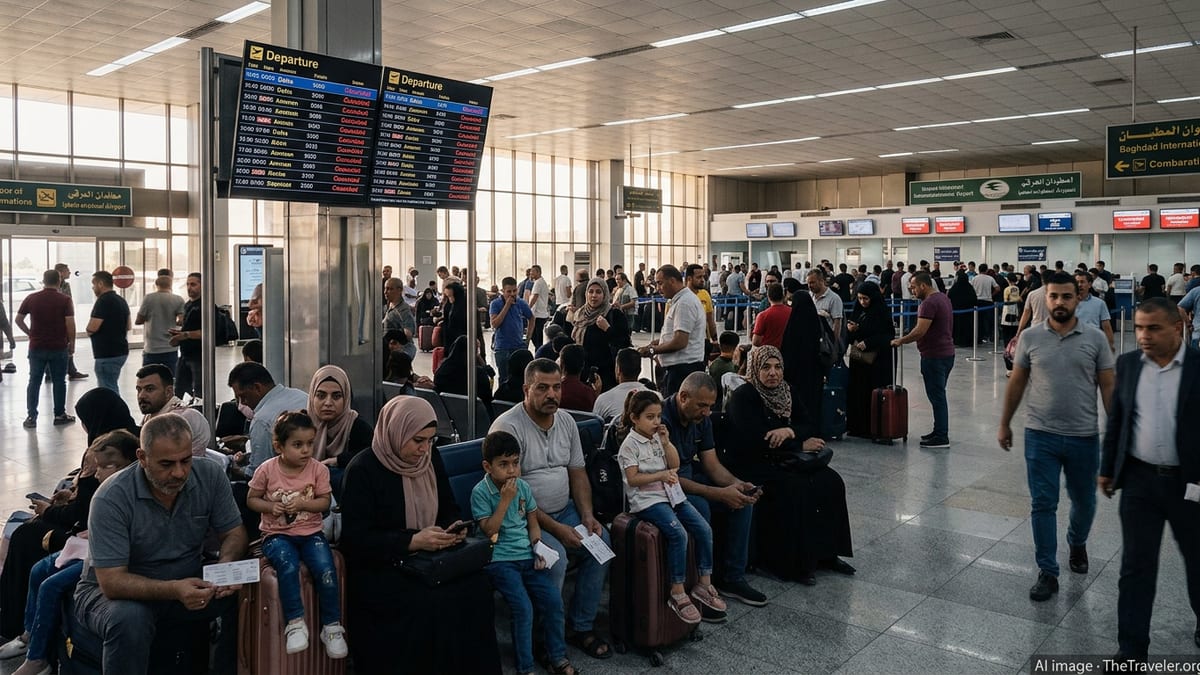
The cumulative effect of cancellations by Royal Jordanian, Kuwait Airways, Scandinavian Airlines, Pegasus and other carriers is most visible in the transit halls of Istanbul Airport and Antalya Airport. Travellers report long lines at airline desks, limited communication about the reasons for cancellations, and confusion over whether accommodation or meal vouchers are available.
Many of those affected are long haul passengers using Türkiye as a mid point between Europe, the Middle East and Asia. When an onward segment to Amman, Kuwait City, Copenhagen, Moscow or another hub disappears, the options can be constrained by visa rules and tight capacity on remaining flights. Some passengers describe being offered refunds rather than rerouting, a remedy that does little to help those who must still find a way home or reach a time sensitive destination.
Publicly available guidance from airlines and regulators sets out consumer rights for cancellations originating in the European Union or involving EU carriers, but the picture becomes more complex for itineraries that combine multiple jurisdictions and tickets purchased via online travel agencies. In practice, stranded travellers often find themselves shuttling between airport help desks, call centres and third party booking platforms, each pointing to the others for resolution.
At both Istanbul and Antalya, the disruption comes at a challenging moment, with Türkiye anticipating strong demand for the 2026 summer tourism season. With hotel occupancy on the rise and coastal resorts preparing for peak arrivals, even a modest wave of flight cancellations can ripple quickly through local transport and accommodation systems, raising costs and shrinking options for those suddenly stuck.
What Travellers Can Do if Their Flight Is Cancelled in Türkiye
Travel industry advisories suggest that passengers booked on routes involving Istanbul or Antalya, especially to Amman, Kuwait City, Copenhagen and Moscow, should monitor their reservations closely in the days leading up to departure. Airline apps and airport departure boards may reflect changes before formal emails are sent, and acting quickly can improve the chances of securing a workable alternative.
Experts recommend confirming whether the ticket is protected by European style passenger rights, which may apply if the journey starts in the EU or is operated by an EU carrier such as Scandinavian Airlines. These rules can entitle travellers to rebooking or refunds and, in some cases, additional compensation, although eligibility depends on the specific circumstances and cause of the cancellation.
For itineraries involving non EU carriers like Royal Jordanian, Kuwait Airways or Pegasus, passengers are typically reliant on the airline’s own conditions of carriage and any applicable local consumer laws. Keeping records of boarding passes, receipts and communications can be important if travellers later pursue refunds or reimbursement for reasonable expenses related to unexpected hotel stays or alternative transport.
With Türkiye’s main airports under renewed strain from multiple cancellation waves, travellers are also being urged to allow extra connection time, avoid tight self connections on separate tickets where possible, and consider flexible or changeable fares on the most disruption prone routes. While the current pattern of cancellations may ease as schedules stabilise, the recent experiences of stranded passengers in Istanbul and Antalya underline how quickly a single cancelled flight can disrupt an entire trip.