


For most travelers, Sri Lanka begins at Bandaranaike International Airport, better known by its code CMB. Sitting about 30 kilometers north of Colombo in Katunayake, this busy gateway can feel intense after a long flight. With a bit of preparation, though, your arrival, airport transfer and first few hours in the country can be straightforward, safe and even enjoyable. This guide walks you through arrivals, transport options, SIM cards, money exchange and essential first-time tips, based on the latest information as of mid-2026.
Get the latest updates straight to your inbox!
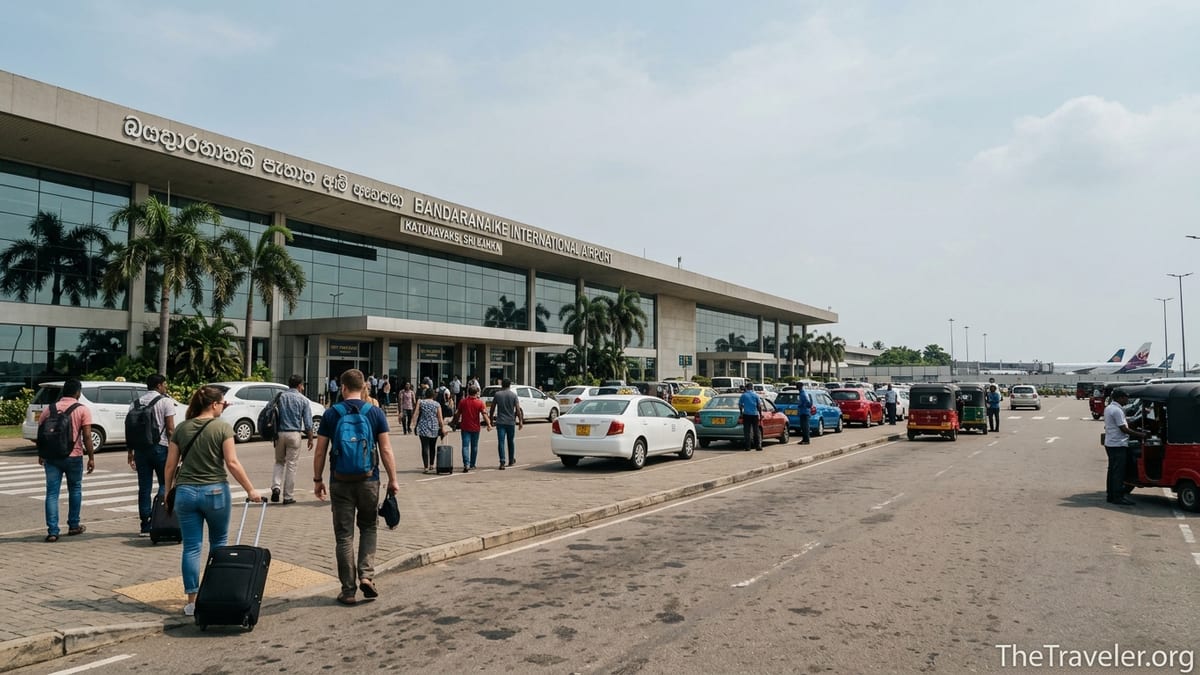
Understanding Bandaranaike International Airport on Arrival
Bandaranaike International Airport is Sri Lanka’s main international gateway and handles the vast majority of overseas flights into the country. The single main terminal for most commercial arrivals is compact by regional standards, but at peak times it can feel crowded, particularly late evening and early morning when long-haul flights from Europe and the Middle East land.
After disembarking, you will pass through immigration, baggage claim and customs before entering the arrivals hall. Immigration queues can vary from a 10-minute breeze to close to an hour if several wide-body aircraft arrive together. Many visitors find that having their accommodation address and return or onward flight details ready on their phone speeds things up when an officer asks basic questions about the trip.
Once you clear customs, you step directly into the brightly lit arrivals concourse. Here you will see money exchange counters, ATMs, official taxi desks and a line of mobile operator kiosks. It can feel overwhelming because multiple staff will call out for taxis or tours. Take a moment on the side to orient yourself, check your phone and decide on your priorities in this order: cash or card access, mobile data, then transport.
For most first-time travelers, a realistic timeline from aircraft door to walking out of the terminal is 45 minutes to 90 minutes, depending on queues and baggage. If you have a driver or hotel transfer waiting, let them know this typical range in advance so they will not worry if you are delayed at passport control or baggage claim.
Getting Cash, Exchanging Money and Using Cards
Sri Lanka operates with the Sri Lankan Rupee, and while cards are widely accepted in mid-range hotels and many city restaurants, cash is still important for small shops, roadside eateries and local buses. At CMB, you will find bank counters and ATMs just after customs and again near the outer exit of the arrivals hall. Several major local banks maintain machines there, and travelers commonly report using Commercial Bank or Bank of Ceylon ATMs to withdraw rupees with foreign debit cards.
Using an ATM is usually better value than exchanging large amounts at airport counters, which often have slightly less favorable rates. As of 2026, most visitors find that withdrawing a modest amount, for example the equivalent of 40 to 80 US dollars, is enough to cover an airport taxi, snacks and the first day’s expenses, after which they can compare rates in Colombo or withdraw more as needed. Keep in mind that your own bank may add an overseas withdrawal fee, so it can be more efficient to take out a few larger amounts rather than many small ones.
The money changers in the arrivals hall can still be useful if you are carrying leftover major currencies such as US dollars, euros or pounds and want a quick conversion. Many travelers exchange a small sum, for example the equivalent of 20 to 30 US dollars, to have some instant rupees, and then rely on ATMs or city exchange offices later where rates may be better. Always count your cash at the counter and get a printed receipt.
Card acceptance in Sri Lanka is improving but not universal. Ride-hailing apps like Uber and PickMe allow you to link a card inside the app, and larger supermarkets in Colombo often take Visa and Mastercard. Small guesthouses, local eateries and tuk-tuk drivers are usually cash-only. A practical approach is to keep a mix: use cards where clearly accepted, but always carry enough rupees for transport, drinks and meals for a day or two in case a terminal is down or a business prefers cash.
Buying a SIM Card or Using eSIM at CMB
Staying connected from the moment you land is especially useful at Bandaranaike, because it allows you to book an Uber or PickMe ride, message your guesthouse and check live traffic into Colombo. Right in the arrivals hall you will see branded kiosks for Sri Lanka’s main mobile operators, typically Dialog, SLT-Mobitel, Hutch and sometimes Airtel. Staff are used to foreign visitors and can set up a SIM or eSIM in a few minutes once you show your passport.
Packages change frequently, but as of 2025 and 2026, travelers commonly report tourist bundles in the range of roughly 10 to 20 US dollars, often including tens of gigabytes of data over 2 to 4 weeks, occasionally with some local call minutes for taxis or hotels. For example, one visitor in early 2026 described buying a Dialog tourist SIM with several tens of gigabytes for around the equivalent of 15 US dollars, enough for maps, messaging and occasional video calls over a month. Hutch and Mobitel often promote slightly cheaper data-heavy packs that appeal to budget travelers who stream a lot.
If you prefer to land already connected, several global eSIM providers offer Sri Lanka data plans that you can install before flying. Many recent visitors use an eSIM for the first day or two to avoid queues, then buy a local physical SIM once settled in Colombo or Kandy. The trade-off is that airport kiosks can sometimes provide better value per gigabyte, and local SIMs may have stronger coverage in remote areas. Dialog and Mobitel are generally praised for good nationwide coverage, while Hutch and Airtel can work well in major towns but may be patchier in rural regions.
Whichever option you choose, test your connection before you walk out of the terminal by opening a map app or messaging someone. Also confirm whether hotspot tethering is allowed on your plan if you plan to share data with a travel companion. Having data active before you step into the humid air outside makes it much easier to ignore touts and go straight to your chosen transport option with confidence.
Official Airport Taxis, Uber and PickMe
As soon as you exit customs, you will notice official airport taxi desks on your left and right. These counters, supervised under Airport and Aviation Services Sri Lanka, sell pre-paid taxi rides in fixed categories such as small car, sedan or van. You receive a receipt, then proceed to the taxi rank outside where a dispatcher matches you with a vehicle. This system is reliable, operates 24 hours and is the simplest option for jet-lagged first-timers who want a straightforward, regulated ride without haggling.
Typical example fares can vary with fuel prices and time, but in mid-2026 travelers frequently report paying in the region of the equivalent of 18 to 30 US dollars for a standard car to central Colombo, depending on the exact neighborhood and whether the route uses the expressway. For nearby Negombo, prices are usually lower, often more like 8 to 15 US dollars. These amounts are indicative only and can change, but they give a sense of what to expect at the official desk.
Ride-hailing has become a strong alternative. Both Uber and local app PickMe have a presence at Bandaranaike, and PickMe in particular has an agreement for a dedicated airport stand. Many recent visitors recommend downloading both apps before flying and setting up your payment methods at home. On arrival, you can either book to the official pickup area outside the main exit or, if the apps show higher prices for airport pickups, adjust the pickup pin slightly away from the terminal entrance where it is allowed, which sometimes yields a lower fare. For a mid-range example trip from CMB to Colombo, travelers have reported app quotes in the rough range of 10 to 20 US dollars for a basic car at normal times, often undercutting walk-up taxis, but much depends on time of day and demand.
When using Uber or PickMe at the airport, make sure your driver and vehicle details in the app match the person who approaches you. In busier periods, a few unofficial drivers may loiter and quote prices 2 or 3 times higher than typical metered or app fares. A practical approach is to check the app fare estimate first, then politely decline anyone quoting significantly more. If you are new to Sri Lanka or arriving late at night, many first-time travelers appreciate the peace of mind of a pre-paid airport taxi or a hotel-arranged transfer even if it costs slightly more than a perfectly timed PickMe ride.
Route 187 Airport Bus and Other Budget Transport
For budget-conscious travelers or those who simply enjoy local transport, Sri Lanka Transport Board operates an express bus service between Bandaranaike International Airport and central Colombo. Commonly referred to as Route 187 or the Airport Express Bus, it connects the airport area with major bus terminals around Colombo Fort and Pettah. The service uses air-conditioned buses when available and runs via the Colombo–Katunayake Expressway for a faster journey than regular local buses that stop frequently.
The bus stop is not directly at the terminal door. After exiting the arrivals hall, you typically cross the access road and follow signs or local advice toward the main road, where the Airport Express buses and some regular routes pick up. Travelers describe the walk as around 5 to 10 minutes with luggage, depending on where exactly you stand and current security arrangements. Once on board, you store larger bags in the luggage area or next to your seat, then pay the conductor in cash.
Fares for the Route 187 service are one of the cheapest ways into Colombo, usually mentioned by visitors as being only a small fraction of a taxi price. As an example, while an airport taxi to central Colombo might cost the equivalent of several thousand rupees, the airport bus fare is typically referred to in the range of just a few hundred rupees, or a couple of US dollars, for the roughly 45- to 60-minute ride in moderate traffic. Schedules can shift, but early morning and evening departures are common, and many travelers note that there is usually a bus at least every 30 to 60 minutes during daytime.
Beyond Route 187, some travelers combine a short tuk-tuk or local bus ride from the airport to nearby hubs like Katunayake or Negombo, then transfer to an intercity bus or train toward their final destination. For instance, you might take a local bus from the airport area to Negombo bus stand for a very small fare, then board a coastal bus toward Hikkaduwa or Galle. This approach can be very cheap but involves more steps and is less comfortable with heavy luggage, so it is better suited to budget backpackers or repeat visitors familiar with Sri Lankan public transport.
Transfers to Colombo, Negombo and Beyond
Most first-time visitors continue either to Colombo, the country’s commercial capital, or to Negombo, a coastal town closer to the airport. Colombo is around 30 kilometers away by road, and outside rush hour an expressway taxi can make the journey in roughly 30 to 45 minutes. In peak morning or evening traffic, times can stretch closer to an hour or more. A hotel in areas such as Colombo Fort, Kollupitiya or Bambalapitiya will usually arrange a private car from CMB on request, often bundled into a room package or quoted separately.
Negombo sits to the north along the coast and is much closer, often reachable in 20 to 30 minutes by road when traffic is light. This is why many long-haul passengers choose to spend their first or last night in Negombo rather than Colombo, especially if they have late night or very early morning flights. A typical real-world scenario is arriving on a late-evening flight from the Middle East around 23:00, taking a short taxi to a guesthouse near Negombo Beach, grabbing a light dinner or snack and starting a cross-country train journey refreshed the following morning.
For onward travel around Sri Lanka, you can combine your airport transfer with the broader itinerary. For example, some travelers arrange a direct private car from CMB to Kandy or the Cultural Triangle rather than staying in Colombo at all, saving one hotel change. While this costs more than going via Colombo, it may be worth it if you are short on time. Others head straight south via the expressway toward popular beach towns like Bentota, Hikkaduwa or Mirissa. In these cases, a pre-booked car or van through a local tour operator or your accommodation is usually the most practical option, as buses and trains from the airport require at least one change.
Whatever your destination, confirm the total price, whether expressway tolls are included and approximate travel time before you start the journey. Fuel prices and tolls have fluctuated in recent years, so even local drivers sometimes clarify this before setting off. Keep some small denominations of rupees handy for toll booths or rest stops, especially if your driver expects you to cover toll fees on top of the base fare.
First-Time Sri Lanka Arrival Tips
The first hour in a new country sets the tone for your trip. At Bandaranaike International Airport, a few simple habits can make your arrival smoother. Before landing, fill in any arrival forms handed out by the airline, charge your phone and screenshot your hotel confirmation and address. Having these details offline helps if mobile data takes a few minutes to activate or your battery dips while waiting for baggage.
In the arrivals area, expect to be approached by people offering taxis, tours or currency exchange. Most are simply hustling for business, but a minority may quote inflated prices. You do not need to feel pressured. Stand aside, check Uber or PickMe for an indicative fare, compare that with the official taxi desk quote and decide what suits your budget and energy level. Many seasoned travelers describe a simple strategy: get cash from an ATM, buy a SIM at an official kiosk, then walk directly to the airport taxi counter or open the ride-hailing app, politely ignoring anyone trying to intercept them in between.
Dress for the climate as soon as you exit the terminal. Even in the evening, temperatures are often warm and humidity high. Light, breathable clothing and a refillable water bottle help a lot, particularly if you end up in a non-air-conditioned bus or taxi. Some visitors like to refill bottles at airport fountains before leaving; others buy a cold drink from one of the small shops in the arrivals area before facing the drive to Colombo.
Finally, remember that Sri Lankan hospitality is generally warm, and most people you meet at the airport are used to guiding confused newcomers. If you are unsure where the bus stop is for Route 187 or how to find the PickMe stand, ask an airport information desk, a uniformed staff member or someone at an official kiosk rather than a random tout. A polite question such as “Is this the bus to Colombo Fort?” or “Where is the airport taxi counter?” will almost always get you pointed in the right direction.
The Takeaway
Bandaranaike International Airport can feel busy and chaotic at first glance, but with a clear plan your arrival in Sri Lanka can be efficient and low-stress. Think in stages: immigration and baggage, cash and connectivity, then transport. Use ATMs rather than exchanging large sums at the airport, pick up a local SIM or activate your eSIM before leaving the building, and choose between the convenience of official taxis or the savings of Uber, PickMe or the Route 187 airport bus depending on your budget and time of day.
Colombo, Negombo and the rest of the island are all within easy reach of CMB, whether you are heading for a boutique hotel in the capital, a beachside guesthouse in Negombo or a homestay in the hill country. The most important tip for first-time visitors is to slow down, ignore any pushy offers you are not comfortable with and rely on the many official services that exist precisely to get you into the country smoothly. Once you are in your first taxi or bus and the palm trees and roadside stalls begin to blur past the window, you will know that your Sri Lankan journey has truly begun.
FAQ
Q1. Is it better to take a taxi, Uber, PickMe or the bus from Colombo airport to the city?
It depends on your budget, time of day and comfort level. Official airport taxis and hotel transfers are the simplest door-to-door options, often costing the equivalent of 18 to 30 US dollars to central Colombo. Uber and PickMe can be cheaper at off-peak times but require mobile data and a little confidence with the apps. The Route 187 airport bus is by far the cheapest, usually just a few hundred rupees, but involves walking to the bus stop and sharing space with luggage and other passengers.
Q2. Where exactly do I catch the Route 187 airport bus at CMB?
After leaving the arrivals hall, you walk out to the roadway, cross toward the main road and look for the area where airport and express buses stop. Signs and locals often refer to it as the airport bus stand. If unsure, show “187 bus to Colombo” on your phone to an information desk or uniformed staff member and they can point you toward the correct stop.
Q3. Can I reliably get an Uber or PickMe at any time of day from Bandaranaike International Airport?
Ride availability fluctuates, but travelers arriving in 2025 and 2026 generally report that both Uber and PickMe are available most of the day and evening, with slightly longer wait times very late at night or during heavy rain. It is wise to check the estimated arrival time and fare in the app while still inside the terminal. If cars look scarce or prices surge far above normal, an official airport taxi is a good fallback.
Q4. How much cash should I withdraw at Colombo airport on arrival?
There is no single correct amount, but many visitors start by withdrawing the equivalent of 40 to 80 US dollars in rupees. This typically covers an airport taxi or ride-hail into Colombo or Negombo plus food and small expenses for the first day. You can then use more ATMs in the city once you have compared fees and are comfortable with typical daily costs.
Q5. Which Sri Lankan SIM card is best to buy at the airport?
Dialog and SLT-Mobitel are often recommended for broad nationwide coverage, especially if you plan to visit hill country or more remote regions. Hutch and Airtel may offer cheaper or data-heavy tourist packs that work well in cities and major towns. A practical approach is to ask each kiosk what their current tourist packages include, compare data allowances and validity, and choose based on where you will travel most.
Q6. How long does it usually take to get from CMB airport to central Colombo?
With light traffic and using the expressway, the drive can be as quick as 30 to 45 minutes. During peak rush hours or in heavy rain, the trip can easily stretch to an hour or slightly more. If you are catching a train or onward connection from Colombo Fort, build in at least 90 minutes from scheduled landing to station arrival to cover immigration, baggage and possible traffic delays.
Q7. Is it safe to arrive at Colombo airport late at night?
Yes, CMB operates 24 hours and many international flights arrive very late or very early. The terminal remains busy, with official taxis, hotel drivers and staff present overnight. For peace of mind, solo travelers landing around midnight often pre-book a hotel transfer or plan to use the official taxi counter rather than looking for public transport at that hour.
Q8. Can I pay for taxis and buses by card, or do I need cash?
Airport taxi desks and many ride-hailing trips can be paid using cards stored in the apps, but smaller operators usually expect cash. The Route 187 bus, local buses and most tuk-tuks are cash-only. Because of this, withdrawing some rupees from an ATM or exchanging a small amount of currency before leaving the terminal is strongly recommended.
Q9. Are there luggage restrictions on the airport bus?
The Route 187 buses are used to handling travelers with suitcases, and there is space inside for reasonable luggage. However, extremely large or multiple oversized bags can be awkward at busy times. If you are traveling with several big suitcases, a surfboard bag or bulky equipment, a taxi or pre-booked van will be far more comfortable and considerate to other passengers.
Q10. Should I stay in Colombo or Negombo on my first night after landing?
Negombo is closer to the airport and is convenient if you arrive very late or depart very early, with many guesthouses and hotels along the beach strip. Colombo offers more dining, shopping and cultural options but is farther and more affected by traffic. If you are jet-lagged and only transiting, Negombo is often simpler. If you have a full day or two to explore before moving on, starting in Colombo can give you a good introduction to urban Sri Lankan life.