


More news on this day
Passengers flying between Thailand, Cambodia and Malaysia have been left isolated after two regional carriers identified by aviation data as SWM and MXD abruptly halted key services linking Bangkok with Phnom Penh’s Techo International Airport and Kuala Lumpur, adding fresh disruption to an already volatile May for flights in and out of the Thai capital.
Get the latest news straight to your inbox!
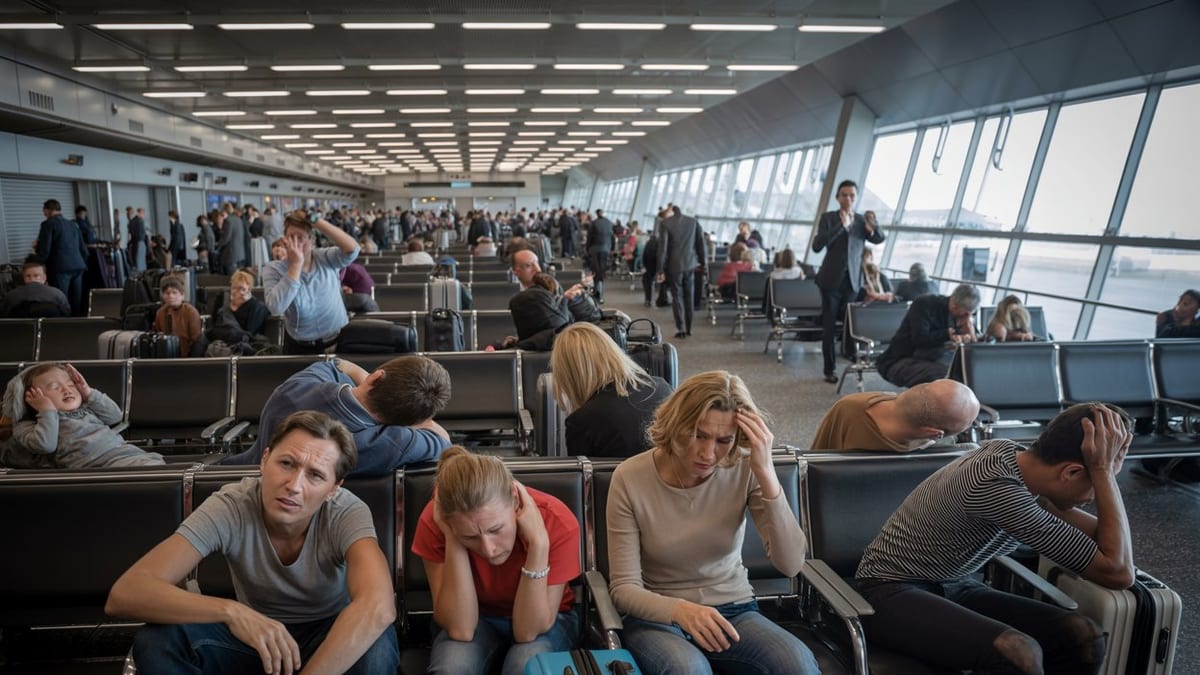
Key services on Techo International and Kuala Lumpur routes pulled
According to airline schedule databases and airport departure boards reviewed in late May, flights marketed under the SWM and MXD designators were withdrawn at short notice on routes connecting Thailand with Phnom Penh’s new Techo International Airport and Kuala Lumpur. The changes appeared in reservation systems as full cancellations rather than simple time adjustments, with no near-term alternatives listed on the same carriers.
The affected services include a Bangkok to Techo International rotation that had been operating several times per week and a Thailand to Kuala Lumpur pairing used by both leisure travellers and regional business passengers. In several instances, passengers reported arriving at airports to find their flights missing from the day’s departure screens, forcing them to seek last-minute options on other airlines or to delay travel altogether.
Publicly available booking data indicates that the cancellations took effect during a wider pattern of schedule trimming across mainland Southeast Asia in May 2026, coinciding with a sharp rise in jet fuel prices and ongoing geopolitical tensions affecting airspace and operating costs. As of the final week of May, neither SWM nor MXD had loaded replacement frequencies for the scrubbed flights into global distribution systems, suggesting the disruptions may extend into the early June travel period.
Stranded travellers highlight patchy rebooking support
Reports from regional travel forums and social media point to stranded passengers at both ends of the cancelled routes, some of whom were left without immediate rebooking options or clear guidance at airport check-in counters. Travellers connecting through Bangkok to onward destinations in Europe or the Middle East were particularly exposed, as the loss of a single regional leg often caused entire itineraries to unravel.
In Phnom Penh, where Techo International only recently replaced the capital’s former airport as the main gateway, the cancellations had an outsized impact. The new facility is still ramping up its carrier mix, leaving fewer alternatives for passengers attempting to reach Thailand at short notice. Some travellers reported needing to purchase expensive same-day tickets on other airlines or to travel overland to alternative hubs.
In Kuala Lumpur, the disruption added pressure to an already busy regional hub, with competing carriers reporting fuller loads on overlapping routes to Bangkok and Phuket. Travel agents in both cities have advised customers booked on SWM and MXD to monitor their reservations closely and to confirm flight status before heading to the airport, noting that further rolling adjustments remain possible while airlines recalibrate their May and early June schedules.
Bangkok cancellations build amid fuel costs and capacity constraints
The abrupt withdrawal of services by SWM and MXD comes on top of a broader wave of capacity reductions across Thailand’s aviation network during May. National and low cost carriers have cut or consolidated dozens of flights linking Bangkok with destinations across Asia and Europe, with Bangkok to Seoul, Beijing, Hong Kong and regional points such as Kuala Lumpur and Yangon among the routes seeing either reduced frequencies or temporary suspensions.
Sector analysts point to a combination of surging jet fuel prices, seasonal demand patterns and ongoing runway and taxiway works at Bangkok’s main Suvarnabhumi Airport as drivers of the current disruption. Fuel benchmarks have risen sharply since February, raising operating costs on long haul and high competition routes, while infrastructure works at Suvarnabhumi have reduced the number of available stands for certain periods, limiting flexibility to add extra rotations.
Separate industry reporting shows that more than forty flights were removed from the May schedule of Thailand’s flag carrier alone, while other regional operators have selectively trimmed frequencies on less profitable routes. Some airlines have maintained route presence but reduced daily services to a handful of weekly flights, creating gaps in connectivity that are only partially filled by competitors.
Regional knock on effects across mainland Southeast Asia
The cancellations involving Techo International and Kuala Lumpur illustrate how vulnerable emerging regional corridors remain to sudden schedule changes. Techo International has been positioning itself as a new hub for Cambodia, with expectations of expanded links to Thailand, Vietnam and beyond. The loss, even temporarily, of a direct Bangkok connection complicates that strategy and may prompt travellers to route through more established airports such as Ho Chi Minh City or Singapore instead.
Similarly, the removal of MXD branded services between Thailand and Kuala Lumpur reverberates beyond point to point leisure travel. Kuala Lumpur is a major connection point for flights to South Asia, Australia and the Middle East, and disruptions on feeder legs can cause missed onward connections and additional accommodation costs for passengers who booked separate tickets.
Travel industry observers note that the May disruption across Thailand is also feeding into a sense of caution among tour operators planning high season itineraries for late 2026. Some package providers are reportedly shifting allocations from smaller regional carriers to larger airlines with deeper fleets, on the assumption that they are better positioned to absorb cost shocks and operational challenges without resorting to wholesale cancellations.
What passengers can do as disruption risk remains elevated
Consumer advocates in the region advise affected passengers to first verify whether their SWM or MXD operated flight is listed as cancelled in the booking platform, then to check any notifications sent by the ticketing agent or airline. In many cases, rebooking on a later date or accepting a refund are the primary options, although availability on alternative carriers may be limited during peak travel days.
Travel insurance documents are also worth reviewing, as policies often distinguish between schedule changes and full cancellations, and may require written proof from the airline before processing claims for additional hotel nights, meals or replacement tickets. Passengers on itineraries that combine multiple airlines or separate tickets are being encouraged to build longer connection times when passing through Bangkok, given the elevated risk of delay and late breaking timetable changes.
While many of the May schedule cuts across Thailand are described in public filings as temporary measures, airlines have indicated that further adjustments could be made if fuel prices remain high or if demand softens during the shoulder season. For now, travellers using Bangkok, Techo International or Kuala Lumpur as transit points in the coming weeks may face a more fragmented network than the one they booked, and should plan accordingly.