


More news on this day
Barbados is reasserting itself on Southern Caribbean cruise maps in 2026, strengthening ties with San Juan just as Puerto Rico posts record passenger volumes and accelerates its rise as the region’s dominant cruise hub.
Get the latest news straight to your inbox!
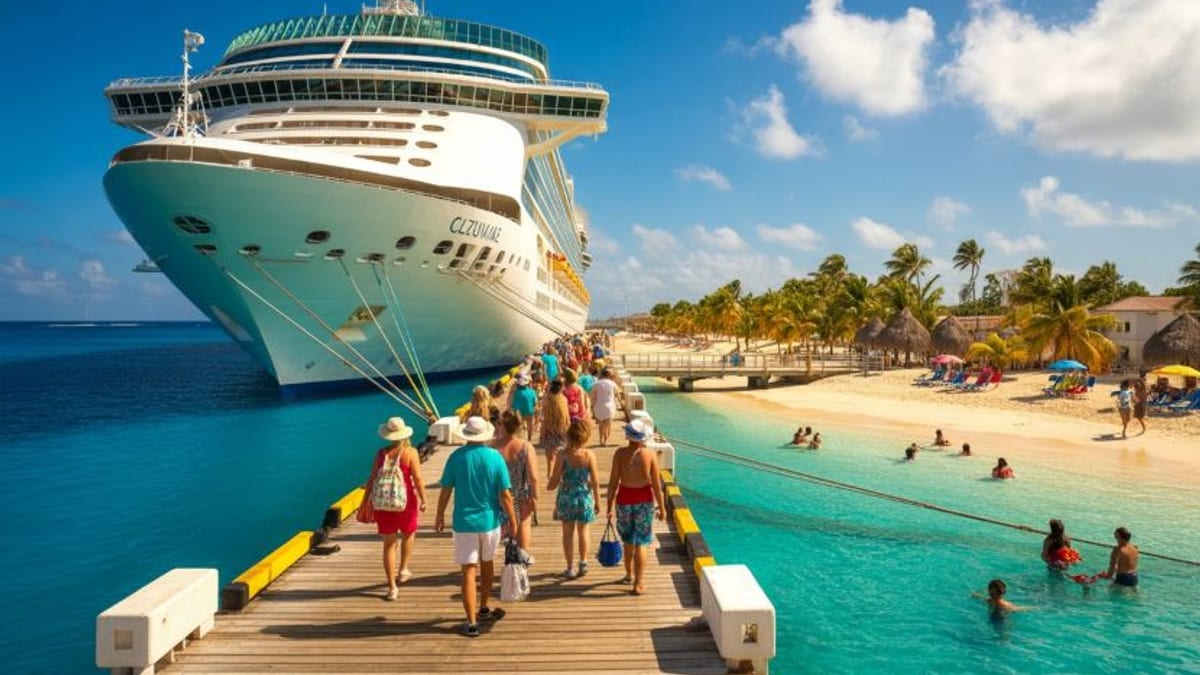
Record-breaking cruise traffic cements San Juan’s hub status
Publicly available data indicates that San Juan has entered 2026 with some of the strongest cruise figures in its history, consolidating years of steady growth. Recent passenger-movement statistics for Old San Juan put total cruise traffic in the 2025–2026 winter season at more than 1.3 million passengers, with a year-on-year increase of around 40 percent for the peak months compared with the previous season.
Government transition reports and tourism performance summaries for Puerto Rico show that cruise passenger totals have climbed well beyond pre-pandemic levels. Cruise passenger counts, which previously peaked at about 1.8 million in 2019, are now reported in the range of 1.6 million to 1.7 million annually, with 2025 and early 2026 described in official documents and industry analyses as record or near-record years. This reflects both a rebound effect and a structural shift, as more lines embed San Juan into their long-term deployment strategies.
Analysts tracking Caribbean port traffic note that San Juan consistently ranks among the busiest cruise ports by passengers. The city benefits from its dual role as a homeport for lines such as Royal Caribbean, Norwegian Cruise Line and others, and as a high-demand transit stop on Eastern and Southern Caribbean itineraries. For cruise passengers, that translates to shorter sailing times to marquee islands and more port-intensive itineraries than those typically offered from mainland U.S. gateways.
Destination marketing reports for Puerto Rico underline the wider tourism backdrop. Cruise arrivals are climbing alongside record air arrivals, rising hotel occupancy and strong forward bookings into late 2026. Within that landscape, the surge in ships calling at or homeporting in San Juan is a central pillar of growth.
Barbados rekindles San Juan inter-porting and Southern Caribbean links
Barbados is now tapping directly into this momentum. According to coverage from regional broadcasters, Bridgetown plans to reintroduce cruise inter-porting with San Juan beginning with the upcoming winter cruise season. The arrangement, developed with Princess Cruises, will allow travelers to embark and disembark in either Barbados or Puerto Rico on select Southern Caribbean sailings, effectively creating a dual homeport model.
Caribbean cruise program brochures for 2026 and 2027 already show itineraries linking Bridgetown and San Juan, with seven-night and longer voyages that weave together Barbados, Grenada, Saint Lucia, Martinique, Antigua and Barbuda, Guadeloupe, Dominica and ports in the U.S. Virgin Islands before finishing in Puerto Rico. These routes position Barbados as the southern anchor of a network that extends north to San Juan, reinforcing the Puerto Rican capital’s role as the main interchange for Southern and Eastern Caribbean cruises.
Inter-porting, in which passengers can start or end their cruise in more than one port on the same itinerary, is regarded by regional tourism planners as a way to spread economic benefits. Bridgetown stands to gain longer pre- and post-cruise stays and higher airlift demand, while San Juan benefits from an expanding web of routes that channel visitors through its terminals, hotels and attractions.
The renewed Bridgetown–San Juan connection also comes as Barbados tourism authorities promote diversified cruise offerings, including boutique and premium lines that favor port-rich Southern Caribbean itineraries. With San Juan already a key homeport for mainstream brands, such tie-ups deepen the island chain’s integration and amplify the overall flow of passengers through Puerto Rico.
Windward and Leeward islands fuel an interconnected cruise corridor
San Juan’s resurgence is increasingly tied to a cluster of Eastern Caribbean destinations that have become staples of winter and shoulder-season itineraries. Cruise deployment data and port schedules highlight frequent combinations of Puerto Rico with Saint Lucia, Dominica, Antigua and Barbuda, Grenada, Barbados, Guadeloupe and islands of the U.S. Virgin Islands and French Caribbean.
Online cruise schedules for San Juan show a dense calendar of calls by large contemporary ships and smaller premium vessels, many of them operating seven-night Southern Caribbean loops. These often include five or more port days, rotating among the Windward Islands of Saint Lucia, Dominica, Barbados, Tobago and Grenada, and the Leeward Islands of Antigua and Barbuda, Saint Kitts and Nevis and Guadeloupe. This pattern tightens the link between San Juan’s role as a major embarkation point and the economic fortunes of smaller island ports.
For destinations such as Saint Lucia, Dominica and Antigua and Barbuda, the growing number of Southern Caribbean sailings out of San Juan brings a steady stream of day visitors. Tourism performance bulletins from around the region describe cruise traffic as an important driver of onshore spending in tours, transportation and retail, particularly in the winter months.
Travel booking platforms and specialist cruise agencies are also highlighting 2026 and 2027 itineraries that begin in Bridgetown and end in San Juan, or vice versa, often touching 8 to 10 islands in a single voyage. The structure of these cruises effectively forms an arc that binds the Eastern Caribbean together, with Puerto Rico as a central gateway.
Cruise industry boom sets the stage for 2026 and beyond
The developments in Puerto Rico and Barbados come against the backdrop of a broader global cruise expansion. Industry surveys and travel association forecasts for 2026 point to a fourth consecutive year of record cruise passenger numbers worldwide, with tens of millions of travelers expected to sail and the Caribbean retaining its position as the largest regional market.
Within that global picture, San Juan’s port performance stands out. Port documentation for Puerto Rico notes a significant rise in homeport trips, as more vessels originate and terminate voyages in San Juan rather than merely transiting. This trend supports higher passenger spending on hotels, restaurants and tours in the city, and it also underpins infrastructure investments in terminals and urban waterfront areas designed to handle larger ships and more frequent turnarounds.
Industry guides focused on San Juan emphasize that the city’s competitive advantage lies in proximity to Southern Caribbean islands, the quality of its air connections, and its standing as a U.S. jurisdiction with established travel infrastructure. For cruise lines, deploying ships from San Juan can reduce sea days and unlock itineraries that would be harder to operate profitably from mainland ports, while still tapping into strong demand from North American and European markets.
As cruise lines expand capacity and introduce new vessels into the Caribbean in late 2026 and 2027, published schedules suggest that San Juan will remain a primary staging point, with Barbados and other Eastern Caribbean states playing a growing supporting role. The result is a highly interconnected cruise corridor that channels record numbers of passengers through Puerto Rico at the heart of the region.
Opportunities and pressures for Caribbean destinations
The surge in cruise traffic centered on San Juan brings opportunities but also renewed scrutiny of the wider impact on Caribbean destinations. Regional tourism reports point to rising onshore spending and employment, particularly for tours, guides, transport operators and small retailers in ports like Roseau, Saint John’s, Castries, St George’s and Bridgetown.
At the same time, policy papers and academic studies examining Caribbean tourism highlight familiar challenges, including congestion in historic districts, pressure on coastal ecosystems and the need to balance day-visitor volumes with overnight tourism. As more ships rotate through the same set of islands on tightly timed itineraries, ports are seeking to spread calls across different days of the week and incentivize smaller-group experiences.
In Puerto Rico, investment plans for the San Juan waterfront and cruise infrastructure reference sustainability goals alongside capacity targets, focusing on upgrades that can accommodate larger vessels while improving crowd management and environmental performance. Similar conversations are taking place around the Eastern Caribbean, where several islands are assessing pier expansions, tendering operations and shore power options.
With Barbados re-engaging in inter-porting and islands such as Saint Lucia, Dominica and Antigua and Barbuda firmly embedded in 2026 cruise schedules, the region’s relationship with San Juan is tightening further. The data for 2025 and early 2026 indicates that this integrated network is already driving record numbers through Puerto Rico’s capital, positioning it as a central hub in what many industry observers see as an enduring Caribbean cruise boom.