


More news on this day
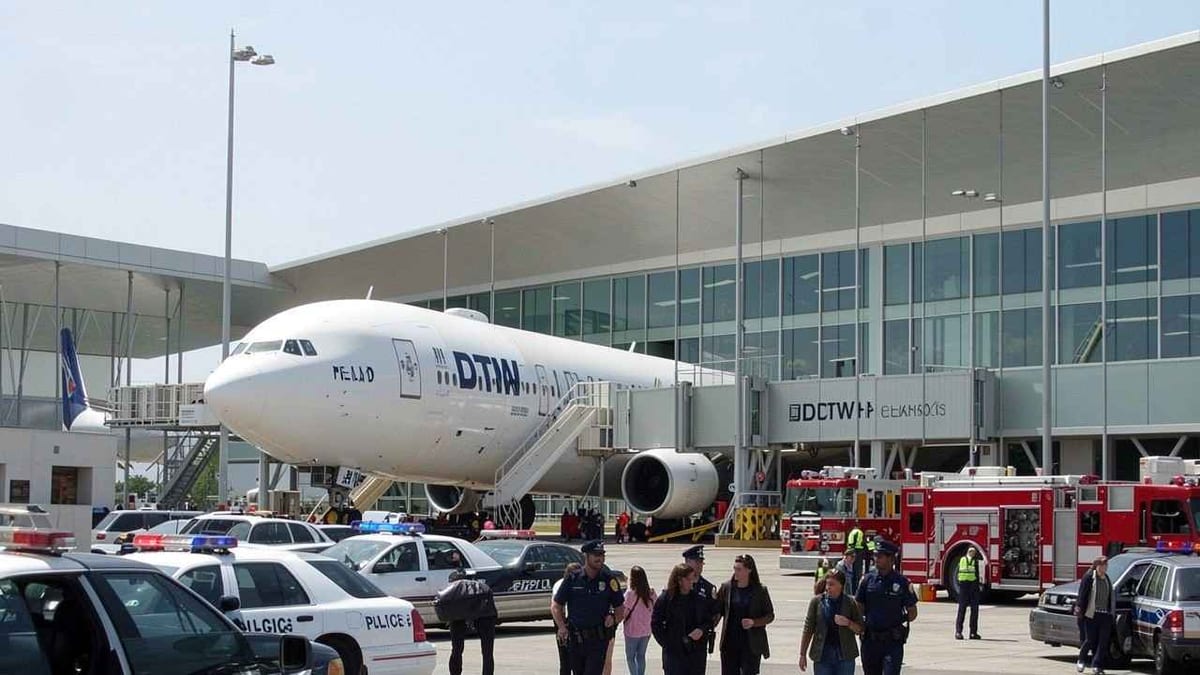
An American Airlines flight operating as AA1261 and scheduled to fly a Boeing 737-800 service from St. Louis Lambert International Airport to Chicago O’Hare diverted back to St. Louis shortly after departure, according to live flight-tracking data and publicly available operational information.
Get the latest news straight to your inbox!
What Is Known About the Diversion
Publicly accessible flight-tracking platforms indicate that AA1261 departed from St. Louis Lambert International Airport with Chicago O’Hare listed as its intended destination before the aircraft reversed course and returned to its origin. The service is typically operated by a Boeing 737-800 on the short haul between the two Midwestern hubs, a route that historically appears in American’s published timetables.
Available data show that the aircraft climbed out of St. Louis and began its route toward Chicago before the track curved back toward Missouri and ended with a landing at Lambert. The change in routing was recorded within a relatively short window after departure, which is consistent with a precautionary return rather than a prolonged diversion to an alternate airport en route.
There were no immediate indications in publicly available reporting of a serious onboard emergency such as a fire, evacuation or injuries. At the time of writing, information in the public domain does not specify the precise cause of the diversion, which can range from technical issues and operational concerns to weather or traffic constraints affecting the destination.
As with many flight interruptions of this type, the focus for passengers would have quickly shifted to returning to the gate, receiving information about onward options, and arranging new itineraries to reach Chicago or other final destinations.
Possible Factors Behind a Return to Origin
While no official technical explanation has been published, aviation operations data and recent travel alerts show that weather and congestion are ongoing concerns for Chicago O’Hare, particularly during unsettled periods when thunderstorms or low visibility can trigger flow-control programs. American’s own travel information pages have recently highlighted operational disruptions affecting Chicago, suggesting that conditions in the region can make short-haul flights especially vulnerable to delays and schedule changes.
Short segments like St. Louis to Chicago are often among the first to be adjusted when traffic management initiatives are in place, as airlines seek to minimize knock-on disruption across their networks. In such cases, a decision to return to origin instead of holding or diverting to a different airport can reduce fuel burn, simplify ground handling, and place passengers in a location with stronger rebooking options.
Other potential contributors to a diversion back to base can include technical warnings in the cockpit that prompt a precautionary landing, minor mechanical irregularities that require inspection, or cabin issues such as malfunctioning systems that are not critical but still require maintenance before continuing. In the absence of detailed fault disclosures, observers can only note that returns to origin are a standard part of conservative airline safety practices.
Airlines generally prioritize a stable maintenance environment and familiar support facilities, so if a technical concern is suspected it is often preferable to take the aircraft back to a hub or staffed station like St. Louis rather than continue to a destination where parts or technicians might be less readily available at that moment.
Impact on Passengers Traveling to Chicago
For travelers on AA1261, the diversion back to St. Louis would have meant extended journey times and, for some, missed connections at Chicago O’Hare. Publicly available guidance from American Airlines indicates that when flights are disrupted, passengers are typically rebooked on the next available services, either later departures on the same route or alternative routings through other hubs such as Dallas Fort Worth or Charlotte.
Recent weeks have already seen a tight operating environment for Chicago-bound flights as airlines adjust schedules and respond to changing demand and fuel conditions. That dynamic can limit spare capacity on subsequent departures, increasing the likelihood that affected passengers are spread across multiple later flights rather than all being accommodated on a single replacement service.
Travel forums and consumer advice resources consistently recommend that passengers in such situations check their booking status in the airline’s mobile app or website as soon as the diversion outcome becomes clear. Same-day schedule changes and reissues are often processed automatically, but manual intervention at a customer service desk or via call centers may be needed when complex itineraries or separate tickets are involved.
For those with tight onward international connections, a return to origin can also complicate entry requirements and ground arrangements at the final destination. Guidance commonly suggests that travelers keep receipts for any essential additional expenses and review contractual conditions and local regulations related to delays once their trip is complete.
How Diversions Fit Into American’s Broader Network Picture
The AA1261 diversion occurs against a backdrop of ongoing adjustments across American Airlines’ domestic network, including recent announcements of seasonal suspensions on selected routes and capacity refinements linked to fuel costs and demand trends. Schedule data show that the airline maintains a dense pattern of services into Chicago O’Hare from cities across the United States, with St. Louis forming part of this wider Midwestern connectivity.
In such a tightly interlinked system, an operational decision affecting one short-haul leg can have multiple downstream effects, including crew duty-time limitations, aircraft rotations, and the positioning of spare aircraft. A prompt return to base allows schedulers to reassess how best to deploy the affected Boeing 737-800, whether by assigning it to a later Chicago departure or reallocating it to another route once any inspection or maintenance is completed.
Industry observers note that modern airline networks are designed with contingency in mind, relying on a combination of spare capacity, rolling rebookings, and interline agreements to absorb the impact of events like the AA1261 diversion. While individual passengers may experience considerable inconvenience, the broader system tends to stabilize over subsequent rotations, especially when disruptions are contained to a limited geographic area and short time frame.
For St. Louis Lambert International Airport, a return by an outbound aircraft is handled much like any unscheduled arrival, with ground crews, gate agents and airport operations coordinating to bring the aircraft back to a stand, disembark customers, and prepare for the next operational step determined by the airline.
What Travelers Should Watch for Next
With the specific cause of the AA1261 diversion not yet detailed in public reporting, travelers following the incident will be watching for updated operational data and schedule records in the coming days. Flight-status platforms often annotate services that experience technical or weather-related disruptions, providing a clearer picture of patterns if similar events occur on the route.
Regular travelers between St. Louis and Chicago may also keep an eye on American’s published schedules for any signs of frequency changes or aircraft swaps on the pairing. Adjustments in the wake of an incident can reflect a routine maintenance shuffle or a broader decision to rebalance capacity across competing Midwestern markets.
Consumer advocates frequently emphasize the importance of preparedness for anyone flying into major hubs that are susceptible to weather and congestion. Recommendations include allowing ample connection time, maintaining current contact details with the airline so that disruption notifications arrive promptly, and familiarizing oneself with airline policies for reaccommodation on the same day.
For now, publicly available information portrays AA1261’s diversion back to St. Louis as a contained operational event on a commonly traveled route, with the key outstanding questions centered on the precise reason for the return and the extent of any ripple effects across American’s Chicago operations on the day in question.