


More news on this day
Passengers booked on a nonstop Qantas service from Rome to Perth faced unexpected overnight stays and rebookings after their long-haul flight was canceled when insects consistent with bedbugs were reported on the incoming aircraft’s economy cabin.
Get the latest news straight to your inbox!
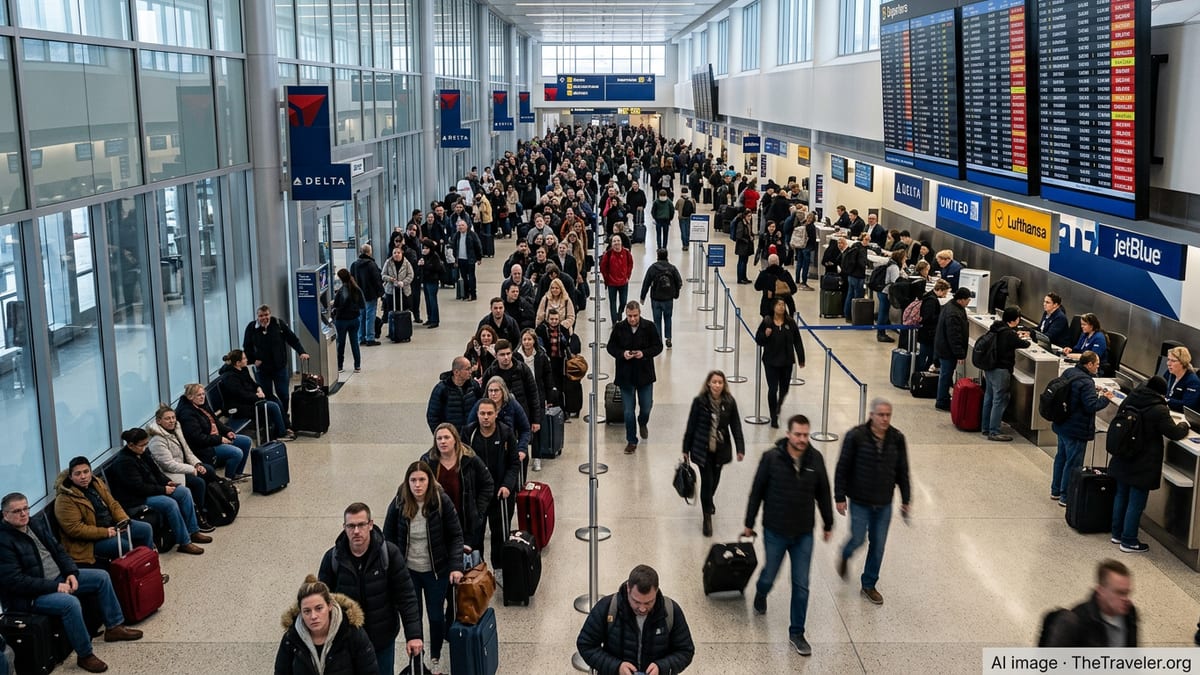
Long-haul Dreamliner pulled from service in Rome
Publicly available information indicates that the disruption centers on Qantas flight QF6, the carrier’s nonstop Rome to Perth service, which was canceled on Saturday 10 October 2026 after a suspected bedbug incident on the previous day’s QF5 from Perth to Rome. Multiple outlets report that passengers in the forward section of the Boeing 787 Dreamliner’s economy cabin complained of bites during the roughly 17 hour westbound journey to Italy.
According to published coverage, the affected aircraft was withdrawn from service on arrival at Rome Fiumicino so that engineering, maintenance and specialist cleaning teams could carry out a deep clean and targeted pest treatment. Qantas has publicly described the problem as an issue confined to a small number of economy seats, but the decision to ground the jet resulted in the full cancellation of the return leg to Australia.
Reports from aviation and travel outlets note that the cancellation applied specifically to QF6, the daytime Rome to Perth flight that links Europe with Western Australia during the northern summer and shoulder seasons. With the Boeing 787 removed from the schedule for decontamination, there was no spare long-haul aircraft positioned in Rome to operate the service as planned.
Coverage from Italian and Australian media also highlights that the incident has revived broader questions about how airlines monitor for bedbugs and other pests on long sectors, particularly on routes where passengers may be sleeping for extended periods and cabin lighting is reduced for much of the flight.
Passengers stranded and rebooked after Rome–Perth cancellation
Travel and business press reports indicate that the cancellation of QF6 left Rome based and connecting passengers facing delays of up to two days while Qantas sourced alternative options. Some travelers were reportedly rebooked on later Qantas operated services via other hubs, while others were moved to partner airlines on one stop routings back to Australia.
Accounts compiled by travel news sites and online forums suggest that affected passengers received rebooking assistance and were offered accommodation and meal support in Rome while they awaited new itineraries, although the exact arrangements appear to have varied by booking and fare type. Several travelers reported overnight hotel stays near Fiumicino Airport, while others described being placed on departures the following day or beyond.
The Rome disruption comes at a time when passenger expectations around care during controllable cancellations are under renewed scrutiny in several regions. Consumer advocates note that hygiene or maintenance issues located on a specific aircraft are generally treated as matters within an airline’s operational control, in contrast with cancellations triggered by severe weather or air traffic control restrictions.
For long haul routes such as Rome to Perth, where nonstop services operate only a limited number of times per week and are supported by a small subfleet of aircraft, a single airframe being taken out of rotation can quickly cascade into missed connections and extended layovers for hundreds of travelers.
How bedbugs end up on aircraft cabins
Explanatory pieces published by aviation and public health specialists emphasize that bedbugs are not linked to overall cleanliness in the way many passengers assume. The insects are adept hitchhikers, often traveling in luggage, clothing or soft furnishings, and can establish themselves in crevices around seats, carpets and sidewalls if they reach an aircraft cabin.
Industry explainers note that once in a confined environment such as an economy cabin, bedbugs can be difficult to detect during routine turnarounds because they tend to hide in seams and joints and are most active at night. On long haul flights where cabin lights are dimmed for rest, travelers may not notice them until they wake with itchy bites, leading to reports of insects crawling on seat cushions or armrests.
When flight and cabin crews receive reports consistent with bedbugs during a flight, publicly available guidance indicates that options are limited to relocating affected passengers, documenting the incident and offering basic first aid items such as antihistamines if stocked. More thorough inspection and treatment typically cannot occur until the aircraft is on the ground and unloaded.
Specialist pest control firms consulted in media coverage of the Rome case point out that effective remediation may require lifting seat cushions, treating carpet edges and, in serious cases, applying heat or insecticidal sprays in line with aviation safety regulations. Such measures are not compatible with tight overnight turnarounds, making cancellations or substitutions more likely when an infestation is suspected.
What Qantas and other airlines say about cleaning standards
In statements quoted across outlets including international broadcasters and Australian business media, Qantas has expressed regret for the disruption and stated that engineers and maintenance teams carried out a deep clean of the Dreamliner after an issue was identified on a limited number of economy seats. The airline has also indicated that it is continuing to investigate the incident and has not publicly confirmed the full extent of any infestation.
Background information on Qantas cabin standards shows that the airline, like many global carriers, advertises the use of regular cleaning cycles, periodic heavy cleans and scheduled maintenance checks to manage hygiene and wear on long haul aircraft. These procedures can include vacuuming, surface disinfection, upholstery cleaning and the replacement of soft furnishings.
However, experts cited in independent aviation commentary stress that bedbugs present a distinct challenge compared with routine dirt or spills. Because the insects can survive for extended periods without feeding and hide in structural gaps, preventing and eradicating them often requires targeted inspections rather than relying solely on standard overnight cleaning.
The Rome grounding follows a series of high profile bedbug related travel stories in recent years, involving not only airlines but also trains and hotels in major cities. Each episode has raised questions about whether current inspection regimes are sufficient for industries built around high passenger turnover and shared seating or bedding.
Advice for travelers worried about in flight infestations
With images of grounded aircraft and insect affected seats circulating widely, travelers planning long haul journeys are increasingly looking for practical steps to reduce risk. Public health agencies and travel medicine specialists generally advise a combination of awareness and simple precautions rather than avoiding flying altogether.
Common recommendations highlighted in recent coverage include inspecting the seat area on boarding for visible insects or dark spotting on fabric, keeping hand luggage closed when not in use, and using hard sided suitcases where possible. Some experts also suggest placing a light colored cloth or travel blanket over the seat and avoiding placing personal clothing directly on the seat cushion or floor during the flight.
If a passenger notices insects or wakes with clusters of itchy bites during a journey, published guidance encourages notifying cabin crew promptly so the incident can be documented and, where feasible, an alternate seat can be assigned. After arrival, travelers concerned about possible exposure are often advised to inspect and, if necessary, heat treat or carefully launder clothing and soft sided bags before bringing them fully into the home.
For those with upcoming itineraries on busy holiday and long haul routes, the Rome episode serves as a reminder that while bedbug encounters in the air remain relatively rare compared with the overall volume of flights, a single incident can significantly disrupt operations when an aircraft must be taken out of service for thorough inspection and cleaning.