


More news on this day
The United States embassy in Saudi Arabia has renewed security warnings for American citizens after a series of attacks on Riyadh’s King Khalid International Airport left more than a dozen people dead, hundreds injured and air travel across the kingdom facing prolonged disruption.
Get the latest news straight to your inbox!
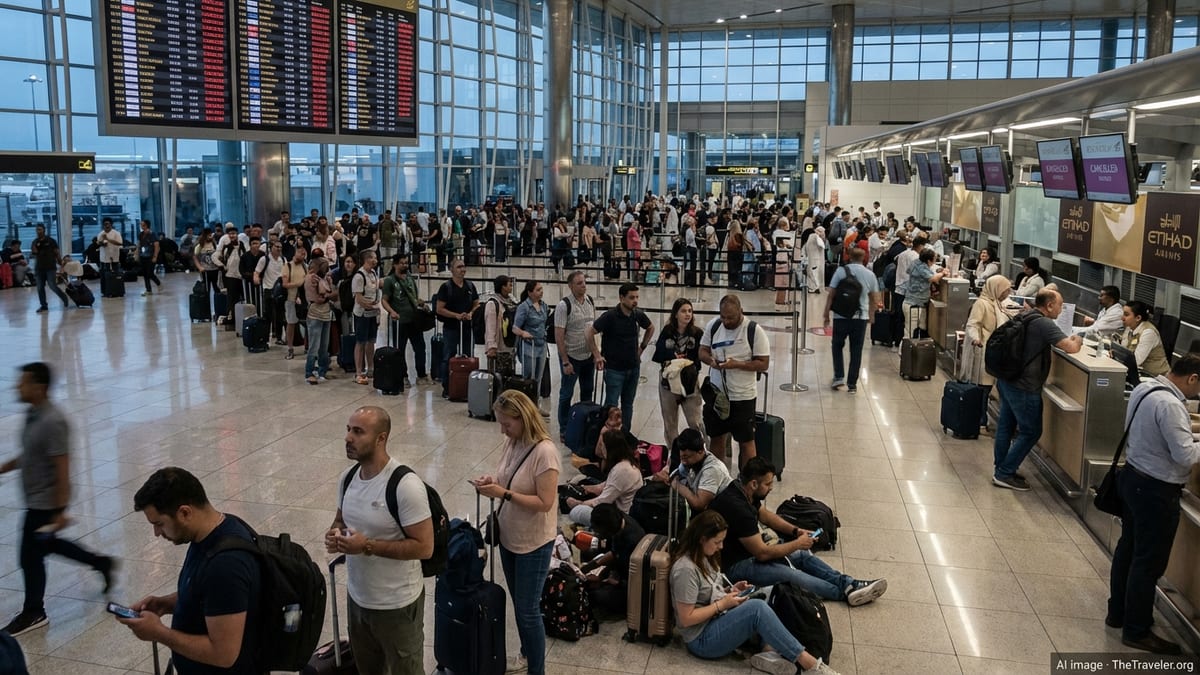
Fresh alert follows escalating attacks on Riyadh airport
Publicly available information shows that the US mission in Saudi Arabia has issued security alerts on three consecutive days, from October 10 to October 12, 2026, in response to repeated missile and drone strikes on King Khalid International Airport in Riyadh. The alerts were circulated as Saudi authorities reported multiple impacts on passenger terminals and airport facilities, including incidents that killed at least 12 people and wounded more than 300 others.
According to published coverage from regional and international outlets, the latest attacks have been linked to Yemen’s Houthi movement, which has claimed responsibility for several recent strikes on Saudi airports. Images and video verified by news organizations show smoke rising from the Riyadh airport area and damaged aircraft on the tarmac, amplifying concerns about the vulnerability of civilian aviation infrastructure.
News reports indicate that, alongside the casualties, operations at King Khalid International Airport have been repeatedly suspended or restricted while debris is cleared and security assessments are carried out. These interruptions have added a layer of uncertainty for travelers using Riyadh as a transit point or as a gateway into Saudi Arabia.
What the latest US embassy security alert advises
The most recent advisory, dated October 12, states that the US mission is aware of additional attacks on King Khalid International Airport in Riyadh, as well as a targeted strike on King Fahd International Airport in Dammam in eastern Saudi Arabia. The alert warns that further incidents could result in sudden flight cancellations, temporary airport closures and broader airspace restrictions affecting commercial services.
Publicly available summaries of the alert indicate that American citizens are urged to exercise a high degree of caution when using airports in Saudi Arabia and to consider alternative travel plans where feasible. Travelers are advised to monitor their flight status directly with airlines and to check airport operations before setting out, rather than relying solely on prebooked itineraries.
The alert also highlights personal safety measures for those already in affected areas. Guidance disseminated by the mission and reported by regional media includes recommendations to stay away from windows and glass during aerial attacks, avoid gathering near impact sites or debris fields and closely follow local announcements and civil defense messages on mobile devices and broadcast channels.
Heightened restrictions for US government personnel and travel choices
Coverage of the embassy’s notices shows that US government employees working in Saudi Arabia now require special authorization to use King Khalid International Airport in Riyadh, as well as major airports in Jeddah and Dammam. This additional layer of approval reflects a reassessment of risk for government-related travel and places tighter controls on official movements through the kingdom’s busiest aviation hubs.
The same coverage notes that American citizens are not subject to an outright ban on using Saudi airports but are strongly encouraged to review the security situation before flying. The alerts point to private cars, trains and buses as potential alternatives to domestic air travel, while stressing that passengers should verify timetables and seat availability directly with transport operators in case of knock-on disruption from the airport attacks.
For business travelers and expatriates who rely on frequent regional flights, the updated guidance implies the need for more flexible itineraries and contingency plans. Some carriers have suspended or rerouted services to Riyadh in the days following the strikes, according to airline statements cited in Gulf-based media, further complicating efforts to maintain regular travel schedules.
Impact on international travel and regional aviation links
Reports from regional news outlets describe a ripple effect across the Gulf and wider Middle East aviation network. Airlines based in neighboring countries have temporarily suspended certain rotations to Riyadh or adjusted flight times to align with evolving security assessments and airspace management decisions. At the same time, foreign embassies including Canadian, German, Spanish and Indian missions have issued their own advisories urging nationals to avoid Riyadh’s international airport or to limit nonessential travel.
While the primary focus remains on King Khalid International Airport, the mention of an attack on King Fahd International Airport in Dammam in the latest US alert has raised questions about whether more of Saudi Arabia’s major airports could come under threat. Travel analysts quoted in regional coverage suggest that a sustained campaign against multiple hubs would place additional strain on domestic transport networks and on airlines seeking to reroute passengers through alternative gateways.
For international tourists, including those visiting Saudi Arabia as part of broader Gulf itineraries, the changing security picture may require last minute changes to routes and stopovers. Travel industry reports indicate that some tour operators are reviewing programs that rely heavily on Riyadh as an arrival or departure point, with a view to shifting more traffic to airports perceived to be under less immediate risk if conditions deteriorate further.
Practical advice for Americans currently in Saudi Arabia
The successive US embassy alerts emphasize that Americans in Saudi Arabia should maintain heightened awareness of their surroundings, particularly near transport hubs and critical infrastructure. The published guidance repeatedly encourages citizens to keep travel documents and emergency contact details readily accessible, ensure that family or colleagues are aware of planned movements and have a plan to reach a safe indoor location quickly in the event of sirens or reports of incoming projectiles.
According to information made public by the mission and relayed by local media, individuals are advised to enroll in official alert systems so they can receive timely updates on security developments, including any changes to airport operations or further strikes. Travelers are also urged to avoid filming or live streaming missile or drone incidents, both to reduce personal exposure near impact zones and to respect local regulations on sharing sensitive security-related imagery.
For those with imminent departures from Riyadh, the most conservative course outlined in recent coverage involves confirming flight status multiple times on the day of travel, building in extra time for security checks and being prepared for reassignment to different flights or even different airports within the kingdom. Where travel is discretionary, the alerts signal that postponement or rerouting may be preferable until there is clearer evidence that the security situation around Saudi airports has stabilized.