


More news on this day
A rush-hour collision between two southbound passenger trains near Bedford, north of London, has left one driver dead and dozens of passengers injured, according to multiple news reports, in one of the most serious rail incidents in Britain in recent years.
Get the latest news straight to your inbox!
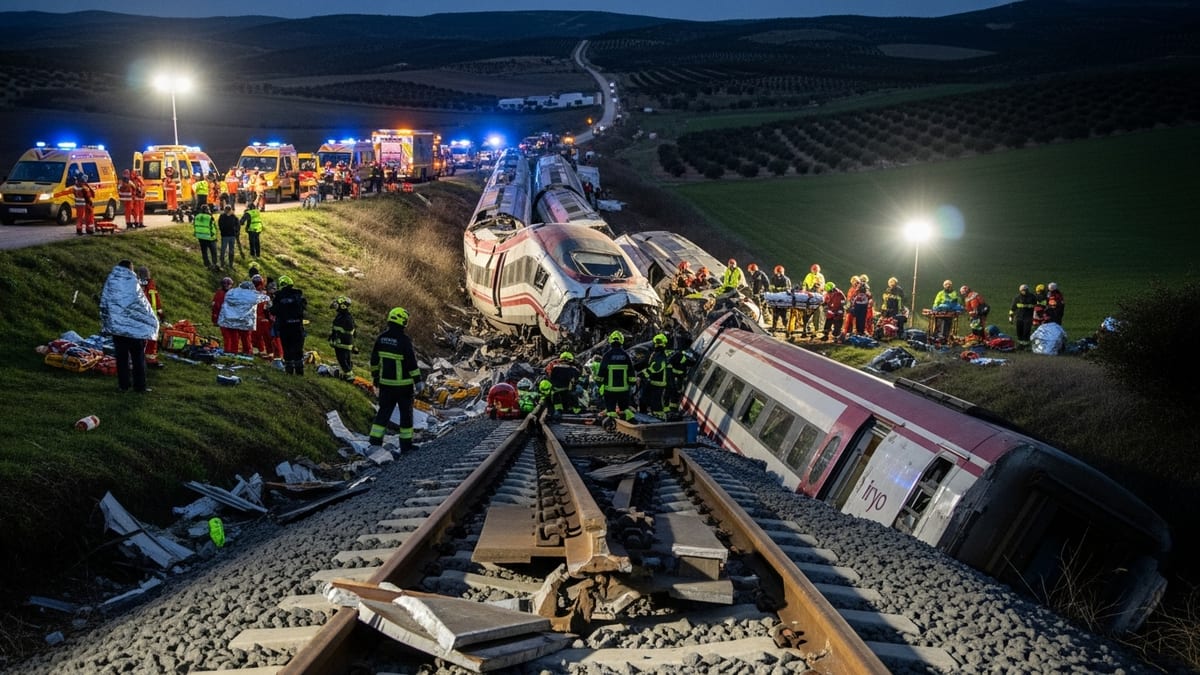
Major incident on busy London commuter route
Published coverage indicates that the collision occurred late Friday afternoon on June 19, on a heavily used stretch of main line between Bedford and Luton, around 100 kilometers north of central London. Both trains were reportedly running south towards London St Pancras, forming part of a key corridor that links the English Midlands with the capital.
Information from rail tracking data described in media reports suggests that one southbound service struck the rear of another train a short distance south of Bedford. The impact crumpled carriages, shattered windows and hurled passengers from their seats as trains that moments earlier were following their usual commuter patterns suddenly came to a violent stop.
Reports from British and international outlets state that a driver died at the scene and that dozens of passengers were treated for injuries ranging from broken bones and deep cuts to suspected spinal trauma. Initial tallies circulating on Friday evening described more than 80 people hurt in total, with a significant number categorized as seriously or very seriously injured by emergency responders.
Publicly available information shows that emergency services declared a major incident, triggering a large-scale response that included ground ambulances, specialist hazardous area teams and an air ambulance, with nearby hospitals placed on heightened alert to receive trauma patients.
Emergency response and passenger accounts
Images and video shared on social media and cited in news reports show a damaged train set halted on the line, its livery consistent with services operating under the East Midlands Railway brand. Some pictures depict passengers standing on track ballast beside the trains, guided away from the carriages by high-visibility-clad personnel as daylight faded.
According to published coverage, emergency crews worked along the length of both trains, moving from carriage to carriage to identify and stabilize the injured. Triage points were established trackside to prioritize treatment, while less severely hurt passengers were assisted down ladders and walkways to safer ground before being escorted to waiting buses and reception centers.
Witness descriptions collected by various outlets speak of a sudden, powerful jolt that threw people against seat backs and into aisles, followed by scenes of confusion as alarms sounded and carriages filled with cries for help. Several passengers described visible fractures, head wounds and heavy bruising among fellow travelers, and some reported using their phones’ flashlights and makeshift bandages before professional help arrived.
Local residents and motorists on nearby roads also reported hearing sirens converging on the area for an extended period, underscoring the scale of the emergency operation as responders worked into the evening to account for everyone on board and clear the line.
Severe disruption across East Midlands and commuter services
The collision has caused extensive disruption to rail travel along the Midland Main Line, a core north–south route that serves Bedford, Luton, the East Midlands and beyond. Rail operator updates cited in media reports indicate that all lines through the Bedford area were initially suspended, with services cancelled or heavily delayed as incident teams secured the site and began technical assessments.
Passengers heading into and out of London St Pancras on Friday evening faced crowded concourses, platform closures and repeated announcements warning of extended journey times. Information released by the rail industry pointed to diversions, ticket acceptance on alternative routes and replacement bus services where possible, although capacity constraints meant many travelers were advised to postpone nonessential trips.
The disruption is expected to ripple into the weekend, as investigators and recovery teams need significant time to document evidence, move damaged rolling stock and inspect tracks, signaling equipment and overhead power systems. For communities along the line, particularly regular commuters who rely on the Bedford corridor, the collision has raised concerns about both short-term travel hardship and longer-term confidence in the resilience of the route.
Travel analysts note that the line carries a mix of intercity and airport traffic, including links to Luton Airport, making it a strategic part of Britain’s wider transport network. The sudden loss of capacity at a key pinch point demonstrates how a single incident can cascade into delays and cancellations far beyond the immediate crash site.
Early focus on safety systems and investigation
While it remains far too early for definitive conclusions, attention is already turning to the safety systems that govern train movements on the route and how two southbound services came to collide on the same stretch of track. Commentators following the incident have pointed to the role of modern signaling, train protection technology and operating procedures that are designed to prevent one train from striking another.
According to coverage drawing on early technical discussion and rail tracking data, one working theory is that a following train may have approached a stationary or slowed service at higher speed than expected, potentially passing a restrictive signal before impact. There is no official determination at this stage, and any such scenario would be examined in detail by rail accident specialists using on-board data recorders, signal logs and communications records.
Britain’s rail network is subject to independent accident investigation processes that typically analyze infrastructure performance, rolling stock condition, human factors and organizational decision-making. Previous serious incidents have led to changes in driver training, signaling upgrades and new technology to provide additional protection where conventional systems have shown limitations.
Safety campaigners and passenger groups are already signaling a desire for clear explanations and, if necessary, rapid implementation of any recommended improvements once findings emerge. For many regular users of the line, the incident serves as a stark reminder that even in a network with a strong overall safety record, rare but high-impact failures can have devastating human consequences.
Human impact and next steps for rail users
Beyond the initial headlines and disruption, the collision is likely to have lasting effects on those directly involved. Passengers caught in the crash face potential long-term recovery from physical injuries, as well as psychological impacts commonly associated with major transport incidents, including anxiety about future rail travel.
Publicly available information shows that local authorities, health services and rail operators are working to provide support and information lines for families searching for updates on loved ones. Travel organizations and insurers are also expected to receive claims related to medical treatment, lost luggage and missed onward connections.
For rail users planning journeys through Bedford in the coming days, operators are advising close monitoring of live timetables and service updates, along with allowing extra time to navigate potential diversions and limited capacity. Many ticket retailers have announced flexible policies for rebooking or refunds on affected services, although specific conditions vary by provider and ticket type.
As investigators begin the painstaking work of reconstructing the events leading up to the crash, attention across the travel sector will focus on how lessons from the Bedford collision are translated into practical measures. For now, the incident stands as a sobering interruption to everyday commuting and leisure journeys, highlighting both the fragility and essential nature of modern rail links in the United Kingdom.