


Few buildings in Europe stop first time visitors in their tracks quite like Casa Batlló. The shimmering dragon-backed roof and bone like balconies rise above Barcelona’s Passeig de Gràcia, tempting travelers to step inside. Yet with premium ticket prices, timed entry and a city packed with architectural icons, many first time visitors wonder: is Casa Batlló really worth it on an already busy Barcelona itinerary?
Get the latest updates straight to your inbox!
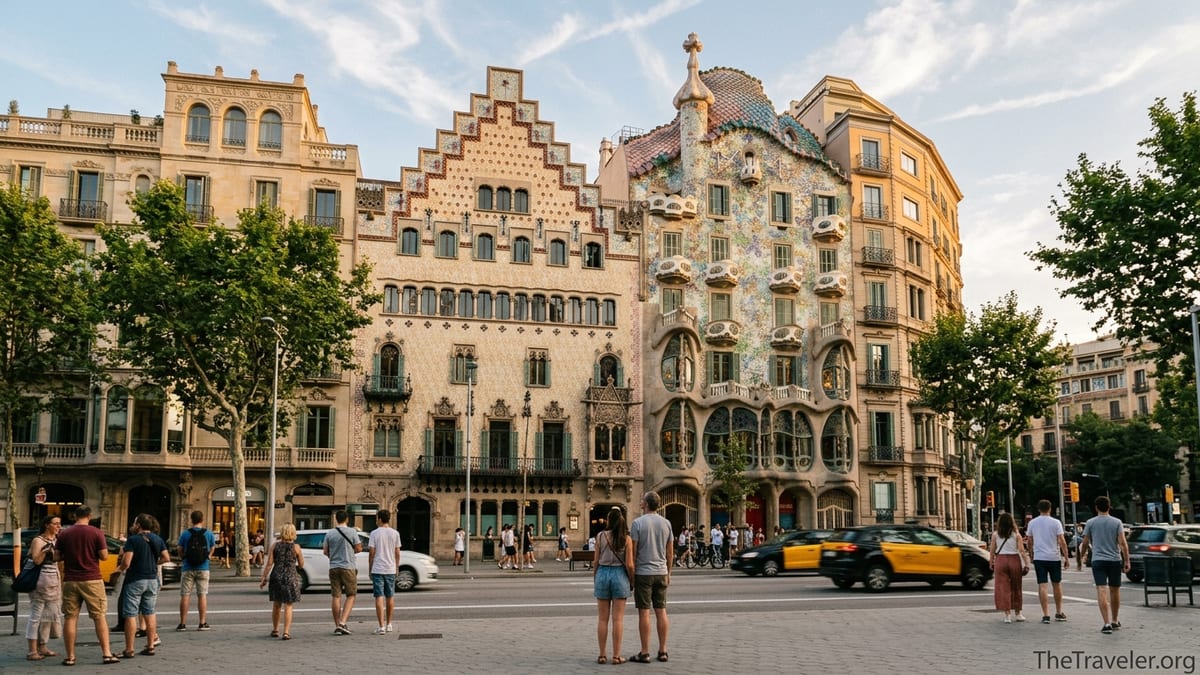
What Exactly Is Casa Batlló and Why Does It Matter?
Casa Batlló is a remodeled townhouse designed by Antoni Gaudí between 1904 and 1906, at the height of his creative powers. It sits in the heart of Barcelona’s Eixample district on Passeig de Gràcia, a short walk from Plaça de Catalunya. Beyond the theatrical facade that fills Instagram feeds, it is considered one of the purest examples of Gaudí’s so called naturalist phase, where he translated organic forms into flowing stone, glass and ironwork.
For first time travelers, Casa Batlló is often the most accessible introduction to Gaudí after the Sagrada Família. Inside, you walk through the former Batlló family residence, up through the light filled central patio and on to the sculptural attic and rooftop. The entire route has been turned into a museum style experience, with multimedia projections, carefully lit rooms and an audio guide that explains details a casual visitor would otherwise miss, such as how the blue tiles in the courtyard gradually shift shade to balance natural light.
The building has also been carefully restored in recent years. In 2025 the rear facade and noble floor patio were returned to Gaudí’s original design, adding depth to the visit for architecture fans. In 2026, the third floor apartment, the last original Gaudí designed residence in the house, opened for private and small group experiences, giving a rare glimpse of early 20th century domestic life in a modernist home.
All of this means that Casa Batlló is not just a pretty facade. It is a dense, carefully curated cultural visit. Whether that makes it worth your time and money on a first Barcelona trip depends on your budget, interests and how you plan the rest of your stay.
Tickets, Prices and How Long a Visit Really Takes
For most travelers, the first question is cost. Casa Batlló uses tiered dynamic pricing, which means the exact amount changes by season, day of week and time slot. As of mid 2026, standard daytime tickets for adults typically start in the low 30 euro range when bought in advance for less popular time slots, and rise toward or above 40 euros at peak times and on busy weekends. Priority or “be the first” morning entries and special evening products sit higher again, often in the 45 to 55 euro band.
You will see ticket categories marketed under colors. The most basic tier usually includes timed entry and an audio guide. Mid tier options add extras such as access to additional spaces or a more immersive tablet guide, while the top tier options bundle in queue skipping, a brief introduction by a staff member, or special rooftop access during certain events. Travelers comparing options online often find that the mid tier “silver” or equivalent product hits the sweet spot between price and what you actually experience inside.
In practical terms, most visitors spend around 60 to 90 minutes inside the house. If you take time to listen to the full audio guide, photograph details like the swirling wooden doors and climb at a relaxed pace, you can easily stretch closer to two hours. Add getting there, a short wait to enter during your time slot, plus a coffee on Passeig de Gràcia nearby, and you should budget at least a half morning or half afternoon around the visit.
For a first time visitor on a tight budget, that can feel like a steep price for a short visit, especially when you factor in other major sights like the Sagrada Família, Park Güell and the Picasso Museum. However, compared with other high profile European attractions, Casa Batlló is not an outlier. A family of four from the United States, for example, should realistically expect to spend more than 120 euros to tour the house, similar to the cost of a guided visit to a major stadium or a combined ticket to a top art museum and special exhibition in cities like Paris or London.
Crowds, Timing and the On the Ground Experience
Casa Batlló is firmly on the Barcelona must see circuit and receives well over a million visitors per year, with 2025 figures placing it just behind the Sagrada Família among modernist sites. For a first time traveler, that means you should expect a highly organized, sometimes crowded experience rather than a quiet architectural study. Your enjoyment will depend heavily on when you go.
Opening hours currently run from the morning into the evening, with the first entries around 9 am and the last standard entries in the early evening. In high season, especially from May through September, midday and mid afternoon time slots tend to be the busiest. Travelers report trains of people moving slowly through the main staircase and noble floor, with queues to take photos at the famous mushroom shaped fireplace or by the living room windows overlooking Passeig de Gràcia.
If you want a more relaxed experience on your first trip, it is worth planning around the crowds. Weekday morning slots, especially the first entry of the day, are generally the calmest. Visiting in the low season months, roughly November to February excluding Christmas and major holidays, also makes a difference. A couple visiting in January, for example, might find they can pause to study details in the attic arches or step back to photograph the vertical courtyard without feeling rushed from behind.
Evening visits can be appealing too. Standard tickets later in the day allow you to see the interior under warm artificial lighting, while special “Magical Nights” products combine an after hours house visit with a rooftop concert and drink. For a honeymooning couple choosing between a 50 euro rooftop concert at Casa Batlló or a high end cocktail bar in El Born, the former can feel like a memorable splurge that doubles as both sightseeing and an evening out. The trade off is that late visits may be more structured and that the rooftop experience depends on weather conditions and event schedules.
How Casa Batlló Compares With Other Gaudí Highlights
First time travelers nearly always face the same dilemma: there are more Gaudí sites in Barcelona than most short trips can comfortably include. The core list usually features the Sagrada Família, Park Güell, Casa Batlló, Casa Milà (La Pedrera) and sometimes Casa Vicens. Understanding how Casa Batlló differs can help you decide if it deserves a place on your personal shortlist.
Compared with the Sagrada Família, which is a vast basilica filled with symbolic sculpture and stained glass, Casa Batlló is intimate. You pass through living spaces, stairwells and a rooftop instead of a cavernous interior. Many travelers report that while the church provides the single biggest architectural “wow” moment, Casa Batlló offers a richer sense of how Gaudí’s ideas shaped the way people actually lived.
When weighed against other houses, Casa Batlló is generally the most theatrical. Its facade is more whimsical than Casa Milà’s sculpted stone waves, and its interior is more immersive than the relatively early and quieter Casa Vicens. On the other hand, Casa Milà’s rooftop terrace, with its warrior like chimneys and sweeping city views, often feels more expansive. Ticket prices for each house can vary, but Casa Batlló is usually at or near the top, so cost conscious visitors sometimes choose one major modernist house and skip the others.
In practice, many first time itineraries that run for three full days in Barcelona end up prioritizing the Sagrada Família, one Gaudí house and Park Güell. If your main interest is understanding Gaudí as a designer of private homes and experiencing an interior that feels almost alive, Casa Batlló is a strong contender for that single house. If you prefer wide views and are sensitive to ticket prices, you may decide that Casa Milà or a free exterior stroll past the block of discord, where several modernist buildings cluster, gives you enough of a taste without the higher spend.
Who Will Find Casa Batlló Most Worthwhile?
Whether Casa Batlló is “worth it” is largely a question of fit. Some travelers walk out raving that it was the highlight of their Barcelona stay, while others feel underwhelmed compared with photos or balk at the price relative to the time inside. Thinking about the type of traveler you are can clarify expectations.
If you are excited by architecture, design or art history, Casa Batlló is close to essential. Architecture students, creative professionals and anyone who loves details like door handles, railings and window frames tend to find that the ticket price vanishes into the background once they are climbing under the parabolic arches of the attic or tracing the pattern of the ceramic tiles. For these visitors, the combination of restoration work, multimedia storytelling and access to previously closed areas, such as the reimagined third floor, makes the house feel like a living laboratory of Gaudí’s ideas.
Travelers looking for unique photo opportunities also usually come away happy. The sinuous staircase, organic skylights and dragon roof ridge are almost tailor made for photography. A solo traveler with a smartphone can easily capture portfolio worthy images in under an hour. Even during busy periods, staff often regulate the flow so that guests can take turns in the most photogenic spots, such as the main salon’s huge windows looking onto Passeig de Gràcia.
On the other hand, budget constrained backpackers, families juggling multiple paid attractions, or visitors who feel fatigued by crowds may decide their money is better spent elsewhere. A pair of students staying in a hostel, for instance, might opt for a free Gaudí themed walking route past Casa Batlló’s exterior, Casa Amatller next door and the Sagrada Família’s facades, saving their paid tickets for one major interior visit. Similarly, if you have only one full day in the city, trying to squeeze Casa Batlló in alongside the Sagrada Família and a long stroll along the waterfront can leave the experience feeling rushed.
Planning Tips to Get the Best Value From Your Visit
If you decide that Casa Batlló belongs on your first Barcelona itinerary, a few practical steps can help you get more from the experience. The most important is to buy timed tickets in advance from an official vendor. Same day walk up purchases are sometimes possible in quieter months, but they often cost more and leave you stuck with less desirable time slots.
Next, think carefully about timing. A couple visiting in June who books the first entry of the day might pay a small premium compared with a midday slot but enjoy clearer views, cooler temperatures and a calmer atmosphere, which many travelers consider well worth the difference. Conversely, off season visitors in January or February might choose a mid morning entry at a lower price and still avoid the most intense crowds.
Combining Casa Batlló with nearby sights can also improve value. The house sits on a section of Passeig de Gràcia that is lined with modernist buildings, flagship shops and cafes. It is a short walk from Plaça de Catalunya and the Gothic Quarter. A realistic plan for a first time visitor could be to book a late morning slot at Casa Batlló, then wander down to La Boqueria market for lunch, or to pair an evening visit and rooftop concert with tapas in the nearby Eixample streets.
Finally, consider how much of the multimedia content you want to engage with. The audio guide and augmented elements add context but also extend the visit. If you are traveling with children with shorter attention spans, you might choose to focus on a few key rooms, such as the main salon, courtyard and rooftop, rather than trying to absorb every explanation. Couples and solo travelers with a strong interest in Gaudí might slow down, replay certain sections and cross reference what they see with guidebook notes to deepen their understanding.
The Takeaway
For most first time travelers to Barcelona, Casa Batlló is indeed worth considering as one of the city’s headline experiences, provided you have both the budget and at least half a day to allocate around the visit. It offers a concentrated, highly curated immersion into Gaudí’s vision of domestic architecture, in a location that is easy to combine with other central sights.
It is not, however, a universal must see at any cost. If ticket prices feel uncomfortably high for your trip, if you have very limited time, or if large crowds significantly reduce your enjoyment, you may prefer to prioritize the Sagrada Família and explore Gaudí’s other works from the outside. Barcelona is rich enough in architecture, food and neighborhood life that skipping one interior visit will not ruin your experience.
If you decide to go, plan ahead, choose your time slot carefully and arrive knowing what Casa Batlló is and is not. It is an immersive architectural experience rather than a traditional museum, a carefully managed tourist site rather than a hidden gem. Approach it with realistic expectations and a little curiosity, and for many first time visitors it becomes one of the most memorable hours of their stay in Barcelona.
FAQ
Q1. How much do Casa Batlló tickets cost for adults in 2026?
Adult daytime tickets typically start in the low 30 euro range for less popular time slots and can rise toward or above 40 euros at peak times and for premium products.
Q2. How long should I plan to spend inside Casa Batlló?
Most visitors spend around 60 to 90 minutes inside, though architecture enthusiasts who listen to the full audio guide and photograph extensively may stay closer to two hours.
Q3. Is Casa Batlló suitable for children and families?
Yes, many families enjoy the colorful, almost storybook interior, but young children may tire if you try to follow every detail on the audio guide, so focusing on key rooms can help.
Q4. What is the best time of day to visit Casa Batlló to avoid crowds?
Weekday mornings, especially the first entry around opening time, are usually the least crowded. Off season months outside major holidays are also calmer overall.
Q5. Should I visit Casa Batlló or Casa Milà if I only have time for one Gaudí house?
If you value immersive interiors and theatrical design, Casa Batlló is often the better choice, while Casa Milà is stronger for expansive rooftop views and a slightly more spacious layout.
Q6. Is the Casa Batlló rooftop included in all tickets?
Access to the roof typically depends on the ticket category, with mid and higher tier options more likely to include it, so you should check what is included before purchasing.
Q7. Can I visit Casa Batlló in the evening or at night?
Yes, standard tickets are available into the evening, and there are special night experiences that combine a house visit with rooftop concerts and drinks on selected dates.
Q8. Do I need to book Casa Batlló tickets in advance?
Advance booking is strongly recommended, particularly from spring through early autumn, since same day tickets may be more expensive or limited to less convenient time slots.
Q9. Is Casa Batlló accessible for travelers with limited mobility?
The site offers lifts and step free routes to most key areas, but some historic spaces and rooftop sections may be less accessible, so checking current accessibility details before visiting is wise.
Q10. Is Casa Batlló worth it if I am on a tight budget?
If your budget is very limited, you may decide to enjoy the facade from the street and prioritize one major paid interior like the Sagrada Família, saving Casa Batlló for a future trip.