


More news on this day
A southbound commuter route north of London became the scene of a major rail disaster on Friday when two passenger trains collided near Bedford, killing one person and injuring scores of others, according to initial reports from emergency services and railway operators.
Get the latest news straight to your inbox!
Rush-hour collision on key London corridor
Publicly available information indicates that the collision occurred in the late afternoon near the town of Bedford, around 60 miles north of central London, on one of the mainlines feeding into the capital’s St. Pancras station. Tracking data cited in published coverage shows that both trains were traveling south toward London when they came together just after 5 p.m. local time, at a time when carriages were reported to be busy with commuters and intercity travelers.
Rail operator information shows that one of the trains had started its journey in Corby, in the East Midlands, while the other had departed earlier from Nottingham, an important regional hub. Both services were bound for London St. Pancras, a key gateway for domestic and international rail, which meant that disruption spread quickly across the wider network as services were halted.
Images shared on social media and described in local and international news reports show carriages at a standstill beside a rural access road, with ambulances, fire engines and specialist incident response teams lining the embankment. Passengers could be seen standing or sitting by the roadside, some with visible injuries and bandages, while others waited to be checked or evacuated from the site.
According to early tallies released by regional health services, more than 80 people required medical assessment at the scene or at hospital, with a subset of those recorded as having serious or life-changing injuries. The casualty figures were expected to be refined as patients were transferred and their conditions reassessed overnight.
One train driver confirmed dead as casualty numbers mount
Rail union statements and published news accounts indicate that the person who died in the crash was a train driver working one of the southbound services. Industry bodies expressed condolences to relatives and colleagues, describing the driver as the only confirmed fatality as of Friday evening, while warning that the full human impact of the crash would take time to clarify.
Ambulance service updates cited in national media detailed a broad range of injuries among passengers and rail staff. A double-digit number of people were reported to have very serious trauma, including fractures and suspected internal injuries, while several dozen more were categorized as seriously injured and an even larger group as having minor wounds such as cuts, bruises and shock.
Firsthand descriptions gathered by reporters from people who were on board suggest that many passengers were thrown forward on impact as the rear train made contact with the one in front. Some described smoke and dust in the carriages, scattered belongings and a period of confusion before crew members and other passengers began helping people to the doors and emergency exits.
Social media posts from the scene referenced improvised escape routes, with some riders squeezing through partially opened doors or windows to reach the embankment. Others waited for ladders and assistance from firefighters, who worked along the length of the train to evacuate those who were injured or unable to move independently.
Major incident declaration and widespread travel disruption
Regional police forces and emergency services classified the crash as a major incident, a designation that brings additional resources and coordination mechanisms into play. Publicly accessible updates throughout the evening noted that specialist search and rescue units, hazardous area response teams and air ambulances were all dispatched to the scene, reflecting the scale and complexity of the operation.
The collision led to the immediate suspension of all East Midlands Railway services into and out of London St. Pancras for the remainder of Friday, according to operator statements. Other train companies using the same corridor warned of knock-on delays and cancellations, advising travelers to avoid nonessential journeys and to seek alternative routes where possible.
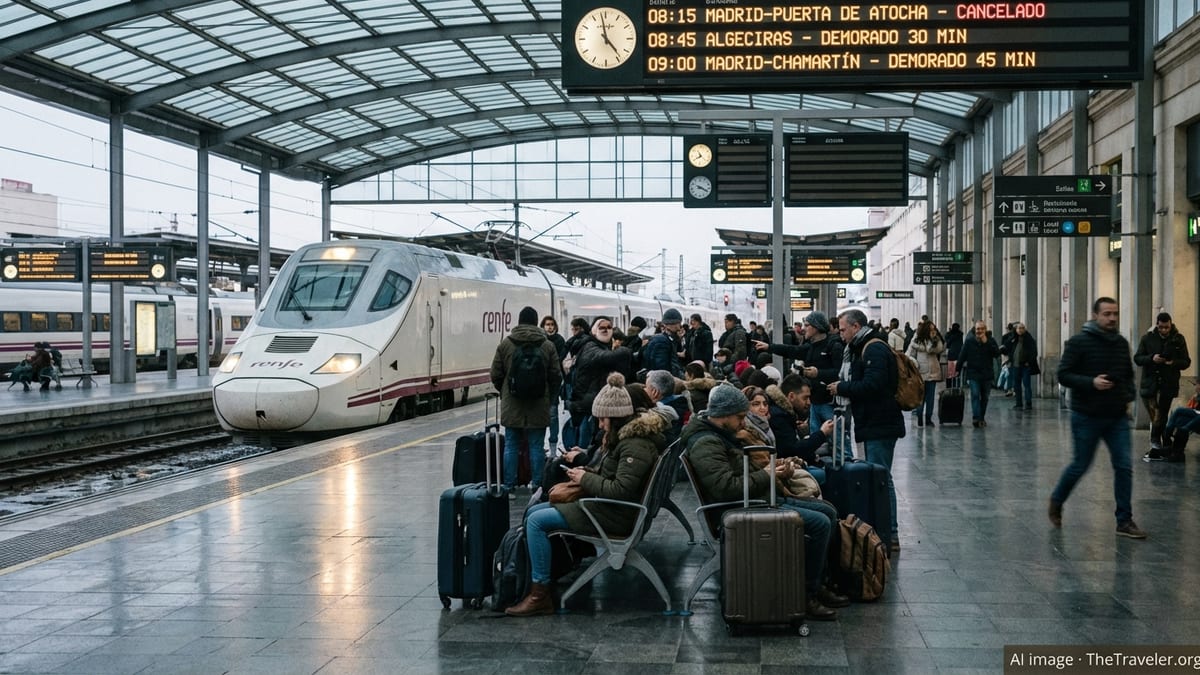
Platforms at St. Pancras and at key intermediate stations quickly filled with stranded passengers, as real-time departure boards showed long lists of cancelled services. Some long-distance travelers were diverted to other London terminals, such as King’s Cross, while others were offered bus replacements or refunds. For many commuters, journeys that would normally take under an hour extended late into the evening.
Transport analysts interviewed in broadcast coverage noted that the Midland Main Line is a strategic artery for both regional and intercity services, linking the capital with major towns and cities in the East Midlands. A prolonged closure, they suggested, could have ripple effects on weekend travel, including for leisure and tourism, given that the corridor also serves popular city-break destinations.
Investigators begin work to determine how crash happened
By Friday night, attention had begun to turn to how two modern passenger trains could collide on a heavily monitored section of mainline track. Specialist rail accident investigators were reported to be on site, working alongside police and rail engineers to secure the scene, recover data recorders and begin the complex task of reconstructing the sequence of events.
Travel and transport commentators highlighted several potential lines of inquiry, including signaling performance, train protection systems, driver workload and visibility, and railhead conditions such as low adhesion that can affect braking. At the same time, they cautioned that it would likely take weeks or months before formal findings are published, drawing on technical data, witness accounts and operational records.
Publicly available background on previous rail collisions in the United Kingdom shows that investigations often lead to substantial safety upgrades, from changes in signaling rules and driver training to the installation of additional automatic protection systems. Observers suggested that, depending on what is uncovered in Bedford, similar systemic recommendations could follow, potentially affecting operations across the national network.
Industry bodies representing drivers and other front-line rail staff have already called in public statements for a thorough and transparent investigation, while emphasizing that it is too early to attribute blame. Safety campaigners and passenger groups, many of whom have campaigned for years on issues such as signaling resilience and maintenance standards, were also reported to be scrutinizing early information emerging from the site.
Implications for travelers and rail safety confidence
The crash occurred at a time when rail operators and tourism bodies have been encouraging travelers to choose trains over cars and short-haul flights, citing environmental benefits and convenience. For many regular passengers on the Bedford corridor, the images of crumpled metal and stranded carriages cut sharply across that message, renewing long-standing anxieties about overcrowding and infrastructure strain on key commuter lines.
Travel industry commentators noted that major incidents of this scale remain rare in the context of the millions of rail journeys undertaken each week in Britain. Comparative statistics published by safety agencies show a long-term decline in serious rail accidents over recent decades, even as passenger numbers grew significantly prior to the pandemic. However, high-profile crashes can still have an outsized impact on public confidence, particularly among occasional or nervous travelers.
For visitors planning trips that rely on rail access to and from London via the East Midlands, the immediate concern was whether services would be running normally over the weekend. Operators were unable on Friday evening to provide firm guarantees, indicating instead that updates would depend on how quickly investigators could complete work at the site and whether any significant repairs to track or signaling equipment were required.
Travel advisors recommended that passengers with near-term journeys check for service updates before setting out, allow extra time for connections and consider flexible tickets where possible. They also suggested that those unfamiliar with the area familiarize themselves with alternative routes into London, including services through other mainline stations and, where available, coach links that can bypass affected stretches of rail.