


At first glance, Ruka–Kuusamo looks straightforward: fly into a small airport in northern Finland, check into a slopeside cabin, ski all day and chase the northern lights at night. In reality, this compact winter destination hides a surprising number of practical details that can make or break a first visit. From darkness and snow conditions to transport quirks, prices, and how tours actually operate on the ground, there are patterns of confusion that repeat every season. Here is what regulars and locals wish first timers knew before they land in Kuusamo.
Get the latest updates straight to your inbox!
Understanding Where Ruka–Kuusamo Actually Is
Many first time visitors arrive thinking they are headed “to Lapland.” Ruka–Kuusamo feels like Lapland with its deep snow, reindeer and aurora, but technically it sits in the region of Northern Ostrobothnia, just south of the official Lapland border. In practice this matters less for scenery than for expectations: you will still get forested fells, frozen lakes and winter activities, but you are usually closer and easier to reach than the better known resorts further north such as Levi or Saariselkä.
The area has two names that confuse newcomers. Ruka is the ski and activity village built on the side of Rukatunturi fell, while Kuusamo is the nearby town about 25 minutes’ drive away, home to the airport, larger supermarkets and services. When you book accommodation labelled “Ruka–Kuusamo,” check the exact location: a chalet listed under the region might be in Ruka Village at the foot of the lifts, or in rural Kuusamo 30 kilometres away on a lakeshore road with no public transport.
Distances are not large on the map, but winter conditions make them feel longer. A “short” 20 kilometre transfer from Kuusamo town to a lakeside cabin can take 30 to 40 minutes in heavy snow or freezing rain, and taxis must be pre-booked. Visitors who assume they can walk or grab an instant ride between Ruka and Kuusamo often discover that in minus 20 degrees, along unlit roads and forest, that simply is not realistic.
Understanding this split between Ruka and Kuusamo helps you choose where to stay. If you want ski-in/ski-out convenience and to stroll between restaurants, look for addresses around Ruka Village, Ruka Valley or the slopes of Rukatunturi. If your priority is silence, frozen lakes and perhaps summer fishing or bear-watching, cabins in the wider Kuusamo area might suit you better, provided you have a car.
Weather, Darkness and Seasonality Surprises
Travel brochures often highlight bluebird days and pastel Arctic sunsets. What many first timers underestimate is how much darkness and weather shape each day, especially from late November to early January. Around mid-December, Kuusamo gets under three hours of true daylight and a long period of twilight. A visitor who plans back-to-back outdoor tours from 9 a.m. to 6 p.m. may be surprised that part of their husky ride or snowshoe trek unfolds in near-darkness or under floodlights.
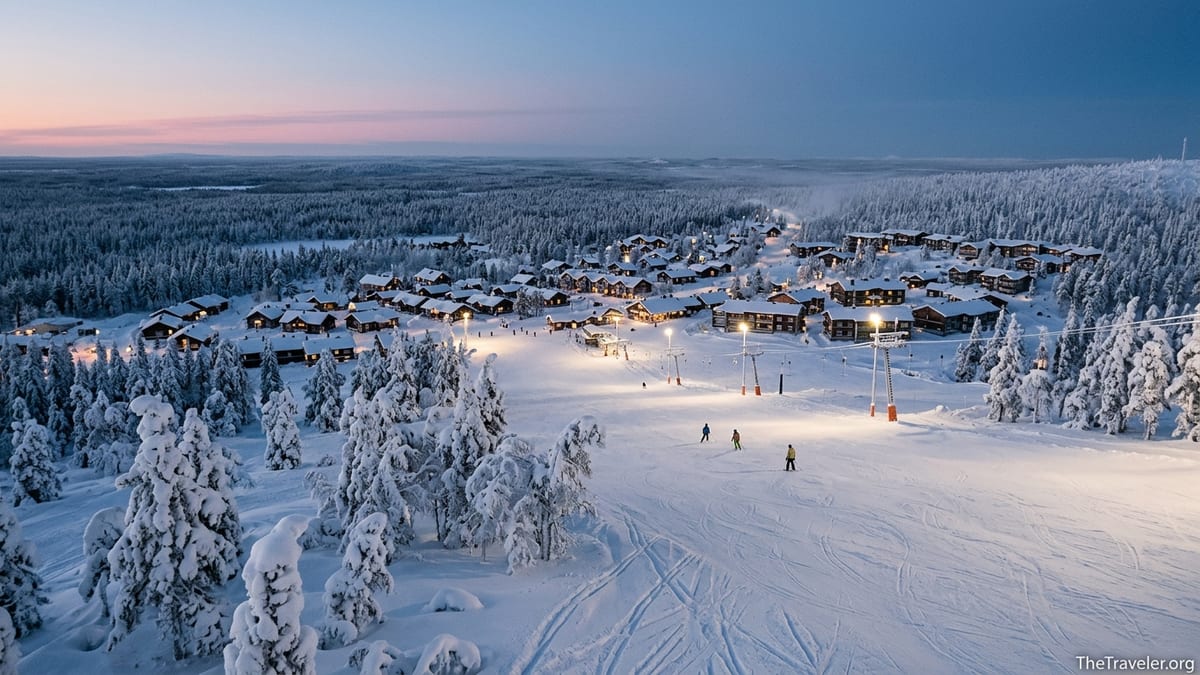
The flip side is that the polar twilight can feel magical. Skiers often find themselves on Ruka’s floodlit runs with the sky glowing deep blue at midday, and many cross-country and snowmobile routes are lit for hours after sunset. Because of this, you can still fill a day with activity, but you need to be comfortable moving outside in semi-darkness at temperatures that often sink below minus 15 degrees, occasionally below minus 25.
Another surprise is how long the winter lingers. The ski season at Ruka often starts in late October and can run into early May, thanks to snow storage and extensive snowmaking. That means conditions in early season and spring can feel very different. In November and early December, you may ski on mostly artificial snow with limited open slopes but quieter lifts and lower prices. By March and early April, the days are much longer, sunshine is stronger, and families sit on terraces in light jackets while the snowpack remains thick on the runs and trails.
Summer is an entirely different destination that many winter-only visitors never hear about. Ruka–Kuusamo turns into a hiking, rafting and wildlife hub, with trails in Oulanka National Park, the Karhunkierros hiking route and brown bear watching hides operating from roughly May to September. A first timer arriving in June expecting snow and northern lights will be surprised to find midnight sun, mosquitoes and people in trail shoes rather than snow boots. Matching your expectations to the season is crucial.
Getting There and Getting Around in Reality
On a map, Kuusamo Airport looks reassuringly close to Ruka. In practice, new arrivals often misjudge how transfers and local transport work. There is usually a scheduled or pre-booked airport bus connecting Kuusamo Airport with Ruka Village, timed to meet incoming flights. The fare is typically in the region of 15 to 20 euros per person each way, which is good value compared with taxis, but you often need to pre-register your seat online or by phone so the bus actually runs at your flight time.
Between Kuusamo town and Ruka, a SkiBus service runs multiple times a day during the main winter season, linking hotels, the centre of Kuusamo and Ruka’s main stops close to the lifts. Many first time visitors overlook this and unnecessarily book expensive private transfers for simple shopping trips. A SkiBus ticket is commonly just a few euros each way and can save you 40 to 60 euros that a taxi might charge for the same distance, especially in the evening or on holiday dates.
The bigger surprise is what does not exist. There is no rideshare culture like Uber or Lyft in the area, and regular city-style buses inside Ruka are limited. If your chalet is not on the SkiBus route or is located down a side road by a lake, you should plan as if you have no spontaneous public transport at all. This catches out visitors who arrive imagining they can book activities in different locations every day and simply “grab a taxi” across the area. In reality, taxis must be ordered in advance and may be unavailable at short notice on busy holiday weeks.
For many, renting a car at Kuusamo Airport is the most flexible option, but this too has pitfalls. Winter driving in northern Finland involves icy roads, drifting snow and very limited daylight. Rental cars come with proper winter tyres, but if you are unused to driving in snow and on packed ice, consider whether you want the stress. A good compromise is to stay in Ruka Village itself, where most restaurants, a small supermarket, ski lifts, and several activity companies are within walking distance, and use pre-arranged transfers only for arrival and departure.
Costs, Lift Passes and Hidden Budget Items
Ruka–Kuusamo can feel reasonably priced compared with large Alpine resorts, but first timers often underestimate the total cost of a winter week once lift passes, equipment hire and activities are added. A walk-up adult day lift ticket for Ruka’s ski slopes in the 2025 to 2026 season typically sits in the range of around 60 euros per day, with six-day passes priced around 185 to 195 euros. Multi-day passes are better value, but they usually have to be used on consecutive days unless you pick a special flexible product such as “3 days in 4” or “5 days in 7.”
Equipment rental for downhill skiing or snowboarding runs roughly 35 to 45 euros per adult per day for a standard set of skis or board, boots and poles, with discounts for multi-day rentals. Add in optional helmet rental and insurance and a family of four can easily spend over 150 euros per day just to be on the slopes. Cross-country ski packages, on the other hand, often cost half of that, which makes them an economical way to enjoy the 500 kilometres of trails around Ruka and Kuusamo.
Activity excursions are another major budget item that visitors sometimes treat as an afterthought. A short husky safari of 5 to 10 kilometres from a local provider can cost in the region of 120 to 170 euros per adult, while longer half-day rides reach 200 euros or more. Reindeer sleigh rides and farm visits might come in slightly cheaper per person but still add up once you multiply by a family. Snowmobile safaris, northern lights hunts, ice fishing trips and snowshoe tours each typically range between 80 and 200 euros per adult depending on duration and what is included.
Food and drink prices also surprise some first timers. A main course at a mid-range restaurant in Ruka Village commonly costs between 20 and 35 euros, and a draft beer often sits in the 8 to 10 euro range. Self-catering apartments and chalets with kitchens are popular for this reason. If you shop at the larger supermarkets in Kuusamo, prices are notably lower than in the compact convenience stores near the slopes. Many regular visitors schedule a big grocery run in Kuusamo on their transfer day to reduce the need for small, more expensive top-up shops later.
Choosing Activities Beyond the Obvious
Most first time visitors arrive with a fixed picture of what they will do: downhill ski for a few days, book a husky ride and a reindeer sleigh, then chase the northern lights. In practice, Ruka–Kuusamo offers a much broader mix of winter and summer activities, and focusing only on the “big three” can mean missing some of the most memorable experiences.
For winter visitors, Ruka’s 41 ski slopes and extensive cross-country network are just the start. There are evening snowshoe hikes into Oulanka National Park where guides lead small groups by headlamp over suspension bridges and frozen rapids, stopping to boil coffee over open fires. There are ice fishing excursions by snowmobile across frozen lakes, and sauna experiences where you warm up in a lakeside sauna before plunging into an ice hole in the ice if you are brave enough. Families may enjoy the small fell roller coaster that opened recently on Rukatunturi, operating as a fun, relatively affordable add-on between ski sessions rather than a main attraction.
In summer and early autumn, Kuusamo becomes one of Finland’s centers for wildlife watching. Local operators run evening and overnight bear watching tours in forest hides near the Russian border, starting from roughly May, where guests sit in comfortable blinds with camera hatches waiting for wild brown bears to wander into view. These trips often include snacks or a simple meal in the hide and can last four to eight hours. Photographers also come for whitewater rafting on the Kitka and Oulanka rivers and guided hikes along sections of the Karhunkierros trail, which has become one of the country’s best known long-distance routes.
Another commonly overlooked angle is that you do not have to ski at all to enjoy Ruka–Kuusamo. Some visitors spend their days on guided tours and evenings in cozy restaurants or their cabin sauna, using a one- or two-day lift ticket simply to ride the gondola for views and a short scenic walk on the summit trails. For those nervous about skiing, planning a trip explicitly around non-ski activities removes pressure and typically spreads costs more evenly across the week.
Accommodation, Self-Catering and Where People Get Caught Out
On booking sites, the range of accommodation in Ruka–Kuusamo can be confusing. There are classic Finnish log cabins, modern apartments branded as “ski chalets,” boutique hotels and holiday villages. Many first timers filter by price and photos alone, then are surprised on arrival by how self-sufficient they are expected to be. Ruka has relatively few full-service hotels compared to the Alps. Instead, you are likely to stay in an apartment with a drying cabinet for clothes, a private sauna and a small kitchen, but no daily housekeeping or hotel-style reception.
This self-catering model suits families and groups, yet it comes with practical details people miss. Cleaning is often not included in cheaper rates: you either clean the accommodation yourself before departure or pay an additional cleaning fee. Bed linen and towels may also be optional extras if you book through local cabin agencies, so check whether your rate includes them. Guests who assume hotel-style service sometimes arrive to find bare duvets and must quickly rent linen sets at extra cost.
Location within Ruka matters more than many first timers realize. Staying in or very close to Ruka Village puts you within a few minutes’ walk of the main lifts, restaurants and small supermarket, and you can easily return to your apartment for lunch. Properties near the Ruka Valley side or Saarua slopes might have ski-in/ski-out access to certain lifts but fewer dining options in walking distance in the evening, which can be inconvenient if you do not have a car and the weather is particularly cold or windy.
In Kuusamo and the wider countryside, cabins on lakes or in forest settings can be idyllic, with private saunas, fireplaces and often better chances of seeing the northern lights away from village lights. The trade-off is that you must plan food shopping, fuel and activity transfers carefully. For example, a family staying in a lakeside cabin 30 minutes from Ruka might arrange for their husky safari operator to pick them up directly, but they will pay a supplement for the extra distance. Understanding these trade-offs up front makes it easier to choose a base that matches your style and budget.
Local Realities: Northern Lights, Crowds and Culture
Many visitors arrive in Ruka–Kuusamo with one non-negotiable goal: to see the northern lights. The region does get regular aurora activity in winter, but weather and cloud cover are major variables. A common mistake is to book a single northern lights tour and treat it as a guarantee. In reality, even if the solar activity forecast looks promising, a cloud front over Kuusamo can obscure the sky all night. A more realistic approach is to build in several potential viewing nights, stay flexible with operators that allow late rescheduling when conditions are poor, and manage your expectations: you might see a faint green arc or a full-sky display, or nothing at all.
Crowds take first timers by surprise in a different way. Ruka–Kuusamo handles around a million visitors a year, and peak periods such as Christmas and New Year, Finnish school holidays in February, and Easter can feel busy, especially in Ruka Village. Lift queues remain modest compared with major Alpine resorts, but restaurants, husky farms and reindeer safaris can sell out weeks in advance. At the same time, step a few kilometres away onto a forest trail or into Oulanka National Park and you may see almost nobody, even at peak times. The area concentrates services tightly but leaves huge amounts of surrounding nature quiet.
Culturally, visitors often remark on how quietly everything operates. Finns tend to value personal space and low-key service. Restaurant staff and guides may not make big small-talk unless invited, but they are usually happy to answer questions and share local stories when asked. Tipping is not expected, although rounding up a bill or leaving a small gratuity for exceptional guiding is appreciated. Alcohol is tightly regulated compared with many visitors’ home countries: stronger drinks are sold through state-run shops in Kuusamo town, so if you are staying in Ruka Village and wish to stock a chalet bar, plan a stop in Kuusamo on the way from the airport.
Finally, many first timers underestimate how central the sauna is to daily life here. Almost every apartment and cabin has a private sauna, and taking one in the late afternoon or evening becomes a natural ritual after skiing or snowshoeing. If your accommodation lacks a sauna, several hotels and spa centres in Ruka and Kuusamo offer public saunas and small pool areas for a fee, which can be a welcome warm indoor break on the coldest days.
The Takeaway
Ruka–Kuusamo rewards visitors who look beyond postcard images and think practically about location, season, transport and costs. Understanding the difference between Ruka Village and the wider Kuusamo region, the realities of Arctic winter light, and the limited nature of local transport helps you build an itinerary that feels smooth rather than stressful. Budgeting realistically for lift passes, rentals and activities prevents unpleasant surprises when you arrive.
Most of all, this is a destination where variety is the hidden strength. Whether you come for skiing, wildlife, hiking or simply to sit by a cabin fire after a sauna, the area offers more than the standard huskies-and-reindeer package. If you plan for darkness as well as light, for self-catering as well as restaurant meals, and for nature’s unpredictability as well as its beauty, your first trip to Ruka–Kuusamo is far more likely to feel like the start of a long-term winter habit than a one-off Arctic tick box.
FAQ
Q1. Is Ruka–Kuusamo in Lapland?
Not officially. Ruka–Kuusamo lies just south of the Lapland border in Northern Ostrobothnia, but the landscape, snow conditions and activities are very similar to what people associate with Lapland.
Q2. Do I need a car, or can I rely on buses and taxis?
You can manage without a car if you stay in or next to Ruka Village and use the airport bus and SkiBus, but rural cabins and properties outside the main routes are difficult without your own vehicle, especially in winter.
Q3. How expensive is skiing in Ruka compared with the Alps?
Day lift tickets and six-day passes are generally cheaper than in major Alpine resorts, but once you add equipment hire and paid activities, a full winter week can cost a similar total amount.
Q4. When is the best time to visit for reliable snow and some daylight?
Late February to early April usually offers a good balance of thick snow cover and longer days. Earlier in winter you get more Arctic twilight and darkness, while late spring brings strong sun and softer snow.
Q5. Can I see the northern lights from Ruka Village?
Yes, it is possible, especially on clear nights, but village lights can reduce contrast. Your chances improve if you step a little outside the centre or join a guided tour that drives to darker viewpoints.
Q6. Are winter activities suitable for young children?
Many husky, reindeer and snowmobile operators offer shorter, gentler programs designed for families, but age and height limits apply, so check details before booking and be prepared to layer children warmly.
Q7. What kind of clothing do I really need in Ruka–Kuusamo in winter?
Think in layers: thermal base layers, a warm mid-layer such as fleece or wool, and a windproof, waterproof outer shell, plus insulated boots, good gloves, a hat and neck protection. Many activity companies provide extra outerwear for their tours.
Q8. Is English widely spoken?
Yes. In Ruka–Kuusamo, staff at hotels, activity companies, restaurants and shops almost always speak good English, so you can get by easily without Finnish.
Q9. How far in advance should I book activities?
For Christmas, New Year, February school holidays and Easter, it is wise to reserve popular activities like husky safaris and reindeer rides several weeks or even months in advance to secure preferred dates.
Q10. Is Ruka–Kuusamo worth visiting outside the winter season?
Absolutely. From late spring to autumn the area offers hiking in Oulanka National Park, sections of the Karhunkierros trail, rafting, fishing, bear watching and long bright evenings, with far fewer crowds than in peak winter.