


Flying into Bengaluru for meetings in Electronic City is a classic business traveler scenario: you land at Kempegowda International Airport on the northern edge of the city, but your hotel and offices are 60 to 70 kilometers away in the far south. The route cuts across some of Bengaluru’s busiest corridors, from Hebbal and the Outer Ring Road to the Silk Board and Electronic City elevated expressways, and the wrong choice in mode or timing can easily turn a two-hour journey into a three-hour ordeal. This guide breaks down the best real-world options, what they cost, and how to plan around peak traffic and heavy luggage.
Get the latest updates straight to your inbox!
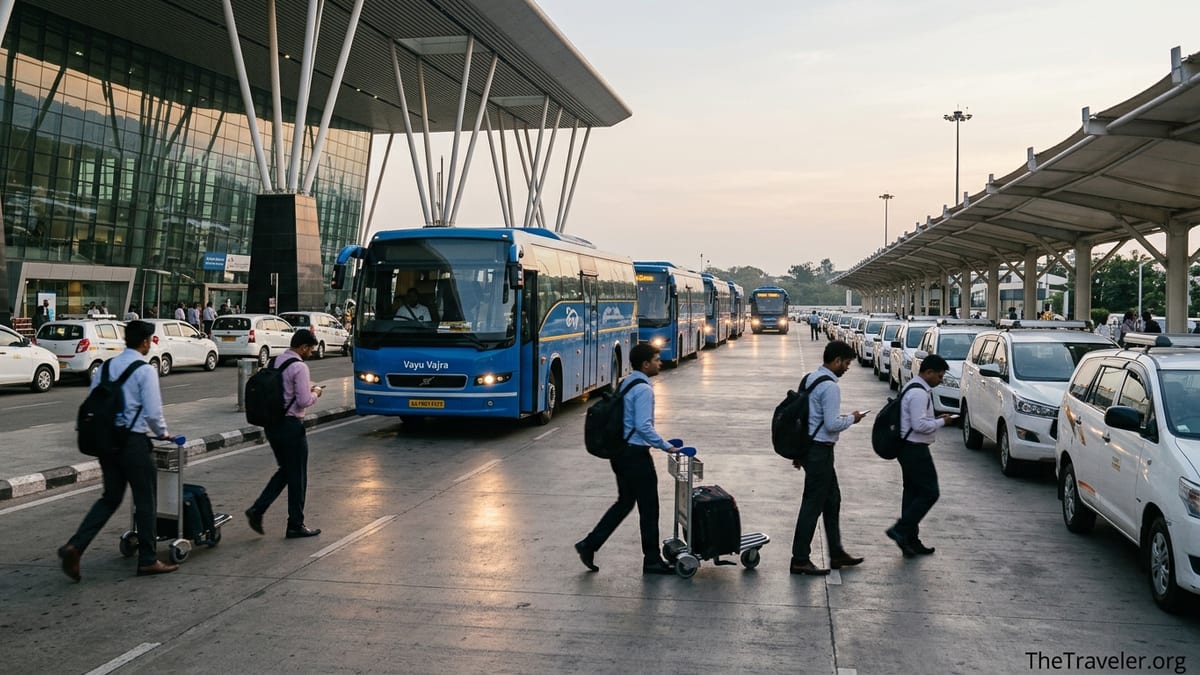
Understanding the Route: From BLR to the IT Corridor
Kempegowda International Airport (BLR) lies north of the city near Devanahalli, while Electronic City sits in the south along Hosur Road, connected by the Electronic City elevated expressway. In practical terms, you are traversing the entire length of Bengaluru. In normal, off-peak conditions, business travelers can expect around 2 hours by car or airport bus. During late nights or very early mornings, some manage the trip in about 1.5 hours, while in heavy peak traffic it can stretch close to 3 hours, especially around Central Silk Board junction and the entrances to the elevated expressway.
The typical taxi or bus route from the airport heads south along the airport expressway and Ballari Road, then uses the Outer Ring Road or the Hebbal flyovers to swing toward Silk Board and finally Electronic City. The bottlenecks are well known to locals: Hebbal junction, stretches of the Outer Ring Road, and in particular Silk Board, which is one of the most congested intersections in the city and also the gateway to the Electronic City elevated corridor. Even with new flyover works and traffic management measures, the combination of airport traffic, office commuters and intercity buses means delays are common.
Electronic City itself is spread across multiple phases and large corporate campuses. Phase I includes many of the older IT parks and companies such as Infosys and Wipro, while Phase II hosts a growing cluster of R&D centers and manufacturing units. Your exact drop-off point matters: a cab that leaves you at the wrong phase or wrong gate of a large campus can add another 15 to 20 minutes of local auto-rickshaw or shuttle rides. When booking, it helps to state the precise campus gate or nearby landmark, such as “Infosys Gate 6, Electronic City Phase I” or “Wipro Main Gate, Phase II.”
For business travelers connecting directly to meetings, this distance and complexity means it is rarely wise to schedule back-to-back appointments within an hour or two of landing. Even if your flight lands on time, baggage claim, a short queue for a cab or ticket, and a mid-morning jam at Silk Board can easily eat into your schedule. Building in a buffer of at least one extra hour from scheduled arrival to first meeting is a sensible baseline.
Airport Taxis: Easiest Door-to-Door Option
The simplest and most common choice for business travelers is a metered airport taxi directly from BLR to Electronic City. As you exit the arrivals area at Terminal 1 or Terminal 2, you will see counters for several operators such as Karnataka State Tourism Development Corporation (KSTDC) taxis and other city taxi services. There are dedicated taxi lanes outside with dispatch staff who allocate vehicles and help with luggage. This is often the best option if you are landing late at night, have multiple bags, or are unfamiliar with the city.
Fares are typically calculated using a combination of base charge, distance and sometimes time-based components. Given the roughly 65 to 70 kilometer distance to Electronic City, business travelers commonly report paying somewhere in the range of 1,800 to 2,400 rupees for a standard sedan in regular traffic conditions, with SUVs costing more. In heavy peak traffic, where the taxi spends a lot of time crawling between Hebbal and Silk Board, the meter can edge higher due to waiting-time charges. Some airport taxi counters at BLR also offer indicative fixed fares on display boards for major corridors such as “Electronic City / Hosur Road,” which can help you avoid surprises.
The key advantage of an airport taxi is reliability. Cars are usually lined up, so even during busy evening bank arrivals you are rarely waiting more than 10 to 20 minutes. Drivers are familiar with corporate campuses, hotels and apartment complexes around Electronic City, and you can specify precise gates or towers. If you are heading to a business hotel such as those clustered near Neeladri Road or the main elevated expressway exits, most drivers know them by name. For late-night arrivals, airport taxis provide a safer and simpler alternative to negotiating with independent cabs outside the airport perimeter.
Payment is generally straightforward. Many airport taxis in Bengaluru accept cash and popular digital wallets, and some will also accept card payments through handheld machines, though connectivity can occasionally be patchy. To avoid disputes, confirm at the counter whether you will be paying a metered fare or a slab-based approximate amount to Electronic City, and keep the printed slip with the vehicle number until your journey ends. For corporate travelers using expense claims, this slip doubles as a simple proof of journey.
App Cabs: Ola, Uber and Corporate Car Rentals
For those comfortable with ride-hailing, Ola and Uber both operate extensively from Bengaluru Airport to Electronic City. Once you collect your baggage, you can book a ride from inside the terminal and follow the signs to the designated app cab pick-up zones. In practice, wait times can range from 5 to 15 minutes depending on the time of day and demand, though at odd hours such as 3 or 4 a.m., cars may arrive sooner while the roads remain relatively free of congestion.
App cabs can occasionally be marginally cheaper than airport taxis, particularly during off-peak hours or when promotional fares are active. As a rough guide in 2026, a standard Ola or Uber sedan for BLR to Electronic City might display an estimated fare somewhere around 1,500 to 2,100 rupees in normal traffic, with SUVs and premium options priced higher. However, surge pricing is common at peak airport arrival waves or during rain, and this can push the fare above what you would pay a regular airport taxi. The benefit is that you see the estimate upfront and can decide whether to proceed or wait for prices to come down.
For corporate travelers, pre-arranged car rentals and chauffeur services remain popular. Bengaluru has several business-focused operators that offer airport transfers with English-speaking drivers, bottled water and in-car Wi-Fi. These services often cost more than a regular app cab but provide predictable pricing and better documentation for corporate expense systems. A monthly commuter flying in from Mumbai every week, for example, might have their firm contract with a local operator for a fixed rate for “BLR to Electronic City Phase I” with tracking and invoice consolidation.
One real-world consideration with app cabs is navigation around Silk Board and the Electronic City elevated expressway. Many experienced drivers will check live traffic on navigation apps and decide whether to climb the elevated corridor or stay on the at-grade service road if the flyover is gridlocked. Occasionally, during severe jams, they might choose to divert via alternative connectors, which can add distance but save time. For passengers, it is usually best to let the driver pick the route while keeping an eye on your own navigation app; interference rarely helps unless you are very familiar with local conditions.
Vayu Vajra Airport Buses: Cost-Effective for Solo Travelers
If you are traveling alone with manageable luggage and have a little time to spare, the Vayu Vajra airport buses operated by BMTC are a strong value choice. These are air-conditioned Volvo buses running under the KIA or KIAS series that serve major hubs across the city, including Electronic City. Services labeled KIAS-8 or KIA-8 operate between the airport and Electronic City, typically routing via key junctions such as Hebbal, K R Puram and Silk Board before continuing to Phase I and Phase II stops.
Fares are significantly lower than individual taxis. As of mid-2026, travelers report paying in the region of 300 to a little over 300 rupees for a one-way ticket from the airport to Electronic City on these buses, which represents strong value for a 60-plus kilometer air-conditioned ride. Tickets can be purchased directly from the conductor on board in cash or via local smart card options. Modern apps and third-party tools now help track Vayu Vajra buses in real time, so a traveler can land, check the next KIAS-8 departure, and decide whether to wait or opt for a cab instead.
Journey times on the Electronic City airport buses tend to be slightly longer than in a point-to-point taxi because the buses make scheduled stops to pick up and drop off passengers along the route. A real example shared by regular commuters suggests around 2 hours from Electronic City Infosys gate to the airport during early morning services, and closer to 2.5 hours when the bus hits normal weekday congestion at Silk Board and K R Puram. For an arriving traveler going from BLR down to Electronic City, that translates to a practical range of 2 to 3 hours door-to-door, depending on the timing of the bus and your final drop-off point.
From a comfort perspective, Vayu Vajra buses are geared to airport users. There is adequate luggage space near the front and under the seats, air-conditioning is usually effective, and the seating is more comfortable than standard city buses. For business travelers staying at a hotel near a well-served stop, such as close to the main Wipro or Infosys gates, the bus can be a relaxed, low-stress way to begin or end a trip, particularly outside of peak office hours. Just bear in mind the fixed route: if your office is several kilometers away from the nearest KIAS-8 stop, you might need to factor in an additional auto-rickshaw or cab ride at the Electronic City end.
Managing Peak Traffic and Choosing the Right Time
Bengaluru’s traffic patterns strongly influence the experience of traveling between the airport and Electronic City. Traditional morning peak hours run roughly from 8:30 a.m. to 11:00 a.m., with a secondary surge in the evening from about 5:30 p.m. to 8:30 p.m. These are broad bands, and traffic can remain heavy just before and after them, especially on weekdays. The Silk Board junction and the stretches leading onto the Electronic City elevated expressway are particular pinch points, where average speeds can drop dramatically in dense traffic.
For a traveler landing at BLR at 9:00 a.m. on a Tuesday aiming to reach a 12:30 p.m. meeting in Electronic City, it is prudent to assume the higher end of travel times, around 2.5 to 3 hours. The same journey starting at 11:00 p.m. or in the early hours of the morning might take closer to 1.5 hours by taxi, or under 2 hours by airport bus, because the city’s major junctions are significantly less congested. Many frequent business flyers deliberately choose late-night or red-eye flights into Bengaluru for this reason, preferring a fast, quiet drive down to Electronic City and a later start the next morning.
Weather and events can compound delays. Heavy rain is common during the monsoon months and often slows traffic around low-lying sections and flyover approaches. Occasional political rallies, protests or road work near Silk Board, BTM Layout or along Hosur Road can further reduce speeds or cause diversions. For example, an unplanned demonstration at Silk Board during the evening peak can spill congestion back along the Outer Ring Road and toward Koramangala, snaring both taxis and airport buses headed to the Electronic City expressway.
Navigation apps are widely used by both taxi and bus drivers to monitor traffic, but as a passenger, you can also keep an eye on live conditions from the moment your flight lands. Before booking your final mode, open a map app and enter “Kempegowda International Airport” to “Electronic City Phase I” or your specific office location. Comparing the estimated times for car versus public transport at that moment helps you decide whether to head straight for the app cab pick-up lane, the airport taxi counter, or the Vayu Vajra bus stand.
Luggage, Comfort and Safety Considerations
Luggage is a decisive factor for many business travelers. If you are carrying a large suitcase, a laptop bag and perhaps a sample kit or marketing materials, a private car is much more convenient. Airport taxis and app cabs can accommodate typical international baggage for one or two persons in a standard sedan, but for three or more passengers with multiple large suitcases, it is often worth booking an SUV variant or a premium taxi. Trying to squeeze four hard-shell suitcases into a compact hatchback can lead to awkward compromises and occasionally arguments with drivers about keeping the rear hatch partly open.
In contrast, Vayu Vajra buses are designed to manage multiple passengers with large bags. Near the front door there is space to place bigger suitcases, and overhead racks or under-seat room for smaller cabin bags. Still, during busy hours, particularly when multiple travelers board at the same central stops, luggage areas can become crowded. You will also need to manage your bags yourself as the bus navigates sharp turns and sudden stops in traffic. If you are recovering from a long-haul flight and prefer to rest rather than constantly monitor your luggage, a taxi may feel more secure and restful.
On safety, Bengaluru’s airport taxis and popular app cabs are generally considered reliable, with GPS tracking, driver identification and central call centers. Most business hotels in Electronic City are accustomed to late-night arrivals and can coordinate with drivers to ensure you are dropped at the correct gate and escorted inside if necessary. When traveling in the small hours, it is still sensible to share your trip details with a colleague or family member, lock doors, and avoid displaying laptops or expensive devices when stuck in very slow-moving traffic.
For solo travelers, especially women arriving late at night, pre-booked transfers through hotels or trusted car rental companies can offer extra peace of mind. Many properties in and around Electronic City will arrange airport pick-ups with known drivers for an additional fee that is comparable to, or slightly higher than, a regular airport taxi. This also reduces the risk of miscommunication about route or fare, since the journey details are fixed in advance between the hotel and the transport provider.
Should You Pre-book or Decide on Arrival?
Whether to pre-book your transfer or make a decision on arrival depends on your tolerance for uncertainty, your schedule and the time of day. For a mid-morning weekday arrival with a flexible meeting schedule, many travelers are comfortable deciding on the spot, checking the live times for the Electronic City Vayu Vajra buses and comparing app cab and taxi fares. In such cases, you can walk to the Vayu Vajra stand, see when the next KIAS-8 bus is scheduled, and choose between a low-cost bus ride or a faster, more expensive cab.
By contrast, for early morning meetings, tight connections or late-night arrivals, pre-booking tends to work better. A traveler landing at 11:30 p.m. on a Sunday with a 9 a.m. presentation in Electronic City on Monday might ask their hotel to arrange a pick-up, or book a corporate car rental in advance. This ensures that a driver waits even if the flight is delayed, and that there is no uncertainty about route or payment. It also reduces the need to stand in queues or search for buses in a half-empty terminal after a long flight.
There is also a hybrid approach that frequent visitors use. They maintain a shortlist of options: a preferred corporate car service, airport taxis as a backup, and the Vayu Vajra buses as a last-resort or cost-saving choice when schedules and luggage allow. Upon landing, they evaluate real-time conditions. If the app shows a long wait or high surge pricing for Ola or Uber, they switch to a pre-arranged car or head for the bus. If the airport bus departure is more than 45 minutes away and the Outer Ring Road looks relatively clear, they choose a taxi instead.
From a budgeting perspective, companies sending staff regularly between BLR and Electronic City often set internal guidelines. For example, they may encourage the use of Vayu Vajra buses for solo travelers on flights landing between 10 a.m. and 6 p.m. when meetings are not time-sensitive, while approving taxis or app cabs for late-night arrivals, early-morning departures or when two or more employees share the same transfer. Sharing a taxi between colleagues can be cost-effective and still preserve comfort, with the total cab fare divided between passengers.
The Takeaway
Traveling from Bengaluru Airport to Electronic City is a long cross-city haul that demands a bit of planning, particularly for business travelers on fixed schedules. Airport taxis and app cabs deliver door-to-door convenience, typically at a cost in the low thousands of rupees, and are especially well suited to those with heavy luggage or late-night arrivals. Vayu Vajra airport buses like KIAS-8 offer a comfortable, air-conditioned and significantly cheaper option, especially for solo travelers heading to well-connected stops near major campuses.
Peak traffic around Hebbal, the Outer Ring Road and Silk Board is the main wildcard, capable of extending travel times by an hour or more. Checking live traffic and bus schedules as soon as you land, and allowing generous time buffers for important meetings, will go a long way to reducing stress. When in doubt, prioritize reliability over marginal cost savings, particularly on your first trip or when you are unfamiliar with Bengaluru’s complex traffic patterns.
Above all, think of the journey from BLR to Electronic City not as a simple airport transfer, but as an integral part of your business itinerary. By choosing the right mode for your arrival time, luggage and schedule, you transform a potentially frustrating commute into a predictable, even productive, transition between flight and office. With a little foresight and flexibility, navigating this crucial tech corridor can become just another routine step in your Bengaluru work trips.
FAQ
Q1. How long does it usually take to travel from Bengaluru Airport to Electronic City?
In typical conditions, expect around 2 hours by taxi or Vayu Vajra bus. During late nights or very early mornings it can be closer to 1.5 hours, while during peak weekday traffic it may stretch toward 3 hours.
Q2. What is the approximate taxi fare from the airport to Electronic City?
For a standard sedan, many travelers pay roughly between 1,800 and 2,400 rupees for the one-way trip, depending on traffic, operator and any night or waiting-time charges.
Q3. Are Ola and Uber reliable for trips from BLR to Electronic City?
Yes, Ola and Uber operate widely on this route and are commonly used. Reliability is generally good, but fares can surge during peak hours or heavy rain, and wait times vary with demand.
Q4. Is the Vayu Vajra airport bus a good option if I have a lot of luggage?
The Vayu Vajra buses have reasonable luggage space and are designed for airport passengers, but you must handle your own bags and share space with others. For very large or multiple suitcases, a taxi or SUV may be more convenient.
Q5. Which airport bus should I look for if I am going to Electronic City?
Look for Vayu Vajra routes such as KIAS-8 or related variants serving Electronic City. These buses run between the airport and key stops near major campuses in Electronic City.
Q6. When are the worst traffic hours on the route to Electronic City?
Weekday mornings from about 8:30 a.m. to 11:00 a.m. and evenings from roughly 5:30 p.m. to 8:30 p.m. are usually the most congested, especially near Hebbal, Silk Board and the entrances to the Electronic City elevated expressway.
Q7. Should I pre-book my airport transfer or arrange it after landing?
If you have a tight schedule, late-night arrival or early meeting, pre-booking through your hotel, corporate travel desk or a trusted car service is safer. If your timing is flexible, you can compare taxis, app cabs and bus options after landing based on live conditions.
Q8. Is traveling late at night from the airport to Electronic City safe?
Many travelers regularly make this journey at night using airport taxis, app cabs or pre-arranged cars. It is generally considered safe, though it is still wise to use reputable services, share trip details with someone and go directly to your hotel or campus gate.
Q9. Can I use the airport bus if my hotel is not directly on the route?
Yes, you can get off at the nearest Electronic City stop and then take a short auto-rickshaw or local cab to your hotel. This works well if your accommodation is within a few kilometers of a major stop such as a large campus gate.
Q10. What is the best option for a solo business traveler on a budget?
For a solo traveler with moderate luggage and a flexible schedule, the Vayu Vajra KIAS-8 airport bus offers the best balance of cost and comfort. If time is critical or buses are infrequent at your arrival time, an app cab or airport taxi is worth the extra expense.