


Walk up to the Acropolis at the wrong time and you can find yourself queuing in 35°C sun behind cruise groups, squinting into harsh midday light and struggling to frame a single uncrowded shot of the Parthenon. Time it right and the same hill feels almost serene, with low golden light on the marble and space to breathe between tour groups. This guide breaks down exactly when to visit the Acropolis for fewer crowds and better photos, using real seasonal patterns, current opening hours and on-the-ground experience in Athens.
Get the latest updates straight to your inbox!
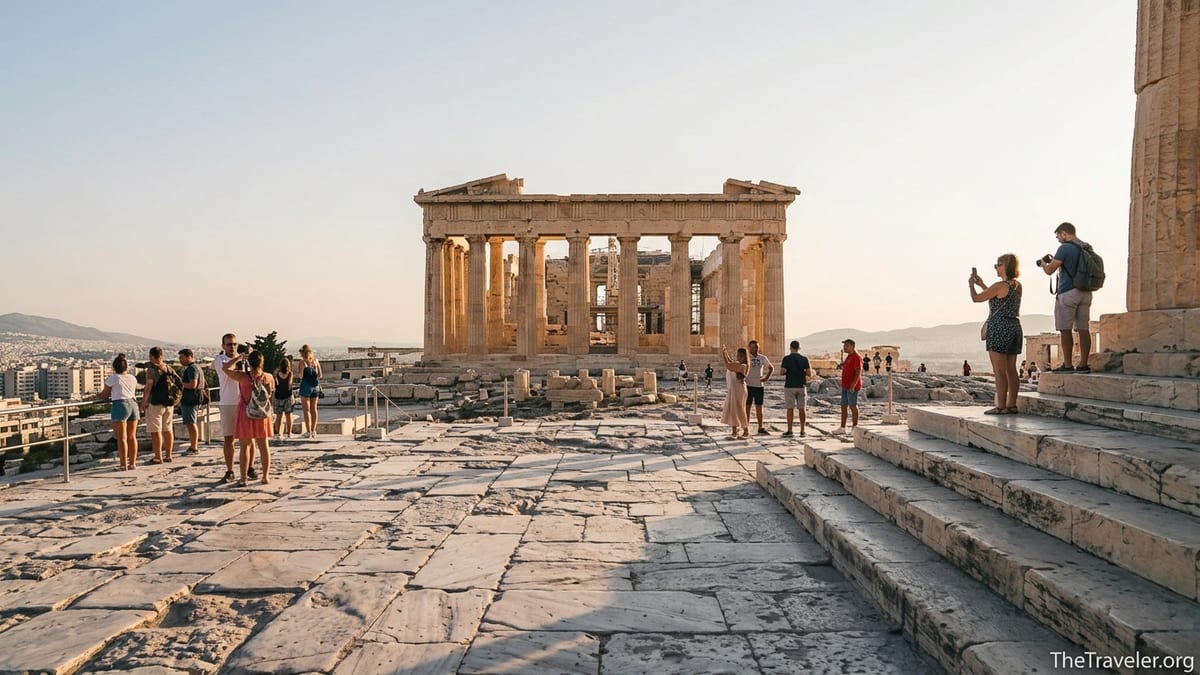
Understanding Acropolis Hours, Seasons and Light
The Acropolis follows a clear seasonal schedule that shapes everything about your visit. In the current 2026 timetable, the site opens daily at 8:00 and in peak season typically closes around 20:00, with last entry 30 minutes before closing. From April through roughly late August, you can generally count on a 12-hour window. From September and especially through October, closing time steps earlier in stages, before dropping to around 17:00 in winter. Exact times can shift slightly year to year, so it is worth checking a few weeks before you travel, but the broad pattern stays stable.
These hours matter because your choice is not simply “morning vs afternoon” but “full sun vs softer light” within what is effectively a compressed day. In July, the sun is already high and strong by 9:00, while in March or November, 9:00 can still feel soft and angled. Golden hour in Athens varies too: in mid-June the sun sets around 20:45, while in late November it can dip before 17:10. Since the Acropolis closes before or around sunset for safety, there is usually only a short window when you can enjoy warm, low light at the top before staff begin asking visitors to move toward the exit.
Think of your visit as a triangle of constraints: opening hours, heat and light. On a mild April day, you might happily walk up at 15:30, enjoy a leisurely circuit in gentle warmth and still have flattering light for photos. On a 38°C day in late July, the same time slot can be punishingly hot on the exposed rock and will coincide with some of the largest crowds of the day.
Another timing factor is the Acropolis Museum, which typically opens at 9:00 and closes later than the hill itself in summer. Many travelers pair the two on the same day. One practical pattern is to climb the hill at opening, then retreat to the cool museum for the late morning and early afternoon heat. The reverse also works in cooler months: museum first, then a late-afternoon ascent when the site is quieter.
Morning vs Late Afternoon: Which Really Has Fewer Crowds?
For years the standard advice has been to visit the Acropolis “as soon as it opens.” That is still partly true, but it is no longer the secret it once was. On a sunny May Saturday, you will find dozens of guided groups already queuing at the main Dionysiou Areopagitou entrance by 7:45, tickets in hand, ready for the 8:00 opening. Tour companies and cruise excursions have learned the same trick, so the first hour of the day can feel surprisingly busy in peak months.
From around 8:30 to 10:30 in high season, the plateau around the Parthenon often fills with flag-following tour groups. If two large cruise ships dock in Piraeus on the same morning, thousands of passengers are funneled toward central Athens on coaches and sightseeing buses. Many of those buses timetable a 9:30 or 10:00 Acropolis visit, which is why stairways to the Propylaea and the viewpoints toward Mount Lycabettus can feel clogged by mid-morning.
Late afternoon, by contrast, is when the site begins to exhale. On a typical June weekday, crowds peak between roughly 10:00 and 14:00, then slowly thin. By 16:00 or 17:00, especially on non-cruise-heavy days, you can often move more freely, find gaps at the railings and photograph details of the Erechtheion’s caryatids without a forest of selfie sticks in frame. Independent travelers who have spent the early afternoon in shaded tavernas of Plaka or inside the National Archaeological Museum often target this cooler window on purpose.
If your priority is the absolute thinnest crowds, aim for two specific slots outside high summer: the first 60 to 90 minutes after opening, or the last 60 to 90 minutes before closing, on a weekday in March, April, late October or November. In early March, for example, you might find yourself sharing the upper plateau mainly with small school groups and a handful of international visitors, with long stretches when you can easily photograph the Parthenon almost people-free. In late October’s softer light, a 16:00 entry can feel similarly relaxed, with lower temperatures and tour groups already drifting back to their buses.
Summer Heat, Cruise Crowds and When to Avoid the Hill
Summer in Athens is not just “warm.” In July and August, daytime highs in the city regularly reach around 33°C and often climb higher, while heat waves can push temperatures well into the high 30s or above 40°C. The Acropolis is essentially a treeless limestone outcrop, where sun bounces off pale stone and marble underfoot. There is little shade once you pass the entrance. On a 14:00 climb in late July, it is common to see visitors retreating to the scant strips of shadow along the outer walls, fanning themselves with ticket printouts.
During extreme heat waves in recent years, there have been temporary early afternoon closures of the Acropolis for safety reasons. Travelers with 11:30 or 12:00 tickets found their visits cut short or rescheduled to later in the day. While such closures are not everyday events, they underscore how punishing the midday period can be. If you are visiting between late June and late August, especially with children, older relatives or anyone sensitive to heat, the 11:00 to 16:00 window is best avoided entirely for being on the hill itself.
Cruise ship traffic adds another layer. Piraeus is a major Mediterranean cruise port, with multiple large vessels frequently scheduled on summer days. A 3,000-passenger ship that arrives at 7:00 and departs at 18:00 typically runs morning sightseeing buses into Athens, dropping groups near the Acropolis by 9:00. On days when two or three ships follow that pattern, you can feel their presence vividly in the crowds clustered at the main gate and around the Parthenon in late morning.
If your Athens stay overlaps peak cruise season and you cannot avoid a summer visit, build a buffer by purchasing timed tickets for 8:00 or for a late-afternoon slot around 17:00 or 18:00, depending on seasonal closing time. In practice, that might look like staying in the Plaka or Koukaki neighborhoods so you can walk to the entrance by 7:45, then leaving the site by 10:00 before cruise buses fully unload, or conversely arriving after 16:30 when many groups have already left to rejoin their ships or evening tours.
Season by Season: Spring, Summer, Autumn and Winter
Spring and autumn are, for most travelers, the sweet spots. In April and May, daytime highs in Athens typically sit in the low to mid 20s Celsius, with cool mornings that feel ideal for the 15 to 25 minutes of uphill walking from the base to the top. Wildflowers often sprout between the stones on the slopes, adding soft color to wide shots. A 9:00 entry in early May can give you comfortable temperatures, reasonable light and manageable crowds. By late May, you should treat 11:00 to 15:00 as warmer and busier, but still more tolerable than high summer.
September and the first half of October mirror spring, although early September can still feel hot, with highs above 30°C. The key advantage in autumn is the quality of afternoon light. Around the equinox, the sun is already lowering by 16:00, casting side light across the Parthenon and the distant Saronic Gulf. On a clear late-September afternoon, marble columns take on a honey-colored glow that photographers love, and the cityscape below looks softer compared to the haze of July.
Winter from November to March has a different character. Days are shorter and more changeable, with a real chance of rain and cooler winds on the hill. Typical daytime highs sit around 12 to 15°C in January and February, which makes climbing the slopes physically easier. Crowds are dramatically smaller outside Christmas and New Year. On a grey Tuesday in late January, for instance, you might share the upper plateau with a couple of school groups and clusters of independent travelers, having ample time to experiment with compositions from different corners of the site without feeling rushed.
The trade-off in winter is shorter opening hours and a lower sun that can sit directly behind the Parthenon during parts of the day, creating strong contrast in photos. If you visit in December with a 14:30 entry, you may find staff gently shepherding visitors toward the exit not long after you reach the top. Plan to arrive earlier in the day and build flexibility for quick changes if a rain shower blows in. Pack a light waterproof layer and something windproof; the plateau can feel cooler than central Syntagma even when temperatures are mild at street level.
Getting the Best Light and Angles for Photography
Photographing the Acropolis is as much about direction and timing as about your camera. Early morning light from the east illuminates the west-facing side of the Parthenon more gently, while late-afternoon light striking from the west skims across its eastern colonnade and the Erechtheion. If you want the classic postcard angle of the Parthenon with fewer people in the foreground, walk clockwise around the plateau soon after entering, so you can shoot from the north-western corner using a moderate wide-angle lens. In early morning, you can sometimes frame the structure with only a few small groups at the base.
For visitors with smartphones, consider using the ultra-wide lens sparingly at the very top, as it can exaggerate crowds and distort columns. A standard wide setting equivalent to 24–28 mm on a full-frame camera tends to give balanced results. If you are carrying a dedicated camera, a 24–70 mm zoom at around f/8 is a versatile choice. At 24 mm you can capture the full Parthenon even from closer vantage points; at 70 mm you can isolate details like the metopes or the Caryatids’ hair and drapery without including modern railings.
Golden hour is your ally but also your constraint. Because the site closes before or around sunset, you rarely get full twilight blue hour on the plateau itself. Instead, think of the final hour of opening as your de facto golden hour. In late September, for instance, a closing time around 19:00 means that from 17:30 onward, the whole rock begins to glow. Shadows lengthen across the flagstones, and the white city below shifts toward pastel. Plan to be near the northern and western viewpoints in this window to capture the Parthenon and Propylaea with rich texture, then exit toward Areopagus Hill or Filopappou Hill, where you can photograph the illuminated Acropolis from outside as the sky deepens.
Even in the middle of the day, you can still come home with strong images by leaning into contrast. Use the stark overhead sun to capture black-and-white style shots of columns and tourists’ silhouettes, or focus on abstract patterns in the marble steps. On a hazy August afternoon, for example, you might aim your camera downward at the worn grooves in the stone where centuries of feet have passed, sidestepping the washed-out sky entirely.
Practical Strategies to Minimize Queues and Stress
The easiest way to waste time at the Acropolis is to arrive ticketless in the mid-morning peak. Queues at the ticket office can easily stretch to 30 or 40 minutes in May and June, especially when a large tour bus has just emptied its passengers. Buying a dated timed entry ticket in advance lets you bypass that line and walk directly to the entrance scanners. Many travelers combine this with a multi-site pass that includes the Ancient Agora and other ruins, making it easier to spread visits over several days.
Choosing the right entrance can also help. The main southern gate on Dionysiou Areopagitou is where most coach groups arrive. The slightly less-used side entrance from the northeast, near the quieter residential streets, can sometimes be noticeably calmer in the first and last hours of the day. On an April weekday around 8:15, for example, you may encounter only a short line of independent travelers there, even while tour groups cluster at the main gate.
Time of week matters. Saturdays and Sundays in April, May, September and October see not only international visitors but also Greek families and regional tour groups. If your schedule allows, target Tuesday to Thursday for your Acropolis climb, then use weekends for indoor sights such as the Benaki Museum or the Museum of Cycladic Art. For those staying only briefly in Athens before an island ferry or cruise, build a buffer day. Instead of scheduling your Acropolis visit on the morning of your departure, do it the day before, so any weather closure or strike has less power to derail your plans.
Finally, pack for the site, not just for city strolling. The marble paving can be slippery, especially after rain, so wear shoes with decent grip rather than thin leather sandals. Bring water even in winter, as vendors are outside the entrance, not on the hill itself. In high summer, a brimmed hat and high-SPF sunscreen are almost non-negotiable. You will see many unprepared visitors buying emergency hats or knock-off umbrellas from kiosks near the Acropolis metro station after underestimating the exposure above.
Winter Visits, Free Admission Days and When to Stay Flexible
Visiting in winter can feel like insider Athens. On a clear morning in early February, with the air cool and views stretching to snow on distant mountains, the marble seems almost translucent. Crowds are thin enough that you can sit on a low wall and listen to guides explain the Panathenaic procession without being jostled. This quiet comes with trade-offs: shorter opening hours, more frequent maintenance works, and occasional closures due to strong winds or thunderstorms.
Greece also designates several free admission days for state archaeological sites, including the Acropolis, such as certain national holidays and specific dates like International Museum Day in May or European Heritage Days in late September. On these days, queues to enter can be much longer than normal, even in shoulder seasons, because both locals and visitors take advantage of the waived fee. If your Athens stay coincides with a free day and you value a calmer experience more than saving on tickets, consider visiting the Acropolis on a paying day and using the free admission window for another site that absorbs crowds better, such as the Kerameikos cemetery or the Roman Agora.
Strikes and demonstrations occasionally affect access. Public transport strikes can make it harder to reach the Acropolis from outlying neighborhoods, while cultural workers’ strikes sometimes close major sites entirely for a day. These are typically announced in Greek media and picked up by international outlets and local hotels. If you are staying in central Athens, check with your hotel front desk or host the evening before your planned visit and be prepared to switch days if needed.
Weather, too, rewards flexibility. In late November, a forecast might show alternating days of sunshine and showers. Rather than locking in your Acropolis slot for the rainiest morning, keep your schedule loose within a 2 or 3 day window and pounce on the clearest forecast. Even a thin layer of high cloud can soften light beautifully for photography while keeping temperatures mild, so do not fixate only on deep blue skies. A slightly overcast March afternoon can produce some of the most flattering images of the hill and the city below.
The Takeaway
If you remember only a few rules, make them these. In high summer, avoid the exposed stone of the Acropolis between late morning and mid-afternoon; visit at opening or in the final two hours instead. In shoulder seasons, pair your climb with the best light by targeting either the first 90 minutes of the day or a late-afternoon entry that leaves enough time before closing to explore without rushing.
Plan around real-world patterns: cruise ships that feed morning crowds, free days that swell lines, winter hours that clip your golden hour. Stay close enough to walk to the site, buy your ticket in advance and keep one eye on both the weather forecast and transport news. Do that, and the Acropolis becomes less a box to tick and more a place you truly inhabit for a few unhurried hours, watching marble shift from cold white to warm gold as the city of Athens hums below.
FAQ
Q1. Is it better to visit the Acropolis in the morning or late afternoon?
The least crowded options are usually right at opening and in the final 60 to 90 minutes before closing, with late afternoon often giving better light and cooler temperatures, especially outside high summer.
Q2. How hot does it actually get on the Acropolis in summer?
In July and August, Athens regularly reaches the low to mid 30s Celsius, and the exposed marble on the Acropolis makes midday feel even hotter, so the 11:00 to 16:00 window can be very uncomfortable.
Q3. Can I see sunset from the Acropolis itself?
The site generally closes before or around sunset for safety reasons, so you usually enjoy only the beginning of golden hour on the plateau and then watch full sunset from nearby hills such as Areopagus or Filopappou.
Q4. Are winter visits to the Acropolis worth it?
Yes, winter visits offer smaller crowds, cooler temperatures and clear views on sunny days, but opening hours are shorter and you need to be prepared for rain, wind and occasional weather-related closures.
Q5. How do cruise ships affect Acropolis crowds?
When large cruise ships dock in Piraeus, their excursion buses often arrive at the Acropolis between about 9:00 and 11:00, which can make late morning particularly busy on the plateau and at the main entrance.
Q6. What is the best month to visit for both weather and fewer crowds?
Late March to early May and late September to mid-October usually offer a balance of pleasant temperatures, softer light and more manageable visitor numbers compared with peak summer.
Q7. Does buying a timed ticket really help with queues?
Buying a timed entry ticket in advance lets you skip the main ticket office line and go straight to the entrance scanners, which can save you 20 to 40 minutes on busy spring and summer days.
Q8. Are free admission days a good time to go?
Free admission days draw large local and visitor crowds, so while you save on the ticket price, you often face longer lines and a busier site; many travelers prefer to visit on a normal paid day instead.
Q9. Can I combine the Acropolis and Acropolis Museum in one day without rushing?
Yes, a common strategy is to visit the Acropolis at opening for two to three hours, then spend the late morning and early afternoon in the air-conditioned museum when the hill is hottest and busiest.
Q10. What should I wear and bring for a comfortable visit?
Wear sturdy shoes with good grip, a hat and sunscreen in warmer months, and carry water, as well as a light jacket or rain layer in cooler seasons, since the hill is windier and more exposed than the streets below.