


American Airlines Admirals Club lounges are familiar territory for many frequent flyers, but they are not always the most flexible way to get airport lounge access. If you are not loyal to a single airline, rarely fly American, travel with different companions, or simply want more locations and easier entry options, it can make sense to look beyond an Admirals Club membership. Today there is a growing ecosystem of independent lounge networks, premium credit card lounges, and pay-per-use spaces that can give you more choice without locking you into one airline.
Get the latest updates straight to your inbox!
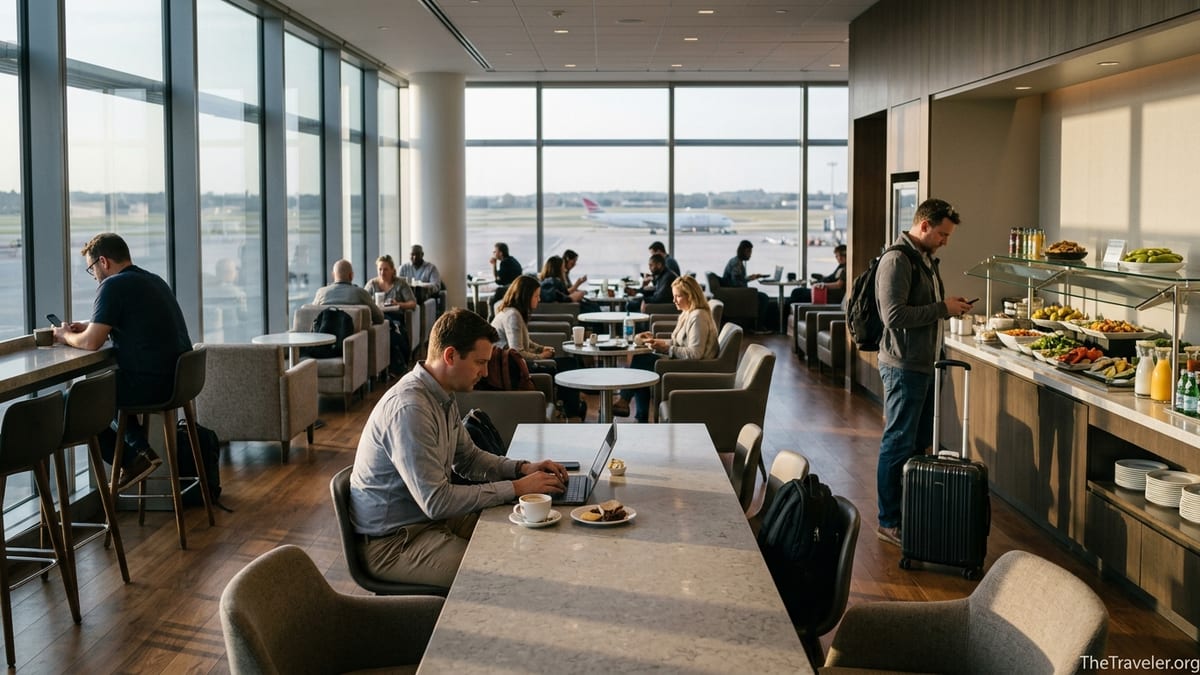
Why Look Beyond Admirals Club in 2026
Admirals Club remains a solid product, especially if you are deeply tied to American Airlines and its Oneworld partners. The lounges offer reliable Wi-Fi, workspaces, light food such as soups and snacks, and a calm place to sit compared with the main terminal. For heavy American flyers based at hubs like Dallas Fort Worth, Charlotte, or Miami, buying an annual membership can still feel like a sensible investment.
However, the model is increasingly restrictive for travelers who value flexibility. Admirals Clubs are available only where American or partners operate lounges, so if you often fly low cost carriers or mix airlines, your access drops sharply. On top of that, day passes are limited to certain locations and can run in the ballpark of what a full independent lounge would cost, without giving you any broader network benefits. If your trips start on American but return on another airline, you might find yourself with lounge access in one direction and nothing in the other.
Costs are also a factor. By the time you factor in the effective annual price of a standalone membership or the premium credit card that includes it, you may be able to redirect that same budget into a card or pass that works in hundreds of airports worldwide instead of only in American’s network. For many travelers, especially those who fly several different airlines in economy but still want to work or relax in a lounge, flexibility has become more valuable than airline branding.
In short, Admirals Club is still a good fit for a narrow profile of traveler. If you want a system that adapts to changing itineraries, mixed airlines, occasional business trips, or family holidays on different carriers, the alternatives below can give you far more options per dollar spent.
Priority Pass: The Classic Flexible Option
Priority Pass is one of the best known independent lounge networks and a natural starting point if you value flexibility. As of 2026 the program advertises access to over 1,800 lounges and other airport experiences in more than 700 airports worldwide, from major hubs like London Heathrow and Singapore Changi to secondary airports where U.S. airlines might not have their own clubs. In practical terms, that means you can often use a lounge regardless of which airline you are flying on a given trip.
The most flexible way to get Priority Pass is through a premium credit card instead of buying a membership directly. Cards such as the Chase Sapphire Reserve, Capital One Venture X, and some higher tier Citi and U.S. Bank products include a Priority Pass Select membership for the primary cardholder, often with at least one or two guests included at no additional charge. For example, a Sapphire Reserve cardholder flying an economy ticket on JetBlue from Los Angeles to New York can still access a Priority Pass lounge in the terminal before boarding, even though JetBlue does not operate its own lounges on that route.
Travelers who do not want a premium credit card can purchase Priority Pass memberships outright. The higher tiers offer unlimited visits, while cheaper entry level plans work on a pay-per-visit basis. This can make sense if you only want lounge access a few times a year and prefer to avoid annual card fees. For instance, a traveler who flies internationally twice a year might take an entry plan with discounted visit fees and still come out ahead of an Admirals Club membership that they would barely use.
There are trade offs. Individual lounges in the Priority Pass network can vary in quality, and some popular U.S. locations periodically restrict access during peak times when they are full. Still, if your main goal is to show up in almost any airport with at least a decent shot at a quiet space, Wi-Fi, and a snack, Priority Pass is one of the most flexible alternatives to relying on Admirals Clubs alone.
Premium Credit Card Lounges: Amex, Chase, and Capital One
Another way to step outside the Admirals Club ecosystem is to lean on the new generation of premium credit card lounges. American Express Centurion Lounges, Chase Sapphire Lounges by The Club, and Capital One Lounges are all airline agnostic. You can usually access them regardless of the airline printed on your boarding pass, as long as you hold the right card and meet each lounge’s entry rules.
Consider a traveler who carries the American Express Platinum Card. On a trip from Phoenix to New York on Delta, they can use the Centurion Lounge in Phoenix before departure, even if they are flying in economy. On another trip from Miami to Madrid on Iberia, the same card may provide access to a Centurion Lounge or a partner premium lounge, in addition to Priority Pass and Plaza Premium network options that come with the card. This kind of flexibility can far exceed what a single airline’s lounges can offer, particularly for international trips.
Chase is building its Sapphire Lounges by The Club in key hubs such as Boston, New York JFK, and Hong Kong. Access is easiest for Chase Sapphire Reserve cardholders, who generally receive complimentary entry and guest privileges. A traveler booking a cheap economy ticket on Air France out of JFK, for example, can still relax in the Sapphire Lounge if they hold the Reserve card, even though Air France has no relationship with Chase as an airline partner.
Capital One Lounges are a smaller network but have quickly gained a reputation for strong food, well designed seating, and extras such as quiet rooms and shower suites. Locations in Dallas Fort Worth, Denver, Las Vegas, Washington Dulles, and two dining focused Capital One Landing spaces in New York and Washington give U.S. based travelers several high quality options. Access is best with the Capital One Venture X card, which provides complimentary visits for the primary cardholder and then charges a fee per guest. For a family that flies different airlines during the year, using a Venture X for airline agnostic lounge access can be more flexible than paying for an Admirals Club that only helps when they happen to fly American.
Independent Pay-per-use Lounges and Day Passes
If you want flexibility without committing to a premium card or a network membership, independent pay-per-use lounges at many airports can be a straightforward alternative to Admirals Clubs. Brands like Plaza Premium, Aspire Lounges, No1 Lounges, and The Club operate spaces that any traveler can access for a fee, often between what an Admirals Club day pass and a premium card lounge would cost.
In real terms, this might look like booking a Plaza Premium Lounge at London Heathrow for a three hour window before an overnight flight, even if you are flying in basic economy on a low cost carrier. Many of these lounges include self service hot meals, beer and wine, and showers. For a once or twice a year international traveler, simply paying for access on the days that matter can be far cheaper and more flexible than carrying an annual Admirals Club membership that will sit unused most of the year.
In the United States, third party operators such as The Club and Escape Lounges often appear in terminals that lack a traditional airline club, which is exactly where an Admirals Club membership would do you no good. For example, a traveler flying Alaska Airlines out of Cincinnati or Spirit Airlines out of Sacramento can book a pay per use lounge in the terminal and enjoy similar comforts without being tied to any specific airline. These lounges may also participate in Priority Pass or bank card programs, but they regularly sell day passes at the door or through online booking platforms.
The main limitation is availability. Not every airport has an independent lounge, and some of the smallest regional airports still lack any lounge option at all. Nevertheless, for travelers who value the ability to pay only when they need it, and to access a lounge even when they are not flying a legacy carrier, independent pay per use lounges can be among the most flexible Admirals Club alternatives.
On-demand Lounge and Workspace Brands
Beyond traditional lounges, a newer wave of on demand concepts has emerged that can offer even greater flexibility. These brands focus on quiet workspaces, micro stays, and short rest breaks, which can be ideal if your priority is productivity rather than a buffet and bar. They typically sell access by the hour, sometimes in compact private rooms with desks and daybeds.
Examples include airport workspace concepts that allow travelers to reserve a private office or soundproof pod for a few hours between flights. At some major hubs in Europe and Asia, sleeping pod providers rent compact cabins with beds, showers, and charging ports that can be booked in short blocks, often starting at two or three hours. While these brands are not always marketed as lounges, they fulfill many of the same needs as an Admirals Club, but with a different focus.
For instance, a consultant on a tight deadline might choose a quiet paid work pod in the terminal where they can jump on confidential video calls, rather than sit in a busy airline lounge with limited privacy. A parent traveling with a baby on a long layover might reserve a private cabin with a door where the child can nap. In both cases, the traveler pays only for the exact time they need, and the solution works regardless of airline, ticket class, or loyalty status.
These services do not completely replace a full service lounge, and they are not yet present in every airport. Still, as part of a flexible strategy they can complement other options like Priority Pass and premium credit card lounges. When you build your travel routine around different types of spaces instead of a single airline program, you can pick the right tool for each trip.
Using the Right Credit Cards to Unlock Flexibility
Many of the most flexible alternatives to Admirals Club become accessible through the right mix of credit cards. The key is to choose cards that provide broad lounge coverage across networks rather than tying you closely to one airline. In practice, this often means pairing one strong premium card with a secondary card that fills in gaps for your travel style.
A common combination for U.S. travelers is a premium travel rewards card like the Chase Sapphire Reserve or Capital One Venture X along with a no fee or low fee airline card for checked bag benefits. For example, a traveler might carry a basic American Airlines card to get a free checked bag when they do fly American, but rely on a Sapphire Reserve for lounge access. That Reserve card can unlock Priority Pass lounges around the world and Sapphire Lounges in select hubs, regardless of the airline printed on the day’s boarding pass.
Another approach is to lean on the American Express Platinum Card for its mixture of Centurion Lounge entry and global lounge partnerships, while keeping your actual flying flexible across different carriers. A traveler might use Amex Platinum to access a Centurion Lounge in Dallas before flying Southwest, then use the same card’s Priority Pass membership on a separate trip through Frankfurt when flying Lufthansa economy. In each case, the card’s lounge benefits follow the traveler, not the airline.
When comparing card options it is worth looking closely at guest policies, authorized user rules, and any caps on annual visits. For instance, some premium cards now limit the number of complimentary guests or require a fee once you exceed a certain number of visits per year. If you often travel with a partner or children, a card that seems generous on paper might become less attractive once you factor in guest charges on every trip. Reading the fine print and matching card policies to your typical travel pattern is essential if your goal is true flexibility.
The Takeaway
For travelers who fly American Airlines frequently, an Admirals Club membership or an eligible co branded credit card can still make sense. Yet for many modern travelers whose itineraries span different airlines, destinations, and ticket classes, tying lounge access to a single carrier looks less appealing in 2026 than it did a decade ago.
Independent networks like Priority Pass, premium bank operated lounges from American Express, Chase, and Capital One, and expanding pay per use lounges give you tools to build a more flexible strategy. By focusing on airline agnostic options and choosing credit cards that unlock multiple networks rather than one airline’s club, you can enjoy lounges on more of your trips, not just the ones that happen to involve American Airlines.
In real world terms, that might mean using a Priority Pass lounge during a layover in Mexico City on a low cost carrier, a Sapphire Lounge before a transatlantic flight from New York, and a pay per use independent lounge on a once a year family holiday that starts from a smaller regional airport. None of these options require you to hold an Admirals Club membership, yet together they can give you more total comfort and flexibility for the same or even lower annual cost.
The best Admirals Club alternative is not a single program but a toolkit. Combining one or two well chosen credit cards with on demand lounge and workspace options lets you adapt to each trip, each airline, and each airport. Start by mapping where you actually travel during a typical year, then choose the mix of networks and cards that covers those routes. With a bit of planning, your lounge access can become as flexible as your travel plans.
FAQ
Q1. Is Priority Pass a better value than an Admirals Club membership?
Priority Pass can be a better value if you fly multiple airlines or travel internationally to airports where American does not operate lounges. Admirals Club may win on value only if you fly American or Oneworld partners from their hubs very frequently and rarely use other carriers.
Q2. Which credit card gives the most flexible lounge access overall?
No single card is perfect, but cards like the Chase Sapphire Reserve, Capital One Venture X, and American Express Platinum are strong options because their lounge benefits are airline agnostic and include large networks such as Priority Pass alongside proprietary lounges.
Q3. Can I access lounges when flying low cost airlines like Spirit or Frontier?
Yes, if you rely on independent networks and credit card lounges instead of airline clubs. With Priority Pass or a premium card lounge benefit you can often use a lounge even when your ticket is on a low cost carrier, as long as the lounge and airline share a terminal.
Q4. Are pay-per-use lounges worth it for occasional travelers?
They can be very good value if you only want lounge access a few times a year. Paying a one time fee at an independent lounge in a key airport can cost less over a year than buying an Admirals Club membership you barely use.
Q5. Do premium credit card lounges allow guests for free?
Guest policies vary. Some cards include at least one complimentary guest, while others charge a fee per guest or require a high annual spend to unlock free guest access. Always check the current terms before you rely on bringing companions at no cost.
Q6. Can I use American Express Centurion Lounges if I am not flying American Airlines?
Yes. Centurion Lounges are airline agnostic, so access is based on holding an eligible American Express card and a same day boarding pass, not on flying a specific carrier. You can often use them before flights on Delta, United, or low cost airlines when available in the same terminal.
Q7. How do independent work pods and sleep cabins compare to traditional lounges?
They usually emphasize privacy and quiet over food and social space. You pay by the hour for a private room or pod, which can be better for phone calls, focused work, or rest, but they may not include complimentary meals or drinks like a full service lounge.
Q8. Is it realistic to rely only on Priority Pass for lounge access?
Many travelers do exactly that, especially if they visit a wide range of airports. However, some U.S. airports have limited or crowded Priority Pass options, so pairing it with at least one premium card lounge network can smooth out gaps and peak time issues.
Q9. What if my home airport has an Admirals Club but no independent lounges?
In that case, an Admirals Club membership or an eligible American co branded card might still be worthwhile. For flexibility elsewhere, you can combine that with a separate card that offers Priority Pass or other airline agnostic lounge access for trips through different airports.
Q10. How should I choose between an Admirals Club membership and a premium travel credit card?
Start by listing your most common routes, airlines, and airports. If the majority of your trips start and end in American hubs and you rarely fly anyone else, Admirals Club can be efficient. If your travel is mixed across several airlines or includes many international destinations, a premium travel card with broad lounge access will usually provide more flexibility and long term value.