


Delayed flights have become a frustratingly common feature of modern air travel, and companies like DelayFix exist to help passengers turn disruption into compensation. But DelayFix is just one option in a crowded marketplace. Whether you want lower fees, broader legal coverage, or simply to keep the full payout by claiming directly with the airline, it is worth comparing the best alternatives before you click “submit claim.”
Get the latest updates straight to your inbox!
Understanding When You Can Claim for a Delayed Flight
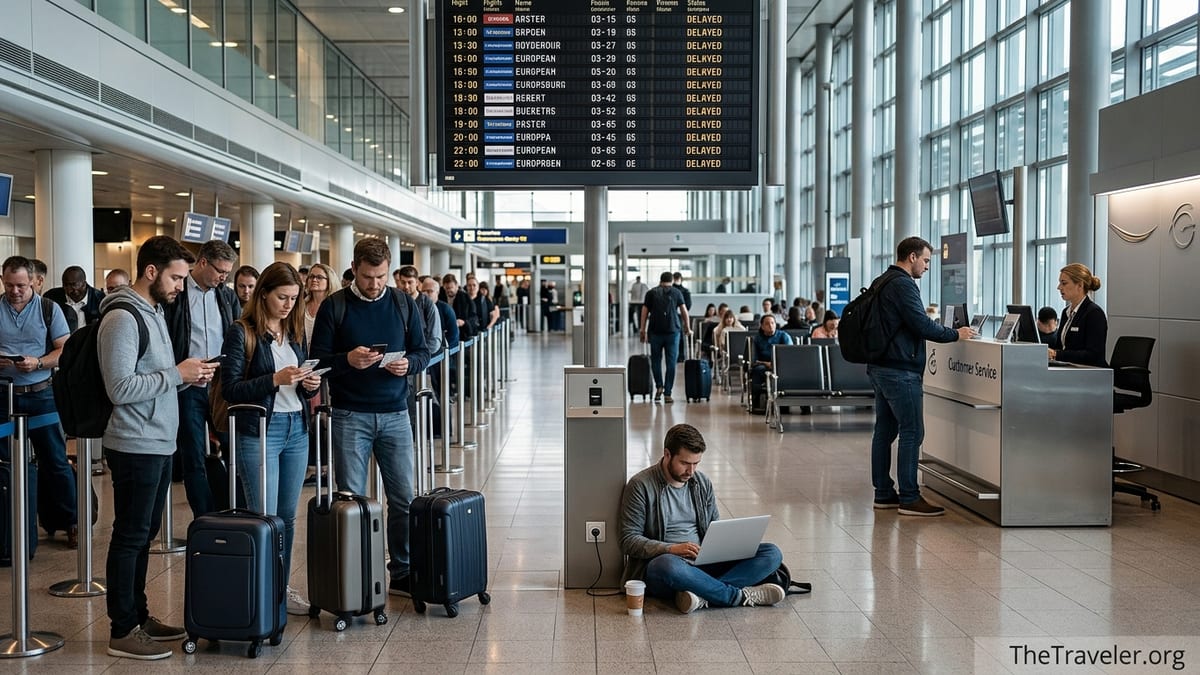
Before choosing an alternative to DelayFix, you need to know whether you are actually entitled to money for your delay. In Europe, the key rule is EU Regulation 261/2004 and its UK twin, often called UK261. Under these rules, passengers on eligible flights whose arrival is delayed by at least about three hours due to reasons within the airline’s control can typically claim fixed cash compensation, usually in the range of 250 to 600 euros depending on distance and route. For instance, a traveler flying from Paris to New York on a European airline who arrives more than three hours late because of a technical fault could be entitled to roughly 600 euros in compensation, in addition to meals or hotel vouchers that may already have been provided.
Outside Europe, the landscape is very different. In the United States, there is no general federal rule that obliges airlines to pay cash after delays, although recent Department of Transportation rules have improved refund rights for long delays and clarified when passengers can get money back instead of a voucher. Canada has its own regime, and some countries such as Brazil or Turkey apply their own passenger rights codes. Many of the large claims companies that compete with DelayFix specialize in EU261 and UK261 cases and may not pursue compensation that depends purely on airline goodwill or local consumer law.
Another key distinction is between compensation and a refund. If your flight is significantly delayed or canceled and you choose not to travel, you may be entitled to a refund of the unused ticket under both airline policies and, in many cases, US and EU rules. That is separate from the lump-sum compensation EU261 offers for long delays on qualifying routes. Good alternatives to DelayFix will clearly explain what type of claim they can pursue for you and when the law simply does not provide for cash compensation at all.
Finally, airlines often argue that “extraordinary circumstances” like severe weather, air traffic control strikes, bird strikes, or security threats remove their obligation to pay compensation under EU261 and similar regulations. In practice, there is a large gray area. For example, a staff shortage caused by the carrier’s own scheduling is usually considered within its control, while a sudden closure of airspace is not. Top-tier claims companies and specialized aviation lawyers can sometimes challenge an airline’s narrative more effectively than an individual traveler who has never read a court judgment on EU261.
Claiming Directly With the Airline: The Zero-Fee Alternative
The most obvious alternative to any claims company, including DelayFix, is to handle the process yourself. Every major airline that operates in Europe has an online form for EU261 and UK261 claims in its customer service section. In a typical case, you fill in your booking reference, flight details, and a short explanation of the disruption, then upload boarding passes or confirmation emails. Some carriers respond within a couple of weeks; others may take two or three months and sometimes require follow-up.
A practical example illustrates how this works. Imagine your Madrid to Berlin flight operated by a European carrier arrives four and a half hours late because of a technical defect identified after boarding. You search for “EU261 claim” on the airline’s site, submit your details, and reference EU261 compensation for a delay over three hours on a route over 1,500 kilometers. If you are entitled to about 400 euros, the airline might transfer it directly to your bank account or card once the claim is accepted. By doing this yourself, you keep the full 400 euros instead of paying a commission of 20 to 35 percent, which is typical among commercial claims firms.
The drawback is time and persistence. Many travelers report that first responses from airlines are vague or that claims are rejected on the basis of “extraordinary circumstances” without much detail. In such cases, you may need to write back, ask for the specific reason, and possibly escalate to a national enforcement body, such as the civil aviation authority in the country where the incident occurred. This can involve filling in another form, attaching correspondence, and waiting several more months. For people who fly only occasionally, the learning curve and delay can feel disproportionate to the compensation involved.
Still, for straightforward cases where the airline is responsive, the do-it-yourself route is powerful. It is especially well suited to organized travelers comfortable saving documents, quoting the regulation, and sending one or two firm but polite follow-up messages. For short-haul delays where the compensation is around 250 euros, keeping the entire amount instead of paying 60 to 90 euros in fees to a claims company is a compelling reason to at least try the airline first.
Major Global Claims Companies Competing With DelayFix
If you prefer a professional to handle everything in exchange for a cut of your payout, several large international firms are recognized as alternatives to DelayFix. Names that come up repeatedly in traveler discussions include AirHelp, Flightright, Skycop, AirAdvisor, and Myflyright. These companies are legal-tech platforms that use automated checks to see if your flight is eligible under EU261, UK261, or related rules, then pursue compensation from the airline on a no-win, no-fee basis. Many of them claim very high success rates for the cases they accept, in part because they have in-house lawyers and experience with court decisions across different European countries.
AirHelp, for example, positions itself as a one-stop shop for EU261, UK261, and other international regulations. A typical customer uploads a boarding pass or confirmation email, and the platform instantly assesses eligibility. If AirHelp believes there is a valid case, it will submit the claim and, where needed, escalate to legal proceedings. In return, AirHelp charges a success fee that can be around a quarter to a third of the compensation; exact percentages can depend on the jurisdiction, type of claim, and whether court action is required. Some travelers also opt for a subscription product that bundles claim handling with fixed payouts for disruptions.
Flightright is another major player that has focused heavily on legal enforcement in German and European courts. It often markets a very high win rate for accepted cases and is known for taking airlines to court when they repeatedly deny claims. A passenger whose Frankfurt to Barcelona flight was delayed five hours, for instance, could assign the claim to Flightright, which would then stand in the passenger’s shoes and pursue compensation directly. If the case is successful and yields roughly 250 euros, Flightright keeps an agreed share and transfers the balance, usually around 150 to 190 euros, to the traveler.
Skycop, AirAdvisor, and Myflyright operate on similar no-win, no-fee models and focus primarily on European routes, though they may also assist when EU261 applies to flights involving non-European carriers or third countries. These companies are especially attractive to travelers who do not want to engage in legal correspondence with an airline, are unsure about eligibility, or have already been rejected once and now want professionals to challenge the decision. The trade-off is that you will receive less than the full statutory amount after fees, though many passengers consider that a fair price for avoiding months of effort.
Regional and Niche Alternatives: Local Expertise Matters
Beyond the big global brands, there are regional claims services that function as targeted alternatives to DelayFix. In markets where DelayFix is active, such as Central and Eastern Europe, similar services have emerged that focus on specific languages and local courts. These smaller players may have deep knowledge of how certain airlines behave when sued in particular jurisdictions, which can sometimes lead to faster settlements or better outcomes for local passengers.
For example, a Polish traveler flying from Warsaw to Lisbon with a European airline who experiences a four-hour delay might find both an international company like AirHelp and a Polish-language claims service ready to take the case. The local firm might offer customer support entirely in Polish, handle communications with domestic enforcement bodies, and be more familiar with national case law. For a passenger uncomfortable communicating in English or German, that language advantage can be decisive, even if the fee structure is similar to that of the big global providers.
There are also niche firms that focus on business travelers or high-value long-haul itineraries. A law practice specializing in aviation and consumer rights might handle cases where the legal situation is complex, for example when a single reservation covers multiple airlines or when the disruption touches several jurisdictions. In some of these cases, rather than a fixed success fee, the lawyer might work on a traditional hourly basis or a custom arrangement negotiated with the client. This can make sense for corporations seeking to recover large amounts over many tickets, but it is usually not cost effective for a single economy-class passenger trying to claim 250 euros for a short-haul delay.
Finally, some travel insurance products include claim assistance as part of their service. A premium credit card or standalone policy may offer to help you file a claim against the airline, cover certain out-of-pocket expenses, or even pay a flat amount for a delay beyond a set number of hours. In this model, the “alternative” to DelayFix is embedded in an existing relationship you already pay for, like your card’s travel benefits center. The compensation may be lower than EU261 amounts, but it can be faster and more predictable, which appeals to frequent travelers who care more about certainty than squeezing out every last euro.
Costs, Timelines, and Payout Options Compared
When evaluating DelayFix against its alternatives, three practical questions dominate: how much will it cost, how long will it take, and how will you receive the money. Most claims companies, including the major competitors, do not charge anything upfront but instead take a percentage of any successful compensation. While exact numbers can change as companies adjust their models, it is common to see total fees between roughly 20 and 35 percent for standard EU261 claims, rising if the case requires formal legal action or court representation. In contrast, claiming directly with the airline has no fee, though you may invest hours into emails and online forms.
Timelines vary widely. In routine cases where the airline readily accepts responsibility, a do-it-yourself claim may result in payment within four to eight weeks. The same case handled by a large provider like AirHelp or Flightright could take a similar amount of time, since both use digital workflows and established contacts with airlines. The difference becomes clear when the airline resists. A claims company with in-house lawyers may quickly escalate to a demand letter or legal filing, but court proceedings can stretch the timeline to many months or even over a year. This is why some travelers treat claims firms as a “last resort” if a direct claim fails.
Payout options are another point of comparison. Airlines typically offer bank transfers, card credits, or occasionally checks, while claims companies will pay your share to a bank account, card, or digital wallet after deducting their commission. Some also provide an option to sell your claim for an immediate but reduced payout. For example, instead of waiting an uncertain nine months for a contested 600-euro claim to resolve, you might accept an offer of 350 to 400 euros within a few days, with the company taking on the risk of recovering the full amount later. Travelers who need cash quickly after a disruption often find this appealing.
Real-world experiences show that the “best” alternative depends on your priorities. A detail-oriented traveler delayed five hours on a London to Rome flight might take an evening to submit a carefully worded EU261 claim directly and receive the full statutory amount after a few weeks. Another passenger on the same flight, juggling work and family responsibilities, may upload the boarding pass to a claims app during the taxi ride home and be content to receive, say, 420 euros out of a 600-euro entitlement once the company wins the case. Both passengers made rational choices based on their tolerance for hassle and delay.
Strategic Tips for Choosing the Right Alternative
Choosing the best alternative to DelayFix is less about finding a single “top” company and more about matching the tool to your situation. A helpful approach is to start with a quick self-assessment. Ask yourself how complex the itinerary is, whether the airline is known for cooperation, how comfortable you are dealing with regulations, and how much time you are willing to invest. A simple point-to-point flight with an EU carrier departing from the EU is a strong candidate for a do-it-yourself claim. A multi-stop ticket involving different airlines and jurisdictions may justify professional help from a specialist.
It is also sensible to run a no-obligation eligibility check on one or two major claims platforms before deciding. Most competitors to DelayFix allow you to enter your flight number and date without committing. The system will estimate whether you have a valid claim and the approximate compensation level. You can then compare the projected fee and expected payout with what you would get if you claimed directly. If the difference is modest and you value convenience highly, handing the case over can be worthwhile. If the potential fee would reduce your compensation significantly, it might motivate you to try the airline yourself first.
Another strategic tip is to document everything from the moment your flight starts to go wrong. Take screenshots of delay announcements in the airline app, photograph departure boards, keep meal and hotel vouchers, and note any explanations given by staff. Whether you later choose to use DelayFix, a rival like AirHelp or Flightright, or go the DIY route, this evidence can be critical in disputes over whether the delay was within the airline’s control. A compensation company is only as strong as the documentation you provide; the same is true if you appear before a small claims court or national enforcement body.
Finally, be realistic about what the law can deliver. Many travelers assume that every frustrating delay must lead to a cash payout, but that is not true. A two-hour weather-related delay on a domestic US flight will not generate EU261 compensation, and even in Europe, truly extraordinary circumstances like airport closures or security incidents can legitimately remove the airline’s cash obligation. A reputable alternative to DelayFix will tell you when your chances are low instead of giving false hope. In some cases, it may direct you toward a complaint to the regulator, a request for goodwill miles or vouchers, or a claim under your travel insurance instead.
The Takeaway
For delayed flight claims, DelayFix is just one of many tools available to travelers. Your least expensive option is almost always to claim directly with the airline under EU261, UK261, or local rules, accepting that you may need to push back against rejections and wait weeks or months for a final answer. This route lets you keep every euro you are entitled to, which can be meaningful on long-haul flights where statutory compensation reaches the upper end of the scale.
If you prefer to offload the hassle, large global platforms such as AirHelp, Flightright, Skycop, AirAdvisor, and Myflyright represent well-established alternatives to DelayFix. They specialize in passenger rights, know the legal landscape, and operate on a no-win, no-fee basis. In exchange for a percentage of your payout, they take on correspondence, legal escalation, and the uncertainty that comes with fighting a reluctant airline.
Regional firms, niche legal specialists, and even your travel insurance or credit card benefits can also play a role, especially in markets or languages where local knowledge matters. The right choice will depend on your appetite for paperwork, the size of the claim, and how quickly you need the money. By understanding when the law is on your side and what each type of service actually does, you can make a calm, informed decision long after the stress of the delay has faded.
FAQ
Q1. Is it better to claim flight delay compensation myself or use a company like AirHelp or Flightright?
It depends on your priorities. Claiming yourself usually means keeping 100 percent of the compensation but investing time and effort. Using a company such as AirHelp, Flightright, Skycop, or another DelayFix alternative saves time and may improve your chances in complex cases, but you give up a share of the payout as a success fee.
Q2. How much do flight compensation companies typically charge compared with DelayFix?
Most major claims firms, including common alternatives to DelayFix, work on a no-win, no-fee basis and take roughly 20 to 35 percent of the compensation, sometimes more if court action is required. Exact percentages vary by company, jurisdiction, and case complexity, so it is worth checking the current price list before signing.
Q3. Can I use DelayFix alternatives for flights outside Europe, such as in the United States?
Some companies focus almost entirely on EU261 and UK261 cases, while others also pursue claims under the Montreal Convention or local passenger rights rules. For US domestic flights there is generally no automatic cash compensation for delays, so even the best alternatives to DelayFix may only help with refunds or specific cases where foreign regulations apply to your itinerary.
Q4. How long does it usually take to get paid when using an alternative to DelayFix?
In straightforward cases where the airline does not contest liability, payment can arrive within several weeks to a few months. If the airline resists and the case goes to court or a national enforcement body, timelines can extend to many months or even over a year, regardless of whether you use DelayFix, a rival such as AirHelp or Flightright, or a lawyer.
Q5. What information do I need to provide to a claims company like AirHelp or Skycop?
You generally need your full name, contact details, booking reference, flight number, travel dates, and a short description of the disruption. Many platforms also request boarding passes, confirmation emails, receipts for expenses, and any written explanation from the airline about the cause of the delay or cancellation.
Q6. Can I switch to a DelayFix alternative after the airline has already rejected my claim?
Yes, in many cases you can. Several major providers allow you to submit previously rejected claims so they can reassess eligibility and decide whether to take legal action or escalate to regulators. You will usually need to upload the airline’s rejection letter and any earlier correspondence to give them a complete picture.
Q7. Are regional or local claims firms as reliable as big names like AirHelp or Flightright?
Some regional firms offer excellent service and strong local expertise, especially when dealing with national courts and language-specific procedures. Reliability varies by company, so it is wise to read recent reviews, compare fee structures, and ensure they clearly explain what happens if the claim fails and how they handle your data and money.
Q8. Will using a claims company hurt my relationship with the airline or my frequent flyer status?
In most cases, no. Airlines treat compensation claims as a legal or customer service matter separate from loyalty programs. While a carrier may not enjoy being taken to court, there is no widespread evidence that simply asserting your rights through DelayFix or an alternative will automatically harm your status, miles, or upgrade chances.
Q9. What if I have travel insurance or a premium credit card that already covers delays?
If you hold travel insurance or a premium card, check the benefits guide. Many policies pay a fixed amount per long delay or reimburse expenses like meals and hotels. This can complement, not replace, EU261 or similar compensation. You may be able to claim from both the insurer and the airline, provided you do not double-claim the same specific loss.
Q10. How can I avoid paying unnecessary fees when making a delayed flight claim?
Start by checking your eligibility and trying a direct claim with the airline if you feel comfortable. If the airline rejects you or does not respond, compare the fee structures of several DelayFix alternatives, including global brands and local firms, before signing anything. Avoid services that require upfront payments or that do not clearly state their commission and any extra charges for legal action.