


Opening a reliable current account is one of the first operational steps for any expat or new resident in Germany. The banking market is fragmented, terminology is unfamiliar, and service levels vary significantly between institutions. This briefing outlines the main banking models in Germany, highlights banks widely used by foreign residents, and identifies the factors that matter most when choosing where to keep day to day funds.
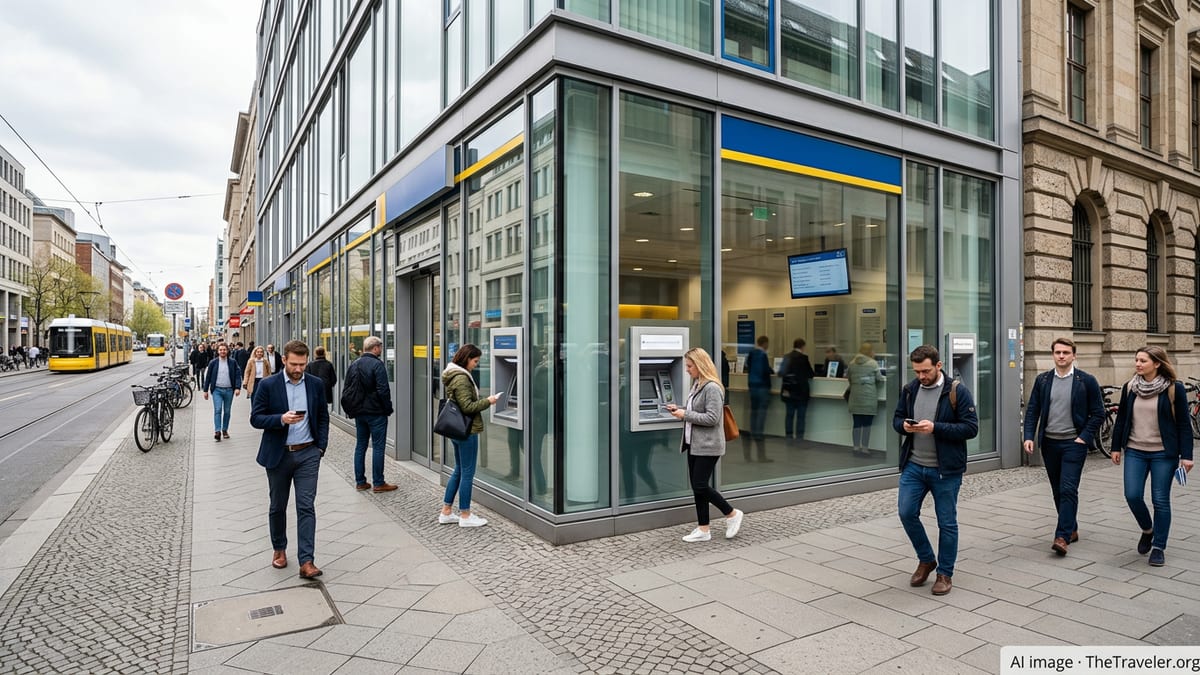
How Banking in Germany Works for Newcomers
Germany has a three pillar retail banking system: commercial banks, public savings banks (Sparkassen), and cooperative banks (Volksbanken and Raiffeisenbanken). Public savings banks together hold roughly one third of the retail market, cooperative banks slightly over a quarter, with the remainder split between private commercial banks and newer digital providers. This structure matters for expats because product design, language support, and digital maturity differ by pillar.
For most residents, the core product is the Girokonto, a current account used for salary, rent, utilities, and daily payments. German employers and landlords typically expect an account with a German IBAN, and many still prefer local banks for rent and utility direct debits. International accounts alone are often not sufficient for long term living, even if they can receive euro payments.
Since 2016, legal residents in the European Union have a right to a basic payment account in Germany, which must at minimum allow deposits, withdrawals, card payments, transfers, and direct debits. Regulators clarify that banks cannot refuse such an account solely because of nationality, employment status, or lack of credit history, although enhanced due diligence may apply in individual cases. This framework provides a safety net for newcomers who face rejection from more selective providers.
Fees are usually structure based rather than fully free. While marketing often highlights zero monthly account fees, banks commonly charge for paper statements, certain cash withdrawals, or foreign currency card payments. Understanding these cost components is essential when comparing offers.
Key Evaluation Criteria for Expats and New Residents
When selecting a bank in Germany, expats typically weigh a different mix of criteria than long term local customers. Language support and onboarding ease often rank as high as cost. Digital only banks may appeal for their English interfaces, but limited cash services or weak branch coverage can be problematic in a still cash friendly economy.
Core decision criteria include: language availability in the app, online banking, and customer service; remote onboarding options before or immediately after arrival; monthly account management fees and required minimum incoming payments; ATM access networks and charges for out of network withdrawals; card types provided and compatibility with local payment habits; and international functionality such as foreign currency fees and transfer costs.
For many expats, it is also relevant whether a bank is comfortable with non standard profiles, such as freelancers without permanent contracts, international students with limited German documentation, or people who may leave Germany again within a few years. Account retention after emigration and the bank’s willingness to communicate by email or secure messaging rather than only by post can influence the long term suitability of an account.
Finally, digital experience quality is critical. Some large universal banks still operate legacy online banking environments with limited English and slow transaction posting, which can frustrate users accustomed to real time app based banking. Conversely, some fintechs have modern interfaces but narrower product ranges and less resilience in unusual cases such as compliance reviews or disputed transactions.
Major Traditional Banks Used by Expats
Among Germany’s commercial banks, Deutsche Bank and Commerzbank are the best known national brands with broad branch networks and established retail offerings. Deutsche Bank is the largest German banking institution by assets, while Commerzbank is one of the country’s biggest retail players with around 400 branches nationwide. Both participate in major ATM alliances that provide several thousand free cash withdrawal points across Germany for their customers.
Commerzbank positions its standard current account as low or zero fee if a monthly minimum inflow, often around 700 euros, is met. New residents regularly choose it for in person account opening, relatively modern mobile apps, and partial English support in large cities and in its digital interfaces. It issues a debit card compatible with local Girocard schemes and often a co branded Mastercard or Visa debit for international use, which covers most domestic and cross border payment needs.
Deutsche Bank has traditionally been recommended to English speaking newcomers because of its international orientation and English capable staff in major urban centers. It offers current accounts with discounted or waived fees for students and young adults and participates in one of the largest German ATM alliances for cash access. However, user reports frequently note comparatively higher standard fees and less modern digital interfaces than leading fintech alternatives, which is an important trade off to consider.
Other conventional consumer facing banks such as Postbank or HypoVereinsbank can also serve expats, but English support is patchier and branch experiences vary regionally. International residents who prioritize face to face service in English and robust cash access often select one of the two major brands and complement this with a digital secondary account for everyday app based spending.
Savings Banks and Cooperative Banks: Sparkasse and Volksbank Options
Sparkassen and cooperative banks collectively serve a large share of German residents and small businesses. Savings banks alone have been reported with market shares close to 30 percent in retail banking, and together with cooperative institutions they dominate many regional markets. Their strengths are dense branch and ATM coverage, strong local brand recognition, and embeddedness in municipal and regional economies.
From an expat perspective, these institutions can be highly practical for those living outside major cities or in regions where national commercial banks have a weaker presence. The savings bank network offers tens of thousands of ATMs nationwide, and cooperative banks maintain similarly extensive networks. Accounts are usually robust, support all standard payment formats, and integrate easily with local employers and service providers.
The limitations for foreign residents are mainly language and onboarding flexibility. Most Sparkassen and Volksbanken operate autonomously and focus on German speaking customer bases. Account applications, contracts, and online banking tools are typically only in German, and English speaking staff are not guaranteed. Digital onboarding and mobile apps vary in sophistication between regions.
New residents with some German language skills or strong local support networks may find a regional savings or cooperative bank advantageous, especially where branch proximity and personal advisor relationships are valued. Those who rely on English or fully remote onboarding may find these institutions less accessible and opt for commercial or digital banks instead.
Digital and Mobile First Banks Popular with Expats
Digital native banks have become particularly attractive for expats because of app centric design, streamlined onboarding, and consistent English language support. Several providers market specifically to international users, students, and mobile professionals and allow accounts to be opened with a smartphone video identification process, sometimes even before arrival if documentation is sufficient.
N26 is one of the most established app based banks used by foreign residents in Germany. It offers accounts with no fixed monthly fee at entry level and paid tiers that add insurance and premium cards. The entire interface and customer support are available in English, and international card payments are competitively priced within the euro area. However, N26 does not provide physical branches and has limited free cash withdrawal allowances, typically a small number of domestic ATM withdrawals per month before fees apply. German landlords and some public authorities may still prefer accounts held with traditional institutions.
Other digital banks with German IBANs that are gaining traction include bunq and newer direct banks such as C24. Bunq offers multi currency features, sub accounts, and budgeting tools combined with full English support, but charges modest monthly fees for most plans. Direct banks like DKB and ING, while not strictly new fintechs, also operate largely online and provide competitive current accounts with broad ATM access through major card schemes. DKB’s standard account can be fee free when minimum usage conditions are met, but the bank is selective in its customer acceptance and historically has limited English language content, though its app and documentation have gradually improved.
It is important to recognize that some digital providers impose eligibility criteria linked to residence status or tax residency. Several now require at least a German residence registration or residence permit before opening an account. Expats should therefore verify onboarding conditions ahead of time and, if needed, temporarily rely on an international multi currency account until local registration is complete.
Fees, ATM Access, and Foreign Transactions
Published fee schedules in Germany can be complex, but a few patterns help structure comparisons. Current accounts at major commercial and direct banks typically charge monthly management fees in the range of 0 to 10 euros, with the lower end conditional on minimum monthly incoming transfers or on digital only account usage. Student and youth accounts can be free of charge up to specified age limits.
ATM access is a critical differentiator. Germany is still relatively cash oriented, and not all merchants accept international card brands. Traditional banks often participate in ATM consortia that allow free withdrawals within the group but charge 3 to 5 euros per withdrawal at third party machines. Savings and cooperative ATM networks offer very extensive geographic coverage, while commercial networks such as Cash Group and CashPool cover many but not all regions. Digital banks rely on partner ATM arrangements or reimburse withdrawal fees up to a limited number of transactions per month.
Foreign currency card use and international transfers can generate significant costs if not considered upfront. Conventional banks commonly apply foreign transaction markups around several percentage points on non euro card payments, plus fixed fees on international transfers using traditional rails. Digital multi currency accounts and specialist providers often offer lower foreign exchange spreads and transparent flat fees for cross border payments, which is why many expats combine a local German account with a dedicated international money service.
Prospective customers should review fee tables with particular attention to: monthly account maintenance charges at expected income levels; cash withdrawal fees inside and outside the bank’s ATM alliances; card replacement fees and charges for physical or virtual extra cards; and foreign currency or cross border payment fees. Many accounts marketed as free still generate noticeable annual cost through add ons and occasional charges.
Choosing Between One or Two Accounts
For many expats, the most practical configuration is a two account set up: one German bank account optimised for local payments, salary, and rent, and one digital or international multi currency account optimised for travel and foreign transfers. This combination balances local acceptance with global flexibility and can reduce overall banking costs while providing redundancy.
A local account with a traditional or direct German bank ensures compatibility with employer payroll systems, landlord expectations, and public authority payments. It also maximises access to domestic ATM networks and supports SEPA direct debits for utilities and telecommunications. Where English support is needed, major commercial brands and certain digital direct banks tend to be more accommodating than local savings or cooperative institutions.
The secondary account can then focus on strengths such as low cost foreign currency conversion, fee free international ATM use, and modern budgeting tools. Providers like N26, bunq, and international fintechs linked to German IBANs often fill this niche. Keeping some funds in a separate institution also provides operational resilience if one bank temporarily blocks transactions for security checks or if there are IT outages.
Expats planning to leave Germany after a few years should additionally check whether the chosen local bank allows accounts to remain open when tax residence changes. Some institutions are comfortable maintaining accounts for former residents provided regulatory reporting obligations are met, while others may request closure when a foreign correspondence address is recorded.
The Takeaway
Germany offers a wide choice of banking options for expats and new residents, but the market’s fragmentation and legacy practices can be confusing at first contact. Traditional banks such as Deutsche Bank and Commerzbank provide broad branch networks, strong domestic acceptance, and partial English support, at the cost of higher fees and less modern digital experiences. Savings banks and cooperative banks add excellent regional coverage and local integration, but are primarily designed for German speakers.
Digital and mobile first banks, led by N26 and supported by bunq, DKB, and others, have filled the gap for international users who prioritise app quality, fast onboarding, and English language interfaces. They work particularly well in combination with a conventional German account that anchors local financial life. Fee structures and ATM conditions require careful reading, as apparently free accounts can accrue costs through foreign currency markups or off network cash withdrawals.
New residents who define their priorities in terms of language, branch access, international usage, and future mobility can usually identify one or two suitable banks within a few days of research. Aligning the account type with realistic daily payment habits and travel patterns is more important than maximising any single feature such as zero monthly fees. A deliberate choice at the start of a relocation can prevent later administrative complications and provide a stable base for wider financial planning in Germany.
FAQ
Q1. Can a foreigner open a bank account in Germany before receiving a residence permit?
In many cases yes, particularly with digital banks and some commercial banks, but most institutions require at least proof of identity and an address. Requirements vary, so it is advisable to check each bank’s onboarding rules and be prepared to present residence documentation soon after arrival.
Q2. Do German banks require a minimum monthly income to avoid account fees?
Several major banks waive monthly account fees if a specified minimum income, often around 700 euros, is credited each month. If that threshold is not met, a fixed monthly fee usually applies, so students, freelancers, or part time workers should verify conditions carefully.
Q3. Is it possible to manage a German bank account entirely in English?
Yes, but primarily with selected providers. Digital banks and some commercial banks offer apps, online banking, and support in English, while many savings and cooperative banks operate almost exclusively in German. Even with English support, official contracts are frequently in German.
Q4. How important is a physical branch for everyday banking in Germany?
For routine payments and card use, branches are less critical due to widespread online banking and ATMs. However, branches remain useful for cash heavy regions, complex issues such as disputed transactions, or when personal identification is required. Newcomers who value in person help may prefer banks with nearby branches.
Q5. Are digital only banks widely accepted by German employers and landlords?
Most employers and many landlords accept salary and rent payments to any German IBAN, including those from digital banks. However, some conservative landlords or institutions may still prefer accounts with traditional banks, which is why some expats maintain at least one conventional German account.
Q6. What type of bank card is most practical for daily payments in Germany?
A combination of a domestic debit card compatible with local Girocard systems and an international Mastercard or Visa debit is typically most practical. Many banks issue both, either as a single co branded card or as separate physical cards.
Q7. How expensive are foreign card payments and ATM withdrawals outside the euro area?
Conventional banks often charge a foreign currency markup plus a fixed fee for out of area ATM withdrawals. Digital banks and specialist multi currency providers can be cheaper, making them attractive as secondary accounts for frequent travellers or those sending money abroad.
Q8. Can an expat keep a German bank account after leaving the country?
Some banks allow accounts to remain open when customers move abroad, provided tax residency and reporting information is updated. Others request closure if the primary residence is no longer in Germany. Policies differ, so it is important to ask before relocating again.
Q9. Are student accounts in Germany significantly different from standard accounts?
Student accounts often waive monthly maintenance fees and sometimes card fees up to a specified age or until studies end, but otherwise function similarly to standard current accounts. Eligibility usually requires proof of enrolment at a recognised institution.
Q10. What should new residents prepare before starting a bank account application in Germany?
Typical documentation includes a valid passport, local address registration where available, proof of income or enrolment, and tax identification information. Having digital copies ready and understanding basic German banking terms can speed up the process, even when using banks with English support.