


Germany has a highly regulated and technologically advanced financial system, but newcomers must understand local banking tools, security practices, and consumer protections to move money safely. Evaluating how easy and secure it is to send and receive money, both domestically and across borders, is a critical component in any relocation decision.
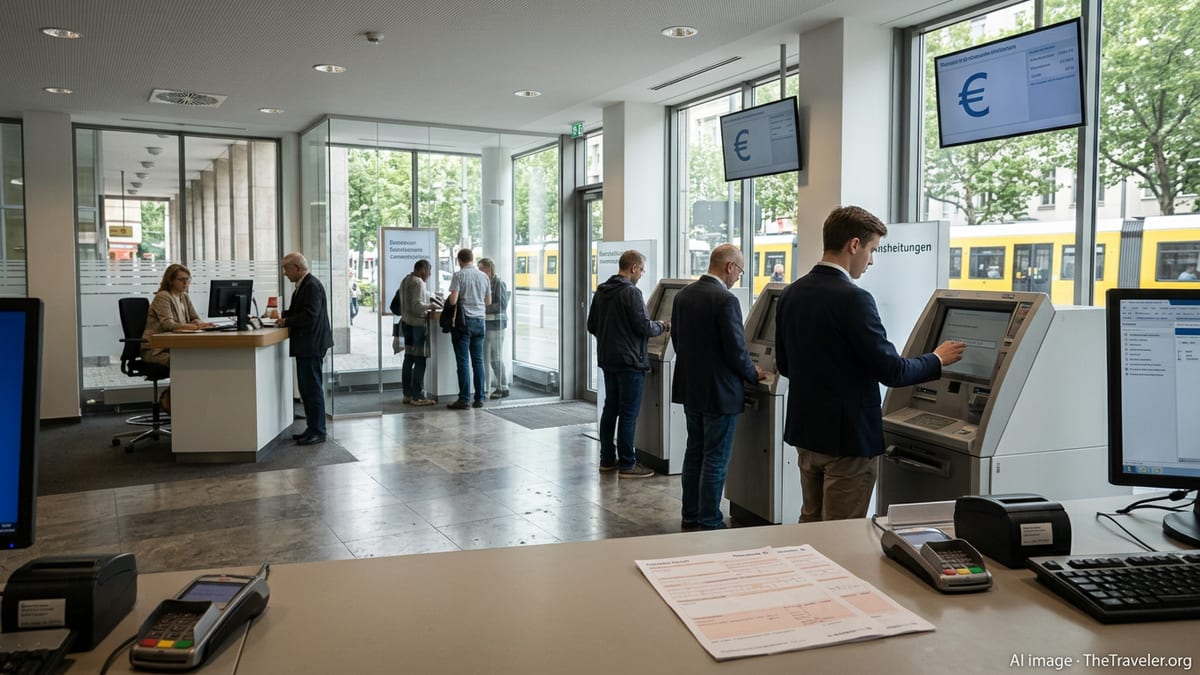
Overview of Germany’s Payment and Banking Environment
Germany operates within the eurozone and uses the euro as its currency. The banking sector is tightly supervised and most consumer payment activity runs through bank accounts. Cash is still common in everyday transactions, but digital payments and bank transfers are dominant for salary, rent, utilities, and cross-border payments within Europe.
Residents typically use an IBAN-based current account for nearly all formal financial interactions. This account is the anchor for receiving salaries, paying bills, and sending or receiving money domestically and internationally. Many employers, landlords, and public services require a local bank account and will pay or charge only via bank transfer or direct debit.
For those relocating from outside the eurozone, understanding how SEPA transfers, online banking, and local security norms work is essential. While the system is generally safe and efficient, procedures, terminology, and risk patterns differ from other markets such as North America or Asia.
Germany’s payment infrastructure favors account-to-account transfers and structured processes, which can feel rigid but provide a high degree of traceability and legal protection when used correctly.
Core Methods for Sending and Receiving Money Domestically
The primary mechanism for moving money within Germany is the SEPA credit transfer. This is a bank-to-bank transfer across the Single Euro Payments Area using the recipient’s IBAN. For domestic transfers in euro, SEPA is usually low-cost or free for retail customers and is the default method for salaries, rent, and private transfers between individuals.
SEPA direct debits are widely used for recurring payments such as utilities, mobile phone contracts, and insurance premiums. The payer signs a mandate allowing the company to pull funds from the bank account periodically. A legal refund right within a defined time window provides additional safety if an unauthorized debit occurs.
Standing orders are also common for predictable, fixed payments such as rent or savings contributions. These are scheduled outgoing transfers set up in online banking to repeat at specific intervals. They reduce the risk of missed payments and late fees while maintaining full visibility in the account statement.
Card payments and local mobile payment apps are used for retail spending but play a secondary role for peer-to-peer transfers compared with SEPA bank transfers. Most banks provide user-friendly online and mobile interfaces that allow domestic transfers to be initiated in minutes once a payee’s IBAN is known.
International Transfers and Remittances
Sending and receiving money across borders is a central concern for many relocating individuals, particularly when salaries, savings, or family support remain partly outside Germany. Within the SEPA zone, cross-border euro transfers typically function much like domestic transfers. Fees are often low or zero and transfers usually arrive within 1 to 2 business days under normal conditions.
For payments outside the eurozone or in foreign currencies, banks use international wire transfers that may involve intermediary banks and foreign exchange conversion. Fees can be higher and total costs depend on a combination of transfer fee, exchange rate margin, and any correspondent banking charges in the destination country. Delivery times are usually a few business days but can be longer in complex corridors.
Specialized international money transfer providers and regulated fintech platforms are widely used for remittances. These services often offer more competitive exchange rates and transparent fee structures than traditional bank wires, especially for frequent transfers or smaller amounts. Many allow transfers funded by German bank accounts or cards, with payouts to foreign bank accounts or cash pick-up locations, depending on the corridor.
When choosing a method for international transfers, relocating individuals should compare total cost, payout options, speed, and regulatory protections. For larger transfers, such as moving savings or paying for property abroad, advance planning and staged transfers can help manage both currency risk and security.
Bank Account Setup and Security Practices
Opening a current account with a reputable German or pan-European bank is the safest base for sending and receiving money in Germany. Traditional banks and online banks are both common, and many offer English-language interfaces. Identity verification is strict and usually requires an official ID and proof of address. Once opened, an account provides an IBAN, debit card, online banking credentials, and access to SEPA payments.
German banks typically secure online access with multifactor authentication. Customers use a combination of passwords, transaction numbers (TAN), mobile apps, or physical devices to confirm sensitive actions such as adding a new payee or initiating a transfer. It is critical not to share login details or TAN codes with anyone, including individuals claiming to be from a bank or public authority.
Security-conscious behavior plays a central role in preventing fraud. Users should avoid initiating transfers over public Wi-Fi without protection, should regularly update devices and banking apps, and should review account statements to spot unusual activity. Many banks provide real-time transaction notifications, which significantly improve the ability to detect and respond to suspicious movements.
Newcomers should also understand that German financial institutions are conservative about risk. High-value or unusual transactions can trigger additional verification, delays, or requests for documentation. While occasionally inconvenient, this conservatism is part of the protection against money laundering and financial crime and serves as a structural safeguard for account holders.
Using Fintech Apps, Mobile Wallets, and Alternative Payment Services
Beyond traditional banks, Germany supports a growing ecosystem of licensed fintechs, mobile wallets, and payment apps that facilitate sending and receiving money. Many of these services operate under European payment services regulations and are required to maintain strong customer due diligence and data protection standards.
Peer-to-peer payment functions are offered by a number of banks and apps, enabling users to send money using mobile numbers or email addresses linked to accounts. These tools are convenient for splitting bills or reimbursing friends, but they are usually underpinned by bank transfers or card transactions. Users should confirm that any app they adopt is from a regulated provider and download it only from official app stores.
Some platforms offer multicurrency accounts and cards, which can be useful for frequent travelers or individuals with ongoing financial ties outside the eurozone. These accounts often allow holding, converting, and transferring funds in multiple currencies with transparent fees. While convenient, users should carefully review terms, including protection of funds, whether balances are covered by deposit protection, and dispute resolution processes.
Cryptocurrency transfers are available in Germany through regulated exchanges and service providers, but they are generally not used for everyday payments or salary transfers. Crypto assets carry high volatility and distinct regulatory treatment and are not covered by traditional deposit insurance schemes. For most relocating individuals, crypto should be considered speculative rather than a core tool for routine sending and receiving of money.
Consumer Protection, Dispute Resolution, and Fraud Risks
Germany’s payment ecosystem operates within a strong consumer protection framework. For unauthorized card transactions or fraudulent direct debits, consumers benefit from legal chargeback and refund rights if they notify their bank promptly. The time limits and user responsibilities vary depending on the payment instrument and circumstances, but in many cases losses are limited if customers have not acted with gross negligence.
Account holders should report suspected fraud or lost cards immediately. Banks typically offer 24-hour hotlines to block cards and access. Written confirmations may be required afterward, and banks might ask customers to file a police report in serious cases. Prompt action significantly improves the chances of limiting financial damage and obtaining a refund where rules allow.
Common scams include phishing emails or calls pretending to be from banks, delivery companies, or public authorities asking for login details or pushing urgent transfers. Romance scams and investment fraud also appear, where victims are persuaded to transfer funds to fraudsters’ accounts inside or outside Germany. Another pattern involves fraudulent job or rental offers requiring advance payments or “processing fees.”
To reduce risk, individuals should verify payment requests through independent channels, never approve transfers they do not fully understand, and avoid responding to unsolicited messages seeking financial information. Red flags include pressure to act quickly, requests for secrecy, or payment instructions that change at the last minute. Relocating individuals may be especially targeted due to unfamiliarity with local practices, making cautious verification even more important.
Practical Tips for Safe Money Flows as a Newcomer
Relocating to Germany often involves multiple simultaneous money flows, including salary income, rent payments, deposits, and ongoing support for or from family abroad. Structuring these flows in a secure and transparent way is important for both personal risk management and compliance with banking rules.
Newcomers should prioritize opening a local current account as soon as possible and routing salary and regular expenses through this account. When arranging rent and deposits, direct transfers from a personal bank account with clear payment references are safer than paying in cash or through informal channels. Landlords and employers who refuse traceable payment methods warrant extra due diligence.
For cross-border financial commitments, such as paying mortgages or supporting relatives, it is sensible to standardize on a small number of reputable channels and avoid frequent switching between unfamiliar services. Keeping records of transfer confirmations, contracts, and correspondence helps in case of disputes, audits, or account reviews by banks.
Finally, those planning to hold or move substantial savings should consider professional financial advice, especially if managing multiple currencies or tax jurisdictions. While this extends beyond basic payments, the way larger transfers are structured directly affects risk, cost, and the smooth functioning of ongoing money movements in and out of Germany.
The Takeaway
Germany offers a secure and mature framework for sending and receiving money, centered on bank accounts, SEPA transfers, and regulated payment services. For most routine domestic and European transfers, the system provides low-cost, predictable, and traceable mechanisms with robust consumer protections.
The main operational challenges for newcomers involve understanding local processes, vocabulary, and security expectations rather than technological limitations. Strict identity checks, conservative bank compliance practices, and cautious handling of unusual transactions may require adjustment but are core components of the overall safety of the system.
Evaluating Germany as a relocation destination from a payments perspective should focus on aligning personal financial habits with local norms, choosing reliable institutions and platforms, and adopting disciplined online security behavior. When these elements are in place, moving money in and out of Germany can be managed efficiently and with a relatively low risk profile.
FAQ
Q1. Do I need a German bank account to receive a salary in Germany?
Most employers require a German or eurozone bank account with an IBAN for salary payments, and having a local account simplifies everyday financial transactions.
Q2. How long do domestic transfers inside Germany usually take?
Standard SEPA transfers between German banks are typically completed within one business day, and many are processed close to real time during banking hours.
Q3. Are bank transfers in Germany free?
Many current accounts include unlimited SEPA transfers with no per-transfer fee, although some low-cost or basic accounts may charge small fixed fees depending on the tariff.
Q4. What is the safest way to pay rent in Germany?
Bank transfers from your personal account to the landlord’s account with clear references are generally safest, as they provide traceability and proof of payment.
Q5. How can I send money from Germany to a non-euro country safely?
Using bank wires or reputable international money transfer services that are properly regulated and offer transparent fees is recommended for non-euro destinations.
Q6. Are mobile payment apps in Germany secure?
Well-known payment apps and mobile wallets operating under European regulations use strong security, but users must protect their devices and login credentials to maintain safety.
Q7. What should I do if I suspect a fraudulent transaction on my account?
Contact your bank immediately to block cards or access, dispute the transaction, and follow any instructions, which may include providing written confirmation or filing a police report.
Q8. Is it safe to send large sums in a single transfer?
It is generally safe through established banks, but large or unusual transfers may prompt additional checks. For very high amounts, staged transfers and prior discussion with the bank can reduce delays.
Q9. Are cash payments recommended for major transactions like deposits?
Cash payments for large amounts are not recommended, because bank transfers provide documentation and a clearer audit trail in case of disputes or reviews.
Q10. Does German deposit protection cover money in all accounts and apps?
Deposit protection usually covers funds held in licensed banks up to a defined limit per customer, while some fintech or wallet balances may be safeguarded differently, so checking each provider’s terms is important.