


Vieques is one of Puerto Rico’s most rewarding beach destinations because it rarely feels like one single “type” of island. In one trip you can swim in a calm, family-friendly bay with showers and lifeguards, then drive into the Vieques National Wildlife Refuge for luminous white sand and reefy snorkeling, and finish with a walk to a dramatic black-sand shoreline that looks nothing like the Caribbean postcards. Discover Puerto Rico spotlights Vieques for exactly this variety, from classic white-sand crescents like Sun Bay and Caracas to the island’s famous black-sand stretch at Playa Negra.
Get the latest updates straight to your inbox!
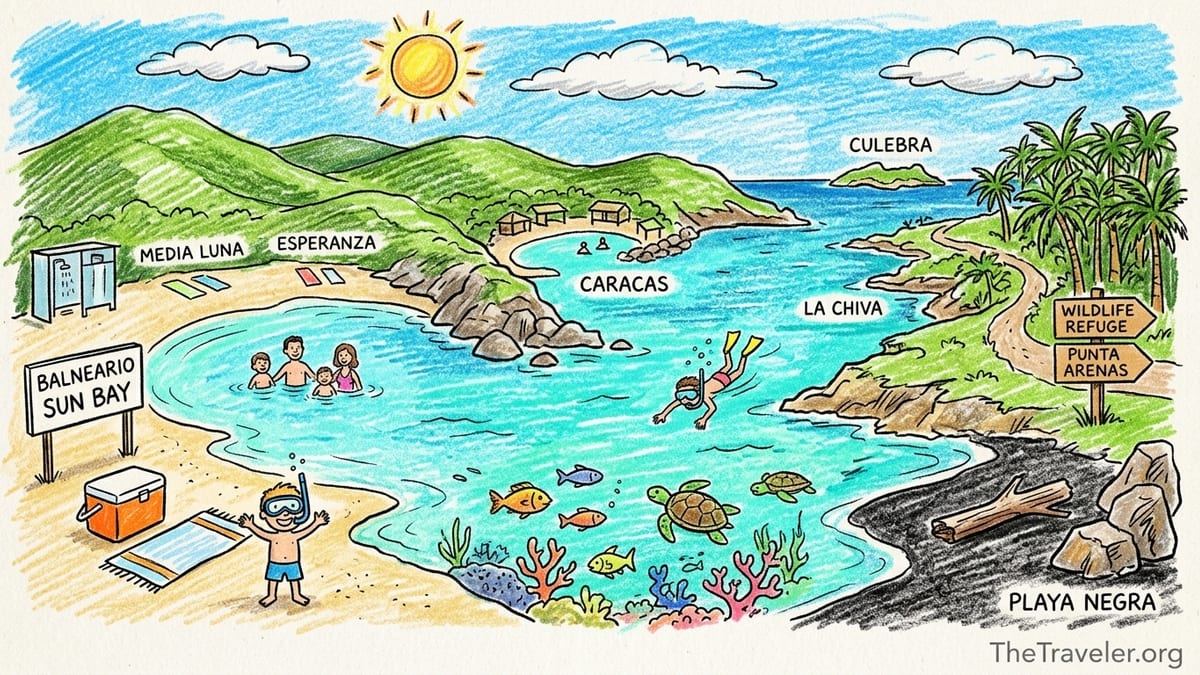
Vieques Beach Selection Guide: What Each Beach Does Best
If you want the clearest “wow” water color with an easy beach day setup, start with the south-coast pair that anchors most first visits: Sun Bay (Balneario Sun Bay) and nearby Media Luna. Sun Bay is the island’s best-equipped beach for travelers who want bathrooms, showers, and a staffed, organized feel, while Media Luna keeps the same calm-water vibe but with fewer structures and a quieter cove atmosphere.
If your priority is wildlife refuge scenery and snorkeling, Caracas and La Chiva are the headliners. Both sit inside the Vieques National Wildlife Refuge, where the mood shifts quickly: fewer services, more nature, and the kind of water clarity that makes bringing your own mask and snorkel feel non-negotiable. Caracas is often the easiest “refuge beach” for most travelers to manage, while La Chiva rewards those who go a bit farther for broader views and strong snorkeling potential along rocky edges.
If you’re planning for “beach hopping” with minimal driving, Esperanza Beach is the most convenient base beach because it’s steps from the Malecón, restaurants, and hotels. From the same area, you can also reach Playa Negra (Black Sand Beach), which is best treated as a hiking and photography stop rather than a classic swim day due to conditions that can include strong currents.
Finally, if you want the far-flung, end-of-the-road feeling, consider Punta Arenas (often called Green Beach). It’s a signature “remote Vieques” experience at the island’s northwestern tip, where the landscape feels wilder and the water can be stunning, but you should plan like you’re visiting an undeveloped shoreline: bring water, sun protection, and a realistic mindset about limited shade and services.
Beaches Inside the Wildlife Refuge: La Chiva, Caracas, Navío, Punta Arenas
The Vieques National Wildlife Refuge is where many travelers understand why Vieques is different. Beaches here are defined by clear water, minimal development, and the chance to combine a beach day with nature observation. It is common to spot birds along lagoon areas on the drive, and you can pair beach time with activities like snorkeling in shallow reef zones and quiet paddling in nearby bays, depending on your tour operator and conditions.
Caracas (also known as Red Beach) is frequently recommended as a first refuge stop because it balances beauty with approachability. It’s set in a protected-feeling cove with pale sand and gentle-looking water on many days, plus picnic-style structures that make it easier to take breaks from the sun. For families, this “cove layout” can feel more manageable than a fully open coast, especially if you arrive earlier in the day for calmer conditions.
La Chiva (also known as Blue Beach) is the refuge beach that many visitors describe as the trip-defining swim. Expect bright white sand, exceptionally clear water, and long sightlines that make the blues shift through the day. For snorkeling, La Chiva tends to be a stronger pick than Caracas if you’re comfortable exploring rocky pockets and looking for fish along structure, while still having plenty of shallow areas for relaxed floating.
Navío and Punta Arenas fit a more adventurous style. Navío is often discussed as a beach for travelers who want a more “raw” setting and don’t mind that conditions can change quickly, while Punta Arenas is a remote tip-of-island experience that feels far away from town conveniences. Both are best tackled with a plan: full tank of gas, offline map downloaded, and a clear cutoff time so you exit the refuge before access closes for the evening.
Swimming Conditions and Safety: When “Calm” Still Needs Caution
Vieques has plenty of calm-water days, but every beach on the island is still ocean, and conditions can shift with wind and swell. As a practical rule, treat Sun Bay and Media Luna as the most consistently beginner-friendly swims because they are known for gentler wave action and a protected-bay feel. Sun Bay is also the easiest place to look for a staffed, “managed beach” environment, which matters if you’re traveling with kids or if someone in your group is a nervous swimmer.
Caracas often feels gentle because of its cove shape, which is one reason it’s a frequent family pick among the refuge beaches. Still, even a cove can develop shore break and lateral currents depending on weather. The safest approach is to arrive early, take five minutes to watch the water, and keep weaker swimmers closer to shore instead of trying to “push out” for a deeper swim just because the water looks clear.
La Chiva can be a dreamy swim, but it’s also a beach where travelers spread out and explore. If you’re snorkeling near rocky edges, keep space between you and the rock line so surge doesn’t push you into it. For families, the simplest pattern is to use La Chiva as a relaxed float and shallow snorkel day, and save more advanced snorkeling for a guided tour when conditions and entry points are assessed by someone who does it daily.
Playa Negra deserves special emphasis: it’s a standout for scenery, but it’s widely treated as a poor choice for casual swimming. If you visit, go for the walk, the photos, the unusual sand, and the feeling of discovering a different side of Vieques. If you want a “get in the water” moment the same day, build your itinerary so you swim at Esperanza Beach or Sun Bay first, then do Playa Negra as a late-afternoon hike and sunset photography stop.
Snorkeling and Water Time: Reefs, Grass Beds, and Easy Wins
For many travelers, the best snorkeling in Vieques is the kind you can do without a boat: bring your own mask and snorkel, and plan beach time where the water is clear and the bottom has structure. La Chiva is one of the most commonly cited “bring-your-snorkel” beaches because the water clarity can be excellent and there are areas where rocks and grass beds attract fish. If you’re new to snorkeling, you can keep it simple by staying in shallow, calmer zones and focusing on easy, low-effort floats rather than long swims.
Caracas is another strong pick for casual snorkeling because of its protected layout and approachable water. A realistic expectation is that you will see tropical fish and interesting bottom textures when visibility is good, but you shouldn’t expect a dense, aquarium-like reef directly off every entry point. When the ocean is calm, the most enjoyable sessions are often along edges where the sand transitions to rock, provided you maintain safe space and watch for wave surge.
Media Luna is a sleeper hit for families who want a gentle first snorkel. The cove setup and generally shallow feel can make it easier for kids to spot fish without feeling overwhelmed by waves. This is also a good “practice beach” before heading into the refuge, where you may be farther from help and services and want everyone comfortable with masks, fins, and the basics of staying together.
If you want to combine beach time with kayaking and nature observation, plan at least one structured half-day around the island’s calm-water environments and protected areas. Many visitors pair refuge beach hopping with a guided bio bay outing in the evening, and while that’s not the same as daytime kayaking, it’s the classic Vieques add-on that turns a beach trip into a broader nature trip. The key is logistics: do refuge beaches earlier, exit before closing hours, grab dinner in Esperanza, then head to your tour check-in without rushing.
Shade, Facilities, and Road Access: What to Pack for Each Beach
Sun Bay is the easiest beach for travelers who want to minimize packing stress. It’s known for having bathrooms, showers, and other “balneario” extras, plus an on-site food option that many visitors use as a convenient lunch stop instead of driving back into town mid-day. If your group includes grandparents, toddlers, or anyone who simply wants predictable comfort, Sun Bay is the strongest default choice.
Sun Bay is also the island’s headline beach for travelers who want to camp with permission. Local rules have required advance arrangements for camping, and official guidance emphasizes permits. In practical terms, that means you should confirm the current permit process before you arrive and not assume you can set up last-minute. If you’re building a budget trip around camping, plan a backup lodging option in Esperanza in case your preferred dates are unavailable.
Media Luna sits close to Sun Bay and feels like an extension of a Sun Bay day, but with fewer structures and a more natural cove experience. This is where your packing list matters: water, snacks, and sun protection become more important because you cannot count on the same level of facilities that you have at the balneario. A small, real-world trick that frequent beach hoppers use is a soft cooler with ice from a grocery stop in Esperanza so you can stay out through midday without hunting for food.
Inside the refuge, plan like you’re going to a beautiful place that does not cater to forgetfulness. Even at better-known refuge beaches like Caracas and La Chiva, you should bring drinking water, reef-safe sunscreen, and a basic first-aid kit for small cuts and fin blisters. Road access can vary with weather and maintenance, so if you’re renting a vehicle, ask the rental desk directly which beaches they consider realistic for your specific vehicle type on that week, especially after heavy rain.
Families, Photography, and Where to Stay Nearby
For families, the most straightforward “no drama” combination is Sun Bay plus Media Luna. Start at Sun Bay for bathrooms and an easy swim, then move to Media Luna for a quieter cove where kids can play near shore and try a first snorkel session. If you want a low-effort evening, you can finish back at Esperanza Beach and walk to dinner on the Malecón without having to drive across the island again.
For photography, Caracas and La Chiva are the classic daylight stars because of their bright sand and the way the water shifts from pale turquoise to deep blue. If you want recognizable, real-world shots that look great without special gear, aim for late morning when the sun is high enough to light the water cleanly, then return closer to golden hour for softer beach portraits. Keep in mind that wildlife refuge access is daytime-focused, so you do not want to be racing the clock for sunset if you’re deep inside the refuge roads.
Playa Negra is the “different” photography story: darker sand, driftwood, and a moody palette that can make smartphone photos look surprisingly cinematic, especially if clouds roll in. It is also a good place to capture the contrast that makes Vieques famous, because you can photograph black sand and turquoise water in the same frame on the right day. Treat it as a walk and a shoot, then do your longer swim session elsewhere.
For accommodation, travelers who want beach variety with minimal driving usually choose the Esperanza area, because it puts you near Esperanza Beach, Sun Bay, and the road access for Media Luna and Navío. If your priority is early starts into the refuge to beat crowds and heat, consider staying with a plan that makes morning departures easy, whether that’s a hotel near Esperanza or a rental that keeps you closer to the south-coast routes. The practical goal is to avoid losing the best morning water conditions because you spent an hour coordinating transport across the island.
The Takeaway
The “best beach in Vieques” depends on what you want your day to feel like. Sun Bay is the most comfortable choice for amenities and an easy family swim. Media Luna is a quieter, calmer cove that rewards travelers who pack smart. Caracas is the refuge beach that combines wow-factor water with a more approachable setup, while La Chiva is the refuge beach that often wins the snorkeling-and-scenery contest when conditions cooperate. Navío and Punta Arenas are for travelers who want a wilder feel and don’t mind planning around road access and limited services. Playa Negra is the island’s signature contrast, best treated as a hike and photo stop that proves why Vieques stands out in Puerto Rico.
If you build your itinerary around real logistics, not just beach names, Vieques becomes easy: swim where conditions are gentle, snorkel where structure and clarity align, pack for undeveloped shorelines, and make the wildlife refuge your daytime adventure zone. That mix of comfort beaches, refuge beaches, and a black-sand detour is exactly what gives Vieques its unusually varied beach portfolio.
FAQ
Q1. Which Vieques beach is best for first-time visitors?
Sun Bay is the easiest starting point because it’s well-known for facilities like bathrooms and showers and is set up for a straightforward swim day.
Q2. Which beaches are inside the Vieques National Wildlife Refuge?
Popular refuge beaches in most beach-hopping itineraries include Caracas and La Chiva, and many travelers also aim for more remote spots such as Punta Arenas and Navío depending on road conditions.
Q3. Is Playa Negra (Black Sand Beach) good for swimming?
It is generally better treated as a hiking and photography beach because conditions can include strong currents; plan your main swim at a calmer beach like Sun Bay or Media Luna.
Q4. Where is the calmest water for families in Vieques?
Sun Bay and Media Luna are commonly chosen for calmer conditions, with Sun Bay adding the most “managed beach” comfort for groups with kids.
Q5. Which beach is better for snorkeling, Caracas or La Chiva?
La Chiva is often favored for snorkeling variety when visibility is good, while Caracas can be more approachable for a casual, close-to-shore snorkel depending on the day.
Q6. Are there food and drinks directly on the beach anywhere in Vieques?
Sun Bay is the best-known beach for on-site food options, so it’s the easiest place to plan lunch without leaving your beach setup.
Q7. Do I need to bring my own snorkel gear in Vieques?
Yes, if snorkeling matters to your trip, bringing your own mask and snorkel is the simplest way to take advantage of clear-water days at beaches like La Chiva and Caracas.
Q8. Can I visit wildlife-refuge beaches late in the evening?
Refuge access is typically limited to daytime hours, so plan your refuge beach hopping earlier and save dinner and evening activities for Esperanza afterward.
Q9. What’s the best plan for a one-day beach-hopping itinerary?
A practical one-day route is Sun Bay for a comfortable swim start, Media Luna for a quieter cove, then Caracas or La Chiva in the refuge if you have time and the roads are in good shape.
Q10. Where should I stay if I want easy access to multiple beaches?
Staying near Esperanza is convenient because it places you close to Esperanza Beach, Sun Bay, and the roads that lead toward Media Luna, Navío, and refuge beach day trips.