


Booking the Ceiba to Vieques ferry can feel deceptively simple: the fare is low, the route is popular, and the terminal looks modern. The friction usually comes from timing: schedule releases can be unpredictable, sailings can shift for operational reasons, and travelers often underestimate how early they need to arrive, where to park, and how luggage charges work. This guide is written for travelers who are ready to book and want the full, real-world picture, from ticket purchase to stepping off the boat in Isabel Segunda (Isabel II).
Get the latest updates straight to your inbox!
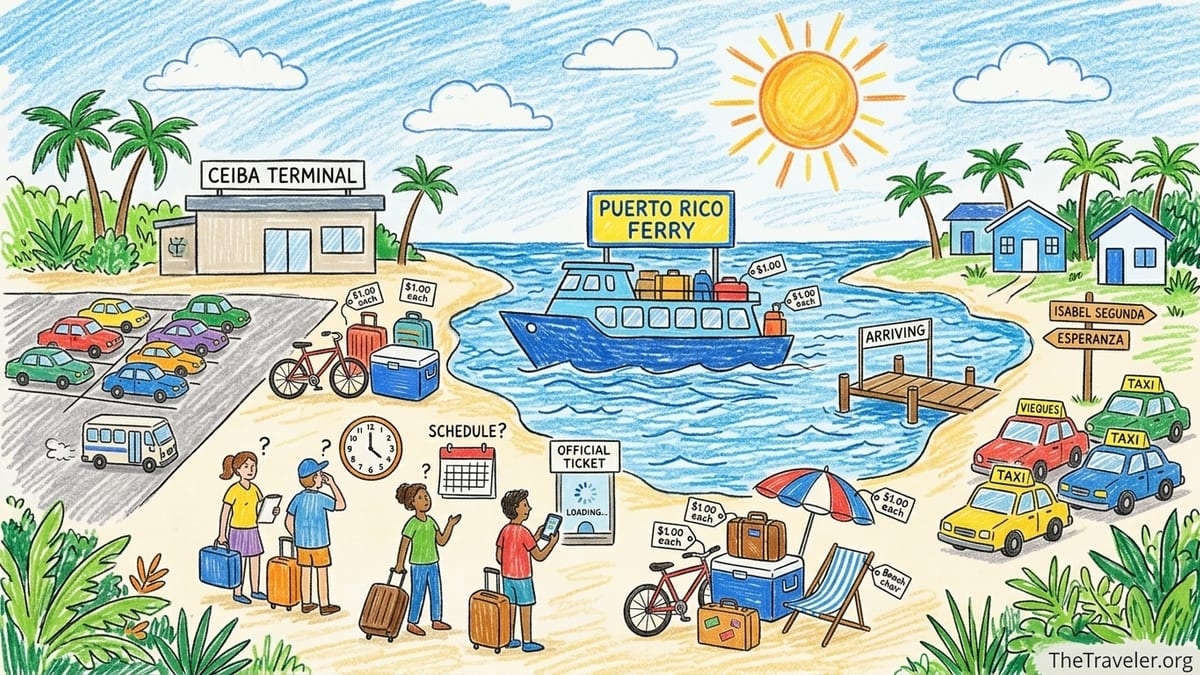
Before You Book: The “Official” Schedule, and Why It Can Change
For Ceiba to Vieques, the Puerto Rico Integrated Transit Authority (PRITA) currently directs passengers to the official Puerto Rico Ferry platform for schedules and ticket purchases. That matters because the most common trip-planning mistake is relying on a third-party blog post, a screenshot of an old calendar, or a travel forum thread that was accurate once but is no longer current.
Even when you are using the official platform, plan with the assumption that ferry schedules can change. Operational issues, vessel rotations, weather, and service disruptions can alter departure times or remove sailings. A practical approach is to treat your ferry time like a flight: check the schedule again close to travel and keep a backup option in mind, especially if you have a tight connection like a sunset biobay tour or a hotel check-in deadline.
One concrete example: if you land in Puerto Rico midday and you are eyeing an early afternoon sailing from Ceiba, build enough buffer for flight delays and road traffic. Many travelers choose a later ferry and use the extra time to eat near the airport or on the way east, rather than risking a missed sailing that could force an overnight on the mainland.
Where To Buy Tickets (Official Website, App, and Port Window)
Ticket buying is centered on the official Puerto Rico Ferry platform, which supports web purchases and also ties into the City Experiences app used to buy tickets, view schedules, see service alerts, and track ferries in real time. In practice, travelers typically book on a phone because it is the fastest way to refresh schedules, purchase immediately, and store tickets for scanning at the terminal.
If you are booking for a standard adult passenger (ages 13 to 59), the commonly published one-way passenger fare for Ceiba to Vieques is $2.00. Children (4 to 12) are commonly listed at $1.00 one way, and adults 60 to 74 are commonly listed at $1.00 one way. Infants (0 to 3) and seniors 75+ are commonly listed as free, but free categories often require in-person handling at the ticket window with identification. If you are traveling with a grandparent who is 75+ or a toddler, plan extra time at the terminal so you are not doing last-minute ticket issues at the counter.
Yes, you can sometimes buy tickets in person at the port window, and the official messaging has indicated fares are available both at the terminal and online. Real-world caveat: relying on walk-up inventory is risky during weekends, holidays, and peak travel months. If your lodging in Vieques is non-refundable, or you have a must-make event like a wedding, book as soon as the sailings you need appear online and avoid building your plan around “we’ll just buy them at the terminal.”
Passenger vs Cargo Sailings: Which One You’re Actually Booking
When travelers say “the Ceiba to Vieques ferry,” they often mean the passenger sailing. But the system also includes cargo sailings that move goods and can have different boarding procedures. This becomes important when you are traveling with items that may be restricted to cargo-only handling, or when you assume your luggage behaves like airline baggage and it does not.
A practical example is a bicycle: bicycle tickets are commonly described as available online, but bicycle handling is often tied to cargo-only rules. If you show up with a bike expecting a standard passenger boarding flow, you may be redirected to different instructions at the counter. The same planning applies to oversize boards, hand trucks, and certain bulky gear. If your trip depends on arriving with a specific item, confirm which sailing type supports it and buy the right article ticket.
Vehicles are another separator. The published vehicle fare tables for the Ceiba to Vieques route can include compact cars (for example, a compact up to 15 feet), SUVs, pickups, and larger freight categories, with distinct one-way and round-trip rates. In practical terms, most visitors do not bring a rental car onto Vieques. Many rental agreements on the main island restrict ferrying the vehicle, and on-island rentals are usually handled by local agencies. If you are one of the exceptions who has authorization and a legitimate need, you are planning a cargo and vehicle process, not a simple walk-on passenger experience.
Ceiba Terminal Logistics: Location, Timing, ID, and Check-In Reality
The Ceiba ferry terminal is in the Roosevelt Roads area of Ceiba, and it is not a “walk up from a tourist district” kind of location. Most visitors arrive by rental car, taxi, or rideshare from San Juan, Isla Verde, Condado, or the airport area. If you are building your timeline from San Juan, assume the drive can be long enough that you should not treat it like a quick hop, especially around rush periods or if you are departing after a heavy rain.
Arrive early. The ferry operator’s general guidance has commonly recommended arriving at least one hour before departure to avoid delays or setbacks. That hour disappears fast when you factor in finding parking, walking or shuttling to the building, waiting at the ticket window for special categories, and getting in the correct line. A real-world planning template many travelers use is: arrive at the terminal area 75 to 90 minutes before departure if you are parking, and 60 minutes before if you are being dropped off curbside and already have tickets.
Bring identification that matches your ticket name. A common boarding friction point is a mismatch between the purchaser name and the traveler name, or a traveler who has a ticket screenshot but no ID. Treat this like airport security in the sense that you want the basics ready: your ticket accessible on your phone (and ideally saved offline), a photo ID, and a plan for anyone in the party who needs in-person ticket validation.
Luggage and “Articles” Fees: What’s Free, What Costs Extra, and Common Examples
Plan your luggage like you are boarding a commuter boat, not checking bags on an airline. The commonly published policy is that each passenger may board with one small carry-on baggage item free of charge. Beyond that, additional items often require an extra ticket as an “article.” These are fees to bring items onboard, not rentals.
Concrete examples of commonly published article charges include luggage at $1.00 each way (and $2.00 round trip), a beach chair at $1.00 each way, and a beach umbrella at $1.00 each way. Coolers may be ticketed as an article; for example, a large beach cooler has commonly been listed at $2.00 each way. If you are traveling with a family of four and each person has a roller suitcase plus you also have a cooler and two beach chairs, your total cost is still usually modest, but only if you buy the article tickets correctly and do not assume everything is automatically included.
Some items are commonly flagged with special handling, such as certain surfboards, and some categories are described as cargo-only. If you are planning to bring a longboard surfboard, treat it as a special case and confirm whether it is cargo-only and what the corresponding fee is. The main takeaway is not the exact inventory of item types, but the mindset: decide ahead of time what you are bringing, buy the relevant article tickets when possible, and avoid showing up with a pile of gear expecting staff to “figure it out” at boarding time.
Parking on the Mainland: What to Expect in Ceiba
If you are driving yourself to Ceiba, parking becomes part of your departure timeline. Travelers frequently describe a dedicated parking area serving the terminal, with shuttles that run between the lot and the ferry building. This is why “I arrived 40 minutes early” can still become stressful: the parking step is not always at the front door, and you can lose time parking, paying, waiting for the shuttle, and walking in with bags.
Because parking operations can change, do not assume an old social media post reflects current procedures. Still, it helps to plan using real-world expectations: budget extra time for parking, keep small bills or a card available depending on the system in use, and if you are traveling with heavy luggage, be prepared to load and unload it multiple times (car to shuttle, shuttle to terminal).
A practical example that reduces stress is drop-off first, park second. If you have two adults traveling together, one person can hop out with most of the luggage at the terminal while the driver parks and returns by shuttle. That way you are not hauling everything through parking logistics, and you are holding your place and situational awareness inside the terminal while the other person completes the car step.
Arriving in Isabel Segunda: What Happens Next (Taxis, Lodging, and First Stops)
On Vieques, the ferry arrives at the Isabel Segunda terminal area, which is close to the island’s historic administrative center. The first thing many travelers notice is that arrivals can be “bursty.” When a ferry unloads, dozens or even hundreds of people may need transportation at the same time. That creates a short window where you will see taxis and ride services clustering near the terminal, and another window where demand can outstrip supply.
If your lodging is in Isabel Segunda itself, you might be able to walk, but many accommodations are not realistically walkable with bags in the midday heat. If you are staying in Esperanza, near Sun Bay, or in a more remote rental, plan on a taxi or a pre-arranged pickup. A concrete planning move is to message your hotel or host the day before, tell them your scheduled sailing time, and ask what they recommend for pickup. Some properties have preferred drivers, and having a name and a plan beats stepping off the boat and negotiating under pressure.
Once you’ve reached your lodging, the practical “first hour on Vieques” often looks like this: secure transportation for later (taxis do not operate like a big-city rideshare grid), buy water and snacks if you arrived late, and confirm any time-sensitive activities. If you have a biobay tour, for example, your operator may have a strict arrival time and a meeting point that assumes you already have transportation arranged from Isabel Segunda.
The Takeaway
The Ceiba to Vieques ferry is one of the best-value transportation options in the Caribbean, but it rewards travelers who plan like operators might change the plan on them. Use the official Puerto Rico Ferry platform and app for schedules and tickets, check the schedule close to travel, arrive early enough to absorb parking and check-in friction, and treat luggage as a ticketed “article” system rather than an airline-style free-for-all. On arrival in Isabel Segunda, expect a rush of people seeking rides at the same time, and pre-plan transportation if you are heading beyond town.
FAQ
Q1. Where should I buy Ceiba to Vieques ferry tickets?
Buy through the official Puerto Rico Ferry platform (website or the associated app). The port ticket window can work, but it is risky during busy periods.
Q2. How much is the passenger fare from Ceiba to Vieques?
The commonly published one-way passenger fare for a standard adult (13 to 59) is $2.00. Other age categories are typically lower, and some categories may require in-person processing.
Q3. Do ferry schedules change?
Yes. Schedules can change due to operational issues, weather, or service disruptions. Check the schedule again close to your travel date and on the day you depart.
Q4. How early should I arrive at the Ceiba terminal?
A widely recommended buffer is at least one hour before departure, especially if you need to park, buy special-category tickets, or travel with extra items.
Q5. Is there a difference between passenger and cargo sailings?
Yes. Passenger sailings are for walk-on travelers, while cargo sailings handle freight and certain items and may have different procedures. Some gear may be cargo-only.
Q6. What luggage is included with my ticket?
Commonly, one small carry-on item per passenger is free. Additional luggage and items like coolers, umbrellas, and beach chairs may require an extra article ticket.
Q7. What are examples of “article” fees?
Commonly published examples include luggage at $1.00 each way and beach chairs or umbrellas at $1.00 each way, with some items like large coolers often priced higher.
Q8. Can I park overnight near the Ceiba ferry terminal?
Many travelers use designated parking serving the terminal and then take a shuttle to the building. Because procedures can change, confirm current parking instructions close to travel.
Q9. What should I expect when I arrive in Isabel Segunda?
Expect a surge of passengers looking for taxis and rides right after the ferry docks. If you are staying outside Isabel Segunda, plan transportation ahead to avoid delays.
Q10. What’s the most common mistake travelers make with this ferry?
Relying on an old schedule or assuming tickets will be available at the window. Use the official platform, book when inventory appears, and re-check schedule updates close to departure.