


Bad credit can feel like extra baggage every time you try to book a flight, reserve a hotel, or rent a car. Higher security deposits, declined bookings, and sky-high interest rates can turn even a simple weekend getaway into a financial headache. The good news is that the right credit card, used carefully, can help you rebuild your score and unlock better travel options over time. This guide walks through real-world choices and examples so you can move from damage control to rebuilding with confidence.
Get the latest updates straight to your inbox!
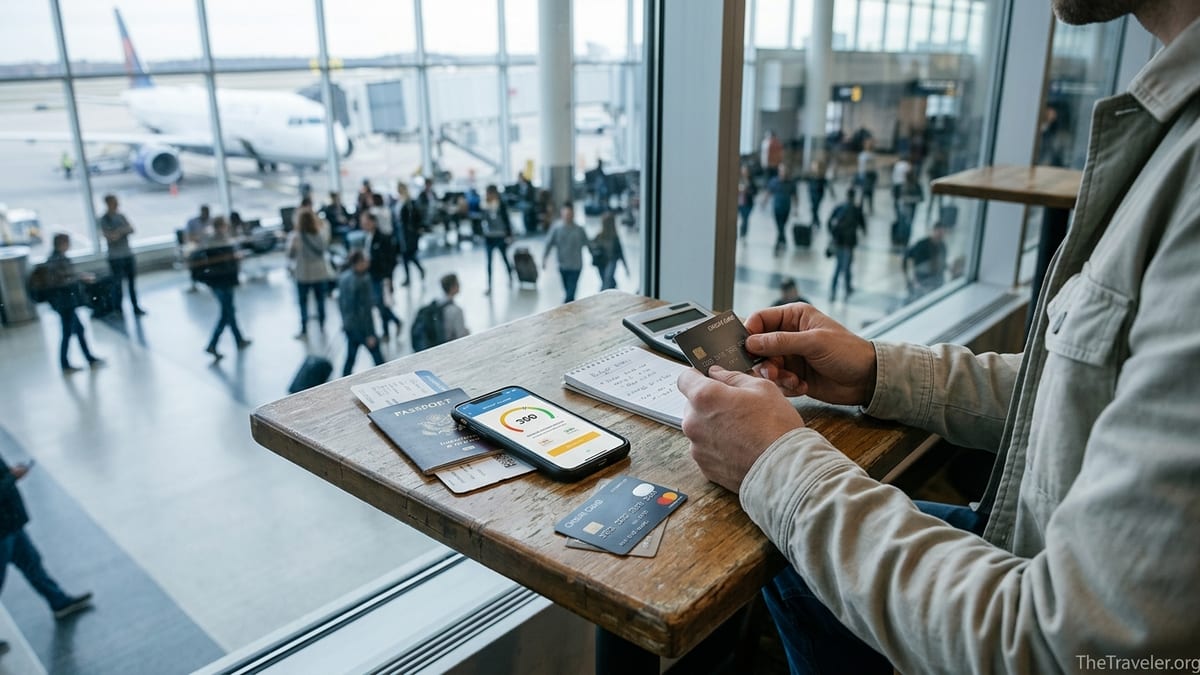
What “Bad Credit” Really Means for Travelers
When banks talk about “bad credit,” they are usually referring to a FICO score in the lower ranges, often below the mid 600s. Each lender has its own cutoffs, and they rarely publish exact numbers, but many travelers start seeing higher deposits, more frequent denials, and less generous card offers once their scores fall below that level. This can happen after late payments, high utilization, collections, or a past bankruptcy. The key is to understand that your score is not a judgment of character. It is a risk score that can change with consistent, deliberate action.
For travelers, bad credit shows up in very practical ways. You may need to pay a larger deposit when renting a car at airports like Denver or Orlando, or you might not be able to book a pay-at-hotel rate with some international chains if your card is frequently declined. When you try to finance a big trip, like flights from New York to London, the interest rate on a loan or on carried credit card balances may be significantly higher than what a traveler with strong credit would receive.
Bad credit can also limit your access to popular travel rewards cards. Premium products that advertise large welcome bonuses, airport lounge access, or hotel free nights are typically reserved for applicants with good to excellent credit. That can feel doubly frustrating when you see friends paying for trips with points while you are still focused on getting approved at all. Yet this stage does not have to be permanent. Many people move from subprime cards to mainstream rewards cards within a few years.
The starting point is shifting your mindset. Instead of thinking of a card as a quick way to finance a vacation, view it as a tool in a longer rebuilding plan. With the right card and disciplined use, each on-time payment and each reduced balance becomes a small but meaningful step toward better travel options and more affordable borrowing in the future.
How Credit Scores Work and Why Utilization Matters
To choose the best credit card for bad credit, it helps to understand the basic structure of a credit score. While exact formulas are proprietary, major scoring models typically weigh payment history as the most important factor. Missing payments on a store card in Miami or a general credit card used for groceries in Chicago can have a similar negative impact. The second major factor is how much of your available credit you are using, often called utilization.
Imagine you are approved for a secured card with a 400 dollar limit and you use it to book a 320 dollar low-cost airline ticket from Dallas to Los Angeles. You have just used 80 percent of your available credit on that one purchase. Even if you pay it off over the next two months, your reported utilization for that period may be high, which can drag down your score. By contrast, if you kept your monthly charges around 80 to 120 dollars and paid in full each month, your utilization would typically look healthier.
Other elements of your score include the age of your accounts, your mix of credit types, and how often you apply for new credit. Closing your oldest card, even if it is a basic, no-frills product you opened years ago for gas purchases on a road trip through Arizona, can sometimes hurt your score because it shortens your average account age. Likewise, applying for many cards in a short span can signal risk and trigger multiple hard inquiries, which may temporarily lower your score.
The practical takeaway is that rebuilding is less about clever tricks and more about consistent baseline behavior. Paying on time every month, keeping utilization well below your limits, and avoiding unnecessary new applications gradually signal to lenders that you are becoming a lower-risk borrower. Once this pattern is visible in your reports, better card offers and travel-friendly products tend to follow.
Best Types of Credit Cards When You Have Bad Credit
When your credit is damaged, most mainstream rewards cards are out of reach for now, but several categories of cards are specifically designed for people in your situation. Secured credit cards are often the most accessible starting point. With a secured card, you provide a refundable cash deposit, which usually becomes your credit limit. For example, if you put down 300 dollars, your usable limit might also be 300 dollars. That deposit protects the issuer, which makes approval more likely even if you have late payments or collections in your history.
There are also unsecured cards aimed at people with bad credit. These do not require a deposit, but they typically come with higher fees and interest rates, and sometimes very low limits at first. A traveler based in Atlanta might receive a 300 to 500 dollar limit on an unsecured subprime card, along with an annual fee. The key question is whether the card reports regularly to all three major credit bureaus and whether the fee structure is reasonable enough that you can maintain the account without added financial stress.
Store cards and gas cards can also play a role, though they require caution. You might receive targeted offers from a large retailer you use regularly for travel gear or from a national gas station chain you visit on cross-country drives. While these accounts can help build positive history if used lightly and paid in full, their higher interest rates and relatively low limits mean they are easy to misuse. They should complement, not replace, a general-purpose Visa or Mastercard that can be used more flexibly for travel bookings.
For travelers who are rebuilding after a more serious event like bankruptcy, some credit unions and community banks offer “second chance” credit cards or programs. These may start with very conservative limits and require a savings account as collateral. However, they can come with more transparent fees and supportive customer service. If you live in a smaller city and already bank locally, it is worth asking whether your institution offers a credit-building card or secured product tied to your existing relationship.
Real-World Examples of Secured and Subprime Cards
To make this more concrete, consider how a traveler named Maria might approach things. After a period of missed payments on several cards, her score dropped and mainstream travel rewards cards were no longer an option. She decided to open a secured card through a major bank, funding it with a 500 dollar deposit. Within a few days, she received a physical card that could be used anywhere a standard major-network card is accepted, from budget hotels in Phoenix to online train bookings in Europe.
Maria treated the card primarily as a bill-payment and small-purchase tool, not as a travel bankroll. Each month she used it for a streaming subscription and groceries, keeping her balance below about 100 to 150 dollars at any given time. She set up automatic payments from her checking account to ensure she never missed a due date. Over the course of a year, those on-time payments appeared on all three of her credit reports, and she began to receive offers for unsecured cards with better terms.
Another traveler, Jason, received an offer for an unsecured card marketed to people with fair or rebuilding credit. The card came with a modest starting limit of 400 dollars and an annual fee. Jason used the card strictly for recurring travel-related expenses, such as monthly public transit passes and occasional rideshare trips to the airport. By always paying his statement balance in full, he avoided interest entirely. After about six to twelve months of responsible use, his issuer automatically reviewed his account and increased his limit, which helped lower his utilization and slightly improve his score.
In both cases, the critical factor was not which specific brand they chose, but how they used the card day to day. A traveler in similar circumstances might compare several secured and subprime cards offered by major banks and reputable issuers, paying close attention to key terms like annual fees, security deposit requirements, whether the card graduates to unsecured status over time, and whether it reports to all major bureaus. The best choice is often the product with clear costs, straightforward terms, and a path to better options after a track record of on-time payments.
Building a Practical Rebuilding Plan Around Travel
Rebuilding credit is easier to stick with when you connect it to concrete goals. For frequent travelers, that goal might be qualifying for a mid-tier travel rewards card in a few years, or simply being able to rent a car at a major airport without a punishing deposit. Start by mapping out a 12 to 24 month plan that guides your use of any new secured or subprime card. This plan should include specific behaviors around spending, payments, and monitoring your progress over time.
One effective strategy is to tie your rebuilding activity to predictable, budgeted expenses instead of discretionary trip costs. For example, you might charge your cell phone bill and a small recurring subscription to your secured card each month, then pay the balance in full from your checking account. You avoid the temptation to finance a spontaneous weekend in Las Vegas or a last-minute international flight, which could push your utilization too high. Over time, each of those routine payments becomes a positive data point in your credit file.
It is also helpful to set a personal utilization target, such as keeping balances below 30 percent of your credit limits, and ideally lower. If one of your goals is to book a 250 dollar domestic flight later in the year and your card limit is 500 dollars, you might plan to prepay or split the purchase so your statement balance never reflects a large spike. In some cases, travelers time their payments so they pay down big purchases before the issuer reports balances to the credit bureaus, which can help keep reported utilization in a favorable range.
Finally, pair your card strategy with regular monitoring of your credit. Many issuers now provide free access to an estimated score and basic report information through their websites or mobile apps. Even if the score is an approximation, watching it move gradually upward can reinforce your progress. If you notice a sudden drop after a trip or a new application, you can adjust your behavior, such as pausing new credit inquiries or paying down balances more aggressively.
Avoiding Common Pitfalls that Keep Scores Low
When you are eager to rebuild, it is easy to fall into traps that slow or reverse your progress. One common mistake is applying for several cards at once out of fear of missing out on an approval. A traveler planning a vacation might submit applications for multiple store cards and subprime cards in a single weekend, hoping at least one will be approved. Each of those applications can trigger a hard inquiry, and multiple inquiries in a short span can make you appear riskier to lenders.
Another pitfall is carrying a balance and paying only the minimums month after month. Some travelers mistakenly believe that carrying a small balance helps their score, but most scoring models primarily reward on-time payments and low utilization, not interest payments. If you charge a 200 dollar hotel stay in Chicago and then only pay the minimum for months, you will likely pay significantly more than 200 dollars once interest is added. Whenever possible, aim to pay your statement balance in full, or at least more than the minimum, especially on high-rate subprime cards.
Fee-heavy products are another concern. Some cards marketed to people with bad credit include a combination of annual fees, monthly maintenance fees, and even setup charges that reduce your available limit from day one. For example, you might be approved for a 300 dollar limit, but after various fees are deducted, you have far less available for actual purchases, which can instantly push up your utilization. Before accepting any offer, travelers should read the fee schedule closely and avoid products where maintaining the account would strain their monthly budget.
Last, do not ignore existing negative items while you focus on new cards. Old late payments, collections related to medical bills from a hospital visit in another state, or an unpaid utility bill from a prior apartment can continue to weigh on your score. While not every debt can be quickly resolved, contacting creditors to set up payment plans or confirm balances is often worthwhile. In some cases, paying down or settling old obligations may help your rebuilding efforts over time and reduce the stress of surprise collection calls while you are on the road.
When to Start Graduating to Better Travel Cards
As your score improves, one of the most satisfying milestones is qualifying for a mainstream card with more favorable terms or basic rewards. There is no single score threshold that guarantees approval, since issuers weigh many factors, but travelers commonly start to see more options as they move into the fair and then good credit ranges. You will know you are making progress when prequalification tools begin to show offers for cards from major banks that were previously out of reach.
Many secured cards are designed with a “graduation” path. After a set period of on-time payments, the issuer reviews your account and may return your deposit while converting the card to an unsecured version. For a traveler, this might mean that the 300 or 500 dollars locked up as a deposit becomes available again for an emergency fund or trip savings while you keep the account open and continue building history. If your current secured card does not offer this feature, you can periodically check competing products from reputable issuers and consider applying once your score has strengthened.
At the same time, this is often when travelers are tempted to jump directly into premium travel cards with annual fees and complex rewards structures. While those products can be valuable, it is usually wiser to start with a straightforward no-annual-fee card that earns simple cash back on everyday spending. For instance, you might first obtain a card that offers a modest percentage back on groceries, gas, and some travel purchases, and only later layer on a more advanced travel card once you are consistently paying in full and managing multiple accounts comfortably.
When you are ready to upgrade, think about your actual travel patterns instead of broad marketing promises. If most of your trips are domestic flights and road trips, a mid-tier airline or hotel card might fit better than an ultra-premium product focused on luxury lounges and international business class tickets. Matching your next card to your real habits helps ensure that your new benefits are used, not wasted, and that annual fees make sense for your budget.
The Takeaway
Living with bad credit while trying to travel can be discouraging, but it does not have to define your future trips or your financial identity. The best credit card for bad credit is not automatically the one with the lowest advertised rate or the flashiest design. It is the one you can use predictably, affordably, and responsibly as part of a broader rebuilding plan.
By starting with a well-structured secured or subprime card, using it for stable, budgeted expenses, paying on time every month, and keeping your balances relatively low, you steadily send better signals to lenders. Over time, those signals translate into higher limits, lower costs, and access to travel rewards cards that were once out of reach. Each trip you book without extra deposits, each hotel stay you pay for without anxiety, becomes a reminder that your efforts are paying off.
Rebuilding credit is rarely fast, but it is highly achievable with patience. Focus on a few clear habits, avoid common traps like fee-heavy products and unnecessary applications, and give yourself time. Whether your dream is a cross-country road trip, a family reunion across the ocean, or simply smoother business travel, stronger credit can help you get there with more comfort and less cost.
FAQ
Q1. Can I get a credit card for travel if I have bad credit?
Yes, but your options will usually be secured cards or unsecured cards designed for people with damaged credit. These cards may have lower limits and higher fees, but if they report to the major credit bureaus and you use them responsibly, they can help you rebuild over time.
Q2. How long does it take to rebuild my credit score enough for better cards?
There is no fixed timeline, but many people begin to see noticeable improvement within 12 to 24 months of consistent on-time payments and low utilization. The exact pace depends on your starting point and the severity of past issues.
Q3. Should I choose a secured card or an unsecured card for bad credit?
A secured card is often safer and more predictable, since your deposit reduces the issuer’s risk and may lead to better approval odds and clearer terms. An unsecured card can work if the fees and interest rates are reasonable and the issuer reports to all major bureaus, but reading the fine print is essential.
Q4. Does carrying a balance help my credit score?
Carrying a balance generally does not help your score and can cost you a significant amount in interest, especially with subprime cards. Most scoring models reward on-time payments and low utilization, so paying your statement balance in full whenever possible is usually the better approach.
Q5. Can I use a secured card for booking flights and hotels?
In many cases, yes. Secured cards from major issuers often function like regular credit cards and can be used for airline tickets, hotel reservations, and rental cars. However, you should confirm with your issuer and be mindful of your credit limit so large travel holds do not push your utilization too high.
Q6. What fees should I watch out for on cards aimed at bad credit?
Look carefully for annual fees, monthly maintenance charges, setup fees, and additional costs for authorized users or limit increases. A card with multiple layered fees can leave you with little available credit and make rebuilding more difficult.
Q7. Will applying for several cards at once improve my chances of rebuilding?
Applying for many cards in a short period can actually hurt you by adding multiple hard inquiries to your reports. It is usually better to research carefully, apply for one card that fits your needs, and then focus on using it well before seeking additional accounts.
Q8. Should I close old cards while I am rebuilding?
Closing old cards can sometimes shorten your average account age and reduce your total available credit, which may affect your score. If an older card has no annual fee and you can manage it responsibly, keeping it open may help maintain a longer credit history and more available credit.
Q9. How do existing collection accounts affect my efforts to rebuild?
Collection accounts and other negative items can continue to weigh on your score even as you build new positive history. Whenever possible, contact creditors or collection agencies to confirm balances and explore payment arrangements. Resolving old debts may support your long-term rebuilding efforts and reduce financial stress.
Q10. When should I start considering travel rewards cards again?
Once your score has improved into a more stable range and you have shown at least a year of on-time payments and controlled utilization, you can start exploring basic rewards cards with modest benefits and no annual fee. After you demonstrate that you can manage those accounts consistently, you can gradually consider more advanced travel cards that align with your actual travel patterns.