


More news on this day
The UK Civil Aviation Authority is reinforcing reminders about how passengers carry power banks on flights, highlighting that failure to follow long-standing safety rules can trigger security incidents and contribute to avoidable departure delays.
Get the latest news straight to your inbox!
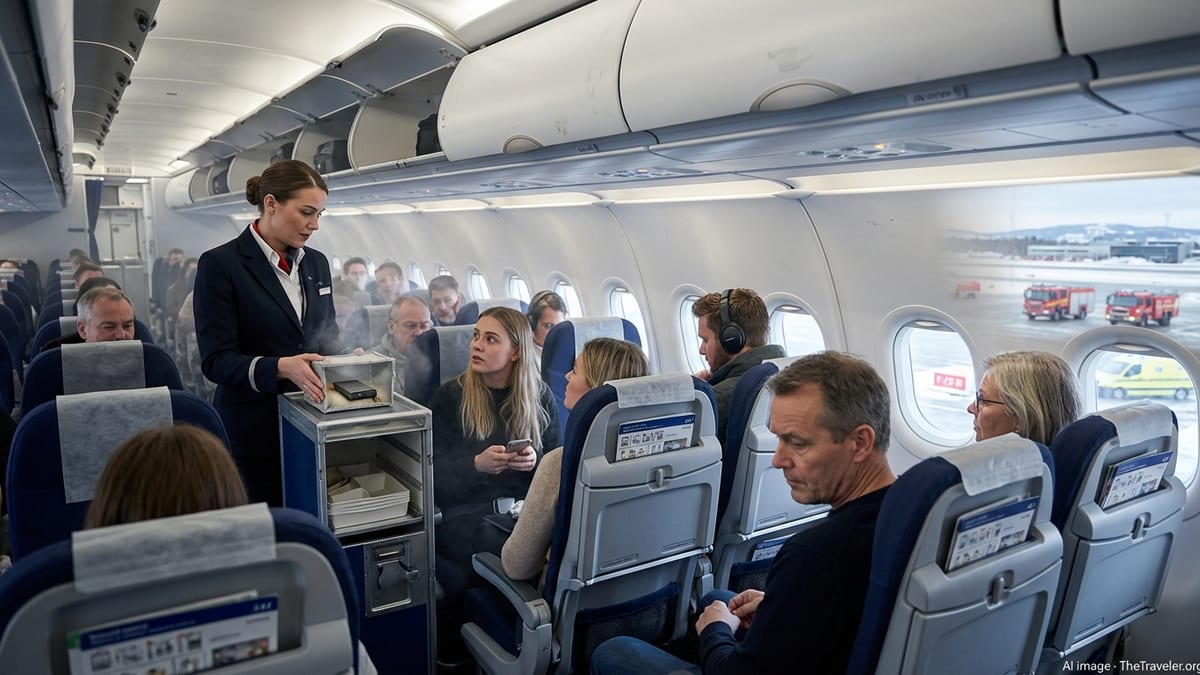
Focus on lithium battery safety at UK airports
Recent coverage in industry and consumer travel media indicates that the UK Civil Aviation Authority (CAA) has renewed efforts to draw attention to existing rules governing the carriage of power banks and other lithium battery devices on commercial flights. The move comes amid ongoing reports of security interceptions at airport checkpoints involving loose batteries and unlabelled power packs in checked luggage.
Publicly available guidance from the regulator reiterates that power banks are treated as lithium-ion batteries and must be carried in hand luggage rather than checked baggage. Travel trade reporting notes that the reminder is aimed at reducing the number of cases where bags are pulled from the hold or screened again because of incorrectly packed battery devices.
Airports and airlines have reported a steady rise in passengers travelling with multiple personal electronic devices and standalone power banks, particularly on leisure and city-break routes popular with younger travellers. Industry commentary suggests that while most travellers are broadly aware that laptops and phones should go in the cabin, many remain unclear that the same restrictions apply to detachable power banks.
Incorrectly packed power banks can hold up departures
Operational updates from airlines and handling agents indicate that mispacked lithium batteries are a recurring cause of last-minute baggage interventions once luggage is already loaded. When a suspicious item such as a power bank is detected in a checked bag, ground staff may have to stop loading, locate the specific suitcase, and remove or inspect it, a process that can take valuable minutes during a tight turnaround.
Travel trade coverage notes that the CAA’s latest reminder explicitly links compliance with power bank rules to efforts to minimise flight delays. As carriers work to maintain on-time performance through the busy summer holiday period, reducing security-related baggage disruptions has emerged as a priority alongside staffing and air traffic control resilience.
Industry sources describe scenarios in which aircraft are ready to depart but must wait while baggage is traced in the hold due to an unresolved screening image involving a battery pack. Although such events may only add a short delay to a single flight, the cumulative impact across a busy schedule can lead to missed slot times and knock-on lateness throughout the day.
Clear rules for passengers on what is allowed
According to publicly accessible CAA and airline safety pages, power banks are permitted on most passenger flights but must be carried in cabin baggage, protected from accidental activation, and kept within specified capacity limits. Typical thresholds require airline approval for larger units, while very high-capacity power stations may be prohibited entirely.
Travel-focused reporting highlights that passengers are generally advised to check the watt-hour rating of a power bank before travel and to ensure that any on-off switches or exposed terminals are covered. Some carriers also recommend disconnecting integrated cables and avoiding makeshift tape repairs or damaged casings, which can trigger additional scrutiny at security checkpoints.
Airlines commonly state that power banks and loose spare batteries should never be placed in checked bags due to the fire risk if a cell is damaged or short-circuited in the hold. By contrast, devices in the cabin can be monitored by crew and passengers, and any signs of overheating or smoke can be responded to using standard onboard procedures.
Travel industry steps up passenger communication
Reports in travel trade publications suggest that airlines, airports and booking platforms are being encouraged to present power bank and battery rules more prominently during the booking and check-in process. This may include clearer wording in pre-departure emails, more visible alerts in mobile apps, and simplified graphics on airport signage.
Some travel agents and tour operators are reported to be updating their customer documentation to include short reminders about battery restrictions alongside existing information on liquids, cabin baggage size and prohibited items. The goal is to ensure that travellers encounter consistent messaging from the point of purchase through to arrival at the airport.
Industry observers note that while power bank rules themselves are not new, the combination of growing device usage and heightened operational pressures has sharpened the focus on compliance. Better-informed passengers are seen as a practical way to reduce disruption without introducing new regulations or restrictions on personal electronics.
What travellers can expect this peak season
As the peak holiday season continues, passengers departing UK airports can expect to see ongoing emphasis on battery safety at both check-in and security screening. Travel media reports indicate that staff may ask more direct questions about where power banks are packed and may advise travellers to move them from checked bags into cabin luggage before drop-off.
Airport operators are also likely to maintain or expand the use of in-terminal messaging, including announcements and digital displays that remind customers about packing rules for electronic devices. These measures sit alongside wider efforts to streamline security, such as the gradual roll-out of advanced scanners and updated cabin baggage procedures.
For international travellers connecting through or into the UK, alignment between CAA guidance and airline policies means that following common lithium battery rules should minimise the risk of last-minute repacking at the gate. Clearer awareness of how to carry power banks is expected to support smoother boarding, fewer baggage holds for security reasons, and improved punctuality across busy summer schedules.