


Finland rewards visitors who plan ahead. With distinct seasons, long distances and a mix of wild nature and design-driven cities, choosing the right tours, hotels and travel packages can make the difference between a good trip and a truly memorable one. Below is a practical guide to some of the most compelling Finland experiences on the market right now, with real examples of where to stay, which operators to look at and what kind of budget to expect.
Get the latest updates straight to your inbox!
How to Choose the Right Finland Trip for You
Before you start booking glass igloos and husky safaris, it helps to be clear about what kind of Finland you want to experience. The country’s official tourism board divides Finland into four main regions: the Helsinki area, the Coast and Archipelago, Lakeland and Lapland. Each feels different in terms of landscapes, pace and price level, and your choice of base will shape which tours and hotels make sense for you.
Winter visitors, especially between December and March, often focus on Lapland for snow, Northern Lights and Christmas experiences. This is when package prices are highest, with weeklong aurora tours commonly starting around 2,500 to 3,000 euros per person including activities. Summer travelers, on the other hand, might prefer Helsinki paired with the lakes and islands further south, where cottage stays, cycling routes and lake cruises are more prominent and prices for simple guesthouses can drop well under 150 euros per night.
It is also worth deciding early how structured you want your trip to be. Fully packaged itineraries that bundle hotels, airport transfers and curated excursions are convenient for first-time visitors or families. Independent travelers may prefer to book a hotel in Helsinki or Rovaniemi and add small-group tours on a day-by-day basis. Both approaches work well in Finland, but the best-value option for you will depend on your comfort with driving in winter conditions, navigating public transport and juggling multiple booking confirmations.
Finally, think about seasonality beyond the obvious winter or summer split. Early autumn can bring colorful forests and fewer crowds in Lapland, while late April and May offer long days and more budget-friendly hotel rates in the south. Many Finnish destination sites and local tour boards now publish seasonal highlights and sample itineraries, which are helpful references when narrowing down your travel window.
Standout Tour Packages Across Finland
For travelers looking for a one-booking solution, Lapland-focused packages currently offer some of the strongest and most clearly defined experiences. For example, specialist operators in Finnish Lapland advertise winter tour bundles running between December and March, typically combining hotel nights in hubs like Rovaniemi with one or two nights in glass-roof accommodation further north. A representative seven-day Northern Lights itinerary might start from about 2,700 euros per person, including airport transfers, nightly aurora hunts, a glass igloo stay, and activities such as snowmobiling or reindeer visits.
Shorter Santa-themed breaks are common for families who want to meet Santa Claus in Rovaniemi without committing to a full week above the Arctic Circle. A three or four night Santa package at the peak of the Christmas period can begin around 1,800 to 2,300 euros per person, including visits to Santa’s village, a basic Northern Lights excursion and a night in an aurora cabin. These trips are highly seasonal, often selling out months ahead for late December and early January dates, so early booking is strongly recommended.
Beyond packaged Lapland holidays, there are also ready-made lake district itineraries, particularly around Lake Saimaa and the Lakeland cities that promote themselves collectively as a nature and culture region. Sample trips here might focus on a mix of cottage stays, guided hikes in national parks, visits to historic sites like medieval castles, and optional sauna and lake-cruise experiences. While pricing varies widely depending on the standard of accommodation, a five-night multi-stop Lakeland package with mid-range hotels and some guided excursions can often be found for noticeably less than an equivalent-length Lapland itinerary.
If you prefer to keep cities front and center, Helsinki and nearby coastal regions like Turku and the surrounding archipelago are increasingly included in combination tours with Lapland. A common pattern is a two-night Helsinki city break at the start, followed by a domestic flight to Rovaniemi or Ivalo for four or five nights of Arctic activities. When booked as a package, that sort of split itinerary normally includes internal flights, which can make it more cost effective than assembling every component independently.
Helsinki and Southern Finland: Design Hotels and Easy Day Tours
Helsinki works well as a standalone long-weekend destination or as a gateway to the rest of Finland. The city’s hotel scene has expanded in recent years, with a noteworthy mix of design-led boutique properties and large international brands in historic buildings. High-end travelers now look closely at addresses like the Waldorf Astoria Helsinki in the central Kruununhaka district, a luxury hotel created from restored early 20th century structures. At this level, room rates can run to several hundred euros per night, but you gain access to destination restaurants, spa facilities and concierge teams that can pre-book private guides and transfers.
Well-known Finnish chains also offer reliable mid-range options. Sokos Hotels operates properties such as Solo Sokos Hotel Torni, an art deco landmark near the center with a rooftop bar, and Hotel Torni Tampere, the tallest hotel building in the country, known for its panoramic views from the upper floors and sky bar. For travelers who value Scandinavian styling without ultra-luxury pricing, Nordic brands like Clarion Hotel Helsinki in the Jätkäsaari district combine modern rooms, strong breakfast spreads and easy access to tram and ferry connections.
From these Helsinki bases, it is easy to add small-group or private tours that bring Finland’s nature and culture into focus without requiring a rental car. Popular day experiences include walking architecture and design tours in the city center, boat trips to Suomenlinna sea fortress in summer and evening sauna cruises in the surrounding archipelago. Many operators now offer bundled “city plus nature” day packages that combine a half-day urban tour with a guided visit to a nearby forested island or national park, which can be a good compromise if you are short on time.
Southern Finland also lends itself to self-organized mini-packages. A common pattern is to spend two nights in Helsinki, then take the train to a regional hub such as Turku or Tampere for two or three nights before looping back to the capital. Hotels in these secondary cities often price lower than in Helsinki, particularly outside major festivals, which allows you to upgrade to higher room categories or include more paid excursions such as lake cruises, museum passes or sauna experiences without breaking the budget.
Lapland Highlights: Aurora Hunts, Huskies and Glass Igloos
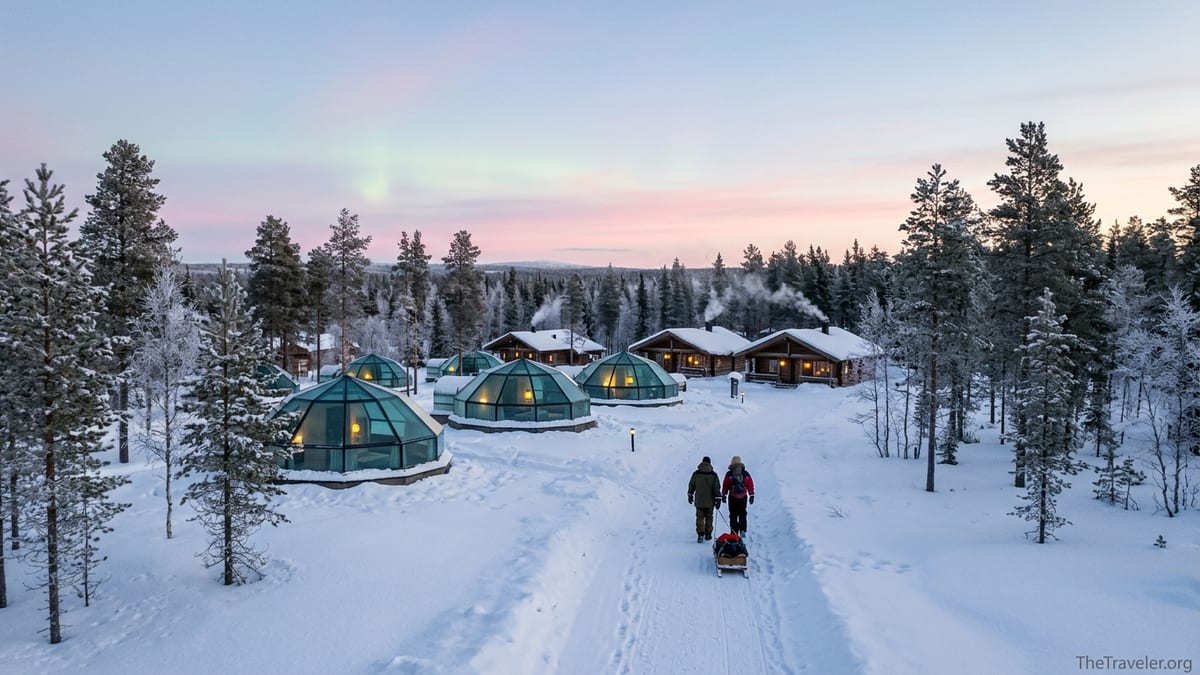
Laptop or phone wallpaper images of glass-roofed cabins under green Northern Lights are usually shot in Finnish Lapland, so it is no surprise this region anchors many of the most in-demand tour packages. Rovaniemi, marketed as the capital of Lapland and the official hometown of Santa Claus, is the most common entry point thanks to its domestic and seasonal international flights. From here, specialist guides run small-group aurora chasing tours, husky safaris, reindeer farm visits and snowmobile trips that can be booked individually or as part of multi-day bundles.
Small-group Northern Lights operators near Rovaniemi now emphasize quality over quantity, often limiting group sizes, providing winter clothing and offering professional photography. Prices for a four to five hour aurora hunt in a small group commonly start from around 200 to 260 euros per person, with some companies advertising “guaranteed” or repeat-chance policies where you can join again at a reduced rate if there is no visible aurora on your first night. Travelers who are comfortable driving in snowy conditions sometimes base themselves a little outside town to enjoy darker skies, then join these tours on select evenings when the forecast looks promising.
For many visitors, however, the real headline experience is spending a night under glass. Resorts such as Aurora Village in Ivalo, along with a growing number of glass igloo complexes near Levi, Saariselkä and Ranua, offer cabins with transparent or semi-transparent roofs oriented toward the northern sky. Pricing varies sharply by date, but a glass-roof cabin for two in high season can easily cost several hundred euros per night, and some premium units with private saunas or hot tubs are more expensive still. To soften that impact, some Lapland tour packages include only one or two nights in glass accommodation, paired with more conventional hotel rooms for the rest of the stay.
One way to lower costs and avoid peak crowds is to look at shoulder seasons such as late November or early April, when there can still be snow and Northern Lights but fewer visitors. Some aurora packages around Inari and other northern towns explicitly publish 2025 and 2026 availability windows running from early December to late March, with optional upgrades to aurora cabins for just the first or last night. Travelers interested in Arctic wildlife can also time their visit for special experiences like icebreaker cruises or winter wildlife parks, which are sometimes bundled as optional add-ons to core aurora and husky packages.
Finland’s Lakes and Archipelago: Slow Travel and Cottage Breaks
While Lapland dominates winter marketing images, Finland’s Lakeland region and coastal archipelago come into their own from late spring through early autumn. Around Lake Saimaa, Finland’s largest lake, local tourism organizations promote cottage stays, gentle outdoor adventures and a slower pace of life. Visitors can combine guided canoeing or paddleboarding with forest hikes, visits to local markets and evenings in traditional lakeside saunas. National landscapes like the ridges and forests of Punkaharju or the waters around historic Olavinlinna Castle near Savonlinna offer a strong sense of place without the intense logistics of deep-winter travel.
Multi-day packages in this region tend to be more flexible, sometimes framed as suggested routes rather than rigidly scheduled tours. A typical example might be a five-night trip that includes two nights in a lakeside hotel or guesthouse, two nights in a self-catering cottage and a final night in a small city such as Mikkeli or Savonlinna, with optional guided excursions available in each location. Prices per night can be noticeably lower than in Lapland, particularly if you share accommodation among a family or group of friends, and self-catering kitchens help reduce food costs.
The Finnish lake district around Jyväskylä and other central towns adds a cultural layer through UNESCO-listed sites, design history and local festivals. Many independent travelers form their own “package” by combining a few nights in a city hotel with rural guesthouses reachable by bus, train or rental car. Small local tour companies offer services such as guided cycling routes, berry and mushroom foraging walks and photography outings, which can be booked individually to tailor the experience to your interests and budget.
On the coast and archipelago, particularly around Turku and the islands of the southwest, summer packages often revolve around island-hopping with ferries, stays in converted lighthouses or old wooden houses and sea-kayaking or sailing tours. These trips are usually easier to plan independently than Lapland winter adventures, but some specialist operators do offer curated archipelago itineraries that bundle accommodations, certain meals and pre-booked boat legs to simplify logistics for first-time visitors.
Notable Hotels and Unique Places to Stay
Finland’s accommodation scene has expanded beyond traditional city hotels and ski-resort chalets to include a wide range of distinctive stays. Visit Finland and regional tourism sites now highlight new or noteworthy properties almost every year, from architectural design hotels in Helsinki to remote nature retreats with mirrored cabins. Travelers who care as much about where they sleep as what they see can easily shape an itinerary around a handful of these standout places.
In Helsinki, the Waldorf Astoria Helsinki stands out among luxury options, especially for travelers who appreciate heritage architecture and full-service amenities in a central neighborhood. Other long-established hotels, such as Hotel Torni and the harborside Clarion Hotel Helsinki, remain popular for their skyline views, rooftop bars and walkable locations close to restaurants, museums and ferry terminals. At the top gastronomic level, properties tied to fine dining restaurants, including historic venues with Michelin recognition, attract visitors who are willing to splurge for tasting menus and wine pairings.
Outside the capital, distinctive stays range from glass igloo villages to new-generation wilderness lodges. Ranua in Lapland has developed a cluster of glass igloos by a lake, published with seasonal pricing that reflects demand for aurora and autumn foliage periods. Inari, Levi and Saariselkä host several resorts with varying levels of privacy and facilities, from simple igloos with shared services to spacious cabins with private saunas and full board. In Lakeland and along the coast, visitors can find architect-designed villas, barn conversions and eco-certified lakeside cabins that put sustainable building and low-impact travel at the forefront.
These one-of-a-kind properties often book out early for peak months, particularly Christmas and New Year in Lapland and school-holiday weeks in July and early August by the lakes and sea. When comparing options, pay close attention to what is included in the nightly rate. Some resorts bundle breakfast, winter clothing rental and select activities, while others charge separately for everything beyond the room. If you are considering a package that highlights a specific hotel or resort, it is sensible to price out the same stay independently to understand how much convenience you are paying for.
Smart Booking Tips, Budget Ranges and When to Go
Budgeting for Finland can feel daunting at first glance, but costs vary widely depending on timing, comfort level and how you combine packaged and independent elements. As a rough guide, city-break visitors who book mid-range hotels in Helsinki, use public transport and join a couple of paid tours can expect daily on-the-ground expenses that are comparable to other Nordic capitals. In Lapland, however, the combination of higher accommodation costs, specialized winter activities and airport transfers means daily budgets typically need to be higher, especially in December and early January.
One effective strategy is to let a package handle the most logistically complex segment of your trip, then add independent city days at either end. For example, you might book a five or six night Lapland aurora package that bundles airport transfers, accommodation, breakfast and a core set of activities, then stay two nights in Helsinki with a simpler, self-planned program. This approach reduces both planning time and the risk of hidden transport costs, while still leaving room for spontaneous exploring in the capital.
When looking at date ranges, consider that domestic Finnish holiday periods and major European school breaks can push prices up. If you are flexible, look for early December, mid to late January or late March for winter trips, and late May, early June or early September for lake and archipelago travel. Airlines and hotels often release sales or early-bird offers several months ahead of these shoulder periods, which can translate into meaningful savings, especially for families needing multiple rooms.
Finally, pay attention to what is included in any tour or package you are considering. Check whether winter clothing is provided or must be rented separately, whether airport transfers are private or shared and whether meals are full board, half board or breakfast only. In many cases, a slightly higher upfront package cost can become better value once you factor in the price of arranging these pieces independently. Likewise, for hotels, comparing flexible and non-refundable rates, and watching for promotions that include extras such as spa access or dining credits, can help you align your choices with both your budget and your travel style.
FAQ
Q1. When is the best time to visit Finland for Northern Lights tours?
The core Northern Lights season in Finnish Lapland usually runs from late September to early April, with the most popular tour packages scheduled between December and March when snow conditions are most reliable. Shoulder months at the start and end of this window can offer lower prices and fewer crowds.
Q2. How much should I budget for a weeklong Lapland tour package?
Prices vary, but a typical six or seven night Northern Lights package that includes airport transfers, mixed hotel and glass-igloo stays and several guided activities often starts around 2,500 to 3,000 euros per person in high season, not including international flights.
Q3. Is it better to book a Finland trip as a package or independently?
First-time visitors, winter travelers and families often benefit from packages that bundle transfers, activities and some meals, especially in Lapland. Independent travel can be more flexible and sometimes cheaper in Helsinki, Lakeland and the archipelago, particularly in summer when public transport works well and accommodation prices are lower.
Q4. Do I need to rent a car to explore Finland?
In Helsinki and major southern cities, public transport and organized tours are usually sufficient. In Lapland and remote lake or archipelago areas, a rental car offers more freedom, but many tour packages and resorts provide airport transfers and organized excursions that allow you to visit without driving.
Q5. What kind of clothing is required for winter tours in Finland?
Layering is essential, with a moisture-wicking base layer, insulating mid-layers and a windproof outer shell, plus warm gloves, hats and thermal socks. Many Lapland tour operators and hotels provide or rent insulated overalls and boots for outdoor activities, which reduces the amount of specialist gear you need to pack.
Q6. Are glass igloo stays worth the price?
Glass igloos and aurora cabins are expensive compared with standard hotel rooms, especially at Christmas and New Year, but they deliver a memorable experience when the sky is clear. Many travelers choose to book just one or two nights in glass accommodation within a longer stay to balance cost with the chance of seeing the lights from bed.
Q7. Can I combine Helsinki and Lapland in a single trip?
Yes. A common pattern is two or three nights in Helsinki for museums, restaurants and coastal walks, followed by a domestic flight to Rovaniemi, Ivalo or another Lapland airport for four or five nights of winter activities. Some tour operators sell this as a single package that includes the internal flight.
Q8. How far in advance should I book Finland hotels and tours?
For Christmas and New Year in Lapland, booking six to twelve months ahead is sensible, especially for glass igloos and family rooms. For summer lake and archipelago trips, three to six months is usually enough, though last-minute deals can appear in shoulder seasons.
Q9. Is Finland suitable for budget travelers?
Finland is not a classic budget destination, but careful planning helps. Visiting outside peak periods, staying in guesthouses or self-catering apartments, using public transport and booking only a few key paid tours can keep costs manageable, especially in the south and lake regions.
Q10. Are Finland tour operators generally reliable and safe?
Tourism is well regulated, and established Finnish tour operators and hotels follow high safety and environmental standards. It is still wise to check recent reviews, confirm what insurance is recommended and read cancellation policies carefully before paying deposits.