


Finland has a way of getting under travelers’ skin. It rarely shouts for attention, yet year after year it tops global happiness rankings and appears on dream-trip wish lists, drawing visitors who are curious about how a country of forests, lakes and understated cities has become one of the world’s most fascinating places to explore. The answer lies in a mix of wild nature, thoughtful design, deep-rooted traditions and a quietly ambitious approach to sustainability that together create a travel experience unlike anywhere else in Europe.
Get the latest updates straight to your inbox!
Happiest-country mystique and the reality travelers encounter
Finland’s reputation as the “world’s happiest country” is one of the main reasons it keeps appearing in travel conversations. The World Happiness Report has placed Finland at or near the very top of its rankings for several years running, and Finnish authorities highlight that standing in recent national overviews. That headline naturally piques the curiosity of visitors who want to see what life looks like in a place that consistently scores so well on measures such as trust in institutions, social support and perceived quality of life.
On the ground, travelers quickly realize that Finnish happiness does not look like constant cheerfulness. In Helsinki, for example, you are more likely to see people quietly reading on a tram or chatting softly over coffee than performing exuberant street scenes. What stands out instead is how smoothly daily life works. Trains from the airport are frequent and clearly signed, tap water in hotels and cafés is clean and free, and even small neighborhood supermarkets stock gluten-free and lactose-free options as a matter of course. Many visitors describe an overall sense of calm efficiency rather than overt exuberance.
That subtle quality of life becomes part of the attraction. A long weekend in Helsinki might involve strolling from the Central Railway Station to the Oodi central library, a striking curved building where locals actually linger to study, knit or meet friends. A traveler working remotely can easily find a quiet corner, plug in a laptop and use the free, fast Wi‑Fi without needing to buy anything. In many countries such spaces are rare; in Finland, they are treated as a normal public service. Experiences like this help explain why the country’s global image is tied to contentment and why many visitors leave feeling unexpectedly rested.
The happiness narrative also influences the types of tourism Finland promotes. Official campaigns in recent years have invited guests to learn from Finnish balance and simplicity, with sample itineraries focused on slow travel, time in nature and everyday rituals like sauna evenings instead of only blockbuster attractions. For travelers who are tired of rushed checklists and overcrowded hotspots, that softer, lifestyle-driven promise is part of Finland’s enduring pull.
Nature at the forefront: lakes, forests and the Arctic edge
Few countries integrate wild nature into daily life as seamlessly as Finland, and this is perhaps the single biggest reason it keeps ranking among the most compelling destinations. Around three-quarters of the country is covered in forest, and there are tens of thousands of lakes scattered across the landscape. Even first-time visitors to Helsinki notice how quickly the city seems to dissolve into green; a 15-minute tram ride can carry you from the central station to woodland trails or rocky seashore paths.
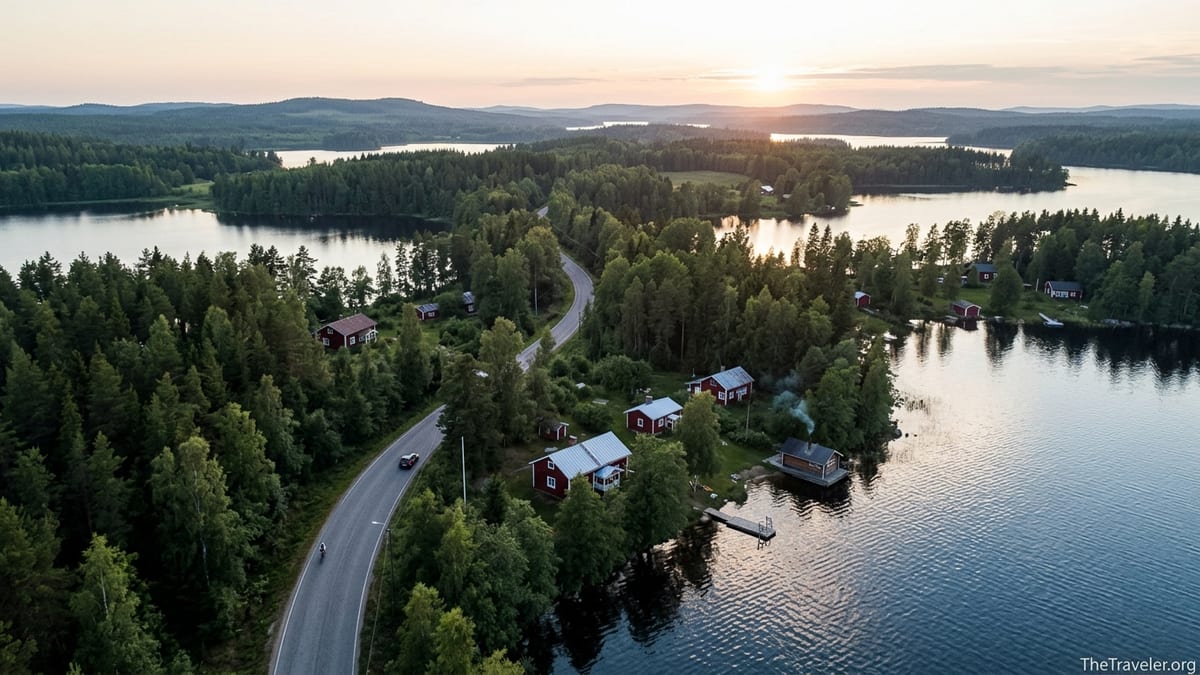
In the Lakeland region, this intimacy with nature becomes the entire point of the trip. Many travelers book a week in a simple wooden cottage near towns like Savonlinna or Kuopio, often with a private sauna and a small jetty leading straight into the water. In summer, evenings stretch almost endlessly, and it is common to see guests grilling salmon outside at 10 pm, then slipping into the perfectly still lake as a light mist forms. For many urban visitors, this slow rhythm and the ability to swim in clean water right off the doorstep is a revelation.
Farther north, Finnish Lapland delivers the sort of Arctic experiences many people once associated only with distant expedition cruises. Towns such as Rovaniemi, Levi and Saariselkä have built up extensive visitor infrastructure, from glass-roofed cabins designed for aurora viewing to family-friendly ski slopes and reindeer farms. The Northern Lights are never guaranteed, but from roughly late autumn to early spring it is common for visitors who stay several nights to catch at least one display of shimmering green or purple across the sky. Resorts typically offer last-minute alerts via phone or in-room signals so that guests can dash out into the snow when the aurora appears.
Importantly, these wilderness experiences are not restricted to hardy adventurers. National parks like Nuuksio near Helsinki and Pallas-Yllästunturi in Lapland have clearly marked trails, free open shelters with firewood and maintained lean-tos. Families with small children can walk short loops to scenic viewpoints, while more experienced hikers can set off on multi-day routes. The ease of access, combined with the feeling of genuine remoteness once you step onto a forest path, makes Finland’s nature feel both welcoming and thrilling.
Helsinki: a design-forward capital that rewards slow exploration
For many visitors, Helsinki is their first encounter with Finland, and it immediately sets the tone: understated, well-designed and closely tied to the sea. The capital has no single must-see monument on the scale of an Eiffel Tower or Colosseum, yet travelers routinely describe it as one of their favorite European cities, precisely because it feels livable rather than monumental. Its human-scale streets, harbor views and functional public spaces invite wandering without a strict agenda.
Architecture lovers find plenty to admire. Within a short walking radius you can move from the neoclassical Senate Square and its white cathedral to the granite romanticism of the National Museum, then on to contemporary landmarks like the Kamppi Chapel of Silence and the Oodi library. The new central library in particular has become a symbol of modern Helsinki: a warm, light-filled space where tourists take photos of the sweeping wooden facade while locals use sewing machines, 3D printers and children’s play areas on the upper floors. It feels less like a tourist sight and more like a glimpse into how the city invests in everyday quality of life.
Helsinki’s design culture also extends to its food scene. The covered Old Market Hall near Market Square is a convenient place for travelers to try local flavors at controllable prices, from salmon soup and rye bread to Karelian pies filled with rice. Cafés around the Design District serve single-origin coffee and cinnamon buns in minimalist interiors, and it is increasingly common to find plant-based menus or clearly labeled vegetarian dishes alongside traditional meat and fish. Tap water is safe to drink everywhere, which helps keep dining costs manageable for budget-conscious visitors.
What keeps Helsinki fascinating even for repeat travelers is how quickly you can shift from urban streets to archipelago views. A short ferry ride from the central harbor takes you to the island fortress of Suomenlinna, where locals picnic on grassy ramparts and commuters still take boats to reach their homes. Smaller islands host summertime public saunas and swimming spots that feel far from a capital city. It is this blend of design, culture and easy nature access that ensures Helsinki continues to appear in travel round-ups of under-the-radar but highly livable European capitals.
Sauna, everyday rituals and a culture that values quiet connection
If there is one tradition that encapsulates Finland’s appeal, it is the sauna. Sauna culture is so deeply woven into Finnish life that it has been recognized by UNESCO as part of the world’s intangible cultural heritage. Almost every hotel, many apartments and countless lakeside cottages have their own sauna, and going “to sauna” is treated as an ordinary part of the week rather than a luxury spa visit.
For travelers, this offers a rare chance to join locals in a national ritual. In Helsinki, public saunas like Löyly and Allas Sea Pool welcome visitors with bookable sessions and clear etiquette guidelines. A typical experience might involve alternating between the heat of a wooden sauna room and a cool plunge in the Baltic or a small outdoor pool, often even in winter when the sea is fringed with ice. In Lapland, many resorts have lakeside saunas where you can slip directly from the steam into a hole cut in the ice, watched only by pine trees and, with luck, the flicker of northern lights overhead.
Sauna is also a window into Finnish social norms. Conversation tends to be relaxed and unforced, and it is not unusual to sit in comfortable silence with strangers. Mixed-gender saunas are usually swimsuit-only, while traditional single-sex sessions can be fully nude, but modesty towels are widely accepted. The lack of pretension and the focus on simple elements heat, cold, water and wood help visitors understand why this ritual is so cherished and why it has survived into the digital age without losing its authenticity.
Beyond sauna, travelers notice other daily rituals that define the Finnish experience. Long coffee breaks with pulla (sweet buns), evenings spent berry-picking or mushroom-hunting in late summer, and unhurried walks around neighborhood parks all reflect a culture that values quiet, low-key pleasures. Participating in these activities even briefly usually leaves a stronger impression than ticking off a long list of sights, and it is often what returning visitors mention when explaining why Finland stays in their travel rotation.
Sustainable travel and the right to roam
Another reason Finland stands out is how seriously it takes sustainability, not just as a slogan but as a guiding principle for tourism development. The country has set an ambitious goal of becoming carbon neutral by 2035, and national tourism authorities frame their strategies around minimizing environmental impact while keeping nature accessible. For visitors, this is visible in small but concrete details: clear recycling points in hotels, strong rail and bus connections that make it possible to travel without renting a car, and widespread promotion of local food and seasonal produce.
Finland’s Sustainable Travel Finland program encourages accommodation providers, tour operators and destinations to meet specific environmental criteria. When booking, travelers increasingly encounter STF-labeled hotels or activity providers that have committed to reducing energy use, managing waste responsibly and protecting local communities. For example, in Lapland many companies now limit group sizes for husky or reindeer safaris, use quieter, lower-emission snowmobiles or encourage guests to combine motorized activities with slower snowshoeing or skiing excursions.
Underlying much of this is the concept often translated as “Everyman’s Right,” which gives people broad freedom to roam in nature: you may walk, ski or camp on uncultivated land and pick wild berries and mushrooms, provided you respect privacy and do not cause damage. This legal tradition is a major reason why hiking and foraging trips are so popular, and it shapes how tourism operates. Guided berry-picking excursions near Kuusamo or mushroom walks outside Tampere rely on this right of access, but guides are usually careful to explain that responsible behavior is expected in return, from closing gates to carrying out all trash.
For travelers interested in low-impact vacations, this framework makes Finland especially attractive. It is realistic to plan an itinerary that relies on trains between major cities, regional buses to smaller towns, and hiking or cycling once on the ground, all while staying within a network of accommodations that are actively improving their environmental performance. Few countries offer such a coherent blend of freedom in nature and structured sustainability efforts, which helps explain Finland’s steady rise in conversations about model destinations for responsible travel.
Seasonal contrasts that keep travelers coming back
Finland’s dramatic seasons are a key part of its fascination. Visit once in winter and once in summer, and you might feel as though you have seen two different countries. This contrast encourages repeat visits and gives tour operators a reason to develop distinct experiences throughout the year, ensuring that Finland remains newsworthy in travel media beyond a single “best time to go.”
In winter, especially from December to March, the country leans into its snowbound identity. Cities like Helsinki and Turku are decorated with lights, Christmas markets serve hot drinks and gingerbread, and in Lapland snow blankets forests thick enough to muffle almost every sound. Travelers book stays in glass igloo hotels near Rovaniemi or Kittilä specifically for the chance to lie in bed watching for auroras, while daytime might involve cross-country skiing, husky sledding or simply walking along frozen rivers lined with candles. The long nights can be challenging, but they also create a sense of intimacy and romance that many visitors find addictive.
Summer could not feel more different. Around June and July, especially in the north, the sun barely dips below the horizon and the famous midnight sun bathes lakes and fells in soft gold. Locals flock to archipelago cabins, and even business travelers in Helsinki notice that meetings tend to end earlier as people head for their boats or summer houses. For tourists, this is prime time for kayaking among the islands off Turku and the Kvarken archipelago, cycling quiet coastal roads, or attending small-town music festivals where audiences sit on blankets until well past what would normally be bedtime.
Spring and autumn, often overlooked in marketing materials, have their own appeal. Autumn in Lapland brings spectacular ruska foliage, with hillsides turning deep red and orange, ideal for hiking trips that combine crisp days with high aurora chances at night. Spring, when the ice breaks on lakes and migratory birds arrive, can be a rewarding period for photographers and nature enthusiasts who prefer cooler temperatures and fewer crowds. Together, these shifting seasons give Finland an ongoing narrative: there is always a new side of the country to experience, which keeps it firmly on the map for curious travelers.
The Takeaway
Finland’s enduring allure as one of the world’s most fascinating travel destinations does not rest on a single landmark or marketing slogan. Instead, it comes from the interplay between its vast, accessible nature, quietly confident cities, deep-rooted sauna culture and serious commitment to sustainability. Travelers are drawn by headlines about happiness rankings and northern lights, but they tend to remember the country for smaller moments: watching the mist rise off a lake after an evening sauna, sipping coffee in a library that feels like a civic living room, or wandering through a spruce forest knowing that the right to roam is protected.
As global tourism evolves, Finland offers a blueprint for destinations that want to remain attractive without sacrificing authenticity or the environment. It leans into what it already does well calm, functional urban life; generous public spaces; respect for nature; and modest but meaningful traditions instead of chasing short-term trends. That combination ensures that Finland will continue to appear on “most fascinating” lists not only this year, but for many seasons to come.
FAQ
Q1. When is the best time of year to visit Finland for a first trip?
The choice depends on what you want: winter from December to March is ideal for snow and northern lights in Lapland, while June to August offers long days, lake swimming and archipelago trips. Many first-time visitors choose late summer or early autumn to combine mild weather with fewer crowds and a chance of seeing early auroras in the north.
Q2. Is Finland very expensive for travelers compared with other European countries?
Finland is generally more expensive than much of southern or eastern Europe but comparable to other Nordic countries. Accommodation and eating out in Helsinki or Lapland resort areas can be pricey, but costs drop if you self-cater in cabins, use public transport, drink tap water and focus on free activities like hiking, swimming and exploring parks.
Q3. Do I need to rent a car to explore Finland properly?
Not necessarily. Trains and long-distance buses connect major cities such as Helsinki, Tampere, Turku and Oulu, and there are good rail and bus links to many Lapland towns. For remote cabins or smaller villages, a rental car can be useful, but plenty of visitors rely entirely on public transport and organized excursions without feeling limited.
Q4. How difficult is it to see the Northern Lights in Finland?
Seeing the Northern Lights always involves some luck, but northern Finland offers very good odds during the darker months. If you stay at least three or four nights in Lapland between roughly late autumn and early spring, avoid bright city centers and remain flexible about going outside late at night, your chances are reasonably good, though never guaranteed.
Q5. What should I know about sauna etiquette before visiting?
Basic sauna etiquette is simple: shower before entering, speak quietly, respect others’ personal space and ask before pouring water on the hot stones. In mixed-gender saunas, swimwear is usually expected, while single-sex sessions may be nude or towel-only. If you are unsure, watch what locals do or ask the staff; Finns are used to guiding visitors.
Q6. Is Finland a good destination for families with children?
Yes. Finnish cities are generally safe, playgrounds are plentiful and many attractions cater specifically to families. In Lapland, activities like reindeer visits, husky rides and beginner-friendly ski slopes are designed with children in mind, and in summer, shallow lake shores, nature trails and adventure parks keep younger travelers busy without long queues or overwhelming crowds.
Q7. How widely is English spoken in Finland?
English is widely spoken, especially in cities, tourist areas and among younger people. Hotel staff, guides, restaurant servers and transport workers almost always speak good English, so everyday travel tasks are straightforward. Learning a few basic Finnish phrases is appreciated but not necessary for most visitors.
Q8. What kinds of food can travelers expect, and are there options for special diets?
Finnish cuisine highlights fish, rye bread, potatoes, root vegetables and berries, with popular dishes like salmon soup and Karelian pies. Cafés and restaurants commonly offer vegetarian, vegan and gluten-free options, and supermarkets clearly label lactose-free and gluten-free products, making it comparatively easy for travelers with dietary restrictions to eat well.
Q9. How does Finland support sustainable and responsible tourism?
Finland promotes low-impact travel through excellent public transport, national sustainability programs for tourism businesses and strong nature-protection rules. Visitors see this in the form of recycling systems, STF-labeled accommodations, guidance on respectful behavior in national parks and the long-standing right to roam, which is paired with clear expectations to leave no trace.
Q10. Is it realistic to combine cities, lakes and Lapland in a single trip?
It is possible, especially if you have around 10 to 14 days. A common route is to start with two or three nights in Helsinki, travel by train or plane to a Lapland destination for several days of Arctic activities, then spend a few nights in the Lakeland or archipelago region before returning to the capital. With less time, many visitors choose either Lapland plus Helsinki or lakes plus Helsinki.