


Kayak tours have become one of the most popular ways for travelers to get close to water, wildlife, and wild places without needing years of outdoor experience. From bioluminescent bays in Florida to sea caves in California and quiet estuaries in New England, outfitters everywhere now market “beginner friendly” tours. For first-time paddlers, the real question is whether guided kayak tours are genuinely worth the cost, and what you should know before you click “book now.”
Get the latest updates straight to your inbox!
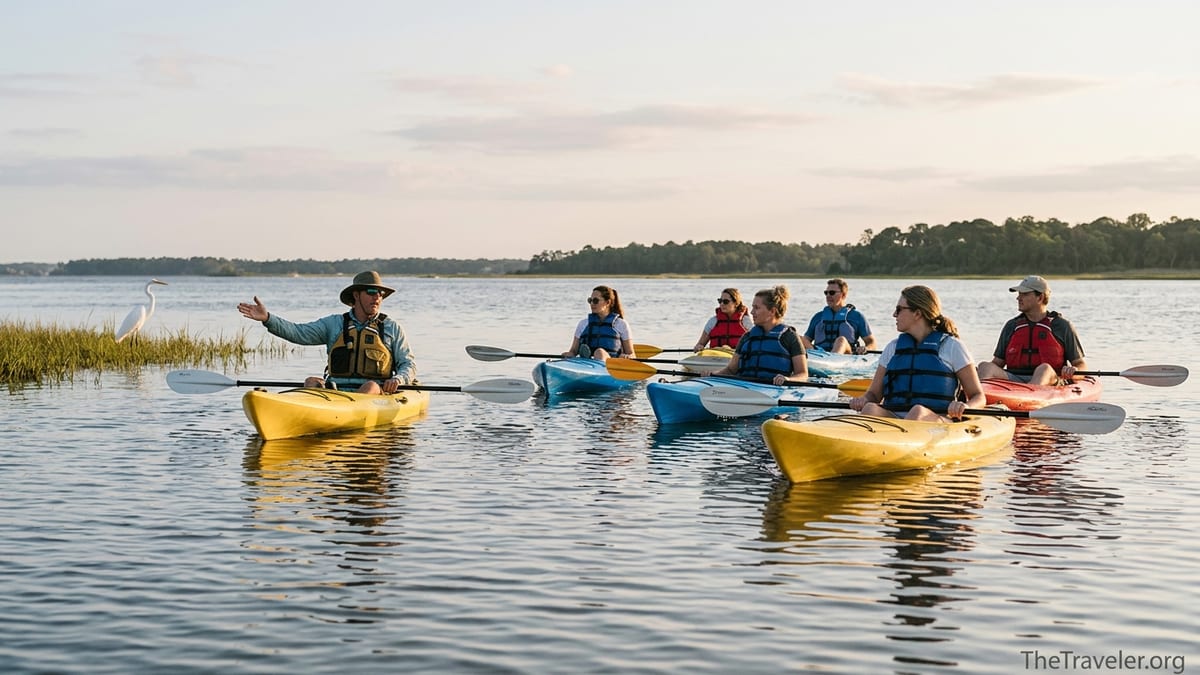
What You Actually Get When You Pay for a Kayak Tour
For a first-time paddler, the biggest value of a guided tour is that almost everything is bundled into a single, predictable experience. A reputable outfitter usually includes the kayak, paddle, personal flotation device, and basic safety gear in the tour price, along with a guide who knows the route, the tides or currents, and where conditions change quickly. For example, outfitters in the Apostle Islands area of Wisconsin often include a kayak, spray skirt, wetsuit, paddle float, and bilge pump in their sea kayak packages, so beginners are not left to guess which gear is essential.
The price you see covers more than just equipment. You are also paying for route planning, local knowledge, liability insurance, and someone whose job is to watch the weather and group dynamics while you enjoy the scenery. On Hilton Head Island in South Carolina, a two hour guided marsh tour typically runs in the range of about 50 to 70 dollars per person for a shared kayak, which includes a safety briefing and interpretation of the local dolphin and bird life, rather than just a boat rental and a map.
In some destinations the access you gain is something you simply could not do on your own as a beginner. Along the Florida Space Coast, bioluminescent night tours in clear kayaks depart into shallow lagoons with glowing plankton where navigation can be confusing in the dark. A guided night tour there commonly costs around 70 to 80 dollars for roughly 90 minutes on the water, but it comes with a small group size and a guide trained to manage low light conditions and keep paddlers together.
It is true that a guided tour will almost always cost more than renting a basic recreational kayak by the hour. In some coastal California towns, a private two hour wildlife-focused tour may cost from 80 to 140 dollars per person depending on group size, while a simple kayak rental in the same harbor might be half that. The tradeoff is that the tour generally moves at a relaxed pace, includes instruction, and makes better use of your limited vacation time than figuring out the route from scratch.
When Kayak Tours Are Worth It, And When They Are Not
Guided tours tend to be most worthwhile for new paddlers in places where water conditions, navigation, or logistics are not straightforward. Sea caves in places like La Jolla, California, tidal currents in the Pacific Northwest, and maze-like mangrove tunnels in Florida all present challenges that even confident swimmers can misjudge. In these kinds of locations, a guide who understands local swell patterns, wind forecasts, and tide tables offers a real layer of safety and peace of mind that is difficult to put a precise price on.
Tours also make sense when you are short on time but still want a memorable experience. A visitor with only one night near Titusville or Cocoa Beach who books a bioluminescent kayak tour is almost guaranteed to see the phenomenon in season, because outfitters time departures to the darkest phases of the moon and know which parts of the lagoon are glowing best that week. Likewise, a traveler with a single free morning in Hilton Head can see marsh wildlife, learn basic technique, and get comfortable with paddling in just a couple of hours.
Where tours are less compelling is in very protected, easily navigated water that you can access directly from shore, such as a small inland lake or a slow, wide river with no motor traffic. In that setting, a simple rental at 20 to 30 dollars an hour might offer better value once you have taken at least one introductory tour elsewhere. If you are staying at a lakeside lodge where they provide stable sit on top kayaks for guests, paying for a full guided tour on that same water may add little beyond casual commentary you could get from staff on shore.
Tours can also be poor value if the group is too large for meaningful instruction. In peak season at popular resorts, some operations load as many boats as possible into a single departure. When there are a dozen kayaks spread out over a long channel, the guide may struggle to give much individualized feedback or to adapt pace for nervous beginners. If you see an operator routinely advertising very low prices and very large groups without clear limits, that can be a sign that you are essentially buying a mass outing rather than a personally guided experience.
Safety, Risk, and the Learning Curve for First-Time Paddlers
From a safety perspective, a guided tour is typically the most controlled environment for your first time in a kayak, as long as the outfitter takes safety seriously. Many sea kayak programs and clubs in North America require every participant to wear a properly fitted personal flotation device, carry a whistle, and receive a safety talk about how to hold the paddle, what to do in case of capsize, and how to stay together as a group. Good outfitters adopt similar standards, especially on larger lakes and coastal waters.
On a well run beginner tour, guides demonstrate basic strokes, show how to adjust the foot pegs and back band, and explain why you should avoid standing up in a shallow kayak to step out. Some coastal tour companies provide wetsuits for cooler water, and many insist that first-time paddlers stay in double kayaks where a guide can pair less confident guests with more experienced partners. These steps reduce the likelihood of capsizes and help beginners conserve energy over a one and a half to three hour outing.
That said, not all tours are created equal. Before booking, first-time paddlers should ask very direct questions over the phone or in person: What is your maximum group size per guide on this tour? Are life jackets required to be worn at all times? What kind of kayaks do you use for beginners? How long are you actually on the water? A company that answers clearly, describes its safety talk, and is happy to discuss recent conditions is more likely to look after you thoughtfully than one that gives vague or rushed responses.
Beginners should also be honest about their own comfort in water and basic fitness. A traveler who is not a confident swimmer but wants to see coastal wildlife will often be better suited to a sheltered estuary tour than an exposed coastline with breaking surf. Someone with limited upper body strength might want a shorter tour of 60 to 90 minutes rather than a half-day journey that fights afternoon winds. Sharing these details with the outfitter helps them recommend the right itinerary and, in some cases, gently steer you away from a tour that is more advanced than its marketing suggests.
What a Beginner-Friendly Kayak Tour Looks Like in Practice
On the ground, a well designed beginner tour follows a recognizable pattern. Guests typically meet at a dock, beach, or roadside launch about 20 to 30 minutes before the start time to check in, sign waivers, and get fitted with life jackets. The guide lays out paddles and kayaks on the beach or dock, gives a shore-based lesson on how to grip the paddle, how to make forward and sweep strokes, and how to avoid “windmilling” the arms in a way that quickly causes fatigue.
Once on the water, the group usually spends the first ten minutes close to shore, practicing turning and stopping and getting a feel for balance. In a lagoon or marsh tour, the guide may lead the group through wider channels first, then gradually into narrower creeks once the group is moving more confidently. On a calm day in a place like Hilton Head, guides often pause to point out wading birds, explain tidal changes, and give tips on posture so that beginners avoid slouching against the backrest and tiring their lower back.
In a coastal or cave tour, such as those near La Jolla, guides watch the swell and only take groups into sea caves when conditions allow, often lining kayaks up and sending them one at a time between waves. First-time paddlers are usually paired in tandem boats so that one paddler can focus on steady strokes while the other follows steering instructions from the guide. If conditions become choppy, a good guide will not hesitate to keep the tour outside the caves entirely, even if some guests are disappointed, because their priority is a safe first experience rather than a risky photo opportunity.
At the end of the outing, guides often review basic technique, answer questions about buying or renting kayaks in the future, and recommend other local routes that are suitable for new paddlers. For many people, that first guided tour becomes a launching point for independent day trips at home, or for joining more advanced tours that cover longer distances or rougher water on future vacations.
How Much You Should Expect to Pay, and What Affects the Price
The price of a kayak tour varies considerably by location, length, and group size, but there are patterns that first-time paddlers can use as a benchmark. In many North American coastal towns, a shared group tour of around two hours on protected water commonly falls somewhere between 50 and 90 dollars per adult. Shorter one and a half hour experiences at high-demand destinations, such as bioluminescent tours in Florida, often start in the mid-70 dollar range for a small group with a local guide.
Private or semi-private tours routinely cost more. Along parts of the California central coast, a private two hour kayak trip focused on wildlife and photography can run from roughly 80 to 140 dollars per person depending on how many people are in your group. In the Florida Everglades region, specialist birding or photography tours by kayak or small boat can exceed 300 dollars for one or two people over a two and a half hour session, reflecting smaller group size and a more customized route.
Regional economics and seasonality also influence pricing. A summer weekend tour from a busy harbor near a major city, where commercial rents and insurance are high, will generally be more expensive than a shoulder-season weekday outing in a small town. Night tours, wildlife-specific trips, or tours that include transport by van to a remote launch site also tend to carry a premium over simple out-and-back paddles from a shop’s own dock.
If you are price sensitive, look for early morning or shoulder-season departures, and ask about youth, family, or group rates. Some outfitters offer discounted midweek tours outside of peak holiday periods or will reduce the price if you join an existing small group rather than insisting on a private booking. Just be cautious of unusually cheap offers from operators who cannot clearly explain their safety standards or equipment; in paddlesports, extremely low pricing sometimes correlates with worn gear and minimal guide training.
Key Questions to Ask Before You Book
Before you commit to a kayak tour as a first-time paddler, a short phone call or in-person conversation can reveal a great deal about whether the operator is a good fit. Start with group size. Ask what the maximum number of guests is, and how many guides will be on the water. Small bioluminescent operators in Florida, for instance, often cap tours at around 8 to 12 paddlers to keep the group together in the dark. If you hear numbers much larger than that for a beginner tour, picture how difficult it might be for one guide to support everyone at once.
Next, clarify what is included in the price. Confirm that the kayak, paddle, life jacket, and any required cold-water gear are provided. In cooler climates or ocean conditions, you may also want to know whether spray skirts, wetsuits, or dry tops are available. Some sea kayak outfitters in the Great Lakes region automatically include these items in their rental and tour packages so that beginners are appropriately dressed without having to shop for specialized gear.
It is also worth asking how the company assesses fitness and experience. Responsible operators will ask you about your comfort in water, swimming ability, and any prior paddling or other outdoor experience. They may recommend easier routes for younger children, older adults, or guests with limited mobility, or they may require double kayaks for all first-time participants. If a company seems eager to place you on a demanding open-coast tour despite your inexperience, it can be a sign to look elsewhere.
Finally, ask about cancellation and weather policies. Coastal conditions change quickly, and reputable operations will be upfront about when they cancel due to wind, lightning, or swell, and how they handle refunds or rebooking. This not only protects your safety but also your budget, especially when you are planning a kayaking highlight into a packed travel itinerary.
The Takeaway
For most first-time paddlers, a well run kayak tour is worth the investment, especially in destinations where water conditions, navigation, or local regulations are unfamiliar. The bundled gear, built-in instruction, and oversight of trained guides make it far easier to relax and enjoy the experience than trying to assemble everything on your own for the very first time.
At the same time, not every tour offers the same value. Travelers should pay attention to group size, guide training, safety standards, and how honestly an operator discusses conditions and fitness requirements. In calm, familiar waters where rentals are available and stakes are low, it may make sense to move from guided tours to independent paddles after you have learned the basics.
If you treat your first guided tour as both an experience and a short course in kayaking, you will come away not only with photos and memories, but also with the skills and confidence to explore more on your own. With a bit of research and a few pointed questions before you book, a kayak tour can be a highlight of your trip rather than just another line on the itinerary.
FAQ
Q1. Are guided kayak tours safe for people who cannot swim well?
Guided tours on calm water are often designed for non-swimmers, but you should always wear a life jacket and be very clear with the outfitter about your comfort level before booking.
Q2. Will I capsize on my first kayak tour?
Most beginner tours on sheltered water have very few capsizes, especially when using wide, stable kayaks, but there is always some risk, so wearing a life jacket and listening closely to the safety briefing are essential.
Q3. How physically demanding is a typical two hour kayak tour?
On calm water, most reasonably active adults find a two hour tour manageable, though you may feel arm and core fatigue afterward; tours in wind or current can be more demanding.
Q4. Should I choose a single or double kayak as a beginner?
Many first-time paddlers are more comfortable in doubles, where two people share the effort and a stronger paddler or guide can help steer, while singles offer more independence but require better control.
Q5. What should I wear on a guided kayak tour?
Wear quick drying, non-cotton clothing, secure footwear that can get wet, a hat, and sun protection; in cooler water, ask if the outfitter provides wetsuits or recommends extra layers.
Q6. Are night bioluminescent kayak tours suitable for first-timers?
Many bioluminescent tours are beginner friendly, but paddling in the dark can feel disorienting, so it is best for those comfortable in water and willing to follow the guide’s instructions closely.
Q7. Can children join guided kayak tours?
Children can often join family oriented tours if they meet the minimum age and weight requirements, typically sharing a double kayak with an adult in protected water.
Q8. Do I need to bring my own life jacket or paddle?
Most outfitters provide life jackets and paddles as part of the tour, but if you own a well fitted personal flotation device you may be allowed to use it after staff inspect it.
Q9. How far will we paddle on a beginner tour?
Many introductory tours cover only a few miles over one and a half to two hours, with frequent stops for photos, wildlife viewing, and rest so that new paddlers do not feel rushed.
Q10. Is it worth paying extra for a private or small group kayak tour?
For nervous beginners, families, or photographers, paying more for a private or very small group tour can be worthwhile because the guide can adapt the pace, route, and instruction to your specific needs.