


Your first guided kayak tour can feel like a leap into the unknown. Will you tip over straight away? How hard is it to paddle for two hours? What if you cannot swim well? The good news is that beginner-focused kayak tours are designed around nervous first-timers. With the right expectations and a little preparation, that first paddle can be less of a gamble and more of a relaxed, memorable introduction to being on the water.
Get the latest updates straight to your inbox!
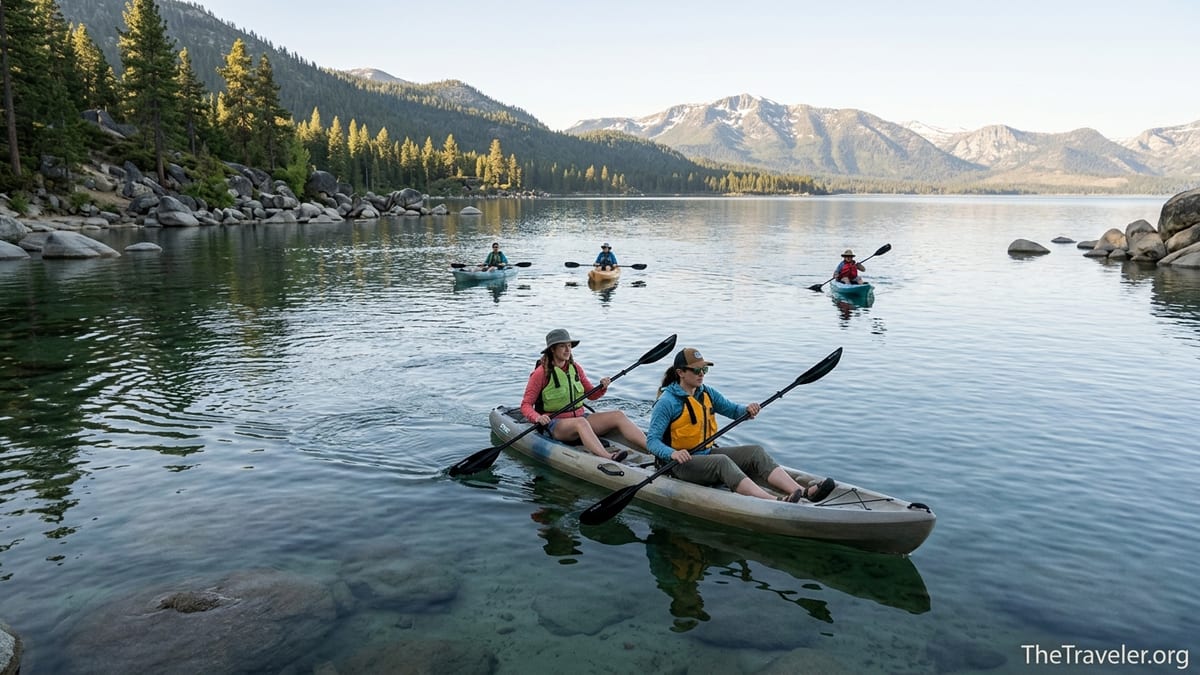
What a Beginner Kayak Tour Actually Looks Like
A beginner-friendly kayak tour typically runs 1.5 to 3 hours, with much of that time spent close to shore on calm, protected water. For example, on Lake Tahoe, operators such as Clearly Tahoe and South Tahoe Kayak offer 1.5 hour “scenic shoreline” or “discover” tours aimed at first-timers. Guests paddle short sections of the coast at an easy pace, stop frequently for photos, and usually have the option to rest their arms while the group floats.
Many coastal and lake destinations in the United States follow a similar formula. In South Carolina, a guided 1.5 hour tour through the salt marshes around Hilton Head Island introduces beginners to tidal creeks and wildlife like herons and dolphins while staying in flat water. In Alaska, Sitka Sound outfitters run 2 to 3.5 hour sea kayak excursions that stay in sheltered coves and around small islands instead of heading into open ocean swells, even though the setting feels wild and remote.
Do not expect to show up and be sent off on your own. A guide will meet the group at a launch area, explain the plan for the route, and check that everyone’s gear fits properly. Before anyone gets in a boat, the guide usually demonstrates basic strokes and how to sit and balance in the kayak. Only after that on-land briefing will you wade into the water and climb in one at a time, often with the guide or staff physically steadying each kayak as you get seated.
The overall experience is usually more like a relaxed nature walk than an intense workout. There will be pauses to look for wildlife, to talk about local history, or to let faster paddlers drift back. Many first-time paddlers are surprised by how quickly their nerves fade once they realize the group will not leave them behind and that the guide is constantly adjusting the pace to the slowest person.
How Much It Costs and What Is Included
Pricing varies by destination, but most short beginner tours in the United States fall in the range of roughly 60 to 120 dollars per person for a half day or shorter outing. On Lake Tahoe, for instance, a 1.5 hour clear-bottom kayak tour that caters specifically to beginners is often priced in the 80 to 110 dollar range depending on season and time of day. In Hilton Head, a 1.5 hour marsh tour may start closer to about 55 to 75 dollars per person, reflecting lower operating costs and calmer, warmer water conditions.
That price almost always includes the kayak itself, paddle, life jacket, and any required safety gear. Sea kayaking companies in Alaska, such as those running Sitka Sound tours, typically provide extra cold-weather equipment as well, including spray skirts, waterproof paddle jackets, and dry bags for cameras and phones. On clear-bottom tours at Lake Tahoe, the higher price reflects specialized transparent kayaks and small-group sizes, not extra skill requirements. You do not need prior experience to join these tours.
Transportation to the launch site can be a detail that catches people off guard. Some operators include van shuttles from a central meeting point to quieter launch beaches where parking is limited or heavily regulated, as is often the case at Sand Harbor on Tahoe’s east shore. Others expect you to drive yourself directly to the marina or state-park lot and pay any day-use or parking fees separately. When you book, read the confirmation carefully so you are not scrambling for cash at a park entrance or missing a shuttle departure.
Tipping policies differ by region, but in many US destinations it is customary to tip your guide if you had a good experience, similar to tipping on a city walking tour. For a two-hour beginner paddle that might mean adding something like 10 to 20 dollars per person in cash at the end, or following any digital tipping prompts if the outfitter uses them. Gratuities are rarely mandatory, yet they make up a meaningful part of many guides’ seasonal income.
What You Will Learn Before You Launch
Most people arrive at their first tour worrying they do not know how to paddle at all. Outfitters assume this. The pre-launch briefing usually covers how to hold the paddle, how to go forward, steer, and stop, and what to do if you feel unstable. In practice, guides will encourage short, relaxed strokes and remind you not to muscle through the water. A ten minute lesson on land is often enough for beginners to move the kayak where they want it to go once on the water.
On a guided discovery tour in South Lake Tahoe, for example, the first part of the outing is essentially a floating lesson. The guide leads the group just a few minutes from shore, then has everyone practice turning left and right, stopping, and backing up. It is an easy environment to make small mistakes because you are still close to land and in calm water. The same approach is common on marsh tours in places like Hilton Head, where guides know guests are adjusting to the feel of tides and currents for the first time.
You can also expect a clear talk about safety, even if the mood is upbeat. Guides will emphasize that life jackets must stay on and properly fastened whenever you are on the water, that the group needs to stay together, and that you should let them know right away if you feel cold, tired, or anxious. On colder lakes or coastal waters, they might explain basic cold-water risks and why they stay near shore or avoid certain wind directions. The briefing is your chance to ask any question, including ones you feel shy about, such as what happens if you cannot swim.
Before you climb into the kayak, the guide or shore staff will help adjust footrests and seat backs so you sit comfortably. This small step matters. When your feet are properly braced and your back supported, you feel more stable and less likely to tense up. In double kayaks, the guide will often pair a more hesitant paddler in the front with a stronger paddler or friend in the back, which lets the person in front focus on enjoying the scenery instead of powering the boat.
Safety Basics, Life Jackets, and Swimming Ability
In the United States, kayaks are treated as recreational vessels, and federal rules require at least one US Coast Guard approved life jacket for each person on board. Many tour operators go further and make wearing that life jacket nonnegotiable throughout the trip, regardless of local minimums. You will be fitted with a vest-style personal flotation device designed for paddling, which is less bulky than traditional boating life jackets and cut so you can rotate your torso easily.
Local regulations add another layer. For instance, many states require children under around 12 or 13 years old to wear life jackets whenever they are in a kayak that is underway, not just have one nearby. Some colder states introduce mandatory life jacket use for everyone during winter and spring months when river and lake temperatures are low. Outfitters that run beginner tours typically follow the strictest standard that applies and may set their own higher bar, so do not be surprised if a guide insists that every adult keep their vest buckled even on shallow, warm lakes.
Not being a confident swimmer does not automatically rule you out of a beginner tour. Many first-time guests on Tahoe or Hilton Head outings, and even in more rugged areas like Sitka, describe themselves as weak swimmers or out of practice. Guides will usually ask about your comfort level in water when you book or at check-in. If you tell them you are nervous, they can keep you closer to the group, choose more sheltered sections of the route, and demonstrate how the buoyancy of the kayak and life jacket work together to keep you afloat if you capsize.
That said, tours are not a substitute for basic water comfort. If you are unable to put your face in the water or tend to panic when splashed, consider taking a short swimming or water-confidence lesson before booking, or choose a very short, protected outing such as a calm-morning lake tour that stays within a few paddle strokes of shallow shoreline. Many outfitters will gently redirect guests away from itineraries that exceed their abilities, such as long open-water crossings or tours that occasionally encounter small surf.
What to Wear and Bring for Your First Tour
Experienced paddlers often say that dressing for a kayak tour is more about the water and wind than the air temperature. On a warm summer morning at Donner Lake or in a sheltered cove of Lake Tahoe, quick-drying shorts or leggings, a synthetic or merino T-shirt, and a light windbreaker are usually enough. In coastal Alaska or on shoulder-season trips where the water is cold even if the air feels mild, outfitters may provide spray skirts, paddle jackets, or even lightweight dry pants so that splashes and drips do not chill you.
Footwear should be something you do not mind getting wet. Many beginners turn up in running shoes and then find themselves standing calf-deep to get into the kayak. Neoprene booties, sturdy water sandals with heel straps, or old sneakers paired with synthetic socks all work. Flip-flops are discouraged because they slip off easily and make clambering in and out of the boat awkward, especially on rocky launches like some sections of Tahoe’s east shore.
Sun protection is critical. Reflections off water can double the exposure you feel on land, and conditions can be deceptive on cool or breezy days. Guides in sunny destinations such as Nevada and South Carolina will routinely remind guests to apply high-SPF sunscreen to hands, thighs, and the back of the neck, wear a brimmed hat that tightens securely, and consider UV-blocking sunglasses with a strap so they do not vanish if you lean over to look at fish.
Most beginner tours provide a dry bag or at least encourage you to use one for phones, compact cameras, and any medications. Pack as if you are going on a slow walk rather than a wilderness expedition. A small water bottle, a light snack such as an energy bar, and any personal items like an inhaler or allergy medication are usually enough. Bulky backpacks and large coolers are rarely allowed in the kayak and would only make the boat feel more unstable.
How to Choose the Right Beginner-Friendly Tour
The most important factor for a pleasant first experience is matching the tour’s difficulty and environment to your comfort level. Shorter outings of 1.5 to 2 hours on sheltered water are the safest bet. For example, a calm-morning paddle on Donner Lake or a beginner-focused shoreline tour on Tahoe’s north shore is far more forgiving than an afternoon windy crossing of a large open bay. Similarly, marsh tours among tidal creeks in Hilton Head usually feel much more protected than exposed Atlantic shoreline, even though they are part of the same coastal region.
When reading tour descriptions, look for clear indications that no prior experience is required, that the route follows shorelines or calm bays, and that there are multiple guides for groups above a certain size. Operators that highlight instruction, nature interpretation, and family friendliness tend to be better suited to first-timers than those that emphasize long distances or ambitious destinations. In Sitka, for instance, entry-level sea kayak tours usually stay within an archipelago of small islands near town rather than crossing large open channels.
Ask direct questions before booking. You can call or email to find out the typical distance covered, how often the group stops to rest, whether doubles are available if you want to share a boat, and what happens if conditions are windier than forecast. Responsible outfitters will cancel or reroute if waves or wind exceed what is reasonable for beginners. If a company seems dismissive of your concerns or unwilling to answer questions, treat that as a sign to look elsewhere.
Also consider timing. Lakes like Tahoe and Donner are usually calmest early in the morning, which is why many beginner tours start around sunrise or shortly after. In coastal areas, guides will plan trips around tide cycles and typical afternoon winds. Booking an early tour not only improves your odds of glassy water but also reduces exposure to summer heat and midday crowds, both of which can make a first experience feel more intense than it needs to be.
What It Feels Like Once You Are On the Water
The first few minutes in a kayak often feel wobbly. The boat responds quickly when you shift your hips or lean to one side, and your brain interprets this as being on the verge of capsizing. Guides are used to this reaction. They will usually encourage you to keep your eyes on the horizon instead of staring at your hands, to relax your grip on the paddle, and to trust that the hull wants to stay upright. Many modern touring and recreational kayaks used by outfitters are intentionally wide and stable, especially doubles.
Within ten to fifteen minutes, most people settle into a rhythm. You will likely notice small patterns: the boat glides farther if you plant the blade fully in the water, you stay straighter if both paddlers mirror each other’s strokes in a tandem, and it feels easier to paddle when you sit upright instead of leaning back. On clear-water lakes like Tahoe, many beginners find themselves so absorbed in seeing rocks and fish below the surface through transparent kayaks that they forget about the mechanics of paddling altogether.
You should also expect some mild physical effort. A gentle two-hour tour is not a grueling workout, but if you are unused to upper-body exercise you might feel your shoulders and core by the end. Guides typically break up the paddling with stories about local history, wildlife interpretation, and photo stops. In Hilton Head’s marshes, that might mean pausing to watch an egret hunt in the shallows. Around Tahoe, you might float near granite boulders while your guide talks about water clarity and snowmelt.
Ending the tour is often when beginners realize how much they have learned. Getting in and out of the kayak that felt intimidating at the start usually seems straightforward the second time. Many guests step onto the beach surprised at how calm they felt on the water and already thinking about where they might paddle next, whether that is another guided outing or eventually a rental on a small local lake.
The Takeaway
A beginner kayak tour is designed to make your first experience on the water feel safe, supported, and genuinely enjoyable. Trips are typically short, close to shore, and run at an easy pace, with guides who understand that some people are anxious or inexperienced. The price you pay generally covers all essential gear and instruction, so you can focus on learning how the boat moves and soaking in the scenery rather than worrying about equipment.
If you take a little time to choose the right tour, dress for the conditions, and communicate honestly about your comfort level, that first paddle can be a highlight of a trip to places as varied as Lake Tahoe, Hilton Head, or coastal Alaska. You may still feel a flutter of nerves when you first push off from the beach, but with a life jacket snug around your shoulders and an attentive guide nearby, those nerves often turn quickly into curiosity and quiet confidence.
For many travelers, that first guided outing becomes the starting point for a new way of exploring lakes, rivers, and coastlines. Whether you go on to rent kayaks on your own, join longer tours, or simply cherish that one calm morning glide across clear water, your first beginner tour is less about technical skill and more about discovering that you belong on the water just as much as anyone else.
FAQ
Q1. Do I need prior experience to join a beginner kayak tour?
Most beginner tours do not require any previous kayaking experience. Guides assume it is your first time and will teach basic strokes, steering, and safety before you launch.
Q2. What if I cannot swim well?
Many first-time guests are weak swimmers. You will wear a properly fitted life jacket for the entire tour, stay close to the group, and paddle in shallow or sheltered water. If you are very uncomfortable in water, choose a short, calm tour and tell the guide about your concerns in advance.
Q3. How likely is it that I will tip over?
Capsizes on beginner tours are uncommon because outfitters use wide, stable kayaks and choose protected routes. Still, guides prepare you for the possibility and explain how to stay calm and let your life jacket keep you afloat if it happens.
Q4. Will I get very wet?
You should expect splashes from your paddle and possibly wet feet when you get in and out of the kayak. On calm-water tours you usually do not end up fully soaked unless you capsize or choose to swim afterward.
Q5. What should I wear on a beginner tour?
Wear quick-drying clothes suited to the air and water temperature, plus secure footwear that can get wet, such as water shoes, sandals with straps, or old sneakers. Add a light windbreaker in cooler conditions and always bring sun protection.
Q6. Are tandem (double) kayaks easier for beginners?
Many beginners feel more comfortable in a tandem kayak because they share paddling with a partner and the boat is often more stable. Outfitters commonly pair less confident paddlers with stronger ones in doubles.
Q7. How long does a typical beginner tour last?
Most entry-level tours run between 1.5 and 3 hours, including time for instruction and rest stops. That duration is usually enough to experience being on the water without becoming overly tired.
Q8. Can children join beginner kayak tours?
Children are welcome on many beginner tours, often in tandem kayaks with an adult. Age minimums vary by operator, and local laws usually require younger children to wear life jackets at all times while on the water.
Q9. How do I know if a tour is truly beginner-friendly?
Look for tours that state no experience is required, operate on calm water close to shore, offer instruction, and keep group sizes manageable. If unsure, contact the outfitter and ask about distance, conditions, and typical guests.
Q10. Should I buy my own gear before my first tour?
For a first guided outing, rental gear provided by the operator is usually sufficient. After you have tried kayaking a few times and know you enjoy it, you can explore buying your own paddle, life jacket, or kayak based on what felt comfortable.