


Few travel experiences compare to gliding into the mist at the base of Niagara Falls, poncho flapping, camera dripping, and the roar of the Horseshoe Falls drowning out everything else. Boat tours have been taking visitors into this natural amphitheater of water and rock for generations, but today there is more than one way to get close to the falls. From classic sightseeing cruises on both the American and Canadian sides to high-speed jet boats that tackle whitewater downstream, choosing the right Niagara cruise can shape your entire visit.
Maid of the Mist: Classic Niagara Experience from the U.S. Side
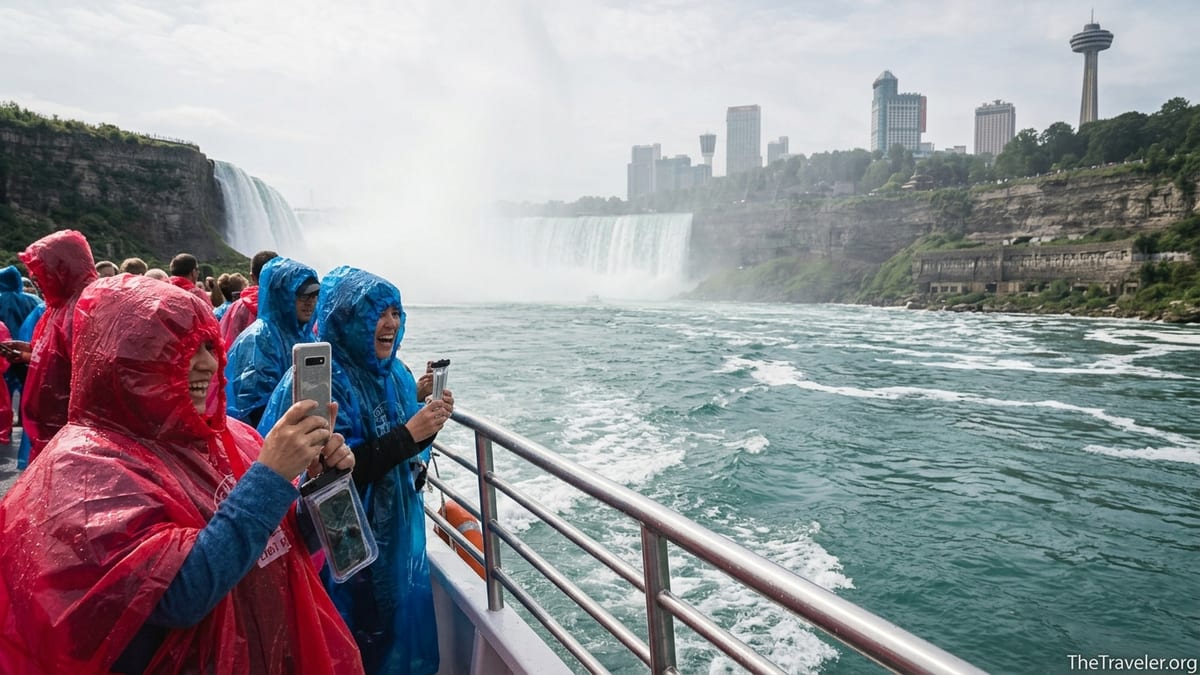
Maid of the Mist is the original Niagara Falls boat tour and still the signature way to see the falls from the U.S. side. Operating out of Niagara Falls State Park in New York, the all-electric boats depart from a dock below Prospect Point and sail past the American Falls and Bridal Veil Falls before heading straight into the spray at the base of the Canadian Horseshoe Falls. The experience is short, typically around 20 minutes on the water, but intensely immersive: visibility can shrink to a shimmering white curtain, and even with the provided poncho, you should assume your hair, shoes, and camera bag will get wet.
In recent seasons, Maid of the Mist has typically run from spring through late fall, with the main operating window roughly from April to early November, though exact opening and closing dates vary with river conditions. Tickets are generally sold as timed entries at the state park ticket booths and via the official operator, and recent prices have started around thirty U.S. dollars per adult, with lower rates for children. Same-day walk-up tickets are common on weekdays outside peak summer, but on sunny July and August weekends, long lines at midday are normal, and booking in advance is strongly advised.
Boarding involves a short elevator ride down into the gorge, where staff hand out the familiar blue ponchos. The decks are open-air, and there is no truly dry spot, which is part of the charm. Many visitors who have tried both sides comment that Maid of the Mist can feel slightly less crowded than its Canadian counterpart, in part because overall capacity is lower and access is limited to those who have crossed into the United States. If you are staying in Buffalo, Rochester, or elsewhere in upstate New York and do not plan to cross the international border, Maid of the Mist is the clear choice for getting close to the falls.
A typical first-time itinerary might combine the boat ride with the Cave of the Winds experience on Goat Island and a walk along the American Rapids. Families often schedule Maid of the Mist early in the day, both to avoid the largest crowds and to plan for a change of clothes afterward. For photographers, the best positions are usually along the front and side rails of the lower deck, where you can steady your camera, but the upper deck offers the most unobstructed views of the skyline and the gorge walls on the way in and out.
Niagara City Cruises: Voyage to the Falls from the Canadian Side
On the Canadian side, the equivalent sightseeing cruise is operated by Niagara City Cruises, a Hornblower company authorized by the Niagara Parks Commission. Its flagship trip, commonly referred to as Voyage to the Falls, follows a route very similar to Maid of the Mist: departure from the base of the gorge on the Ontario side, then a slow pass in front of the American Falls and Bridal Veil Falls, followed by a dramatic approach into the cloud of spray at the base of the Horseshoe Falls. The ride length and intensity are broadly comparable to the U.S. operator, but the vibe is slightly different, with a livelier onboard soundtrack and more of a "cruise" feel.
Voyage to the Falls typically begins operating in early spring and runs through late autumn, with the busiest period from late June through early September. Timed ticketing is standard, and visitors can often choose from day cruises, evening illumination cruises timed to the nightly lighting of the falls, and seasonal fireworks cruises when pyrotechnic shows are scheduled. Recent published starting prices for basic day cruises have tended to sit in the low-to-mid thirty Canadian dollar range for adults, with child tickets discounted and occasional family packages available through Niagara Parks passes that bundle attractions like Journey Behind the Falls and the White Water Walk.
The boarding process starts at the Niagara City Cruises Ticket Plaza near the base of Clifton Hill, followed by a descent via funicular or elevator into the gorge. Red ponchos are provided, and as with the U.S. side, they are more symbolic than waterproof; expect to get soaked if you stand near the bow or outer railings. One advantage for many travelers is the cluster of hotels and restaurants within a short walk of the boarding area, including major high-rise properties that overlook the falls. This makes it easy to schedule the cruise between other attractions or to return to your room quickly to dry off.
Travelers who have compared the two operators often describe the Canadian cruise as feeling slightly more energetic and commercial, while Maid of the Mist feels more stripped-down and traditional. The actual view of the falls from the base is nearly identical in either case. If your Niagara visit is based in Toronto or Niagara-on-the-Lake, or if you want to pair the cruise with Canadian-only experiences like Journey Behind the Falls and the Niagara Parks Botanical Gardens, Niagara City Cruises will be the most convenient option.
Adventure on the Rapids: Whirlpool Jet Boat Tours
For those who care less about lingering at the base of the falls and more about the power of the river itself, Whirlpool Jet Boat Tours provide a very different kind of Niagara cruise. Departing from locations such as Niagara-on-the-Lake in Ontario and Lewiston or Youngstown in New York, these high-powered boats head into the lower Niagara River gorge downstream from the falls, where the river narrows and explodes into Class V whitewater at Devil’s Hole Rapids and the swirling Niagara Whirlpool. Rather than gentle sightseeing, the focus is on speed, big waves, and repeated plunges into standing waves high enough to drench everyone on board.
Whirlpool Jet Boat Tours typically run from May through October, with daily departures in peak season and a mix of "Wet Jet" trips and partially enclosed "Freedom Jet" boats. The Wet Jet option is fully open and guarantees that every passenger will be soaked from head to toe; operators provide life jackets and splash gear, but most guests still bring a change of clothes and secure valuables in lockers on shore. The Freedom Jet includes rows of sheltered seating for those who prefer to stay mostly dry, while still offering a few exposed "power rows" at the bow for thrill seekers.
Recent sample pricing for these trips, which last around 45 minutes on the water, has hovered in the range of roughly seventy to eighty Canadian dollars for adults, with lower youth rates and family packages advertised through local tourism boards. There are age and height restrictions, commonly starting around age four for the driest seats and age six and up for most wet trips, along with health advisories for guests with back, neck, or heart conditions and for pregnant travelers. It is important to note that these boats do not travel all the way up to the base of the falls, as the stretch of river between the Whirlpool and the Horseshoe Falls includes unnavigable and restricted Class VI rapids. From the upper rapids and whirlpool, however, passengers get dramatic views of the sheer gorge walls and the force of the river carved over thousands of years.
Jet boat tours tend to appeal to repeat visitors who have already experienced the classic cruises, as well as to families with older children or groups of friends looking for an adrenaline-heavy outing. On hot midsummer afternoons, these runs can be a refreshing way to escape the pavement heat of Clifton Hill. Reservations are strongly recommended in high season, and same-day bookings can sell out quickly on holiday weekends. If you are driving from Niagara-on-the-Lake or staying in the wine region, the jet boat docks are often only 15 to 20 minutes from town, making it easy to pair a morning on the river with an afternoon of vineyard visits.
Choosing Between U.S. and Canadian Cruises
Deciding which Niagara cruise is "best" begins with a practical question: which side of the border will you be on, and do you have the documents needed to cross? Maid of the Mist is only accessible from the United States, while Niagara City Cruises operates exclusively from Canada. For U.S. citizens traveling without a passport, or for visitors whose visas apply to only one country, that alone can make the choice. If you do have the flexibility to experience both sides, the decision comes down to convenience, atmosphere, and what else you plan to do in the region.
From an on-the-water perspective, the core experience is broadly similar. Both operators run modern boats with large capacities, provide ponchos, and steer into the heavy mist zone at the base of the Horseshoe Falls. Trip duration is comparable, and the feeling of being enveloped in spray while the water thunders around you does not depend on which dock you started from. Differences emerge in the lead-up and follow-up: the Canadian side tends to have more high-rise hotels, neon-lit attractions, and package options that pair the cruise with other Niagara Parks sites, while the American side leans more toward a classic state-park setting with more green space and fewer large hotels directly at the rim.
Cost can be a factor, especially for families or groups. When comparing prices, remember to account for currency exchange, taxes, and potential add-ons such as parking. For example, parking at Niagara Falls State Park in New York carries a separate daily fee for most lots, while many Canadian hotels in the Fallsview and Clifton Hill areas charge significant overnight parking fees that can easily rival the cost of the cruise itself. Some visitors reduce their out-of-pocket costs by staying in budget properties a short drive away, such as in Niagara Falls, New York away from the park, or in suburban St. Catharines or Welland on the Ontario side, then driving in for a single day at the falls and scheduling the boat tour that day.
Weather and timing also play a role. Afternoon sailings on warm, sunny days can be magical, with rainbows forming in the mist and comfortable temperatures making it pleasant to be drenched. During shoulder seasons in April, May, late September, or October, morning trips can feel noticeably colder, especially when the wind picks up inside the gorge. Travelers who are sensitive to cold or visiting with young children may prefer midday slots when the sun is highest, and bring an extra layer to wear under the poncho. In heavy rain or thunderstorms, sailings can be delayed or temporarily paused for safety, so it is sensible to keep some flexibility in your schedule rather than stacking back-to-back activities with fixed times.
What It’s Really Like On Board
Stepping onto a Niagara cruise for the first time, the initial impression is often the scale of the cliffs and the noise of the water. As the boat leaves the dock, the river feels remarkably calm compared to the chaos of the falls you see ahead. Within minutes, you are gliding past the American Falls, close enough to see individual rock ledges and the plumes of spray driving sideways in the wind. Electronic narration or live guides point out landmarks and share fragments of history, but as the vessel lines up with the Horseshoe Falls, those voices disappear under the roar, and the experience becomes almost entirely sensory.
As you approach the central curve of the Horseshoe Falls, the wind picks up and the temperature can drop several degrees. Mist begins as a fine drizzle and quickly escalates to heavy spray. Glasses fog, touchscreens struggle to register taps, and even waterproof jackets feel overwhelmed. Many visitors experience a moment when they simply stop trying to take photos and instead tuck their phones away, grip the railing, and absorb the sound and movement. The captain typically holds the boat in this zone for a short period, pivoting slowly to give both sides a chance to face the falls, before easing back out to return downriver.
On the return leg, there is a social, almost celebratory mood on deck. People laugh as they wring out ponchos, compare photos, and help each other take quick group shots against the backdrop of the receding falls and skyline. Children who were hesitant at the start are often exhilarated by this point. For many families, the boat ride becomes the highlight story of their trip, remembered years later alongside theme park visits or long road-trip drives. Even for seasoned travelers who have stood at the rim of Iguazu or Victoria Falls, being in the cauldron of water at Niagara feels distinct: compact but powerful, framed closely by rock on three sides and city skylines on the fourth.
Practical details matter on board as well. Footwear with good grip is important, as decks become slick, and flip-flops can easily slide. Simple plastic sleeves or dry bags are useful for phones and passports. Most operators advise avoiding umbrellas, which are unwieldy and largely ineffective in horizontal spray. Snacks and alcohol are generally not part of daytime sightseeing runs, though certain evening cruises may offer bar service and light refreshments. Restrooms are usually available on the larger sightseeing boats, but not on shorter jet boat trips, so planning ahead is wise, especially with children.
Tickets, Passes, and Money-Saving Strategies
Niagara’s main cruises are often included in broader attraction passes, which can be good value if you intend to visit several sites in a short period. On the Canadian side, seasonal passes sold through Niagara Parks commonly combine Voyage to the Falls with attractions such as Journey Behind the Falls, the Butterfly Conservatory, the White Water Walk, and access to the WEGO bus network that circulates between major points along the river. For visitors based in Toronto on a day trip, tour companies frequently sell bundles that include round-trip transportation, a boat cruise ticket, and sometimes timed entry to specific attractions, which can simplify logistics at the cost of some flexibility.
On the U.S. side, various passes and combo tickets are periodically offered that group Maid of the Mist with experiences like Cave of the Winds, the Observation Tower, and trolley access within Niagara Falls State Park. These are especially popular with families and bus tour groups. Before purchasing, it is worth comparing the pass price with the sum of individual attraction tickets, particularly if your schedule is tight and you might not use everything included. Some travelers find that buying the boat ticket and one or two key add-ons separately provides better value than a large bundle.
For independent travelers, the most important money-saving tactic is timing. Weekends, public holidays, and school vacation periods tend to see the highest prices on package tours from major cities, as well as the longest lines at local ticket counters. Visiting on a weekday in May or early June, or in late September when weather is still often pleasant but crowds have thinned, can reduce both costs and waiting times. Booking directly with the operator or official tourism bodies can help avoid markups sometimes added by third-party resellers, especially on popular same-day departure slots advertised online at the last minute.
Finally, consider how you will pay and budget for ancillary costs. Parking near the falls, meals in the tourist districts, and souvenirs all add up quickly. Families often save by bringing simple ponchos for non-cruise days, refillable water bottles, and light snacks, then splurging on a full-service meal after their boat tour instead of multiple smaller expensive purchases. If traveling from abroad, checking currency exchange rates in advance, and possibly obtaining a small amount of local cash for parking machines or smaller vendors, can make the day smoother.
Planning Tips: Seasons, Weather, and Crowds
Niagara cruises are highly seasonal, with the main sightseeing boats and jet boat tours typically operating from spring through autumn, and most shutting down in winter when ice and river conditions become challenging. In practical terms, that means many visitors target late May through early October, when the highest number of trips run each day and the odds of comfortable temperatures are greatest. July and August bring the warmest weather and the most evening cruise options, including illumination and fireworks runs on select nights, but they also bring peak crowds and longer lines both at border crossings and at the docks.
Weather at the falls can change quickly, so layering is key. Even on hot days, it can feel markedly cooler inside the gorge where the sun is shaded by cliffs and mist hangs in the air. In early spring and late fall, a thin fleece or softshell worn under the poncho can make the difference between a refreshing soak and a shivering ride. Water-resistant shoes, quick-drying socks, and a small packable towel are all worthwhile additions if you plan multiple water-adjacent activities in one day.
To manage crowds, early and late departures are your allies. First sailings of the morning often see more local visitors and fewer large bus groups, while late afternoon and early evening departures can have a relaxed, end-of-day feel, especially outside of weekends and holidays. Booking a timed ticket in advance, arriving at the dock slightly ahead of your slot, and being flexible about your exact position on deck will help keep stress levels low. Families with strollers should factor in time for elevator rides, ramps, and occasional bottlenecks in queueing tunnels, particularly on the Canadian side where volumes can be high.
Border logistics deserve attention if you plan to cross between the U.S. and Canada for cruises or other activities. In peak periods, the Rainbow Bridge and other crossings can back up with vehicles and pedestrians. Travelers should carry valid passports or accepted identity documents and build buffer time into their schedule if they have same-day timed cruise tickets on the opposite side of the river. Those on tight itineraries, such as day trips from Toronto or bus tours from New York State, often find it easiest to pick a single side and focus their activities there rather than shuttling back and forth.
The Takeaway
Choosing the best Niagara cruise comes down to what kind of experience you want and how you plan to structure your visit. If your goal is the quintessential image of Niagara Falls swirling around you in a wall of mist, then Maid of the Mist from the U.S. side and Niagara City Cruises on the Canadian side both deliver a remarkably similar core experience. Each offers a short, intense encounter with the base of the Horseshoe Falls, a plastic poncho that quickly proves symbolic, and memories that often outlast the rest of the trip.
For travelers drawn to the raw power of the Niagara River itself rather than the falls alone, Whirlpool Jet Boat Tours and similar operators provide a high-adrenaline alternative, trading proximity to the cascade for speed, rapids, and the sculpted walls of the lower gorge. These trips do not reach the base of the falls but showcase a different dimension of the region that many repeat visitors come to appreciate.
Whatever you choose, a bit of planning around season, timing, and logistics will go a long way toward a smooth experience. Booking timed tickets in advance for peak periods, dressing for getting properly soaked, and aligning your cruise with other nearby attractions can turn a straightforward boat ride into the centerpiece of a broader Niagara itinerary. Whether you step off the dock in New York or Ontario, the combination of thundering water, swirling mist, and the narrow embrace of the gorge will likely become one of your defining travel memories.
FAQ
Q1. What is the best Niagara cruise for seeing the falls up close?
The two main sightseeing options that take you closest to the base of Niagara Falls are Maid of the Mist from the U.S. side and Niagara City Cruises’ Voyage to the Falls from the Canadian side. Both follow similar routes into the mist at the base of the Horseshoe Falls and offer broadly comparable views and levels of "soak."
Q2. Do Whirlpool Jet Boat Tours go all the way to the base of the falls?
No. Whirlpool Jet Boat Tours operate downstream from the falls in the lower Niagara River gorge. They run through Class V rapids near Devil’s Hole and into the Niagara Whirlpool but do not continue upstream to the base of the Horseshoe Falls, as the section between the whirlpool and the falls includes unnavigable and restricted rapids.
Q3. Which side of Niagara Falls has the better cruise, U.S. or Canada?
The on-the-water experience is very similar on both sides. The U.S. side’s Maid of the Mist has a slightly more traditional feel, while the Canadian side’s Niagara City Cruises can feel more energetic and commercial. Your choice usually depends on which country you are staying in, what documents you have for border crossing, and which other attractions you want to pair with the boat ride.
Q4. How much do Niagara Falls boat tours typically cost?
Recent adult ticket prices for the main sightseeing cruises have generally started in the low-thirty range in local currency, with discounted child rates and occasional bundles via attraction passes. Jet boat tours that tackle the rapids are more expensive, often priced in a higher band that reflects their specialized equipment and longer time on the river.
Q5. Do I need to book my Niagara cruise in advance?
Advance booking is strongly recommended during peak season, on weekends, and for specific evening illumination or fireworks cruises. While walk-up tickets are often available on quieter weekdays and in shoulder seasons, popular midday departures in summer and jet boat trips on hot days can sell out.
Q6. Will I get very wet on a Niagara cruise?
Yes. On Maid of the Mist and Niagara City Cruises, you will almost certainly get at least partially soaked, especially if you stand near the bow or exposed railings. On dedicated jet boat tours, particularly Wet Jet departures, every passenger should expect to be thoroughly drenched. Operators provide ponchos or splash gear, but they do not keep you fully dry.
Q7. What should I wear and bring on the boat tours?
Wear quick-drying clothing, shoes with good grip, and layers if the weather is cool. Avoid heavy cotton that stays damp. A waterproof phone case or small dry bag is useful for electronics and documents, and many travelers pack a light towel and a spare shirt or socks, especially if combining the cruise with other activities.
Q8. Are Niagara cruises suitable for young children and older travelers?
The standard sightseeing cruises are generally suitable for a wide range of ages, including families with young children and older visitors, though there are ramps, stairs, and occasional crowding to navigate. Jet boat tours have specific age, height, and health restrictions and are better suited to older children, teenagers, and adults comfortable with high-speed, bumpy rides.
Q9. When is the best time of year to take a Niagara Falls cruise?
Late spring through early fall is the prime season for Niagara cruises, with the warmest weather and the most departures typically in July and August. Shoulder seasons in May, June, and September can offer milder temperatures and fewer crowds, but you may need an extra layer under your poncho to stay comfortable in the mist.
Q10. Can I take a Niagara cruise if I am visiting on a day trip from Toronto or nearby U.S. cities?
Yes. Many travelers visit Niagara Falls on day trips from Toronto, Buffalo, or other nearby cities and still fit in a cruise. The key is to book a timed ticket that gives you enough buffer for driving, parking, and potential border delays if crossing between Canada and the United States, then build the rest of your day’s activities around that confirmed sailing time.