


More news on this day
Thousands of travelers across the United States are facing extensive disruption today as a new wave of flight delays and cancellations hits major hubs including Los Angeles, Austin, Atlanta, New York, San Juan, and Seattle, with publicly available tracking data showing more than 2,100 delays and dozens of cancellations affecting carriers such as United, Delta, SkyWest, Alaska, and others.
Get the latest news straight to your inbox!
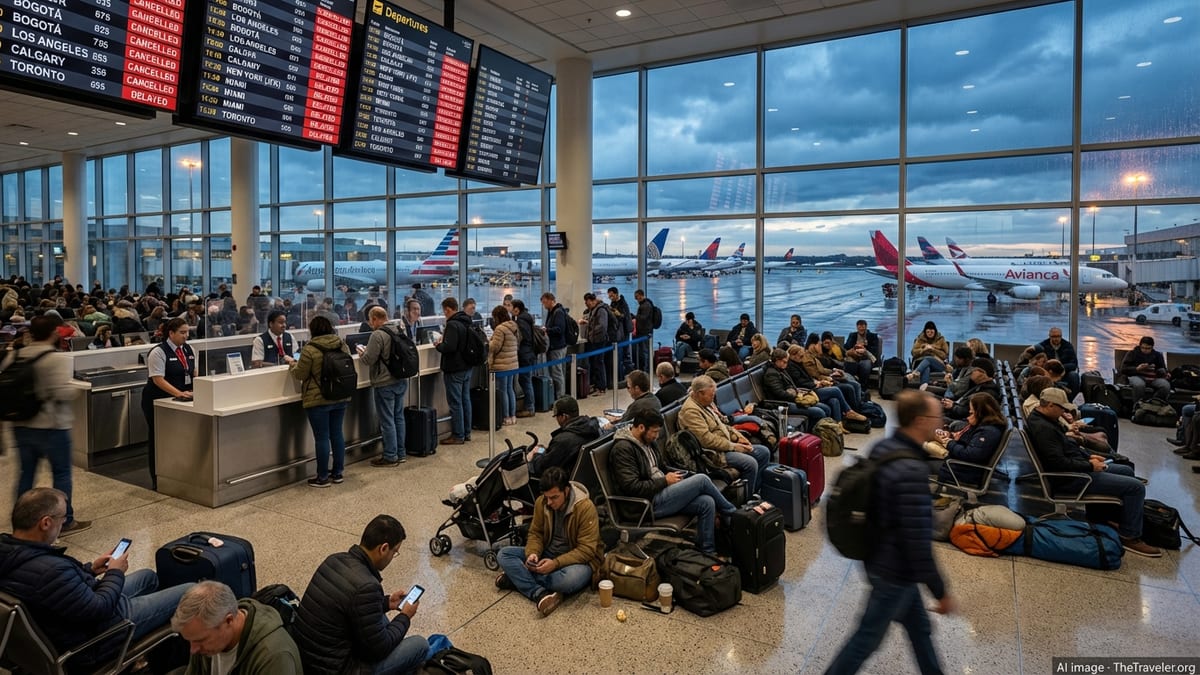
Nationwide Disruptions Concentrated at Major Hubs
Live tracking dashboards indicate that flight operations within, into, and out of the United States are once again under strain, with around 2,129 flights delayed and at least 86 canceled today across the network. The imbalance between delays and outright cancellations is causing rolling congestion, with aircraft, crews, and passengers out of position as the day progresses.
The impact is being felt acutely at large coastal and connecting hubs, including Los Angeles International, Hartsfield-Jackson Atlanta, New York area airports, San Juan’s Luis Muñoz Marín International, and Seattle-Tacoma. These airports are key nodes for both domestic and international connections, meaning that a localized disruption in one hub can quickly ripple into secondary cities around the country.
Available data suggests that regional carriers and legacy airlines are both heavily represented in the disruption totals, reflecting the interconnected nature of the U.S. aviation system. When a major hub experiences ground delays or capacity reductions, regional affiliates and mainline operations often experience simultaneous knock-on effects.
While today’s totals remain below the most extreme meltdown days seen earlier this year, the clustering of delays in a relatively small number of high-traffic airports is once again leaving travelers facing missed connections, overnight stays, and last-minute itinerary changes.
United, Delta, SkyWest, Alaska and Others Feel the Strain
Publicly accessible airline performance trackers show familiar names featuring prominently in today’s disruption landscape. United Airlines and Delta Air Lines, two of the largest network carriers in the United States, are coping with waves of delayed departures and arrivals on key trunk routes that connect coastal hubs with interior cities.
SkyWest, which operates regional flights on behalf of multiple major brands, appears particularly exposed when timing falls apart. Because regional aircraft often feed passengers into banked connections at larger hubs, even modest schedule slippages can cascade into missed onward flights and longer rebooking windows for travelers.
Alaska Airlines, with its large presence on the West Coast and in Seattle, is also contending with a patchwork of late operations. Some services are continuing more or less on time, while others build up delays over the day as each late arrival pushes subsequent departures behind schedule. This pattern has become increasingly common in the post-pandemic recovery period as airlines try to run dense schedules with limited slack in fleets and crews.
Smaller and low-cost carriers are not immune. While some report fewer outright cancellations than the largest airlines on a day like today, they often have fewer spare aircraft and crew to deploy, leaving travelers with more limited same-day alternatives when a flight is significantly delayed or canceled.
Weather, Congested Airspace, and Tight Crewing Combine
Recent disruption patterns at airports such as Atlanta, New York, and major West Coast hubs indicate that a mix of seasonal weather, air traffic control flow restrictions, and tight crew availability continues to challenge operations. Analytical pieces from travel-industry outlets in recent weeks have described how storms and low visibility at one hub can trigger ground stops or arrival metering programs that slow the entire system.
When arrivals are throttled, flights can be held on the ground at origin airports, sometimes for hours, contributing to the kind of delay totals seen today. Even after weather improves, airlines may need multiple schedule cycles to reposition aircraft and pilots, particularly when crews run into federally mandated duty-time limits.
Industry trackers have also highlighted that, compared with the pre-2020 period, carriers are running schedules with leaner reserve staffing. That means irregular operations days, like today, can rapidly stress available resources. Regional airlines that supply feeder traffic to the big three network carriers are especially sensitive to crew timing issues, and this is reflected in the mix of delays across the country.
The result is a familiar pattern for many U.S. travelers this year: morning disruptions at a small set of weather-affected or capacity-constrained hubs mushroom into broader afternoon and evening delays across the national grid, even where local conditions appear relatively calm.
Travelers Confront Long Lines, Missed Connections, and Scarce Seats
Reports shared on social platforms from airports in Los Angeles, Austin, Atlanta, New York, San Juan, and Seattle describe crowded concourses, long customer service queues, and departure boards dominated by yellow and red notices. Many passengers face a combination of late departures and missed connections, with some forced to overnight in hub cities while they wait for open seats.
For travelers on United, Delta, SkyWest-operated regional services, and Alaska, the biggest pain point today appears to be limited rebooking options on already busy weekend flights. On popular routes, remaining seats can sell out quickly, leaving stranded passengers to accept next-day or even later departures, or to cobble together complex routings through secondary hubs.
Consumer-rights organizations and travel advisers have been urging passengers to document their experiences, keep receipts for unexpected expenses such as hotels and meals, and carefully review each airline’s published customer-service commitments. The U.S. Department of Transportation maintains a public dashboard outlining which amenities airlines say they will provide during controllable cancellations and delays, and these resources are drawing renewed attention during spikes like today’s.
Families and leisure travelers are particularly affected when disruptions hit at the start or end of school breaks or major events. Even when flights eventually operate, multi-hour delays can erase valuable vacation time or complicate work obligations at the destination.
How Travelers Can Navigate Ongoing Uncertainty
Given the elevated risk of delays and cancellations reflected in today’s data, travel analysts recommend that passengers build additional buffer time into itineraries involving connections, particularly through high-volume hubs such as Atlanta, New York, and Los Angeles. Early-morning departures often have a better chance of leaving on time, as they are less exposed to the day’s accumulating disruptions.
Passengers are also advised to monitor flight status closely through airline apps and tracking platforms, rather than relying solely on airport departure boards. Same-day schedule changes, aircraft swaps, and gate moves are common on volatile days, and digital alerts can sometimes provide a few extra minutes to rebook or adjust plans.
When significant delays become apparent, experts suggest proactively looking for alternative routes, including connections through less congested hubs or even nearby airports reachable by ground transportation. Travelers booked on United, Delta, SkyWest affiliates, Alaska, or other carriers may find more options if they search across a wider network of gateways instead of waiting in a single airport queue.
With today’s wave of 2,129 delays and 86 cancellations underscoring the fragility of the U.S. flight network during periods of stress, many frequent flyers are rethinking how tightly they schedule same-day connections and key appointments. For now, the country’s major airports remain open and operating, but travelers across Los Angeles, Austin, Atlanta, New York, San Juan, Seattle, and beyond are once again learning how quickly a normal travel day can unravel.