


Antibes is famous for its superyacht marina and glossy harbor views, but the real charm of this Riviera town lives in its lanes, markets, headlands, and hidden coves. Step a few streets back from the masts and polished decks and you find a slower, more local Antibes: one of morning market runs, coastal walks in sea spray, unhurried glasses of rosé and stone ramparts glowing at sunset. This guide focuses on the best things to do in Antibes beyond the yacht marina, with practical, on-the-ground suggestions you can plug straight into your itinerary.
Get the latest updates straight to your inbox!
Wander Vieil Antibes and Its Provencal Market
Start in Vieil Antibes, the compact old town wrapped in honey-colored ramparts. Away from the quay, the streets tighten into a maze of stone alleys framed by painted shutters and hanging geraniums. Mornings are the most atmospheric, when bakery doors are propped open and locals queue for baguettes before work. If you are staying in an apartment, this is the moment to pick up still-warm bread, a wedge of local goat cheese and a box of ripe figs for breakfast back on your balcony.
The heart of daily life is the Marché Provençal on Cours Masséna, the covered food market that runs most mornings. Under the cast-iron roof you will find seasonal fruit and vegetables, olives, anchoïade, socca slices, and stands piled with spices and lavender. Visiting in summer, you might see small producers selling sun-sweet tomatoes and peaches by the kilo, with prices that are often lower than supermarket chains in nearby Nice. Arrive before 10 am to avoid the crowds and bring a small tote bag; most vendors will happily let you taste before you buy if you ask politely in French.
When the food stalls pack up around midday, the same hall often transforms into an arts and crafts market, with painters, ceramicists, and photographers selling work inspired by Antibes light and coastline. It is one of the easiest places in town to find a souvenir that does not feel mass-produced, whether a small framed print of the ramparts or hand-thrown bowls in the blue-green tones of the Mediterranean. Even if you are not buying, wandering through gives you a sense of the local creative scene that long attracted artists like Picasso to Antibes.
Surrounding the market, detour along Rue Sade and Rue Clemenceau, where you can duck into independent boutiques, wine caves, and tiny épiceries. Many shops close for a break at lunchtime, particularly outside high summer, so plan your browsing for late morning or late afternoon rather than the early afternoon lull.
Walk the Coastal Path Around Cap d’Antibes
One of the most rewarding ways to see Antibes beyond the harbor is to walk the Sentier du Littoral around Cap d’Antibes. This coastal path, also signposted as the Sentier de Tirepoil along its wildest section, traces roughly 5 kilometers of rocky shoreline at the southern tip of the peninsula. The route starts near Plage de la Garoupe and threads below the gardens and walls of villas toward the headland, with views back to the Baie des Anges and across to the Lérins Islands on clear days.
Expect stone steps, narrow sections, and uneven rocks, so proper walking shoes or sturdy trainers are essential. The full loop typically takes between two and three hours at a relaxed pace with photo stops. There is almost no shade along the most exposed parts, and in summer the stone heats quickly, so it is worth starting early, carrying at least a liter of water per person, and wearing a hat. Outside of peak season, on a clear day in October or April, the path can feel almost empty apart from a few local dog walkers and trail runners.
Part of the trail below Villa Eilenroc has periodic closures to allow for cliff maintenance and safety works. Before setting out, check the latest notices posted by the town at the start of the walk or on boards near the parking areas. If a small stretch is closed, you can usually follow a short inland diversion and rejoin the path a little further on. Even with occasional detours, the coastal scenery, blowholes where waves crash into rock, and sudden views of hidden coves make this a highlight of any stay in Antibes.
Finish back at Plage de la Garoupe, where small beachfront cafés serve coffee, cold drinks, or a simple lunch of salade niçoise or grilled fish. In high season, some stretches of beach here are private with sunbed rentals, but there are also public sections where you can simply drop a towel and cool off in the water after your hike.
Climb Ramparts, Fort Carré and Picasso’s Hilltop Castle
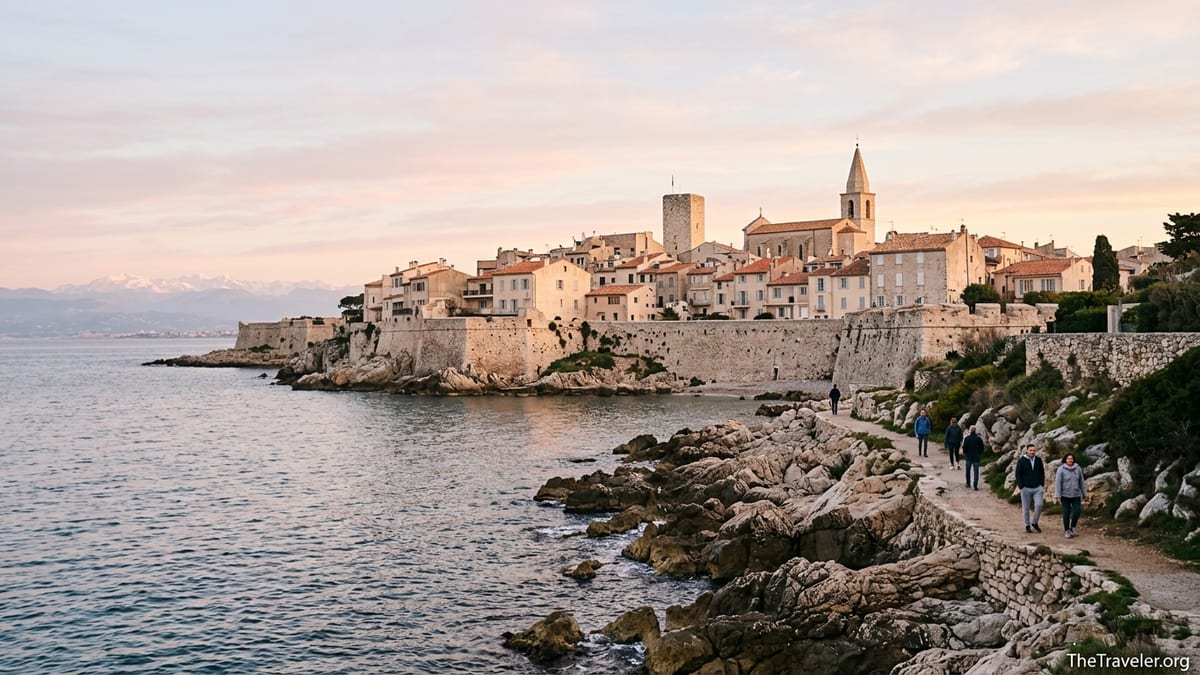
Antibes has a surprisingly layered history of fortifications that you can still explore on foot. From the old town, it takes only a few minutes to reach the ramparts that run along the sea. A paved promenade follows the top of the walls, giving views down to clear water lapping the rocks and, in the other direction, to the tiled rooftops and church towers of Vieil Antibes. At golden hour the stone glows and local families stroll with ice creams, making it an easy, low-effort outing if you are traveling with children or older relatives.
For a more elevated perspective, head to Fort Carré, the 16th century star-shaped fortress that sits on a promontory overlooking both Antibes and the bay. Reached by a short uphill walk from the modern town side of the station, the fort has grassy ramparts and bastions where you can circle the perimeter. Entry is usually modestly priced compared to major Riviera sights, and guided visits explain how the fort once guarded the frontier and harbor approaches. On clear days you can see the snows of the southern Alps to the north and watch local football matches on the pitch below.
Back inside the old town, the Château Grimaldi above the sea houses the Musée Picasso, one of the earliest museums dedicated to the artist. Picasso worked here for several months in 1946, and the collection today includes paintings, drawings, and ceramics from that period alongside works by other modern artists. The building itself is part of the appeal, with stone rooms opening onto terraces that look straight out across the water. Even travelers who are not usually museum-focused often appreciate spending an hour here as part of a wider circuit of the ramparts and old town.
These three elements together ramparts, fort, and castle museum show a side of Antibes that predates the marina by centuries. If you visit all in one day, consider buying a combined ticket when available, and break up your sightseeing with a coffee on Place Nationale or a gelato from one of the ice cream parlors on Rue de la République.
Seek Out Quieter Beaches and Local Swim Spots
While many visitors gravitate toward the main town beaches nearest the harbor, some of the most rewarding swim spots are slightly removed from the marina. Plage de la Salis, east of the old town, has a backdrop of palm trees and the cap rising behind it, with fine sand and shallow water that suits families. From the beach you can look back to the old town skyline and down the coast toward Nice, which gives a very different perspective from the view across the yachts.
Continue walking beyond Salis and you reach smaller curves of sand and pebbles closer to the start of the coastal path. These coves are popular with locals who arrive on foot or by bike, lay out simple picnic lunches of baguettes, cheese, and cherry tomatoes, and swim long distances parallel to the shore. There are fewer formal facilities here, so bring water and something to sit on, but the trade-off is a calmer atmosphere away from the main promenade and road traffic.
On days when the sea is a little rougher, or if you are visiting outside of high summer, watch how residents still use the waterfront. Older swimmers in neoprene caps and short wetsuits often enter from rocky ledges below the ramparts for quick, bracing dips even in early spring. If you want to join them, check local conditions, avoid going alone, and respect any red flags or lifeguard advice. In winter, when temperatures permit only a short swim, it is still enjoyable to walk the length of the seafront and end with a hot chocolate or coffee in a café on Boulevard Albert 1er.
If you are staying for several days, consider timing at least one early-morning swim before breakfast. The light over the Alps is soft, the water often glassier, and you will share the beach mainly with joggers and dog walkers rather than packed rows of parasols. It offers a completely different impression of Antibes than the midday crush near the harborfront.
Taste the Local Food, Wine and Evening Atmosphere
Antibes has a food scene that leans more intimate and local than some of its glitzier neighbors. Back from the quays, bars and bistros fill the streets between the market square and the cathedral. Many places offer reasonably priced daily menus at lunchtime, often featuring dishes like stuffed vegetables, fish of the day, or a simple pasta with seafood. In the evenings, tables spill into narrow lanes, and it is common to see couples sharing a carafe of chilled Côtes de Provence rosé accompanied by tapenade or socca.
Wine lovers will find several small cavistes in the old town that focus on regional bottles, from light coastal rosés to more structured reds from inland appellations. Staff are generally happy to recommend a bottle in the 10 to 15 euro range that pairs with whatever you plan to cook if you are self-catering. For a different perspective, some bars specialize in natural wines from small producers and often host informal tastings; ask locally for recommendations, as line-ups change frequently.
For dessert or a mid-afternoon break, ice cream and patisserie shops around Place Nationale are reliable stops. Look for flavors that nod to the region, such as lemon from nearby Menton, fig, or lavender-honey. Prices are similar to those in other Riviera towns, but the atmosphere in Antibes feels slightly less hurried, especially on weeknights outside of school holidays. If you want a more local experience, avoid the most obviously touristy spots on the main thoroughfares and instead slip into side streets where menus are in French first, with English translations below rather than the other way around.
Later in the evening, the ambiance shifts as small bars begin live music sessions ranging from acoustic covers to light jazz. While the famous Jazz à Juan festival takes place over in Juan-les-Pins each July, you can find year-round performances in more modest settings. A glass of wine or beer on a terrace while listening to a trio play standards is an easy way to end the day that feels worlds away from the formality of yacht clubs.
Explore Juan-les-Pins, Parks and Local Festivals
Just around the headland from Antibes proper sits Juan-les-Pins, reached in minutes by local bus or a pleasant seaside walk. It has a distinct personality, with sandy beaches lined by pines, a slightly younger bar scene, and a tradition of music that culminates in the Jazz à Juan festival each summer. Even if your visit does not coincide with the main July dates, the town retains echoes of its jazz heritage in venue names and murals, and smaller concerts or off-festival events often appear on the calendar from spring to early autumn.
During the day, Juan-les-Pins beaches are popular for their gently sloping sand and views back toward the cap. Some stretches are managed by private beach clubs offering loungers and waiter service, while public sections between them remain free for those content with towels on the sand. If you prefer shade, the pine trees behind the promenade offer relief from the sun in the later afternoon and children often play in playgrounds set back from the waterline.
Back in Antibes itself, seek out the town’s green spaces when you want a pause from sea and stone. Parks like the promenade gardens near the old town or smaller neighborhood squares host pétanque courts where older residents play in late afternoon light. Watching a casual game, perhaps with a takeaway coffee or sandwich from a nearby bakery, is an easy way to feel connected to everyday local life. Occasionally these spaces also form the backdrop for open-air book fairs, artisan markets, or small community festivals advertised on posters at bus stops.
Throughout the year, Antibes hosts a varied cultural calendar, from sailing events to classical concerts. Details and dates shift annually, but if you check local listings or posters around town when you arrive, you may find a free choral performance in a church, an outdoor cinema screening on the ramparts, or a food festival showcasing regional specialties. Building one such event into your stay can give you a memory that goes far beyond the harbor skyline.
The Takeaway
Antibes is often reduced to images of polished hulls and marina lights, but that version tells only a fraction of the story. Away from the harbor, this is a lived-in Mediterranean town of market rituals, sea-sprayed paths, sandy mornings, and stone walls that have watched centuries of change. Walking the cap, climbing the fort, slipping into the market for picnic supplies, or lingering late over a glass of local wine reveals an Antibes anchored more in place than in spectacle.
Whether you are here for a single night on a wider Riviera trip or settling in for a week, spending time beyond the famous yacht marina will almost certainly become the part of Antibes you remember best. Plan at least one market morning, one coastal walk, and one unhurried evening in the old town, and you will have experienced the town in a way many visitors never do.
FAQ
Q1. Is Antibes worth visiting if I am not interested in yachts or luxury travel?
Yes. Antibes has a genuine old town, a daily market, coastal walking paths and accessible beaches that appeal to travelers interested in history, scenery and everyday Riviera life rather than luxury.
Q2. How many days should I spend in Antibes to see more than the marina?
Two full days allow time for the old town, a market visit, at least one beach, and a section of the coastal path. With three to four days, you can add Fort Carré, the Picasso Museum and a side trip to Juan-les-Pins.
Q3. Do I need a car to explore Cap d’Antibes and the coastal path?
No. Local buses and an easy seaside walk connect Antibes to Plage de la Garoupe, the usual starting point for the coastal path. A car is convenient but not essential; parking near the beach can also be difficult in peak season.
Q4. Is the Sentier du Littoral suitable for children or less experienced walkers?
The path includes uneven rocks, steps and narrow sections close to the sea. Confident children and reasonably fit adults usually manage it well in good weather, but it is not ideal for strollers or those with mobility issues. Good shoes and calm sea conditions are important.
Q5. When is the best time of year to enjoy Antibes beyond the marina crowds?
Late spring and early autumn often offer warm weather with fewer visitors, making the market, beaches and walking paths more comfortable. July and August are livelier but also busier and hotter, while winter is quieter with cooler sea temperatures.
Q6. Are there free or low-cost things to do in Antibes aside from the harbor?
Yes. Walking the ramparts, exploring the old town streets, visiting public beaches, and strolling a section of the coastal path all cost little or nothing. Entry fees for sights like Fort Carré and the Picasso Museum are modest by big-city standards.
Q7. Can I swim near the old town, or do I have to go to Juan-les-Pins?
You can swim at several beaches within walking distance of the old town, including Plage de la Gravette and Plage de la Salis. Juan-les-Pins offers additional sandy options, but it is not the only place to swim.
Q8. Is Antibes a good base for travelers without a car?
Yes. Antibes has a train station with frequent connections to Nice, Cannes and other Riviera towns, along with a local bus network. You can comfortably explore the old town, beaches and Cap d’Antibes on foot and by public transport.
Q9. How early should I visit the Marché Provençal to avoid crowds?
Arriving between 8 and 9:30 am usually means cooler temperatures, better choice, and more space to browse before tour groups arrive. By late morning, aisles can become much busier, especially in high season.
Q10. Is Antibes suitable for families looking for more than just beach time?
Yes. Children often enjoy exploring the ramparts, visiting the fort, watching boats from a distance without entering the marina, and walking shorter, manageable stretches of the coastal path. The town’s compact size and frequent snack stops make it practical for family travel.