


On a coastline crowded with big names like Nice, Cannes and Saint Tropez, Antibes quietly does something different. It blends the feel of a working Mediterranean town with the pleasures of a seaside resort, wrapping everything in stone ramparts, bobbing fishing boats and a headland of pine trees and villas. For travelers who want Riviera beauty without losing a sense of place, Antibes often becomes the town they remember most.
Get the latest updates straight to your inbox!
A Real Town First, Resort Second
Compared with Cannes or Saint Tropez, Antibes feels less like a Riviera stage set and more like a town where people still live, shop and work year-round. Stroll through the streets behind Place de Gaulle on a weekday morning and you will see schoolchildren, office workers and residents queuing at boulangeries alongside visitors. The tram-free, compact center makes it easy to cross town on foot in 15 minutes, from the railway station to the old port, without the traffic tangle you find in larger Nice.
This everyday life is part of what sets Antibes apart. While Cannes shifts strongly with the festival and convention calendar, Antibes’ rhythm is more consistent, with cafés on Rue de la République serving regulars even in cooler months. Rents and hotel prices are still Riviera-level, but you can find studios and modest hotels a few blocks inland that feel integrated into local neighborhoods rather than carved out for seasonal crowds.
Location also makes Antibes different. It sits almost midway between Cannes and Nice, with a mainline train station that connects to Monaco, Menton and even Ventimiglia in Italy, yet the town itself never feels like a transport hub. Many travelers base themselves in Antibes for a week and use the frequent regional trains to dip into Cannes for a glossier beach club afternoon or Nice for museums, then return at night to quieter, narrower streets and a more small-scale atmosphere.
Prices, while not low, can be slightly gentler than in starrier resorts. A coffee on a side street away from the ramparts might cost around 2.50 to 3 euros, and a plat du jour lunch in a simple brasserie can still be found for under 20 euros. It is not budget territory, but visitors often notice that their daily spending feels less pressured than in neighboring towns with heavier luxury branding.
Old Stones, Sea Walls and the Picasso Connection
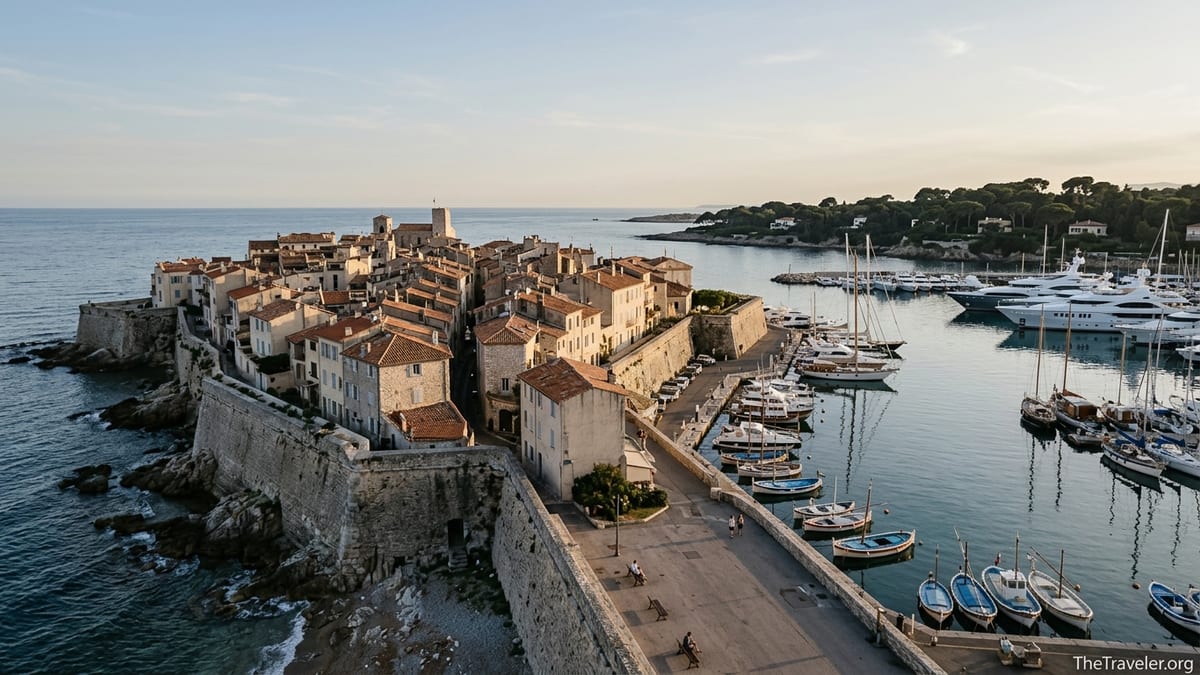
Architecturally, Antibes’ old town is one of the most complete on the French Riviera. Instead of a single hilltop quarter like Le Suquet in Cannes, the historic core stretches across a small peninsula, girded by 16th and 17th century ramparts that still face the sea. Walking the Promenade Amiral de Grasse along these walls you get views that feel surprisingly untamed for such a built-up coastline, with waves breaking against rocks only a few meters below the bastions.
Art lovers will quickly notice the difference here too. The Château Grimaldi, a medieval fortress perched on the ramparts, houses the town’s Picasso Museum. Picasso worked in the building in 1946 and later donated dozens of works to the town, from paintings and drawings to ceramics and sculptures. Visiting today, you are not just moving through white museum rooms; you are stepping into a stone palace with sea views that inspired some of his postwar pieces, something you do not quite encounter in Nice or Cannes, where Picasso’s presence is more diffuse.
The scale of Antibes’ old town also sets it apart. The web of lanes between the cathedral and the port is dense enough that you can wander for an hour, ducking into small squares lined with plane trees, yet it never becomes as crowded or commercial as the busiest streets in Nice’s Vieux Nice. Many buildings here are only a few stories high, painted in faded ochres and creams, with laundry hanging above small épiceries and wine shops. That combination of tourist appeal and lived-in texture is rarer than it should be on this glamorous stretch of coast.
History-minded travelers can extend the story at Fort Carré, the 16th century star-shaped fort that rises on a rocky spur overlooking Port Vauban. While Nice has its castle hill and Cannes its tower, Fort Carré retains more of a military feel, with ramparts and clear lines of sight over the bay. Guided visits give a sense of Antibes’ strategic importance between France and the former states of Italy, grounding what could otherwise feel like just another pleasant holiday town.
Port Vauban: Superyachts and Fishing Boats Side by Side
Another thing that makes Antibes different is the scale and character of its harbor. Port Vauban, just below the old town, is widely described as one of Europe’s largest yacht harbors, with basins that stretch from the historic quays beneath the ramparts to the so-called Billionaires’ Quay at the far end. You can walk from a cluster of small fishing boats selling their catch in the morning to some of the biggest privately owned yachts in the Mediterranean in under ten minutes.
In many Riviera towns, modern marinas feel separated from daily life, hidden behind security gates or tucked beyond ring roads. In Antibes the port is physically locked into the town’s shape. The old streets open directly onto the quays, and you can sit at a café on the edge of the harbor watching both locals working on modest sailboats and crew members loading provisions onto superyachts. The contrast is more visible here than in Cannes, where the festival palace dominates the waterfront, or in Nice, where the port feels slightly apart from the main tourist district.
Port Vauban is also surprisingly approachable for visitors. There are broad promenades where anyone can stroll at sunset without feeling they are trespassing in a private marina. Benches line the quays facing across the water to Fort Carré, and public car parks and bike stations make it easy to come down for an evening walk. Even those not staying in Antibes often detour here specifically to see the harbor and then climb back up to the ramparts for a view over the masts.
The working element of the port matters as well. Early risers can watch small trawlers coming home and unloading boxes of fish that will soon appear at the market and local restaurants. It is a reminder that beneath the gloss of luxury yachts and high-end brokerage offices, Antibes still has a maritime economy. That mix of old and new maritime life is more vivid here than in ports that lean almost entirely into leisure boating.
Markets, Food Culture and Everyday Pleasures
Antibes’ food culture is one of the clearest ways visitors feel the town’s difference. At the heart of the old town sits the Marché Provençal on Cours Masséna, a covered market that operates most mornings, usually from around 7:30 am to early afternoon on main days. Stalls overflow with seasonal vegetables, herbs, olives and local cheeses, along with butchers, fishmongers and small producers selling tapenade, anchoïade and socca-style snacks. On quieter Mondays outside peak season, the food focus may ease up, but the core of the market remains firmly rooted in fresh produce rather than trinkets.
In summer, the same hall often flips in the late afternoon and evening into a crafts and art market, with local artisans setting up stalls where fruit sellers stood in the morning. This dual life of the market is quite particular to Antibes and means the central space remains active from breakfast to late evening at different times of year. Travelers planning self-catering stays appreciate being able to shop, cook and then return at night to browse pottery, paintings and handmade jewelry in exactly the same spot.
Dining in Antibes also has its own character. Around the market and in the lanes fanning out toward the sea, a mix of bistros, wine bars and small family restaurants serve Mediterranean, Niçoise and Italian-influenced dishes. You can order a socca-style chickpea pancake from a window counter for a few euros at lunchtime, then in the evening opt for grilled fish with ratatouille in a mid-range restaurant where main courses hover around 25 to 35 euros. Compared with the fully polished seafront strips of Cannes, there is a greater chance of stumbling across small, independent kitchens in stone-walled rooms here.
Outside the old town, the more residential districts toward Juan-les-Pins offer another layer of everyday food life. Local bakeries sell baguettes and pissaladière to commuters each morning, and small supermarkets tucked into side streets let visitors self-cater without leaving town. This combination of market culture, modest takeaway options and sit-down restaurants makes Antibes particularly well suited to travelers who want some of their meals to feel like normal life rather than a sequence of restaurant reservations.
Cap d’Antibes and a Softer Side of Riviera Luxury
To understand what really separates Antibes from other Riviera towns, you have to walk or drive around Cap d’Antibes, the wooded headland that stretches between Antibes and Juan-les-Pins. Unlike the dense urban coastline of Nice or the built-up seafront of Cannes, this peninsula is a patchwork of pine forest, discreet villas and hidden coves. The roads narrow, stone walls replace shopfronts and glimpses of the sea appear through umbrella pines and agave plants.
Along part of the headland runs the coastal path, often called the sentier du littoral, where hikers follow a rocky trail close to the water’s edge. Sections of this path have occasionally closed in recent years for safety works or rockfall prevention, so it is worth checking local notices at the tourism office before setting out, but when open it offers one of the most dramatic walks on this stretch of coast, with waves sometimes crashing just below the path. Few Riviera resorts offer such raw contact with the sea within an hour’s walk of the main square.
Cap d’Antibes is also home to some of the region’s most storied hotels and villas, including longtime luxury addresses hidden behind gates and cypress hedges. Yet the overall mood feels more residential and private than in Saint Tropez, where the party scene is more visible. Even simple public beaches like Plage de la Garoupe or Plage de la Gallice, depending on season and configuration of private sections, retain a smaller, sheltered feel compared with the long urban strands of Nice or Cannes.
For travelers, this softer, more intimate version of Riviera luxury can be appealing. You might spend the day walking around the headland, pausing at a small public cove for a swim, then catch a bus or taxi back to the old town for dinner. The combination of pine-scented paths and stone alleys in a single day is something Antibes does better than almost anywhere else on the coast.
Beaches, Juan-les-Pins and a Tale of Two Shores
Unlike Nice, whose city beach is entirely pebbly, Antibes offers a mix of sand and shingle, particularly around Plage de la Gravette just below the ramparts and along the shallow curve of sandy beaches near the railway viaduct. These central beaches are relatively compact but convenient, popular with families who want a quick swim between sightseeing sessions. They rarely have the grand beach club infrastructure of Cannes, which can make them feel more casual and less choreographed.
For a different beach personality, you only have to cross the low ridge westward into Juan-les-Pins, which is officially part of the Antibes commune. Here the coastline opens into a series of sandy bays facing the Golfe Juan, lined with beach clubs, bars and restaurants that stay open late in summer. The mood is livelier, with more music, nighttime events and a younger crowd in July and August. Travelers often choose to stay in Antibes’ old town and then walk or take a short bus ride to Juan-les-Pins for afternoon swims and sunset cocktails.
The contrast between the two shores is another way Antibes stands out. On one side you have ramparts, a historic center and a port full of yachts; on the other, a resort strip with umbrella-lined beaches and nightlife. You can switch from one to the other in about 20 minutes on foot. That flexibility appeals to couples and families trying to balance cultural sightseeing with pure seaside downtime without changing hotels mid-trip.
In practical terms, beach costs here can be slightly lower than in the most exclusive parts of the coast, with some smaller clubs in Juan-les-Pins offering a day bed and umbrella package for a bit less than the top-tier clubs in Cannes or Saint Tropez. At the same time, there are always public sections where you can spread a towel for free, pick up sandwiches from a nearby bakery and enjoy the same sea at a fraction of the price.
Festivals, Nightlife and a Calmer Rhythm
Antibes has its share of big events, but they tend to be more focused and seasonal than the nearly year-round congress calendar in Cannes. The best known is Jazz à Juan, the long-running jazz festival held each July in Juan-les-Pins, where an open-air stage faces the bay and pine trees frame the audience. The lineup typically mixes international stars with French and European musicians, and the atmosphere in town during those nights is lively but still manageable compared with the crush around the Cannes Film Festival.
Outside major events, Antibes’ nightlife is moderate. There are plenty of wine bars and small cocktail spots in the old town, along with beach bars in Juan-les-Pins that stay open late for summer crowds, but the overall feeling remains more relaxed than in Saint Tropez’s harbor or Cannes’ Croisette. Many visitors end their evenings with a stroll along the ramparts or a last drink in a square lit by strings of bulbs rather than hunting for exclusive clubs.
This calmer rhythm helps define Antibes’ identity on the Riviera. It caters particularly well to travelers who like to be out all day and then wind down rather than ramp up after midnight. Families appreciate being able to walk back to their accommodation through quiet streets, while couples often mention enjoying early morning runs around the port or along the seafront before day-trippers arrive from nearby resorts.
Seasonality also feels different here. In high summer, Antibes is undeniably busy, with crowded trains and packed beaches across the coast, but shoulder seasons in May, June, September and October can bring a gentler mood. Terraces along the port remain active, the Marché Provençal continues to operate and enough hotels and restaurants stay open to give life without overwhelm. Compared with seasonal resorts that seem to power down aggressively in winter, Antibes retains a base population that keeps cafés, schools and shops running all year.
Using Antibes as a Base for the Wider Riviera
Another reason Antibes stands out is how well it works as a base for exploring the wider French Riviera. The town’s train station sits on the main coastal line, with direct regional trains east to Nice, Villefranche-sur-Mer, Monaco and Menton, and west to Cannes, Saint Raphaël and beyond. Services are frequent enough that many visitors skip car rental altogether, especially in summer when traffic and parking across the region can be stressful.
From a practical standpoint, this connectivity means you can wake up in a relatively calm old town, have breakfast at the market, then be walking along the Promenade des Anglais in Nice or through the festival quarter in Cannes less than an hour later. Day trips to hilltop villages like Èze or to perfume towns in the back country are also straightforward via combinations of train and bus from Nice or Cannes, all reached easily from Antibes.
At the same time, Antibes itself never feels purely like a dormitory. Travelers who base here for a week often report that on some days they simply stay put, exploring another stretch of the ramparts, climbing back up to Fort Carré for a different view or discovering a new café in a back street. The balance between being well-connected and self-contained is one of the town’s great strengths.
For longer stays, Antibes’ infrastructure helps too. There are supermarkets, pharmacies, laundromats and rental agencies dotted around town, meaning you can settle in almost as if you were in a small city, yet still be within a short stroll of the sea. Compared with staying in very small villages that empty at night or in intense city centers, Antibes hits a middle note many travelers find comfortable.
The Takeaway
Antibes is different from its Riviera neighbors not because it shouts louder, but because it manages to be many things at once without losing its shape. It is a fortified old town with a world-class modern art museum, a giant harbor that still smells of salt and diesel at dawn, and a wooded headland where the sound of the sea drowns out traffic within minutes of leaving the main road.
In practice, that means days that slip easily from coffee at the Marché Provençal to a swim at a small city beach, an hour watching superyachts at Port Vauban, then an evening in lanes that still feel like part of a real town. When you want extra glamour, Cannes, Nice and even Monaco are an easy train ride away, but many visitors find themselves increasingly content to stay close, looping between the old streets and the pine trees of Cap d’Antibes.
For travelers trying to decide where to stay on the French Riviera, Antibes offers a strong answer to a simple question: where can you enjoy the coastline’s beauty while still slipping into something like everyday French life? In Antibes, that balance is not an abstract selling point but a feeling you notice every time you step from the ramparts into a shopping street lined with boulangeries and kids on scooters.
If you are looking for a base that delivers Riviera scenery, accessible beaches, serious art, lively markets and straightforward transport, all wrapped in a scale you can understand after a single walk, Antibes should be high on your list.
FAQ
Q1. Is Antibes a better base than Nice or Cannes for first-time visitors?
For many travelers, yes. Antibes is smaller and calmer than Nice, with more of a historic core than Cannes, yet still has excellent train connections to both and beyond. If you prefer a walkable town with markets and a lived-in feel, Antibes is often the best compromise.
Q2. How many days should I spend in Antibes?
Three full days is enough to explore the old town, Port Vauban, nearby beaches and at least part of Cap d’Antibes. A stay of five to seven nights works well if you want to use Antibes as a base for day trips to Cannes, Nice, Monaco or hill villages while still enjoying downtime in town.
Q3. Are the beaches in Antibes sandy or pebbly?
Antibes offers a mix. Central spots like Plage de la Gravette and several beaches near the railway viaduct have sand, while other areas are a blend of sand and small pebbles. Nearby Juan-les-Pins has longer sandy stretches with more classic beach clubs than Antibes’ compact town beaches.
Q4. Do I need a car to enjoy Antibes and the French Riviera?
No. Antibes’ station sits on the main coastal rail line and regional trains connect easily to Nice, Cannes, Monaco and beyond. Buses and occasional local shuttles cover Cap d’Antibes and Juan-les-Pins. A car can help for back-country villages, but in peak season driving and parking can be stressful, so many visitors are happy relying on public transport.
Q5. What is special about the Marché Provençal in Antibes?
The Marché Provençal is a covered market in the old town that focuses strongly on fresh regional produce in the mornings, from fruit and vegetables to olives, cheeses and cured meats. In summer it often transforms into an art and crafts market in the evening, giving the same space a completely different atmosphere later in the day.
Q6. Can I walk around Cap d’Antibes on the coastal path?
There is a marked coastal path around sections of Cap d’Antibes that offers dramatic sea views and access to small coves. However, short stretches may occasionally close for safety works or rockfall prevention, so it is wise to check current information with the local tourism office or posted signs before starting the walk.
Q7. Is Antibes suitable for families with children?
Yes. The town’s manageable size, shallow sandy beaches, markets and relatively calm evenings make it very family friendly. Children can enjoy short walks along the ramparts, visits to the Picasso Museum and easy train rides to nearby towns without long transfers.
Q8. How expensive is Antibes compared to other Riviera towns?
Antibes is still part of the French Riviera, so prices are not low, but it can be slightly more affordable than the most exclusive areas of Cannes or Saint Tropez. You can find mid-range restaurants with main dishes in the 25 to 35 euro range, casual cafés for less, and self-catering options thanks to markets and supermarkets in town.
Q9. What is the best time of year to visit Antibes?
Late spring and early autumn, typically May, June, September and early October, offer a good balance of pleasant weather, warm sea temperatures and fewer crowds than peak summer. July and August bring lively festivals and long beach days but also higher prices and busier trains and roads.
Q10. Is Antibes safe to walk around at night?
Antibes is generally considered safe, and many visitors walk between the old town, port and central districts after dark without concern. As in any busy resort area, normal precautions apply, but the atmosphere in the historic center and along the waterfront is more relaxed than in larger cities.