


Along one of the most coveted stretches of coastline in Europe, Beaulieu sur Mer sits quietly between Nice, Villefranche sur Mer and Monaco. At first glance it can look like just another pretty Riviera resort: palm lined promenades, luxury yachts and pastel facades. Spend a day or two here, though, and the town reveals a character that sets it apart from its noisier and more famous neighbors. This is a place where the Belle Epoque never entirely ended, where you can swim in calm bays before breakfast and be in Monaco or the old streets of Nice by lunch, yet still sleep in a village that feels lived in year round.
Get the latest updates straight to your inbox!
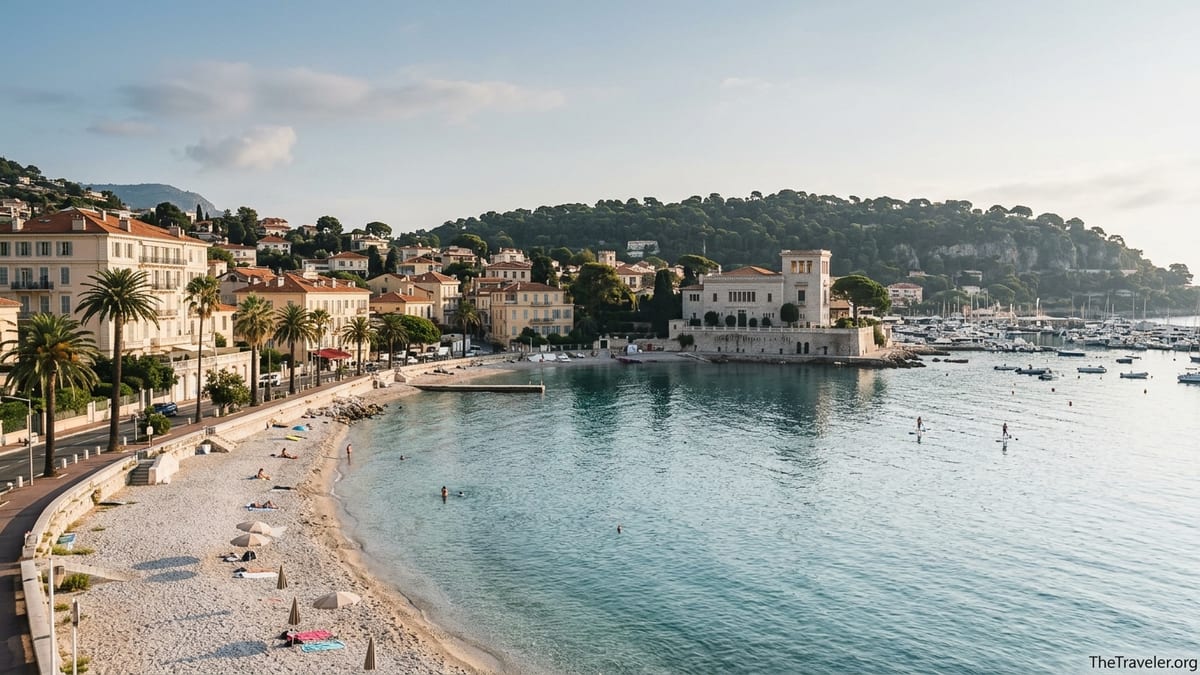
A Riviera Town That Still Feels Like a Town
Many French Riviera bases force a choice between big city energy and resort gloss. Nice offers museums, nightlife and a tram network, but also crowds, traffic and higher noise levels, especially in high season. Villefranche sur Mer is postcard pretty yet can feel like a cruise port on busy days when tenders arrive. Beaulieu sur Mer, in contrast, is compact and largely residential, with around 4,000 inhabitants, so it functions as a real community outside the summer months. You will see schoolchildren on the main square in March and locals chatting with shopkeepers on a Tuesday in November.
This everyday rhythm alters the way visitors experience the town. Instead of a waterfront lined only with souvenir shops and cocktail terraces, Beaulieu’s central streets hold practical places people actually use: a small Carrefour City supermarket, a local butcher, greengrocers, a pharmacy and bakeries that do steady business before 9 am. If you stay in an apartment near Place du Général de Gaulle, it is entirely normal to join residents queuing for warm baguettes at Boulangerie Patisserie Coste or picking up fruit for a picnic at the weekly market rather than eating every meal in a restaurant.
For many travelers this is the key difference. You still get palm trees and sea views, but the atmosphere is calmer and more grounded. Prices reflect that too. While seafront coffees in Monaco often climb past 6 euros and even a simple aperitif in Cannes can surprise you, in Beaulieu you can still sit at a terrace a few blocks back from the harbor and pay about 3 euros for an espresso or 5 to 7 euros for a glass of local rosé in 2026, depending on location and season.
Yet the town is not sleepy. Through spring and summer, there are outdoor concerts on the square, occasional antique fairs on Avenue des Hellènes and screenings at the small cinema. You just share them mostly with residents rather than coach tours, which creates a very different feel from the constant churn of day trippers in some larger Riviera centers.
Two Distinct Beaches Instead of One Long Promenade
Unlike Nice, where the Bay of Angels is edged by one wide, pebbly seafront, Beaulieu sur Mer has two separate main beaches: Plage des Fourmis in the Baie des Fourmis and Plage de la Petite Afrique at the eastern end of town. This geography means your beach experience changes dramatically depending on where you spread your towel.
Plage des Fourmis curves gently beneath the Belle Epoque gardens of the former casino and looks out to the rocky tip of Saint Jean Cap Ferrat. It is a narrow public beach of fine gravel rather than sand, which many visitors find more comfortable than the larger pebbles in Nice. In summer you will find a simple beach restaurant and rows of sunbeds run by local operators, while the rest of the shoreline remains free to access. Because the bay is enclosed, the water is usually calm, which suits families with younger children and anyone who wants an easy swim without strong waves.
In the opposite direction, beyond the marina, Plage de la Petite Afrique lies under a backdrop of umbrella pines and steep cliffs. It is longer, about several hundred meters, and feels wilder despite being only a few minutes’ walk from the station. Here, the sun remains late into the afternoon, and there is more room to spread out than on the small cove in Villefranche or on the narrow strips near some other Riviera harbors. Showers and basic facilities are installed for the high season, and there are snack kiosks and a seasonal beach club, but a large portion stays uncommercialized, which appeals to travelers who prefer to bring their own picnic.
If you compare costs, renting a sunbed with umbrella at one of Beaulieu’s seasonal beach clubs typically runs from about 25 to 35 euros per person per day in July and August, while equivalent setups in Saint Tropez or Cannes can climb noticeably higher. At the same time, the short size of the town means you can easily skip paid loungers altogether and walk from your accommodation to the free sections with just a towel, which is harder if you are staying uphill in Eze or inland from Antibes.
Belle Epoque Architecture Without the Crowds of Nice
Beaulieu sur Mer was one of the Riviera’s go to winter resorts for aristocrats and industrialists during the Belle Epoque. Traces of that era are still everywhere in its streets: creamy facades with wrought iron balconies, villas with lush gardens, and hotels with wide terraces facing the sea. Unlike in Nice, however, you see this architecture at a human scale rather than as continuous apartment blocks along a major boulevard.
One of the most striking sights is the view from Plage des Fourmis toward the Villa Kérylos, a meticulously recreated ancient Greek style house built in the early 1900s on a rocky outcrop. Even if you choose not to visit the interior, its pale stone columns and symmetrical profile give the bay an almost theatrical backdrop. A short walk away, the pink hued façade of La Réserve de Beaulieu & Spa, a five star hotel that first opened as a modest seafood restaurant in the late 19th century, recalls the town’s glamorous past while still functioning as one of its main landmarks.
Compared with Nice’s busy Promenade des Anglais or the concentrated old quarter of Antibes, the Belle Epoque presence in Beaulieu feels woven into everyday life rather than packaged as a historical district. You might pass ornate villas while walking to the supermarket or follow locals along Avenue des Anglais, lined with palm trees and pastel apartment blocks dating from different waves of development. Many travelers enjoy taking the Maurice Rouvier coastal path from Beaulieu to Saint Jean Cap Ferrat in late afternoon. The route begins near Plage des Fourmis and offers changing views back toward the town’s grand buildings without the need to navigate busy traffic or large tour groups.
Prices for staying inside this architectural setting vary less dramatically than in neighboring Saint Jean Cap Ferrat, where rooms in peak summer can easily reach very high nightly rates. In Beaulieu, a midrange hotel a few minutes from the waterfront might cost around 180 to 260 euros per night in late June, while simple rental apartments up the hill can fall below that, especially outside August. This balance of Belle Epoque ambiance and relatively manageable rates is part of the town’s distinct appeal.
A Luxury Edge With More Subtlety Than Monaco
Beaulieu sur Mer sits within what French property agents call the local golden triangle with Saint Jean Cap Ferrat and Villefranche sur Mer, an area that has some of the highest real estate values in France. On paper that might make it sound as flashy as Monaco. On the ground it feels very different. The yachts in the marina are sizeable, but berths are more likely to be occupied by well heeled European families than by the largest superyachts that dominate Antibes or Monaco’s Port Hercule.
The town’s best known luxury address is La Réserve de Beaulieu & Spa, which hosts a Michelin starred restaurant and a fine dining room under chef Julien Roucheteau, alongside a more relaxed bistro. For visitors celebrating a honeymoon or significant anniversary, dinner here can be a highlight, with set menus that may start from around 150 euros per person before wine. Yet just behind the hotel, streets hold pizzerias, crêperies and casual bistros where a main course costs in the region of 18 to 26 euros and where you might share a table with local families on Sunday evenings.
This coexistence of high end experiences and everyday options is one of the main differences between Beaulieu and smaller but ultra exclusive enclaves like Cap d’Ail or parts of Saint Jean Cap Ferrat, where restaurant choices can feel limited at accessible prices. In Beaulieu, you can enjoy oysters and a bottle of Chablis at a refined seafront terrace one night, then pick up roast chicken and salads from a takeaway near the market the next, eating on your balcony as ferries glide past in the distance.
Even shopping follows this pattern. There are a few upscale boutiques and interior design stores dotted along Avenue Maréchal Foch and the streets near the harbor, but also a weekly open air market selling seasonal produce, cheeses and flowers at prices comparable to Nice’s neighborhood markets rather than to luxury resort complexes. Travelers who appreciate quality yet prefer not to spend every day in a pure resort bubble often find this blend ideal.
Car Free Connections to Everywhere That Matters
One of Beaulieu sur Mer’s biggest practical advantages over many Riviera towns is its train station in the center of town. From Beaulieu station, regional TER trains run along the coast, with typical journey times of just over 10 minutes to Nice Ville, around 15 minutes to Monaco Monte Carlo and under an hour to Menton toward the Italian border, depending on the service. This makes it possible to base yourself in a quieter spot and still explore the full coastline without renting a car.
By contrast, charming hilltop villages such as Eze or Saint Paul de Vence require bus connections or taxis, which can be more time consuming and expensive, especially in high season when traffic clogs coastal roads. Even Villefranche sur Mer, although also on the same train line, has its station positioned up a steep walk from the old harbor, while Beaulieu’s is only a gentle few minutes on foot from the main square and beaches, a factor that can matter with luggage or for travelers with limited mobility.
From Beaulieu you can comfortably plan day trips in both directions. A typical itinerary might involve a morning beach swim, then a late morning train to Nice for museums and shopping, returning in time to walk the Maurice Rouvier coastal path before dinner. Another day you could ride east to Monaco to see the Prince’s Palace or the Oceanographic Museum, then be back in Beaulieu for an evening drink in the marina by 7 pm. The ability to move so easily helps distinguish the town from smaller coves like Cap d’Ail, where train access is less straightforward and bus schedules can dictate your day.
Public buses also connect Beaulieu to surrounding villages and to the peninsula of Saint Jean Cap Ferrat. In practice, this means you can hop on a local bus to reach Paloma Beach or the trailhead for the coastal walk around the cape, then return by walking back along the sea to Beaulieu at sunset. Travelers who enjoy combining urban visits, coastal hikes and lazy beach time often find Beaulieu’s location and transport links significantly more convenient than staying further west in Cannes or inland in Provence for this stretch of a trip.
Everyday Food Culture Beside Serious Gastronomy
Food is another area where Beaulieu sur Mer quietly distinguishes itself. Unlike certain resort towns where dining skews heavily toward hotel restaurants and tourist menus, Beaulieu maintains a mixed scene. High end options like the gastronomic restaurant at La Réserve or elegant dining rooms attached to waterfront hotels sit alongside simple brasseries, Italian trattoria style spots and boulangeries that are part of local daily life.
In the mornings, café terraces near Place du Général de Gaulle fill with a blend of residents and visitors over croissants and café crème, often for under 10 euros for a typical breakfast of pastries and coffee. At lunchtime many cafés offer fixed price menus, for example a starter and main or main and dessert for somewhere in the region of 20 to 28 euros, featuring dishes like stuffed Provençal vegetables, grilled fish of the day, or a niçoise style salad. In the evening, you can step up to more elaborate choices, such as multi course tasting menus in a dining room overlooking the port, or keep it relaxed with pizza or socca style chickpea flatbread at a casual place on a side street.
The weekly open air market gives self caterers access to regional ingredients often at lower prices than in purely touristic spots. It is common to see visitors stocking up on local goat cheese, olives, tomatoes and peaches to enjoy on their balcony instead of eating every meal out. Compared with small inland villages where shops can close for long stretches midday or on certain days, Beaulieu’s food shops usually keep hours aligned with a working community, which makes last minute purchases easier.
Travelers who care about good food but who do not necessarily want every meal to be an event often appreciate this flexibility. You can splurge on a fine dining experience one night, grab a rotisserie chicken and salad from a takeaway the next, and enjoy an ice cream while strolling past the yachts on another. In denser and more famous centers like Cannes, the ratio of tourist oriented menus to everyday places can be very different, which subtly changes both pricing and atmosphere.
The Takeaway
Beaulieu sur Mer is not the town for travelers seeking nonstop nightlife, designer shopping streets or a dense medieval old quarter. Those needs are better met in Nice, Cannes or Antibes. Its difference lies instead in a quieter, more local rhythm paired with Riviera level beauty. You get two distinct beaches rather than one long crowded frontage, Belle Epoque architecture without the intensity of a big city promenade, and close rail links in both directions that keep day trips effortless.
For many visitors, the town’s strongest appeal is the feeling that you are temporarily part of a small community rather than passing through a stage set. You might fall into a routine of early swims at Plage des Fourmis, morning coffee on the main square, afternoon excursions by train, and simple dinners at neighborhood bistros. The luxury is present if you want it, in places like La Réserve and in the sleek boats in the marina, but it never dominates every corner.
In a region famous worldwide, choosing where to stay can define your Riviera experience. Beaulieu sur Mer offers an alternative to the best known names: refined but relaxed, connected yet self contained. For travelers who want the sea at their doorstep, real life around them and the rest of the coast within easy reach, that difference is exactly the point.
FAQ
Q1. Is Beaulieu sur Mer a good base without a car?
Yes. Beaulieu sur Mer has its own train station a short walk from the beaches and main square, with frequent regional trains to Nice, Villefranche sur Mer, Monaco and Menton. Local buses also connect the town to Saint Jean Cap Ferrat and nearby villages, so you can explore much of the French Riviera using only public transport.
Q2. How does Beaulieu sur Mer compare with Villefranche sur Mer?
Villefranche sur Mer has a very picturesque old harbor with steep lanes and a more obviously historic feel, but it can be crowded when cruise passengers come ashore. Beaulieu sur Mer feels flatter, more residential and less busy, with two main beaches and more everyday services like supermarkets and bakeries, which many people find convenient for longer stays.
Q3. Are the beaches in Beaulieu sur Mer sandy or pebbly?
The main beaches, Plage des Fourmis and Plage de la Petite Afrique, are composed of fine gravel or small pebbles rather than soft sand. Many swimmers find this more comfortable than the larger stones in central Nice, and the water is usually very clear. Beach shoes can still be helpful, especially for young children or anyone with sensitive feet.
Q4. What is a typical price for a meal in Beaulieu sur Mer?
Prices vary depending on where you eat. A simple café breakfast of coffee and pastries is often under 10 euros. Fixed price lunch menus at neighborhood restaurants may run around 20 to 28 euros. In the evening, main courses at casual bistros often cost between 18 and 26 euros, while high end multi course dinners at luxury hotel restaurants can be much more.
Q5. When is the best time of year to visit Beaulieu sur Mer?
Late spring and early autumn are ideal for many travelers. In May, June, September and early October, sea temperatures are usually pleasant, most services are open and the town feels lively without the peak summer crowds of July and August. Winter is quieter but mild, with some hotels and restaurants closing or reducing hours.
Q6. Is Beaulieu sur Mer suitable for families with children?
Yes. The relatively calm waters of Baie des Fourmis, the gently shelving beach at Petite Afrique and the largely flat streets make Beaulieu sur Mer practical for families. There are playgrounds near the seafront, easy access to ice cream shops and supermarkets for snacks, and short train rides to attractions in Nice and Monaco if you want day trips.
Q7. How expensive is accommodation compared with nearby towns?
Accommodation in Beaulieu sur Mer is generally more expensive than in larger inland cities but can be more affordable than ultra exclusive spots like Saint Jean Cap Ferrat. Midrange hotels near the sea are typically priced in the mid to upper range for the Riviera, while rental apartments further from the waterfront offer better value, especially outside August.
Q8. Can you walk from Beaulieu sur Mer to Saint Jean Cap Ferrat?
Yes. A popular coastal path, the Maurice Rouvier promenade, links Beaulieu sur Mer to Saint Jean Cap Ferrat starting near Plage des Fourmis. The walk offers sea views and takes roughly 30 to 45 minutes at a relaxed pace, making it easy to combine a visit to the peninsula’s beaches or coastal trails with a stay in Beaulieu.
Q9. Is Beaulieu sur Mer lively at night?
Evenings in Beaulieu sur Mer are relaxed rather than wild. You will find waterfront bars, hotel lounges and restaurants open late in summer, and there are occasional outdoor concerts and events. However, there are few large nightclubs, so travelers seeking late night partying usually head by train or taxi to Nice or Monaco and return to sleep in quieter surroundings.
Q10. How many days should I plan to stay in Beaulieu sur Mer?
A minimum of three nights allows time to enjoy both main beaches and take at least one day trip by train. Many travelers choose to stay five to seven nights, using Beaulieu sur Mer as a calm base for exploring the wider Riviera while settling into a comfortable local routine of morning swims, market visits and evening walks along the harbor.