


Fuorigrotta is best known to football fans for the Diego Armando Maradona Stadium, but this western Naples neighborhood rewards anyone who lingers after the final whistle. Stretched between the Posillipo hill and the Phlegraean Fields, it blends rationalist architecture, fairgrounds, amusement parks, science museums and working-class streets where everyday Naples plays out far from the tourist core. If you are staying nearby for a match, a trade fair or a concert, you do not have to rush back into the centro storico. There is more than enough here for a full day or two of exploring, eating and unwinding without ever setting foot inside the stadium.
Get the latest updates straight to your inbox!
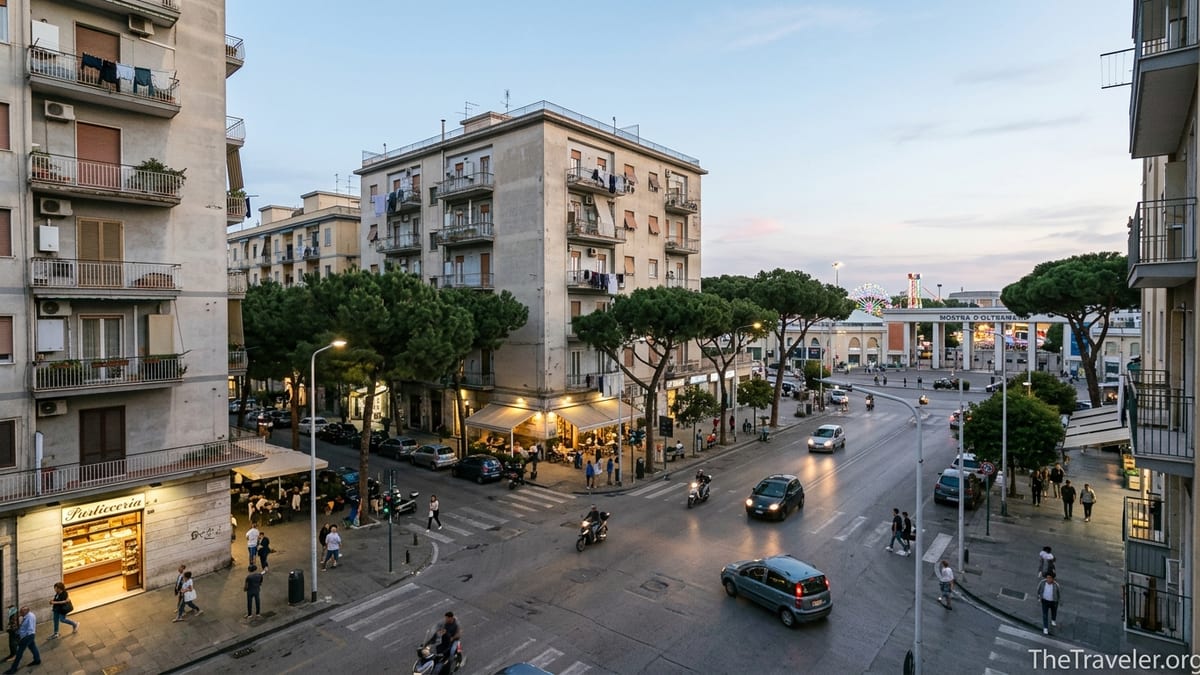
Get Your Bearings in a Very Neapolitan Neighborhood
Fuorigrotta literally means “beyond the grotto,” a reference to the ancient tunnels that punch through the Posillipo hill to connect this district with central Naples. Modern visitors typically arrive on Line 2 of the metro at Campi Flegrei station or on the Cumana railway to stops like Fuorigrotta and Mostra, stepping out into a wide grid of 1930s avenues such as Viale Augusto and Via Giulio Cesare. The atmosphere is suburban in scale but intensely local in character: kiosks selling espresso at the counter, bakeries turning out still-warm taralli and families out for an evening stroll known as the passeggiata.
Because this is a lived-in neighborhood rather than a curated historic center, it helps to think of Fuorigrotta as a set of hubs. Around Piazzale Tecchio you will find the big transport nodes, the stadium and the enormous Mostra d’Oltremare fairgrounds. A few minutes’ walk west, towards Via John Fitzgerald Kennedy and Via Terracina, lie Edenlandia amusement park, the Naples Zoo and the entrance area for many trade fairs. To the north, Via Diocleziano and Via Consalvo are typical shopping and dining streets, while further along the line of the coast the road bends towards Bagnoli and the Città della Scienza science museum.
For most visitors the appeal of Fuorigrotta lies in its contrast with postcard Naples. You will not find Baroque churches on every corner. Instead there are modernist facades, sports facilities, mid-century condos and unexpected islands of greenery. It is a side of the city that many weekend trippers never see, but it is an easy detour if you are curious about contemporary Naples beyond the historic core.
Explore the Green Heart of Mostra d’Oltremare
Mostra d’Oltremare was created in the 1930s as a grand exhibition center and has evolved into one of southern Italy’s major trade fair and event complexes. Today its sprawling grounds cover dozens of hectares, with monumental fountains, rationalist pavilions and landscaped avenues that feel a world away from the traffic on Viale Kennedy outside. On non-event days sections of the complex function as a public park, so locals come here to jog, walk dogs or simply find shade under the pines.
If you are staying in Fuorigrotta for a fair or conference, your badge may give you direct access to the exhibition halls and outdoor areas. Even without an event ticket, check the current program posted at the entrances on Viale Kennedy or Via Terracina. The calendar is surprisingly varied: one week you might find a travel expo, the next a comics convention, a contemporary art fair, a cat show or a food festival with stalls from all over Campania. Temporary events such as dinosaur exhibitions or immersive light shows are often hosted in the pavilions and typically cost under 15 euro per adult, with reduced prices for children.
One of the visual highlights inside Mostra d’Oltremare is the vast Fountain of the Esedra, a sweeping semi-circular pool framed by sculptural decoration that feels like a set from a 1950s film. It is particularly atmospheric at sunset when the water reflects the soft light and joggers trace laps around the basin. In summer, open-air concerts and festivals make use of the Arena Flegrea amphitheater within the complex, bringing Italian and international acts to Fuorigrotta. If a band you like is on tour in Italy, it is worth checking whether they are slated to perform here and timing your visit accordingly.
Mix Fun and Nostalgia at Edenlandia and the Naples Zoo
Directly across from one of the main gates of Mostra d’Oltremare, Edenlandia bills itself as Italy’s first “food and leisure park” and serves as a nostalgic touchstone for generations of Neapolitans. The park blends classic amusement rides with street-food stalls and themed corners. Entrance to the park itself is free, and visitors pay per ride, generally through a rechargeable card or tokens sold at kiosks. As of 2026, common rides cost only a few euros each, with family-friendly deals if you load more credit at once, which makes it feasible to stop by for just a couple of attractions and a snack rather than committing to a full theme-park day.
Among the most popular experiences are small roller coasters suitable for children, a carousel that lights up after dark, bumper cars and themed areas such as “Vecchia America,” with its slightly retro take on the American West. The atmosphere in the evenings feels like a neighborhood fair more than a high-tech theme park: teenagers cluster around game stalls, parents share paper cones of fried seafood and the air smells of popcorn, pizza fritta and sweet churros-style pastries. On summer weekends it can be lively well past midnight, but weekdays and late afternoons are much calmer if you are traveling with small children.
Sharing the same wider complex, the Naples Zoo offers a compact biopark-style layout that can fill a relaxed half day. The enclosures house a mix of familiar zoo residents, from big cats and zebras to lemurs and tropical birds, with a growing emphasis on conservation messaging. Ticket prices are typically in the mid-teens per adult, with discounts for children, families and online advance purchases. While it does not rival Europe’s largest zoos, it is easy to reach by Cumana train to the Zoo–Edenlandia station and pairs naturally with a few hours at Edenlandia next door.
Between the parks, a multiplex cinema and a bowling alley, this strip of Fuorigrotta has become a cluster for local entertainment. If you are staying in central Naples but want a different sort of evening, you can ride the metro out to Campi Flegrei, stroll ten to fifteen minutes past the fairgrounds and enjoy a few rides, dinner in one of the casual restaurants opposite the park, then head back by train before midnight.
Immerse Yourself in Science by the Sea at Città della Scienza
Although technically in neighboring Bagnoli rather than Fuorigrotta proper, Città della Scienza is connected to the district by the same coastal road and public transport lines, and it is one of the most compelling reasons to spend time on this side of Naples. This interactive science museum occupies former industrial buildings on the seafront and is especially popular with families, school groups and curious adults who enjoy hands-on exhibits rather than glass cases.
The museum is divided into themed areas, including an extensive section on the human body known as Corporea, where visitors can explore interactive stations about respiration, movement, the senses and neuroscience. Another draw is the Planetarium, one of the most advanced in Italy, which hosts immersive shows about the night sky, black holes and space exploration. Standard combined tickets that include both the exhibitions and a Planetarium show usually fall in the low-to-mid teens per adult, with reduced rates for children and seniors, and family bundles that can make a visit very cost-effective compared with major European capitals.
Opening hours vary by season, but as of summer 2026 the museum is typically open several days a week from morning until mid-afternoon, with extended programs during a special “summer of science” period running into late September. It is wise to check current hours before you go and to arrive close to opening time if you want to see several Planetarium shows in one visit. The museum’s café serves simple hot dishes and sandwiches, though many Italian families opt to bring small packed snacks and eat at the outdoor picnic tables between visits to the exhibition halls.
Reaching Città della Scienza from Fuorigrotta is straightforward. From Campi Flegrei or Mostra stations you can take a short bus ride along Via Diocleziano and Via Coroglio, or a taxi ride of about ten minutes depending on traffic. The journey offers glimpses of the coastline, the disused Bagnoli industrial area and, on clear days, views across the bay to the islands. Combined with a stroll along the redeveloping waterfront, it makes for an instructive look at how Naples is reimagining its western edge.
Unwind in Thermal Waters and Local Nightlife
One of the quieter pleasures of staying in Fuorigrotta is its proximity to the volcanic Phlegraean Fields, a landscape pocked with fumaroles and hot springs just beyond the built-up streets. Historically, the Agnano area on the district’s edge was ringed with bathhouses that tapped into naturally warm mineral-rich waters. Several have closed or been redeveloped, but spa-style facilities continue to operate in and around Agnano, offering pools, wellness treatments and sometimes evening openings popular with locals.
While not as internationally famous as the thermal complexes of Ischia or Tuscany, these baths can be a practical choice if you are in Naples without time to visit the islands. Expect simple changing facilities, open-air pools surrounded by greenery and pricing that is generally lower than at high-end resorts. Many establishments offer time-limited entries, for example a three-hour slot in the late afternoon or evening, which you can combine with a relaxed dinner in nearby pizzerias or trattorias that cater more to Neapolitans than to tourists.
Back in the core of Fuorigrotta, nightlife is understated but convivial. Around Via Giacomo Leopardi, Via Consalvo and the streets crossing Viale Augusto you will find a rotation of neighborhood bars, gelato shops and casual eateries that stay open late, particularly on weekends and after major events at the stadium or the Arena Flegrea. Rather than glamorous cocktail lounges, expect standing at the bar with a spritz or a beer, grabbing a slice of pizza al taglio and people-watching as teenagers cruise the avenues on scooters.
If you prefer something more structured, look for bowling alleys, escape rooms and small live-music venues clustered near the fairgrounds and the multiplex cinema. Many advertise weekly Latin dance nights, karaoke or live Neapolitan music, and entrance charges are typically modest, sometimes just the cost of a drink. It is an easy way to experience everyday leisure culture in a part of Naples where the clientele is overwhelmingly local.
Eat Like a Local: Street Food, Markets and Everyday Dining
Dining in Fuorigrotta is less about destination restaurants and more about solid neighborhood cooking at approachable prices. Around Campi Flegrei station, rows of cafés and bakeries turn out cornetti and sfogliatelle in the mornings, often for well under 2 euro with an espresso at the counter. It is a good spot to grab breakfast before heading to a trade fair or catching the Cumana train to the coast. Many venues operate on a self-service basis at lunch, laying out trays of pasta al forno, parmigiana di melanzane and contorni vegetables that you pay for by weight.
For lunch or dinner, pizzerias line main streets like Via Giulio Cesare, Viale Augusto and Via Consalvo. Here, a classic margherita often costs noticeably less than in the most famous pizzerias of the historic center, and reservations are easier to secure on short notice, except on busy match nights. Fried street foods are also a point of pride: look out for cuoppi, the paper cones overflowing with fried calamari, shrimp and small fish, and for pizza fritta, a deep-fried pocket stuffed with ricotta and salami that is especially satisfying after a few rides at Edenlandia.
If you prefer to self-cater, local markets and supermarket chains around Piazzale Tecchio and Via Diocleziano sell fresh produce, cheeses and cured meats. In the mornings, market stalls typically brim with seasonal vegetables from the surrounding Campania countryside: tomatoes destined for ragù, zucchini flowers, apricots in early summer and grapes in autumn. Buying picnic supplies and eating in one of the green corners of Mostra d’Oltremare or on a bench overlooking the fairgrounds can be a pleasant alternative to restaurant meals.
Because this is not a heavily touristed area, a few simple phrases in Italian and a willingness to follow what locals are ordering go a long way. Do not hesitate to ask staff for the piatto del giorno or for recommendations on fish of the day; prices are usually clearly displayed, and any cover charge, or coperto, is modest compared with big-city tourist districts.
Connect Fuorigrotta With the Rest of Naples
Fuorigrotta’s role as a transport hub makes it a useful base for exploring both Naples and the wider Phlegraean area. Campi Flegrei station on Line 2 of the metro puts you two to three stops from central nodes like Montesanto and Piazza Cavour, where you can transfer to the funiculars and Line 1, or walk directly into the Spanish Quarter and the historic center. Trains on this line generally run every few minutes during the day, and journey times into the center are short enough that you can easily combine a morning in Fuorigrotta with an afternoon at the Archaeological Museum or vice versa.
The Cumana railway, whose Fuorigrotta and Mostra stations are a short walk from the stadium and fairgrounds, runs west towards stations such as Bagnoli, Pozzuoli and further into the Campi Flegrei. This makes day trips to seaside promenades, Roman remains and volcanic craters straightforward without a car. Services can be busy at peak commuting times and around major football matches, so give yourself extra time and consider traveling outside rush hours if you have luggage.
Within the neighborhood, wide avenues and clear street layouts make it relatively easy to navigate on foot. However, traffic can be intense at major intersections, and pedestrian crossings do not always correspond to where you might intuitively want to cross, especially around the stadium and the large roundabouts. Allow extra walking time when changing between metro and Cumana or heading from the stations to Edenlandia and the zoo, particularly if you are with children.
Taxis and ride-hailing services are readily available outside Campi Flegrei, at Piazzale Tecchio and near the main entrances of Mostra d’Oltremare. A taxi ride from Fuorigrotta to central Naples typically takes 15 to 25 minutes depending on traffic and is priced according to municipal tariffs, with fixed rates available to and from the airport and port. If you are attending a late-night concert in the Arena Flegrea or a midweek football match but staying elsewhere in the city, arranging your return transport in advance can save considerable stress.
The Takeaway
Fuorigrotta rarely appears on the classic list of must-see Naples neighborhoods, yet for those who make the short journey beyond the hill it offers a revealing cross-section of contemporary city life. Here, monumental fairgrounds sit beside amusement parks from another era, an interactive science museum looks out to sea and locals queue for fried pizza in backstreets that tourists seldom enter. It is a place where Naples works, studies and relaxes rather than performs for visitors.
Whether you are in town for a trade fair, a concert, a science festival or simply curiosity about a different slice of the city, Fuorigrotta rewards exploration beyond the shadow of the Diego Armando Maradona Stadium. Plan a morning wandering the rationalist avenues of Mostra d’Oltremare, an afternoon of experiments and star shows at Città della Scienza, or an evening of rides and street food at Edenlandia. You may find that this unassuming western district becomes one of your most vivid memories of Naples.
FAQ
Q1. Is Fuorigrotta a good area to stay in for visiting Naples?
Yes, Fuorigrotta can be a convenient base thanks to metro Line 2, the Cumana railway and relatively quick connections to the historic center, especially if you are attending events or prefer a more residential atmosphere.
Q2. How long should I plan to spend in Fuorigrotta beyond the stadium?
You can see the main sights in a focused half day, but a full day allows time for Mostra d’Oltremare, Edenlandia or the zoo, plus a relaxed meal and an evening stroll.
Q3. Is Edenlandia suitable for adults without children?
Yes, many locals visit as couples or groups of friends for the fairground atmosphere, casual food and evening lights, even if they only ride a few attractions.
Q4. Do I need to book tickets for Città della Scienza in advance?
Booking ahead is recommended during weekends, school holidays and the summer science season, especially if you want a specific Planetarium showtime, but off-peak visits are often possible without reservations.
Q5. Are there beaches in Fuorigrotta itself?
No, Fuorigrotta does not have conventional beaches; for seaside promenades and bathing platforms you will travel a short distance to nearby Bagnoli or Pozzuoli along the same rail and bus lines.
Q6. Is Fuorigrotta safe to walk around at night?
Fuorigrotta is a busy residential district where many locals are out late; normal big-city precautions apply, and it is sensible to stick to well-lit main streets, especially around stations.
Q7. What is the best way to get from Fuorigrotta to central Naples?
Metro Line 2 from Campi Flegrei is usually the fastest and most straightforward, with frequent trains to central stops and easy transfers to other lines and funiculars.
Q8. Can I visit both Edenlandia and the Naples Zoo in one day?
Yes, the parks are adjacent and compact; many families spend the morning at the zoo, have lunch nearby and then enjoy a few hours of rides and snacks at Edenlandia.
Q9. Are restaurants in Fuorigrotta open on Sundays and Mondays?
Most neighborhood pizzerias and cafés keep regular hours on Sundays and often close one midweek day instead; it is wise to check individual venues on Mondays, when some may shut.
Q10. Do I need a car to explore Fuorigrotta and the surrounding area?
No, public transport by metro, Cumana trains and buses is usually sufficient; a car can be more of a hindrance due to traffic and limited parking around major venues.