


More news on this day
Thousands of passengers across Asia faced extensive disruption after a fresh wave of airline delays and cancellations swept through Bangkok and other major hubs, with operational data indicating 7,947 delayed flights and 302 cancellations in a single day as carriers struggled with capacity constraints, adverse weather and knock-on scheduling issues.
Get the latest news straight to your inbox!
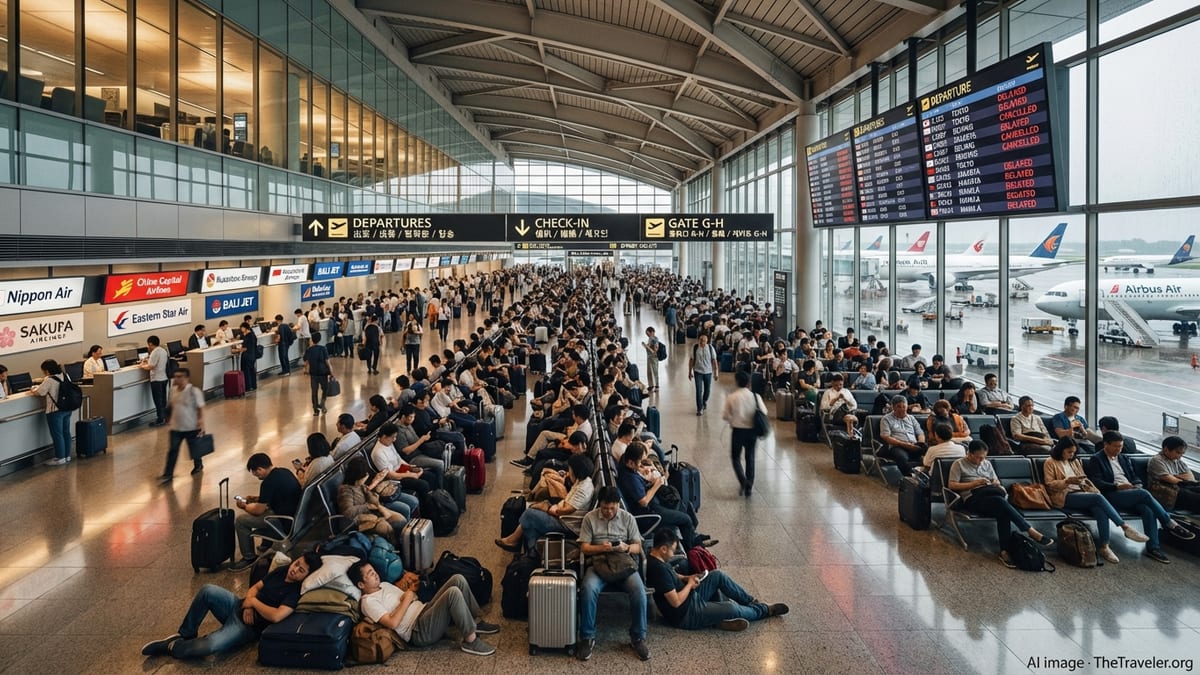
Bangkok at the Center of a Regional Air Travel Snarl
Bangkok’s Suvarnabhumi and Don Mueang airports emerged as focal points of the latest disruption, with regional tracking data indicating that the two gateways accounted for a significant share of the 7,947 delays and 302 cancellations recorded across Asia during the affected 24 hour period. The figures highlight how heavily Asian air traffic now depends on Bangkok as a transfer and leisure hub, amplifying the impact when operations falter.
Publicly available flight boards from both airports showed rolling delays across short haul routes to destinations such as Singapore, Kuala Lumpur, Hanoi, Phnom Penh and domestic Thai cities, along with schedule changes on long haul services connecting to Europe, the Middle East and Australia. Airlines serving Bangkok appeared to respond with a mix of outright cancellations and last minute retimings, as crews and aircraft fell out of position.
Reports from aviation data providers suggest that congestion at Bangkok coincided with already tight schedules across the region, setting off a chain reaction as delayed aircraft failed to return in time for onward legs. Even routes not directly serving Thailand experienced secondary disruptions as carriers reallocated aircraft and crews to protect their highest demand services.
The episode comes during a busy travel window in August, when holiday traffic remains strong and business travel begins to pick up after mid year. That combination has left airlines and airports with limited slack to absorb operational shocks, making any disruption more visible to travelers.
Weather, Airspace Constraints and Airline Scheduling Under Strain
Industry coverage points to a mix of factors behind the spike in delays and cancellations, including seasonal storms over parts of Southeast and East Asia, localized air traffic control restrictions and increasingly stretched airline schedules. Typhoon systems and monsoon weather patterns have recently led to extended holding times, diversions and temporary closure of approach corridors at several regional airports, cutting into buffer times built into timetables.
Aviation analysis over recent months has also highlighted how airspace restrictions linked to geopolitical tensions and route closures have shifted traffic onto fewer corridors between Europe and Asia. When congestion rises on these routes, arrival banks at major hubs such as Bangkok, Hong Kong and Singapore can quickly fall out of sync, prompting delays that cascade through the day’s schedule.
Carriers in Asia have meanwhile been racing to restore capacity to meet post pandemic demand, in some cases adding frequencies or reintroducing routes before crew pipelines and maintenance resources are fully rebuilt. Published commentary from travel forums and industry observers indicates that some airlines have been consolidating lightly booked services or trimming weaker routes, sometimes at short notice, in an attempt to stabilize operations and manage costs.
The result is an operating environment where any unexpected constraint, from a storm cell over the Gulf of Thailand to a temporary runway closure, can cause outsized disruption. When this aligns with peak travel days, the number of affected passengers multiplies rapidly, as reflected in the nearly 8,000 delayed flights logged across Asia during the disruption window.
Knock-On Effects Across Asian Gateways
While Bangkok bore the brunt of the disruption, aviation tracking data and regional media coverage show that airports in several countries felt the ripple effects. Short haul hubs in Vietnam, Cambodia and Laos reported clusters of delayed departures linked to late arriving aircraft from Thailand, while carriers in Malaysia and Singapore adjusted schedules to accommodate missed connections and crew duty limitations.
In South Asia, regional networks that rely on Bangkok as a connection point, including routes from Nepal and parts of India, experienced schedule changes and aircraft swaps. Publicly available customer reports referenced cancellations on certain secondary routes and rebookings that rerouted travelers through alternative hubs such as Kuala Lumpur or Singapore to bypass congested banks in Bangkok.
Japan, South Korea and Taiwan, which are closely tied into Southeast Asia’s leisure and business travel flows, also experienced delays on select services originating from or operating via Bangkok. Aviation analytics indicate that once a critical mass of delays accumulates at one hub, rotational knock on effects can reach airports thousands of kilometers away within a matter of hours.
The web of interline and codeshare agreements among Asian carriers further complicated the picture, as delays on one airline’s metal translated into missed connections across alliance and partner networks. Passengers on multi segment itineraries, particularly those involving self connections on low cost carriers, were disproportionately exposed to schedule changes.
Passengers Confront Cancellations, Limited Options and Rebooking Challenges
The disruption left many travelers across Asia struggling to rework their plans, often with limited seats available on alternative departures. Accounts shared on public travel forums described last minute flight time changes by regional carriers, including schedule consolidations on key domestic and island routes in Thailand and cancellations on lower frequency international services.
Some travelers reported that previously multiple daily services between Bangkok and popular holiday destinations were reduced or retimed, forcing changes to hotel bookings and connecting flights. Others highlighted difficulties contacting airline support channels or obtaining clear information on whether routes would be suspended temporarily or reinstated at later dates, an issue that has surfaced repeatedly as carriers adjust their networks.
In several cases, passengers indicated that they were rebooked on later same day flights or routed through different hubs, but often after extended waits at airports. For those on tight itineraries or with onward international connections, even modest delays created missed tours, lost hotel nights or changes in visa timing, underlining how sensitive modern travel plans have become to schedule reliability.
Consumer advocates in the region have urged travelers to monitor bookings closely in the days leading up to departure, particularly on routes where airlines have been revising schedules or trimming frequencies. Travel insurers and industry commentators also advise keeping records of disruption related expenses, though compensation rules vary significantly between jurisdictions and carriers.
What the Latest Disruptions Signal for Asia’s Peak Travel Season
The scale of the latest disruption, with 7,947 delays and 302 cancellations centered around Bangkok and radiating across Asian airports, underscores ongoing fragility in the region’s air travel recovery. Despite traffic volumes approaching or exceeding pre pandemic levels on many routes, the supporting infrastructure of aircraft, crews, maintenance capacity and air traffic management is still catching up.
Aviation analysts note that as airlines push to maximize revenue during the busy second half of the year, schedules are likely to remain tight. This increases the risk that relatively modest shocks, from localized storms to equipment issues on single aircraft types, can generate widespread operational challenges similar to those seen in the recent episode.
For travelers planning trips through Asia in the coming weeks, the events around Bangkok serve as a reminder to build extra time into connections, favor itineraries with flexible change options where possible and stay alert to schedule updates. The region’s airports and airlines are continuing to refine their operations, but data from this latest wave of disruption suggests that resilience remains uneven, particularly on complex multi segment journeys.
As peak travel demand persists, the balance between capacity growth and operational robustness will remain a central issue for Asia’s aviation sector. How airlines and airports manage that tension will shape the experience of millions of passengers flying through hubs such as Bangkok over the remainder of the year.