


Naples is a city of sharply different neighborhoods packed into a relatively small area. Most first‑time visitors instinctively book a room in the historic center or along the seafront, close to postcard classics like Spaccanapoli and Castel dell’Ovo. Yet a growing number of travelers, often hunting for better prices or a more authentic vibe, end up looking at Fuorigrotta, a largely residential district in the city’s west. Is Fuorigrotta actually better for local experiences than traditional tourist sightseeing in Naples, or does staying here simply mean being too far from the action?
Get the latest updates straight to your inbox!
Understanding Fuorigrotta’s Place in Naples
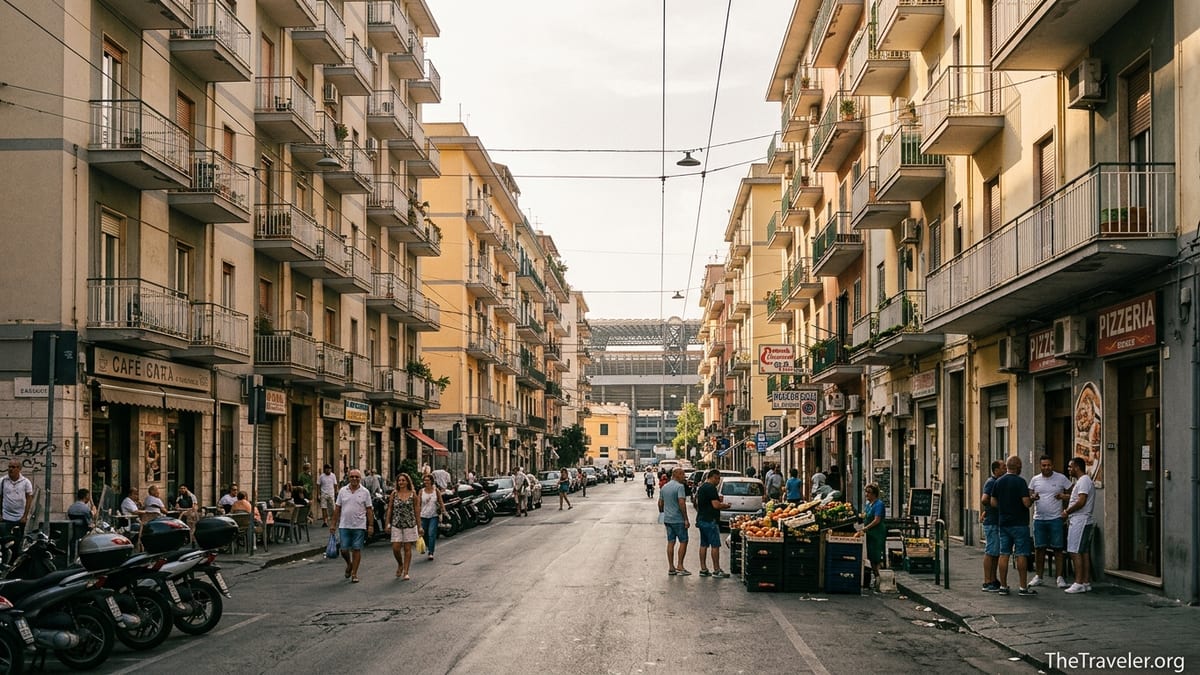
Fuorigrotta sits in the western part of Naples, between the central city and the broader Phlegraean Fields area. Historically a rural district, it was heavily reshaped in the 1930s when wide Viale Augusto, the Mostra d’Oltremare fairground and new churches and apartment blocks were built, turning it into a planned, modern neighborhood by Neapolitan standards. Today it feels distinctly different from the cramped alleys of the UNESCO‑listed historic center, with wider streets, mid‑rise postwar buildings and a daily rhythm driven more by residents than tourists.
The district is best known to Italians for the Diego Armando Maradona Stadium, home of SSC Napoli, and for the Mostra d’Oltremare exhibition complex, which hosts trade fairs, concerts and big events throughout the year. On match days, the entire area around Piazzale Tecchio and the stadium swells with local fans arriving by metro, Cumana suburban train and scooters. On non‑event days, however, Fuorigrotta returns to its usual role as a workaday neighborhood where kids walk to school, office workers grab espresso at the bar downstairs and older residents gather on benches in small piazzas.
Because of this profile, Fuorigrotta rarely appears in glossy city‑break round‑ups alongside Chiaia, Vomero or the Spanish Quarter. Travel planning sites and hotel guides tend to highlight it mainly as a transport hub with cheaper accommodation, rather than as a must‑see tourist destination. That reputation is partly deserved: if you imagine stepping outside your lodging into a cluster of baroque churches and atmospheric chapels, Fuorigrotta is not the place. Yet for visitors who want to plug into everyday Neapolitan life, its anonymity can be a strength.
To decide whether Fuorigrotta is a good base for you, it helps to be clear about your priorities. If your Naples checklist is heavy on bucket‑list churches, underground tours and early‑morning photography in Spaccanapoli, staying closer to the center saves precious time. If, on the other hand, you already know you will be back in Naples or you care more about shopping where locals shop, lingering in neighborhood cafés and seeing how people actually live, Fuorigrotta starts to look more appealing.
Local Life in Fuorigrotta: What Everyday Naples Feels Like
Walk along Via Giacomo Leopardi or Viale Augusto at 8.30 on a weekday morning and you get a vivid sense of local Naples. Traffic is busy with commuters heading toward the city, teenagers in school uniforms cluster at bus stops, and coffee bars do a brisk trade in one‑euro espresso and cornetti. This is an area of apartment dwellers, not holiday rentals. Many buildings have ground‑floor garages or small workshops, and you are more likely to pass a hardware store or a neighborhood bakery than a souvenir shop.
Food here is targeted at locals, which affects both price and style. Around Piazzale Tecchio and along the side streets, you will find classic Neapolitan pizzerias selling a margherita for roughly 5 to 7 euros, versus the slightly higher prices now common on the most touristy stretches of Via dei Tribunali in the center. Family‑run trattorie offer daily specials such as pasta e patate con provola or linguine with clams at prices that reflect an everyday clientele rather than one‑time visitors. Cafés pour strong espresso to regulars, often served standing at the counter with a quick chat about football or local politics.
Shopping in Fuorigrotta leans practical. Instead of designer boutiques, you will mostly see mid‑range Italian clothing chains, shoe shops, pharmacies and household stores. Local markets and fruit stands carry seasonal produce at prices noticeably lower than tourist‑oriented streets near Piazza del Plebiscito. For a visitor who enjoys self‑catering, popping into a neighborhood salumeria to buy sliced provola cheese, prosciutto and fresh bread can be a small but memorable window into daily life.
Evenings outside of match days are relatively calm. Residents stroll with dogs, children ride scooters in small squares, and groups of friends gather at straightforward bars for spritz or beer. There are a few livelier spots near the stadium and the Cumana stations, but you do not get the dense cluster of nightlife and cocktail bars that you would in Chiaia or along the Lungomare. For some travelers that is a drawback; for others, the quieter streets and absence of aggressive touts or bar promoters make Fuorigrotta feel more relaxed and lived‑in.
Tourist Sightseeing: What You Miss If You Base Yourself in Fuorigrotta
Naples’ big‑ticket sights are not in Fuorigrotta. They are concentrated mainly in the historic center, around the monumental seafront and on the hilltop of Vomero. The UNESCO‑listed core around Spaccanapoli and Via dei Tribunali holds densely packed churches, cloisters and underground archaeological sites that trace the city’s 2,700‑year history. Staying nearby makes it easy to visit the Duomo, the Sansevero Chapel, San Gregorio Armeno’s nativity workshops and the catacombs without spending half your day commuting.
Closer to the bay, the waterfront zone between Piazza del Plebiscito, Santa Lucia and Chiaia delivers the views many travelers imagine when they picture Naples: Castel dell’Ovo out on its rocky islet, the curve of the Lungomare with Vesuvius beyond, and a string of cafés and gelaterie facing the water. From these districts it is simple to combine sightseeing with low‑key strolling, dipping into side streets for shopping or lingering over seafood or pizza with a clear sea view, none of which exist in Fuorigrotta itself.
Above the center, Vomero offers fortress‑top panoramas and cultural heavyweights like Castel Sant’Elmo and the Certosa di San Martino. Reaching these from Fuorigrotta requires either a change of metro and then a funicular ride, or a relatively long bus journey. If your ideal Naples stay involves early‑morning walks along the Lungomare or popping back to your room during a day of museum‑hopping, the extra travel time from Fuorigrotta will wear thin.
There is also the intangible aspect of atmosphere. Central neighborhoods such as the Spanish Quarter, the decumani area and Santa Lucia are undeniably more photogenic than Fuorigrotta, with layers of Baroque and medieval architecture, laundry‑draped alleys and tiny votive shrines. You will still see shrines and street art in Fuorigrotta, but against a backdrop of mid‑20th‑century apartment blocks and wide avenues. If your priority is to be visually immersed in old Naples every time you step outside, the center or the seafront has the edge.
Connectivity: How Easy Is It To Reach the Sights From Fuorigrotta?
Fuorigrotta’s main strength, beyond its lived‑in feel, is connectivity. The district functions as a western transport hub, served by Line 2 of the metropolitan rail system, the light‑metro Line 6 and the Cumana and Circumflegrea suburban railways. Key stations like Campi Flegrei, Cavalleggeri Aosta and Mostra link Fuorigrotta with Napoli Centrale, Montesanto and Mergellina, which are gateways to the historic center, Spanish Quarter and waterfront.
From Campi Flegrei on Line 2, trains run directly to Napoli Piazza Garibaldi, the main rail hub by the central station, in roughly 10 to 15 minutes depending on the service. From there you can walk or transfer to Line 1 toward museums and the heart of the old city. Many visitors staying in Fuorigrotta end up doing this journey daily: leave their accommodation, grab a quick espresso at the bar, ride Line 2 into town, then spend the day in the historic center or along the seafront before returning in the evening.
The Cumana line, which also passes through Fuorigrotta, is especially useful if you plan to explore the coastal towns of the Phlegraean Fields, such as Pozzuoli and Torregaveta. For example, a traveler could base in Fuorigrotta, ride the Cumana 10 to 15 minutes to Pozzuoli Porto in the morning to visit the Rione Terra and amphitheater, then return in the afternoon and change to Line 2 for an evening passeggiata along Via Toledo. This web of rail connections compensates somewhat for Fuorigrotta’s distance from the classic sights.
That said, relying on trains for everything has trade‑offs. Services are fairly frequent in daytime but less convenient late at night, so if you plan on staying out past midnight in the Spanish Quarter or along the Lungomare, you may find yourself using taxis or ride‑hailing services for the return trip. Traffic between the center and Fuorigrotta can be heavy at rush hours, meaning that the theoretical 15‑minute drive easily becomes 30 minutes or more. Travelers with very short stays, mobility issues or limited patience for transit may prefer to sacrifice some local flavor and sleep closer to where they will spend most of their time.
Local Experiences You Only (or Best) Get in Fuorigrotta
Fuorigrotta’s reputation as a largely residential district hides several experiences that are especially appealing if you are looking to see Naples through local eyes. The most obvious is a football match at the Diego Armando Maradona Stadium. Even if you are not a hardcore fan, attending a home game offers an intense immersion in Neapolitan passion. Before kickoff, streets around the ground fill with street vendors selling scarves and fried snacks, while bars show pre‑match commentary at full volume. Staying in Fuorigrotta means you can walk to and from the stadium instead of battling for space on packed trains after the final whistle.
Close to the stadium, the Mostra d’Oltremare fairground hosts an evolving calendar of trade shows, concerts and cultural events. Depending on when you visit, you might find a book fair, a food and wine expo highlighting Campanian producers, or an open‑air music festival drawing crowds from across the city. On some summer evenings, residents come not for a specific event but simply to stroll through the green spaces and fountains when they are open for public access, which gives you a softer side of this vast complex.
Another very local experience in Fuorigrotta is Edenlandia, a historic amusement park that has been refreshed in recent years with family‑friendly rides, street‑food stalls and seasonal decorations. Neapolitan families bring children here on weekends and evenings for a mix of nostalgia and entertainment. While the rides themselves are not unique by global standards, spending a few hours at Edenlandia places you squarely in the flow of local leisure time, far from the usual tourist routes.
Daily life details also become part of the experience. You might get to know the staff at your corner coffee bar, exchange greetings with the same bakery owner each morning, or watch the ebb and flow of residents coming home from work around sunset. For slow travelers or remote workers, this sense of being temporarily woven into a neighborhood can be more rewarding than ticking off one more church or viewpoint. In that sense, Fuorigrotta can deliver exactly what many people mean when they say they want to “live like a local.”
Who Should Stay in Fuorigrotta vs Central Naples?
Choosing between Fuorigrotta and more central districts ultimately comes down to trip style. Fuorigrotta works best for repeat visitors, slow travelers and football fans willing to trade instant access to landmarks for cheaper lodging and an everyday atmosphere. If you have four or five full days in Naples and do not mind a 15‑ to 25‑minute commute into the historic center most mornings, you can comfortably base yourself in Fuorigrotta, spend the day sightseeing and then retreat to a quieter, resident‑oriented neighborhood at night.
Budget‑conscious travelers and small groups often appreciate the better value for money here. Because Fuorigrotta is not a classic tourist zone, you may find larger apartments or mid‑range hotels at lower nightly rates than equivalent spaces in Chiaia or near Piazza del Gesù Nuovo. Grocery shopping, casual meals and everyday services also tend to be cheaper. That can make a tangible difference over a week‑long stay, especially if you are combining Naples with side trips to Pompeii, Sorrento or the islands and are watching costs.
On the other hand, first‑time visitors with only one or two full days in the city are generally better off staying closer to the action, in or just beside the historic center or along the Lungomare. From there, you can walk between many of the main sights, minimize time spent figuring out trains and buses and more easily pop back to your room for a rest between museum visits and dinner. Travelers particularly focused on safety perceptions may also feel more comfortable in well‑trodden, more heavily policed central areas, especially late at night, even though street‑smart precautions apply everywhere in Naples.
Families will need to weigh trade‑offs. Fuorigrotta offers family‑friendly draws like Edenlandia and the fairgrounds, along with more space in typical apartments. At the same time, pushing a stroller or shepherding kids on and off trains into the center each day may be tiring. Couples on a romantic city break might find the combination of historic charm and bay views in Santa Lucia or Chiaia more aligned with their expectations of Naples, while still being able to ride out to Fuorigrotta for a match or an event if desired.
The Takeaway
Is Fuorigrotta better for local experiences than for tourist sightseeing? In many ways, yes. It is a district where Naples feels more like a lived‑in city and less like a set piece for visitors. You will not step out of your door into a UNESCO‑listed piazza, but you will share buses, bakeries and football nights with the people who actually call the city home. If your priority is to slow down, observe and participate in ordinary Neapolitan routines, Fuorigrotta can be an excellent base or at least a worthwhile detour.
At the same time, Fuorigrotta is not a substitute for Naples’ core sights. The decumani streets, cathedral, underground ruins, waterfront fortresses and hilltop castles that define the city in the global imagination are elsewhere, and staying far from them adds transit time and small daily frictions. For short trips and first‑time visits, the convenience and atmosphere of the historic center, Spanish Quarter, Chiaia or Vomero usually outweigh the benefits of a more anonymous residential area.
The sweet spot for many travelers will be a hybrid approach. Base yourself centrally for a couple of nights to dive into Naples’ classic landmarks, then spend a night or two in Fuorigrotta if you are particularly drawn to football culture, fairs and neighborhood life. Alternatively, stay central but plan an afternoon in Fuorigrotta around a stadium tour, an event at Mostra d’Oltremare or an evening at Edenlandia. Rather than asking whether Fuorigrotta is “better” than the center, it may be more useful to see it as revealing a different, thoroughly local face of Naples that complements, rather than replaces, the city’s famed sights.
FAQ
Q1. Is Fuorigrotta a good base for first‑time visitors to Naples?
For most first‑time visitors with only a few days in Naples, staying closer to the historic center or seafront is more convenient, while Fuorigrotta works better for repeat visitors or longer stays.
Q2. How long does it take to reach the historic center from Fuorigrotta?
Using Line 2 from Campi Flegrei or nearby stations, you can usually reach Napoli Piazza Garibaldi and transfer toward the old town in about 15 to 25 minutes, depending on waits and connections.
Q3. Is Fuorigrotta cheaper than central Naples for accommodation and food?
Generally yes. Because it is a residential district with fewer tourists, Fuorigrotta often offers lower nightly rates for apartments and more everyday prices in pizzerias and grocery shops.
Q4. Is Fuorigrotta safe for travelers?
Fuorigrotta is a typical urban neighborhood where standard city precautions apply, such as watching your belongings and avoiding very deserted areas late at night, but most visitors feel comfortable during normal hours.
Q5. What are the main attractions in Fuorigrotta itself?
The standout draws are the Diego Armando Maradona Stadium, the Mostra d’Oltremare exhibition grounds and Edenlandia amusement park, which together anchor much of the area’s event and leisure life.
Q6. Will I miss out on classic Naples sights if I stay in Fuorigrotta?
You can still visit all major sights by train or metro, but you will spend more time commuting than if you stayed in the historic center, Spanish Quarter, Chiaia or Vomero.
Q7. Is Fuorigrotta a good choice for football fans?
Yes. Being able to walk to and from the stadium on match days, and soaking up the local atmosphere in nearby bars and streets, makes Fuorigrotta particularly appealing for Napoli supporters.
Q8. How is the nightlife in Fuorigrotta compared with central Naples?
Nightlife in Fuorigrotta is relatively low‑key, with a few busy bars and pizzerias; for dense clusters of late‑night venues and cocktail bars, central neighborhoods and the seafront offer far more options.
Q9. Is Fuorigrotta suitable for families with children?
Fuorigrotta can work well for families thanks to Edenlandia and larger apartments, but parents should factor in daily train rides into the center if they plan intensive sightseeing.
Q10. How many days should I plan if I stay in Fuorigrotta?
Allow at least three to four full days so you can balance commuting into the historic center for major sights with time to enjoy Fuorigrotta’s local markets, cafés, stadium and parks.