


Naples is a city of strong personalities, and its neighborhoods each have their own distinct rhythm. If you are deciding where to base yourself outside the historic center, two names quickly appear: Fuorigrotta, a busy western district anchored by the Stadio Diego Armando Maradona and the Mostra d’Oltremare fairgrounds, and Vomero, the hilltop quarter of leafy boulevards, panoramic views and cafe-lined shopping streets. Both are well connected and far less touristy than the centro storico, but they cater to very different travel styles. Here is how to choose the one that matches the way you like to experience a city.
Get the latest updates straight to your inbox!
Getting Your Bearings: Two Very Different Corners of Naples
Fuorigrotta sits to the west of central Naples, beyond the historic center and the seafront districts. Historically a rural area, it was transformed in the 20th century into a dense modern neighborhood with wide arterial roads like Viale Augusto, large apartment blocks, and two big anchors for crowds: the Stadio Diego Armando Maradona and the Mostra d’Oltremare exhibition center. On match days or during major events, the area feels like a small city of its own, with fans in blue shirts pouring into local bars and kiosks.
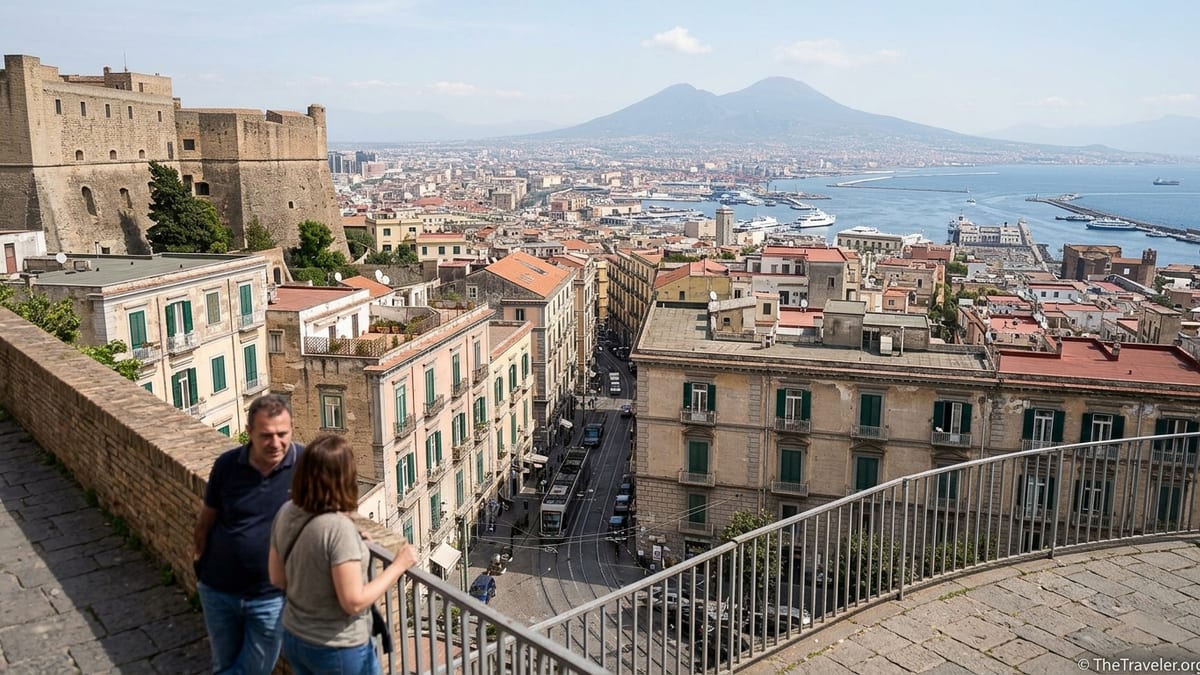
Vomero could hardly feel more different. Draped across the hillside above central Naples, it looks down on the bay, Mount Vesuvius and the tangle of streets below. The neighborhood is known for its central square Piazza Vanvitelli, elegant Liberty-style buildings, tree-lined avenues and cultural landmarks like Castel Sant’Elmo and the Certosa di San Martino monastery-museum. From many street corners you catch a glimpse of the sea or the volcano, and evenings are filled with locals enjoying aperitivo on outdoor terraces.
Both areas are outside the UNESCO-listed historic core, which means fewer tour groups and a more local rhythm. Yet they differ sharply in feel. Fuorigrotta is practical, workaday and heavily residential, with a modern urban landscape. Vomero is more overtly pretty and affluent, with polished shopfronts, branded boutiques and carefully kept apartment buildings. Deciding which suits you starts with deciding whether you want immersive everyday Naples around a stadium and fairground, or a calmer, village-like hilltop base with sweeping views.
In practical terms, both districts are big enough that experiences vary block by block. A guesthouse near Fuorigrotta’s Piazzale Tecchio, for example, feels very different from a quieter side street closer to the Cavalli di Bronzo area. Likewise, a hotel near Vomero’s funicular stations sits amid shoppers and commuters, while a small B&B a short walk uphill toward Castel Sant’Elmo feels almost suburban at night.
Access and Transport: How Easy Is It To Get Around?
If you plan to explore widely, transport might be the single biggest factor in your choice. Fuorigrotta is one of the best-connected western districts. It is served by multiple suburban rail and metro stops, including the Cumana line and stations such as Mostra–Stadio Maradona, as well as Metro Line 2. From here you can reach central hubs like Montesanto or Piazza Garibaldi in roughly 10 to 20 minutes, depending on the route and time of day. On match days services are often crowded, but outside those peaks you can usually find space even at rush hour.
Vomero, on the other hand, is defined by its vertical links. Three funicular lines connect it to the lower city, including routes from near Via Toledo, Montesanto and the Chiaia waterfront. Metro Line 1 also serves stations like Vanvitelli and Medaglie d’Oro. For visitors, this means you can stay on the hill and still be in the historic center in about 10 to 15 minutes using the funicular or metro. In practice, a common routine is to descend in the morning for sightseeing around Spaccanapoli and the archaeological museum, then ride back up in late afternoon to relax in quieter surroundings.
In terms of walking, Fuorigrotta is relatively flat, which some travelers appreciate after a day of exploring Naples’ staircases. You can stroll from the stadium area to the Mostra d’Oltremare and into nearby residential streets without dealing with steep climbs. Vomero is walkable but hilly, with several flights of stairs and even outdoor escalators connecting different levels. If you are comfortable with slopes, this adds to its charm. Routes like the steps of the Petraio or the Pedamentina San Martino down to the center offer memorable views, but they do require a reasonable level of fitness and good shoes.
For airport access, both districts rely on transfers through central Naples. Many visitors take the airport shuttle bus to the main station area and then continue by metro or suburban train. In real-world terms, getting from Naples Airport to a hotel near Piazza Vanvitelli usually takes 45 to 60 minutes using bus and metro, similar to reaching a guesthouse near Fuorigrotta’s Viale Augusto with bus plus Line 2. Taxis or private transfers will be faster but more expensive, with drivers typically quoting higher fares at night or around big stadium events.
Neighborhood Atmosphere: Stadium Buzz or Hilltop Ease?
Fuorigrotta’s character is shaped by crowds and concrete. On a Champions League night or a key league match, roads around the Stadio Diego Armando Maradona pulse with energy. Local bars serve draft beer and fried snacks to fans in Napoli jerseys, street vendors sell scarves and flags, and public transport stations are busy with supporters arriving from the rest of the city. Even outside football, the presence of the Mostra d’Oltremare, which hosts trade fairs and concerts, means a steady flow of visitors who spill into nearby cafes and pizzerias between events.
On an ordinary weekday morning, though, Fuorigrotta feels like a typical Neapolitan residential area. Small grocery shops, bakeries and tobacco shops open early, families walk children to school, and commuters head for the metro and Cumana platforms. Many buildings date from the mid 20th century, so the streetscape is more functional than picturesque. If your idea of travel is getting close to daily life and you are unconcerned with postcard views, this no-nonsense atmosphere can be appealing and usually comes with more budget-friendly lodging.
Vomero’s mood is gentler. Its main pedestrian streets, such as Via Scarlatti and Via Luca Giordano, are lined with fashion chains, independent boutiques, bookshops and cafes. In the late afternoon, you see locals of all ages taking their passeggiata, stopping for gelato or a spritz at sidewalk tables. From certain corners near the Certosa di San Martino, the city opens beneath you: dense buildings in the centro storico, the waterfront curving around the bay, and Vesuvius in the background. The overall impression is of an elegant, lived-in neighborhood that nevertheless feels calmer and cleaner than many parts of the lower city.
The trade-off is that Vomero can feel less “edgy” than central Naples. There is plenty of local character in its markets and older backstreets, but the polished shopfronts and traffic-calmed pedestrian zones make it feel closer to an affluent European residential district than a chaotic southern port. Some travelers love this balance of comfort and authenticity, while others miss the grit and intensity that define central neighborhoods around Via dei Tribunali or the Spanish Quarter.
What You Can See and Do Nearby
Choosing between Fuorigrotta and Vomero also means choosing which sights and activities will be on your doorstep. Fuorigrotta’s biggest draw is the Stadio Diego Armando Maradona, home to SSC Napoli. Match tickets vary widely in price depending on the opponent and competition, but you can sometimes find seats in the higher sections for modest sums when the fixture is less high-profile. Even if you are not a dedicated fan, the chance to experience a home game is one of Naples’ most intense cultural experiences, with choreographed chants, banners and a sea of blue shirts.
Right next to the stadium is the Mostra d’Oltremare, a large fair and exhibition complex with rationalist architecture, fountains and tree-lined paths. It hosts everything from travel fairs to music festivals and comic conventions. If your visit coincides with a large event, you may find food trucks, temporary beer gardens and nighttime concerts inside the grounds. In everyday use, parts of the complex function as a green space where locals jog, walk dogs or meet for coffee between pavilions.
Vomero’s attractions are more historical and scenic. Castel Sant’Elmo, a medieval star-shaped fortress, crowns the hill and offers some of the most expansive views over Naples and the bay. The entry fee is relatively modest and many travelers plan their visit for late afternoon to watch the light change over the city. Just below the fortress lies the Certosa di San Martino, a former Carthusian monastery that now houses a museum. Its cloisters, churches and terraces combine art, architecture and sweeping panoramas, making it one of the most rewarding cultural visits in the city.
For green space, Vomero offers Villa Floridiana, a park and former royal residence. Locals come here on weekends for picnics, and the tree-shaded paths are a pleasant contrast to the bustle of downtown Naples. In Fuorigrotta, green spaces are more fragmented, though parts of the Mostra d’Oltremare and nearby parks provide some respite. Many visitors who stay in Fuorigrotta also make quick trips to the nearby coastal neighborhood of Bagnoli or onward to the Phlegraean Fields area, using local trains that start in or pass through the district.
Food, Nightlife and Everyday Costs
In both Fuorigrotta and Vomero you will eat primarily in places aimed at locals rather than tourists, which usually means better prices and hearty portions. Around Fuorigrotta’s main arteries you find classic pizzerias serving Neapolitan pies at prices that are often slightly lower than in headline famous spots in the historic center. A simple margherita pizza and a drink can still come in at an attractive total, especially at no-frills venues frequented by students and stadium workers. Fried street snacks, like cuoppi of mixed seafood or vegetables, are also common around match days.
Vomero’s food scene runs from old-school trattorias to modern cafes. On streets like Via Luca Giordano you can start your morning with a sfogliatella and espresso at a standing bar, enjoy a light lunch of pasta or salad at a neighborhood restaurant, then return in the evening for aperitivo with small plates. Prices are generally a touch higher than in more working-class districts but still reasonable compared to many northern European cities. Because many residents are families and professionals, quality coffee, good bakeries and everyday gelato are easy to find within a short walk of most accommodations.
When it comes to nightlife, Fuorigrotta tends to peak around specific events. Before and after matches, bars bristle with energy, and some venues stay open late for post-game celebrations. Outside those peaks, evenings can feel relatively quiet, with most nightlife concentrated in simple bars, cafes and neighborhood spots. If you are hoping for late-night cocktails and live music on multiple nights of a short stay, you may end up heading into more central districts and then back out by train or taxi.
Vomero offers a more consistent after-dark scene. While it is not a clubbing hotspot on the scale of central squares like Piazza Bellini, it has a good spread of wine bars, craft beer spots and contemporary cocktail bars that attract a largely local crowd. Many close around midnight or slightly later on weeknights, extending their hours toward the weekend. For visitors who like to end a day of sightseeing with a drink and a view but prefer not to be in the middle of heavy street crowds, this balance is ideal. Overall, everyday costs for coffee, groceries and casual meals are similar between the two districts, though specific venues in Vomero can be slightly pricier given its reputation as a comfortable hillside area.
Safety, Comfort and Who Each Area Suits Best
Both Fuorigrotta and Vomero are considered ordinary, lived-in parts of Naples rather than tourist zones, which automatically reduces some of the issues associated with hyper-visited city centers, such as targeted scams around major monuments. As with anywhere in Naples, standard city precautions apply: keep valuables secure on public transport, be cautious late at night on quiet streets, and avoid getting drawn into street games or overly persistent offers. Many visitors report feeling comfortable walking main streets in both districts during the evening, especially where there are open shops and cafes.
Vomero, with its affluent profile, well-lit pedestrian streets and family-focused feel, tends to attract travelers who prioritize a sense of calm and cleanliness. It is popular with visitors who might be a little apprehensive about Naples’ intensity but still want quick access to the center. Couples on a first trip to the city often pick a small hotel near Piazza Vanvitelli so they can explore downtown by day and then retreat to a quieter base in the evening. The trade-off is that you are always a funicular or metro ride away from the historic streets, so spontaneous late-night wandering in the centro storico is less likely unless you are comfortable with public transport after dark.
Fuorigrotta suits a different profile. Sports fans may choose it simply to be near the stadium and soak up the build-up to a big match. Travelers attending conferences or trade fairs at the Mostra d’Oltremare often find that staying within walking distance makes logistic sense, especially when events start early or end late. Budget-conscious visitors who find that central accommodation prices spike during high season or major festivals sometimes look to Fuorigrotta as a cheaper alternative that still offers decent transport links.
If you are highly sensitive to noise, your decision may come down to your travel dates. A guesthouse a few hundred meters from the stadium might be perfectly peaceful for most of the year, but on high-stakes match nights the chanting and traffic can extend late into the evening. In Vomero, noise tends to be steadier and more limited to specific shopping or bar streets, and many side streets remain quiet after midnight. Checking recent guest reviews for specific properties is wise in both cases, as block-by-block differences in street traffic and bar density are significant.
Making the Choice: Matching Neighborhood to Travel Style
For culture-first travelers, Vomero usually has the edge. Waking up within a short walk of Castel Sant’Elmo and the Certosa di San Martino means you can time your visits around the best light and avoid the midday rush. The funiculars and Metro Line 1 then put the archaeological museum, the cathedral and the alleyways of Spaccanapoli within easy reach. If you imagine your ideal day as a mix of museums, panoramic viewpoints, coffee breaks and relaxed evenings with wine on a terrace, Vomero lines up neatly with that picture.
If your dream Naples moment involves singing with thousands of supporters as the home team scores, Fuorigrotta is hard to beat. Staying close to the stadium lets you arrive at your seat without worrying about long cross-city journeys, and you can stay in the area afterward to watch post-game interviews in local bars. For business travelers, being able to stroll to the Mostra d’Oltremare in five or ten minutes instead of navigating public transport at dawn is a very concrete benefit that can outweigh aesthetic considerations.
Families might lean toward Vomero, especially if traveling with children or older relatives. The combination of parks, elevators and escalators, and pedestrianized shopping streets makes it easier to move around with strollers or mobility issues. On the other hand, families visiting for a specific youth sports tournament or event at the fairgrounds may rightly prioritize the convenience of Fuorigrotta, accepting a more urban environment in exchange for shorter walking times.
For longer stays of a week or more, some travelers split their time. A pattern that works well is three or four nights based in or near the historic center for full immersion in Naples’ old streets, followed by two or three nights in Vomero for a quieter finale with views. Alternatively, football fans sometimes book central Naples for most of the trip and then stay one or two nights in Fuorigrotta around a key match, reducing the stress of late-night returns after the game ends.
The Takeaway
Fuorigrotta and Vomero offer two distinct ways to experience Naples beyond the historic core. Fuorigrotta is modern, practical and dominated by two major venues: the Stadio Diego Armando Maradona and the Mostra d’Oltremare. It fits travelers who value direct access to events, budget-friendly local dining and a strong dose of everyday city life, even if the streetscape is more concrete than cinematic. Vomero, by contrast, offers sweeping vistas, cultural landmarks on its hilltop and a comfortable residential atmosphere that many visitors find reassuring after a day in the lively center.
When choosing between them, picture your ideal Naples evening. If you see yourself in a packed stadium bar reviewing the match with locals and walking back to a nearby guesthouse through streets full of team scarves, Fuorigrotta is the better fit. If instead you imagine watching the city lights flicker on from a belvedere near Castel Sant’Elmo before strolling to a quiet wine bar on a tree-lined street, Vomero will likely feel like home. With Naples’ efficient funiculars, metros and suburban lines, both districts can serve as solid bases. The right choice is the one whose daily rhythm matches your own.
FAQ
Q1. Is Vomero or Fuorigrotta better for a first-time visitor to Naples?
For most first-time visitors, Vomero is the better base. It offers quick access to the historic center, impressive views, clear landmarks like Castel Sant’Elmo, and a calmer, more polished atmosphere that eases you into Naples while still feeling local.
Q2. Which neighborhood is more budget friendly, Fuorigrotta or Vomero?
Fuorigrotta is generally more budget friendly. Average room rates tend to be lower than in Vomero, especially around non-match days, and local pizzerias and bars often price slightly below the hilltop district, though individual deals vary.
Q3. Is Fuorigrotta safe to stay in if I am not attending a football match?
Fuorigrotta is primarily a residential neighborhood used by locals year round, not just on match days. With standard big-city precautions, many visitors stay there comfortably, especially when they choose accommodations on main streets near metro or rail stations.
Q4. How long does it take to get from Vomero to the historic center of Naples?
From central Vomero, such as the area around Piazza Vanvitelli, it usually takes about 10 to 15 minutes to reach the historic center using the funicular or Metro Line 1, not counting any waiting time for the next train.
Q5. Is Vomero too far from the nightlife in central Naples?
Vomero is uphill from central nightlife zones, but funiculars and the metro connect it efficiently. Many travelers go down to areas like Piazza Bellini for a late evening and then ride back up to Vomero before services end, balancing energy and quiet.
Q6. Which area has better views, Fuorigrotta or Vomero?
Vomero clearly wins for views. From places near Castel Sant’Elmo and the Certosa di San Martino you can see the bay, Mount Vesuvius and the dense cityscape below, making it a favorite for photographers and sunset watchers.
Q7. Is it practical to stay in Fuorigrotta for sightseeing if I am not a football fan?
Yes, it is practical, especially given its train and metro links. You can reach central sights in roughly 15 to 25 minutes. However, you will spend a bit more time commuting each day compared with staying in or above the historic center.
Q8. Which neighborhood is better for families with children?
Vomero usually suits families better. Its parks, pedestrianized shopping streets and generally calmer atmosphere make it easier to move around with strollers or younger kids, and there are plenty of cafes and gelato shops for breaks.
Q9. Can I easily visit the stadium if I stay in Vomero instead of Fuorigrotta?
Yes. You can reach Fuorigrotta and the stadium area from Vomero using metro and suburban rail connections, usually in 30 to 40 minutes door to door. Many football visitors base themselves in Vomero or central Naples and travel to the match by train.
Q10. If I have four nights in Naples, should I split my stay between Vomero and Fuorigrotta?
Most travelers benefit more from combining the historic center with either Vomero or Fuorigrotta rather than splitting between the two. If you must choose one, stay in Vomero for general sightseeing or in Fuorigrotta if a match or fair is the focus of your trip.