


Hollywood can feel overwhelming on a first visit. A few blocks mix world famous landmarks with tourist traps, while some of the best experiences sit just beyond the main strip in the hills and canyons. With at least half a day to two days based in Hollywood, you can see the icons, capture the Hollywood Sign from smart viewpoints and still leave time for a studio tour or sunset hike, without wasting hours in lines or under hot pavement sun.
Get the latest updates straight to your inbox!
Getting Oriented on Hollywood Boulevard
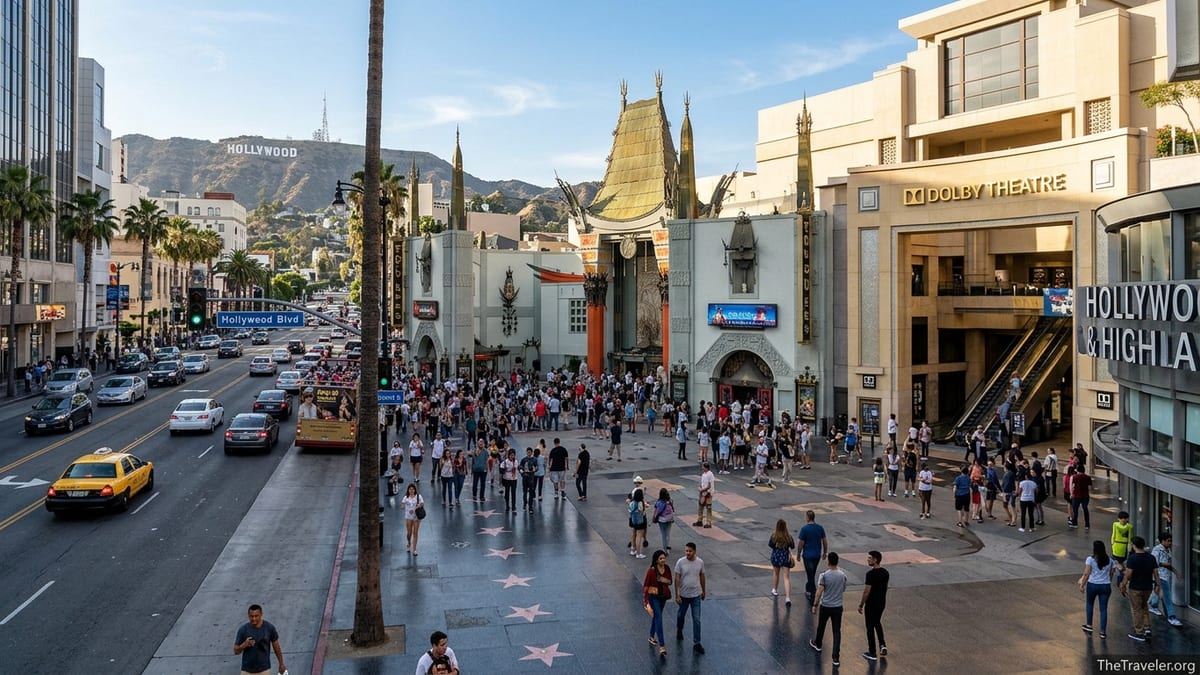
Most of the classic Hollywood sights sit along a relatively compact stretch of Hollywood Boulevard from roughly Highland Avenue to just east of Vine Street. The densest cluster is around the Hollywood and Highland intersection, anchored by the TCL Chinese Theatre and the Dolby Theatre within a multi level shopping and dining complex. The Hollywood Walk of Fame runs along both sides of the Boulevard and cross streets, so you will be walking over stars almost everywhere in this zone. Expect this central section to feel busy throughout the day, with the thickest crowds most afternoons, evenings and whenever there are premieres or award events.
For planning, allow about two to three hours to explore the core Boulevard sights at a relaxed pace. That covers walking part of the Walk of Fame, seeing the Chinese Theatre forecourt, stepping into the Dolby Theatre complex, and popping into one or two nearby museums or attractions. If you add a formal tour or a longer museum visit, budget half a day. Many visitors underestimate distances and linger in souvenir stores that add little value, so it helps to decide in advance which paid attractions are must do and which you will simply pass by.
The easiest way to arrive without parking stress is often by rideshare or the Metro B (Red) Line to Hollywood Highland station, which opens directly into the main complex. If you are driving, garages beneath or adjacent to the Hollywood and Highland complex and nearby commercial lots usually offer paid parking, but rates and time limits change periodically and can rise on major event days. Always check current signs before leaving your car and avoid curb spaces with complex restrictions.
First timers should also temper expectations. Hollywood’s sidewalks can be crowded, a bit gritty and occasionally chaotic, especially at night and on weekends. Costumed characters and ticket sellers line the block, and some can be pushy. A firm, polite “no thanks” and continuing to walk is generally enough if you are not interested in photos or tours. Keeping valuables zipped away and staying aware of your surroundings will help you enjoy the atmosphere without stress.
Hollywood Walk of Fame and the Chinese Theatre
The Hollywood Walk of Fame spans more than a mile of Hollywood Boulevard and several blocks of Vine Street, with thousands of terrazzo and brass stars honoring figures from film, television, music and more. Official information from the Hollywood Chamber of Commerce notes that the Walk itself is simply part of the public sidewalk, open at all hours, and there is no admission fee. Most visitors focus on the stretch near the Chinese Theatre and Dolby Theatre, where high profile film and entertainment names are densely clustered. If you are keen to find a specific star, check the Walk of Fame’s searchable database or information line before you arrive, since roaming at random can take longer than expected.
The TCL Chinese Theatre, just west of the Dolby Theatre entrance, is best known for its Forecourt of the Stars, where actors have left handprints, footprints and signatures in concrete for nearly a century. The forecourt is usually accessible free of charge when there are no premieres or private events, and it is often very busy midday. Plan about 20 to 30 minutes to wander the slabs, look for favorites and take photographs. For a quieter experience and better photo angles, arrive in the morning before 10 a.m. or later in the evening after most day tour buses have departed.
The Chinese Theatre still operates as a working cinema with an IMAX auditorium, and the interior has been repeatedly upgraded with modern projection while preserving historic decor. Separate guided tours are offered on many days and typically last around 30 minutes, subject to the movie schedule and private bookings. Tour times, ticket prices and any current security or bag policies are listed by the theatre operator and may change with little notice, so confirm details directly shortly before your visit.
On the sidewalk outside, expect a mix of street performers and costumed characters who may pose uninvited for photos and then demand tips. To avoid awkward encounters, agree in advance among your group whether you want this kind of photo. If not, decline interaction before anyone poses. You will also pass numerous souvenir shops with repetitive merchandise; most travelers find a single quick stop enough. Save your time and budget for experiences that exist only in Hollywood, rather than items easily bought elsewhere.
Dolby Theatre, Museums and Nearby Attractions
Set back from Hollywood Boulevard behind a grand staircase, the Dolby Theatre is the modern home of the Academy Awards and hosts touring Broadway shows, concerts and special events. Public tours of the venue are offered on many days, typically running around 30 to 40 minutes and highlighting the architecture, awards history and backstage spaces when available. According to current guest information, visitors pass through security screening and must follow bag size limits and prohibited item rules that align with contemporary theater standards. Because performance and rehearsal schedules affect access, check the official tour calendar and policies close to your date and book in advance if you have limited time.
Directly around the Dolby Theatre complex and along nearby blocks of Hollywood Boulevard, you will find several themed museums and attractions. The Hollywood Museum occupies the historic Max Factor building just east of Highland Avenue and showcases costumes, props and memorabilia from classic and contemporary productions. Typical visits run 60 to 90 minutes, depending on your interest in the detailed displays. Wax museums and similar attractions, such as Madame Tussauds near the Chinese Theatre, usually require about an hour and can be fun, especially with children or pop culture fans, but they are optional rather than essential for a short Hollywood stay.
Tickets for these attractions are often sold in bundled packages with other Los Angeles sights or on discount platforms. Prices, opening hours and any timed entry systems vary seasonally, so it is wise to verify the latest information directly with the operator rather than relying on third party listings. Some museums adjust hours on weekdays or during special events, and last entry can be earlier than posted closing time, which matters if you plan to visit in the late afternoon after a hike or studio tour.
While this part of Hollywood is compact, vertical changes can impact accessibility. The Dolby Theatre complex has elevators and escalators between levels, and most major museums in the area provide elevator access and accessible restrooms. Still, internal staircases, sloped walkways and occasional out of service elevators can affect the experience for travelers with mobility limitations. Anyone who uses a wheelchair, scooter or stroller should consult the accessibility information provided by each venue and allow extra time for navigating between floors.
Hikes and Vistas: Runyon Canyon and Griffith Park
One of the biggest surprises for many visitors is how quickly urban Hollywood gives way to steep trails and wide views. Runyon Canyon Park lies just north of Hollywood Boulevard, with main access points off Fuller Avenue and Vista Street a short drive or around a 20 to 25 minute walk from central Hollywood, according to local transit to trails resources. Friends of Runyon Canyon describe several main routes, from gentler lower loops to steeper ridgeline paths that reach viewpoints over the Hollywood Hills and Los Angeles Basin. Even shorter walks can feel strenuous due to unshaded sections and loose footing, so sturdy shoes, water and sun protection are essential.
Runyon Canyon is popular with locals and visitors, including dog walkers, and some routes are designated off leash for dogs. The park can be very busy in the morning and at sunset, but that also adds to the sense of safety for solo hikers. Plan 60 to 90 minutes for an easy to moderate outing and up to two hours if you want to climb higher, pause at viewpoints and take photographs. The park follows typical Los Angeles city park rules, generally open from early morning to sunset. Heat is a real concern much of the year, so avoid starting steep hikes at midday during warmer months and always check recent advisories from the city parks department before you go.
Griffith Park, to the east of Hollywood, offers a broader network of trails, including several with Hollywood Sign views. Official maps from the Los Angeles Department of Recreation and Parks show over 70 miles of paths across more than 4,000 acres, ranging from wide fire roads to narrower footpaths with significant elevation gain. From a Hollywood base, common entry points include trailheads near the Griffith Observatory area and canyon drives accessible by car or rideshare. Parking, one way traffic patterns and shuttle services around the Observatory and upper park roads have changed over the years, so always consult the latest posted maps and signage on arrival, and be prepared to park lower and walk or use shuttles during busy times.
Griffith Park trails can be enjoyed in short segments that fit into a half day Hollywood itinerary. A moderate out and back walk of 60 to 90 minutes from near the Observatory can deliver broad city views and glimpses of the Hollywood Sign, while longer loops of three to six miles reach higher viewpoints. Park hours are generally sunrise to sunset, and there is usually no lighting on the trails, so plan to be off the paths well before dark. Heat, occasional steep drop offs and shared use with runners, cyclists and equestrians mean extra care is needed, especially with children or anyone unsteady on their feet.
Smart Ways to See the Hollywood Sign
Many visitors arrive in Hollywood expecting to stand directly beneath the Hollywood Sign. In reality, the Sign itself is fenced off and monitored, and the Hollywood Sign Trust, which works with the city, emphasizes that there are no official tours directly to the letters. Instead, there are a handful of established legal hikes and viewpoints within Griffith Park that bring you close enough for satisfying photos while protecting the surrounding neighborhoods and hillsides. The Trust’s current information notes that authorized trail routes are free, self guided and range from roughly three to six miles return, with parking free at lots located inside the park when available.
From a Hollywood base, you can think of Sign views in three tiers. Close up views come from hikes that approach the hill behind and above the letters, where you look out over Los Angeles with the Sign just below you. These routes require more time and fitness, usually at least two to three hours including photo stops, and they can be exposed in midday sun. Mid range viewpoints include terraces at Griffith Observatory and nearby ridges that frame the Sign against the hills, achievable with shorter walks or public transport connections such as the DASH Observatory bus. Distant vistas include spots on Mulholland Drive and various overlooks that reveal the Sign as part of the broader city panorama.
Access and parking rules around the Sign and its approach roads have been sensitive and frequently adjusted over the years in response to traffic, fire risk and neighborhood concerns. Some previously well known parking areas now carry strict restrictions, and shuttle routes and stop locations have evolved. Before setting out, review current advice from the Hollywood Sign Trust and the Los Angeles city parks department, and reconsider any guidance that relies on old parking tips in residential streets. Once on the trail, follow official wayfinding signs, stay on marked paths and respect closures.
Whichever viewpoint you choose, start early in the morning or late in the afternoon for softer light and cooler temperatures. Even in cooler seasons, bring water, a hat and sunscreen, and wear closed shoes suitable for uneven terrain. If haze or marine layer clouds obscure the view, it can be worth waiting an hour or returning later in the day when conditions often clear. Families with younger children may prefer mid range viewpoints reached by shuttle or short walks rather than committing to the longest hikes.
Live Entertainment, Cinemas and Studio Tours
Hollywood remains a working entertainment hub, and even a short stay can include a live show or behind the scenes studio tour. On or near Hollywood Boulevard, several historic cinemas and theaters still operate. The Chinese Theatre screens current films in a large auditorium, while other nearby venues host live comedy, music or stage productions. Programming changes frequently, so check schedules a week or two before your visit to see if there is a premiere, festival or special event worth planning around. Remember that major events may also close sidewalks and tighten security around the Dolby Theatre and adjacent streets.
Studio tours require more time but reward film and television fans with sets, soundstages and backlot streets. Universal Studios Hollywood in nearby Universal City includes the World Famous Studio Tour as a signature ride within the theme park. Official guidance notes that the tram tour itself generally lasts about 45 to 60 minutes, but a full visit to the park typically takes most of a day when you include rides, shows and dining. Tickets are date specific and prices vary by season and demand, so pre booking and checking the latest opening hours and any attraction closures is important, especially during holidays and summer.
In Burbank, just over the hills from Hollywood, the Warner Bros Studio Tour Hollywood operates as a dedicated tour experience rather than a full theme park. Recent information from the operator indicates that tours run daily, usually between morning and mid afternoon, with departures roughly every 30 minutes. A typical visit lasts around three hours, combining guided cart segments with self guided exhibit time. Tickets are timed, often sell out on busy days and may have blackout or closure dates, particularly when active production requires additional security. As with Universal, always verify current hours, pricing and any age or height recommendations on the studio’s own resources.
For visitors with only one full day based in Hollywood, combining a morning on Hollywood Boulevard with a late afternoon or evening studio tour is ambitious but possible only if you are efficient and comfortable with a packed schedule. More realistically, many travelers devote one day to Boulevard icons and local hikes or viewpoints, and a separate day to a full Universal Studios or Warner Bros tour. When using rideshare or public transit between Hollywood, Universal City and Burbank, build in extra time for traffic, transfers and security lines.
Cultural, Niche and Themed Experiences
Beyond the headline Boulevard museums, Hollywood offers several smaller cultural and themed experiences that can enrich a focused itinerary. Specialty museums dedicated to genres, famous figures or particular eras of film history appear around the Hollywood and adjacent neighborhoods, often with rotating exhibits and special events. Before allocating time, check current exhibitions and independent reviews to confirm that a given stop aligns with your interests, since quality and depth vary considerably.
Historic theaters in and around Hollywood, including several older movie palaces, regularly host film retrospectives, classic screenings, concerts and comedy shows. Programming is often announced just a month or two in advance, and tickets for one night only events can sell quickly. If you are a serious film buff, it can be worth planning your visit around such a screening, pairing an afternoon Boulevard walk with an evening show in a restored venue.
Themed walking tours and small group excursions can help you go deeper into Hollywood’s architecture, music history, or more offbeat stories. These range from studio history tours to noir crime themed walks and focus on everything from Golden Age landmarks to contemporary filming locations. When considering a tour, look for operators that clearly state group sizes, guide qualifications, refund policies and adherence to local regulations. Be wary of same day sidewalk hawkers who cannot provide written details or who pressure you to book immediately in exchange for supposedly huge discounts.
Travelers with more time or particular interests can also explore adjacent neighborhoods such as nearby Thai Town, Los Feliz or the music focused Sunset Strip in West Hollywood, each accessible by short rideshare or transit trips from central Hollywood. These areas offer a contrasting feel with local restaurants, live music venues and independent shops. For a short Hollywood stay, however, it is usually best to treat these as optional evening add ons rather than core components, unless they match a specific passion like live rock shows or particular cuisines.
Family Friendliness, Accessibility and Sample Itineraries
Most of central Hollywood is technically family friendly, but some parts may feel intense for younger children due to crowds, loud street activity and occasionally adult oriented costumes or buskers. The Walk of Fame and Chinese Theatre forecourt can be enjoyable for school aged children who recognize characters and film titles, while wax museums and interactive exhibits often appeal to preteens and teens. Very young children may tire quickly of dense sidewalks and noise, so it helps to plan frequent breaks in quieter courtyards or indoor attractions with restrooms and seating.
From an accessibility perspective, Hollywood Boulevard sidewalks can be uneven, crowded and occasionally obstructed by equipment or performers, which can be challenging for wheelchair users or anyone with visual impairments. Major venues such as the Dolby Theatre, Chinese Theatre, Hollywood Museum and studio tours provide accessible routes, elevators and reserved seating areas in line with building codes, but internal stairs, long corridors and security checkpoints can still require additional time and energy. Visitors with specific mobility, hearing or vision needs should review each venue’s accessibility section and consider calling ahead for the latest details, especially where advance arrangements are required for sign interpreted or audio described performances.
One practical half day Hollywood itinerary for first timers could begin at around 9 a.m. at Hollywood Highland station, explore the central Walk of Fame and Chinese Theatre forecourt, then visit one museum or attraction before an early lunch in the complex. This might involve roughly two miles of walking on mostly flat sidewalks. In the late afternoon, you could transfer by rideshare to Runyon Canyon for a 60 to 90 minute hike and sunset views, returning to Hollywood for dinner. Adjust timing to daylight hours, and always verify current park opening times and local sunset times before committing to a sunset hike.
For a full day, consider spending your morning on Hollywood Boulevard and mid afternoon traveling to Griffith Park, visiting the Griffith Observatory area for city and Sign views, and taking a shorter trail walk before dark. Alternatively, dedicate one entire day to Universal Studios Hollywood or the Warner Bros Studio Tour and use another half day for Boulevard icons and a nearby hike. Transit routes and schedules, including Metro rail, bus and DASH shuttles, evolve over time, so confirm the latest information with the local transit agency or directly within the official trip planning tools before you rely on a connection.
Practical Tips for a Smoother Hollywood Visit
Arriving early in the day is one of the simplest ways to improve your Hollywood experience. The area around Hollywood and Highland is noticeably quieter before about 10 a.m., allowing clearer photographs of the Walk of Fame, the Dolby staircase and the Chinese Theatre forecourt without dense crowds. Morning air is usually cooler, which also helps if you plan a midday hike in Runyon Canyon or Griffith Park. If you prefer evening lights, consider visiting the Boulevard twice for shorter periods rather than trying to see everything in a single peak afternoon window.
Weather in Los Angeles is generally mild, but Hollywood’s combination of reflective pavement and limited shade can make sidewalks feel significantly hotter than the air forecast, especially in late spring, summer and early autumn. On any day with strong sun, carry water, wear lightweight clothing and a hat, and use sunscreen even if you are mostly in the city. This is even more important on dirt trails, where shade is limited and heat radiates from the ground. If high temperatures or air quality alerts are in effect, consider substituting an indoor museum or studio tour for a long hike and saving hill walks for early morning or cooler seasons.
Guided tours can add insight, but aggressive sales tactics are common along Hollywood Boulevard. To identify reputable options, research and book in advance through established operators or directly with theaters and studios, rather than purchasing on the spot from sidewalk vendors. Look for clear descriptions of what is included, realistic durations and published customer feedback. Be cautious of tours that promise guaranteed celebrity sightings or unrestricted access to the Hollywood Sign, since such claims rarely reflect official rules.
Finally, remember that Hollywood hosts frequent premieres, festivals, award shows and street events that can close lanes, reroute traffic and restrict access to certain areas. In the weeks and days before your visit, check official city event calendars, the Dolby Theatre and Chinese Theatre schedules, and local news sources for notice of major events. On the day itself, be flexible. If closures make the Boulevard too congested, you can shift your schedule toward hikes, studio tours or museums in adjacent neighborhoods, then return to the Walk of Fame at a quieter time.