


Rione Sanità has gone from being one of Naples’ most overlooked quarters to one of its most compelling. Many visitors arrive for the atmospheric catacombs, then leave without ever seeing the courtyards, street art, pastry shops and community projects that are quietly transforming this neighborhood. If you are willing to linger, Rione Sanità rewards you with a dense mix of aristocratic architecture, working-class street life and some of the city’s most interesting food and culture, all within walking distance of the historic center.
Get the latest updates straight to your inbox!
Getting Oriented in Rione Sanità
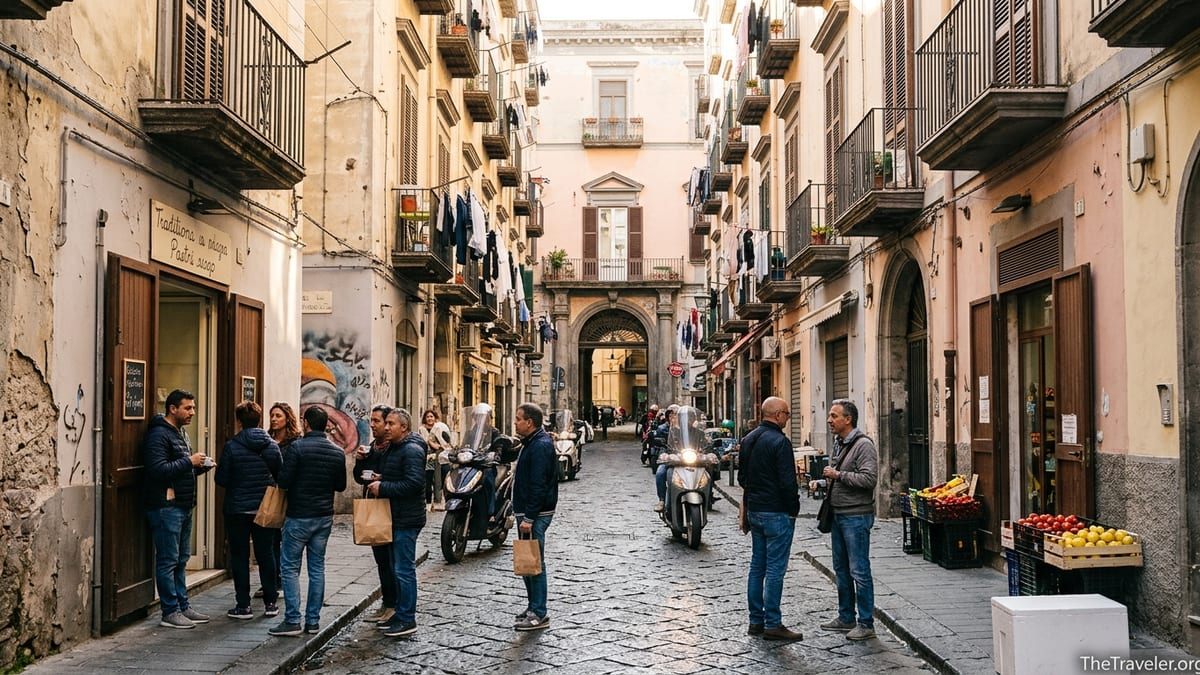
Rione Sanità stretches just north of Naples’ historic center, wedged between the Archaeological Museum and the climb up to Capodimonte. The main access point for most visitors is Porta San Gennaro on Via Foria, from where you walk into a dense web of streets like Via Arena alla Sanità, Via Sanità and Via Vergini. This is very much a lived-in working-class district, with scooters weaving past improvised market stalls and residents chatting from balcony to balcony. It feels intense on first impact, but during the day it is one of the most fascinating areas to walk in central Naples.
Practically, it is easiest to reach Rione Sanità on foot from the Museo or Materdei stops on Metro Line 1, or through Porta San Gennaro from the old town. Expect a 10 to 20 minute walk from the main historic streets around Via dei Tribunali. Visitors who prefer not to navigate narrow streets alone can join a neighborhood walking tour run by local cooperatives, which often start near the catacombs but quickly move into residential lanes, markets and palaces that you would be unlikely to find on your own.
Safety-wise, Rione Sanità is not a polished tourist quarter. You will see graffiti, worn facades and everyday poverty. At the same time, you will also see children playing in piazzas, nonnas shopping at produce stands and students gathering outside cafes. During daylight and early evening, normal street awareness is generally sufficient: avoid flaunting valuables, stick to busy streets, and if you feel uncomfortable on a side alley, simply turn back toward the main thoroughfares.
Because this is a neighborhood in flux, be prepared for change. A deli that is buzzing one year may have closed or moved by the next; a new mural may appear on a once-blank wall. Locals are usually happy to point you toward current highlights if you ask in simple Italian or with a map in hand.
Explore the Noble Palaces and Staircases
Long before Rione Sanità became a working-class district hemmed in by traffic, it was a green valley of villas and palaces for Neapolitan nobility. Remnants of that aristocratic past still dominate the side streets, and visiting them is one of the most rewarding things you can do beyond the catacombs. Two standouts, Palazzo dello Spagnolo and Palazzo Sanfelice, are among the finest examples of 18th century Neapolitan baroque architecture in the city.
Palazzo dello Spagnolo, on Via dei Vergini, is famous for its soaring double staircase often described as a “hawk’s wings” design. Built in the 1730s and attributed to architect Ferdinando Sanfelice, it was conceived as both a functional access route and a kind of public stage. Today you enter through a worn but atmospheric doorway into a courtyard where the pastel walls, arches and staircases draw photographers and architecture fans. Visitors typically stand in the center of the courtyard to look up and capture the interlocking arches; late afternoon light often brings out the texture of the stucco and soft yellows and greens of the paint.
A short stroll away on Via Sanità, Palazzo Sanfelice shows a more austere take on the same baroque ideas, with its own dramatic staircase and weathered facade. Although many apartments in both palaces are still privately occupied, the courtyards are generally open during the day. Expect to spend around 15 to 20 minutes at each, more if you are taking photos. There is usually no entrance fee, but it is courteous to keep voices low and avoid blocking entrances for residents.
To understand these palaces in context, consider combining a visit with a guided walk focused on Rione Sanità’s noble past. Some local guides and cooperatives offer small-group tours, often priced in the range of 20 to 40 euros per person, that connect the palaces with nearby churches, hidden courtyards and older Greek and Roman traces. These tours often run in Italian but are increasingly available in English on weekends, especially in high season from late spring to early autumn.
Follow the Street Art and Totò’s Legacy
Rione Sanità is inseparable from the memory of Totò, Italy’s beloved comic actor who was born here in 1898. His face appears again and again across the neighborhood in murals and posters, and following these images is an engaging way to explore the district beyond its underground attractions. Some of the most striking works are large-scale murals created as part of community art projects aimed at reclaiming walls from decay and anonymous tagging.
On Via Sanità and nearby streets, for example, you may encounter a mural by Spanish street artist Tono Cruz referencing one of Totò’s most famous film scenes, painted as part of a participatory project supported by local foundations. Another well known wall shows an embracing couple, blending contemporary street art with a romantic, almost cinematic view of Neapolitan life. New pieces occasionally appear on shuttered storefronts and side walls, so each visit can feel slightly different.
For film and culture fans, stopping at Largo Totò, a small square dedicated to the actor, adds another layer. Here you might find informal street performances, events organized by local associations, or simply kids kicking a ball under Totò’s watchful gaze from a portrait. Some tours highlight his story, connecting his humble origins in Rione Sanità with later fame and weaving in anecdotes about how the neighborhood has claimed him as a symbol of dignity and resilience.
You do not need a formal street art map to enjoy this side of Rione Sanità. A practical approach is to start near the main square and wander slowly, keeping an eye on building corners, stairwells and long walls. Because traffic can be chaotic, step into doorways or against building fronts when you want to stop and photograph a mural. Early morning and late afternoon often provide softer light and slightly calmer streets, which makes it easier to appreciate details.
Taste Rione Sanità: From Fiocco di Neve to Market Stalls
Food is one of the clearest ways to experience daily life in Rione Sanità, and you can easily build a half day around pastries, snacks and informal meals. The best known address is Pasticceria Poppella on Via Arena alla Sanità, a family-run pastry shop originally founded around 1920 and now famous across Naples for its signature “Fiocco di Neve.” This is a small, soft brioche filled with a light cream based on fresh milk and ricotta, dusted with powdered sugar. Locals often eat one standing at the counter with an espresso, and a single pastry typically costs only a couple of euros, making it an easy indulgence.
Poppella’s success has helped draw visitors into Rione Sanità, and at busy times you may see a line out the door. Service usually moves quickly: staff take orders at the counter, box up pastries to go or place them on a small tray if you plan to eat inside. Besides the classic Fiocco di Neve, there are often variations with chocolate or pistachio, as well as traditional Neapolitan sweets such as zeppole, pastiere and bignè. In warm months, the same brand has branched into gelato, offering flavors that echo local favorites, sometimes including versions inspired by Fiocco di Neve itself or by savory snacks like taralli.
Beyond Poppella, the streets around Via Arena alla Sanità and Via Sanità host a cluster of bakeries, fry shops and simple trattorie where you can sample everyday Neapolitan cooking. Prices are generally lower than in more touristy parts of the historic center: a slice of pizza al taglio or a fried cuoppo of mixed seafood and vegetables might run between 3 and 7 euros, while a sit-down lunch of pasta, water and house wine can often be found in the 12 to 20 euro range per person. Pay attention to where locals are eating; a busy spot with families and workers is usually a good bet.
For a glimpse of the neighborhood’s shopping life, walk through the open-air market area near Via Vergini and adjacent lanes. Stalls sell seasonal produce, herbs, cheese, cheap clothing and household items. You might see crates of tomatoes in late summer, piles of artichokes in spring, or dried peppers hanging from strings. This is not a curated food market for visitors but a practical shopping street for residents. Ask permission before photographing individual vendors, and keep your valuables secure as you would in any crowded market.
Experience Community Projects and Social Tourism
One of the most interesting aspects of Rione Sanità is how local residents, parish groups and cooperatives have used culture and tourism to foster regeneration. The catacombs themselves are managed by a neighborhood cooperative in partnership with a church foundation, and the same network has expanded to offer guided walks, cultural events and social projects that channel visitor revenue back into the community. Even if you choose to skip the catacombs on a repeat visit, you can still engage with this “social tourism” through other activities.
Several associations based in Rione Sanità organize themed walking tours that focus on the living neighborhood rather than only its ancient remains. A typical experience might last three to four hours and include stops at churches, palaces, street art sites and local workshops. These tours often blend storytelling with practical encounters such as a coffee break in a family-run bar or a tasting at a neighborhood pastry shop. Prices commonly fall somewhere between 25 and 50 euros per person, with reduced rates for students or children, and part of the fee supports youth programs, cultural activities or restoration projects.
At various times of year, community-run events animate the streets and piazzas. These might include open-air concerts, processions tied to religious festivals, or collaborative art projects where residents and visiting artists create installations together. Schedules change from year to year, so it is worth asking at your accommodation in Naples or checking the information boards that some associations place near the main squares. Participating in these events as a respectful observer helps reinforce the idea that Rione Sanità is not just a backdrop for photos but a place where people are actively shaping their future.
For travelers who want to deepen their engagement, staying in a guesthouse or B&B within or near Rione Sanità can be a meaningful choice. Some small accommodations donate a portion of their income to neighborhood initiatives or are run directly by residents involved in cultural projects. Booking one of these places often costs roughly the same as staying in other central districts, but it increases the chance that your spending remains in the community you are exploring.
Churches, Hidden Courtyards and Quiet Corners
Although the catacombs draw the headlines, Rione Sanità’s churches and courtyards offer a more intimate way to connect with the area’s layered history. Several churches in the district sit on top of earlier early Christian or even Greek-Roman sites, and many contain art that rewards a slow visit. Interiors range from richly baroque with stucco and gilding to simple spaces that feel closer to the daily spiritual life of the neighborhood.
One of the most prominent churches near the heart of the district combines a street-level sanctuary with an older subterranean basilica. Even without entering the catacomb complex beneath, you can spend 20 to 30 minutes exploring chapels, altars and side aisles. Weekdays in the late morning or mid-afternoon often provide quieter windows between services and tourist groups, when you can sit on a bench and absorb the atmosphere. As always in Italian churches, shoulders should be covered, and speaking softly is appreciated.
Hidden courtyards are another quiet pleasure. Many residential buildings in Rione Sanità still revolve around internal courtyards where daily life unfolds away from the street noise. Some are accessible from side alleys off Via Sanità or Via Vergini and may feature potted plants, laundry lines and religious shrines tucked into corners. Others are within historic palaces now split into apartments. When a gate is open and no signs forbid entry, it is generally acceptable to step inside for a brief look, but take care not to photograph residents without consent and leave promptly if anyone indicates that the space is private.
Occasionally, local cultural associations arrange open days when normally closed spaces, such as small cloisters or restored courtyards, are opened to the public. These events may coincide with citywide initiatives dedicated to heritage or with specific neighborhood festivals. If your visit happens to align with one of these days, it can be a rare chance to see how historical architecture and contemporary community life intersect behind the facades.
Practical Tips for Visiting Respectfully
Rione Sanità’s appeal lies partly in the fact that it is not yet fully adapted to mass tourism. This makes being a considerate guest especially important. Dress in a way that is comfortable for walking, but avoid beachwear or very revealing clothing, which can feel out of place in a traditional neighborhood. Closed shoes are strongly recommended: streets can be uneven, and you may find yourself detouring up steep alleys or staircases to reach viewpoints or palaces.
Photography is a major draw, from the dramatic staircases of the palaces to the murals and daily street scenes. As a rule of thumb, architectural and street-wide shots are fine, but when individuals are clearly recognizable, especially children and older residents, try to ask permission or at least make eye contact and gesture with your camera. Some people are happy to be photographed and may even pose; others prefer not to, and a simple apology in Italian if you have misread the situation goes a long way.
Cash is still useful in Rione Sanità. While better-known cafes and bakeries increasingly accept cards, small market stalls and some older bars remain cash only, particularly for small amounts like a coffee or a single pastry. Having a handful of coins and small notes makes transactions smoother and avoids putting pressure on vendors who are not set up for electronic payments. Public toilets are limited, so plan to combine restroom breaks with stops at cafes or restaurants where you are already buying something.
Finally, try to contribute positively to the local economy. Choose one or two neighborhood businesses for substantial spending, whether that is a sit-down meal at a modest trattoria, baked goods from a family-run forno, or a guided tour led by a community cooperative. The cost difference compared with more tourist-oriented areas is usually modest, but the impact is more visible here, helping sustain the very character that makes Rione Sanità so compelling.
The Takeaway
Visiting Rione Sanità solely for its catacombs means skimming the surface of one of Naples’ richest and most complex neighborhoods. If you linger above ground, you find a place where 18th century palaces and modern street art coexist, where a single pastry like the Fiocco di Neve can become a symbol of local pride, and where community projects are actively reshaping streets that once appeared written off.
By exploring the noble staircases of Palazzo dello Spagnolo and Palazzo Sanfelice, tracing murals that celebrate Totò, tasting your way through bakeries and markets, and engaging with tours and events run by neighborhood cooperatives, you get a fuller sense of Rione Sanità as a living organism rather than a backdrop. The experience is not always polished, but it is rarely dull, and small moments, like a morning espresso in a crowded bar or a quiet pause in a courtyard, often stay with visitors long after they have left.
Ultimately, the best things to do in Rione Sanità beyond the catacombs are those that balance curiosity with respect. Walk slowly, spend locally, listen to the stories people want to tell, and remember that you are stepping into a community that is both deeply rooted in Naples’ past and actively writing its future.
FAQ
Q1. Is Rione Sanità safe to visit during the day?
Rione Sanità is a busy residential neighborhood where many visitors walk around safely during daylight. Use normal city precautions, stick to main streets, avoid flashing valuables and consider guided tours if you feel unsure.
Q2. How much time should I plan for Rione Sanità beyond the catacombs?
If you have already seen the catacombs, allow at least half a day to explore palaces, street art, markets and a pastry stop. A full day lets you add a guided walk and a relaxed lunch.
Q3. Can I visit Palazzo dello Spagnolo and Palazzo Sanfelice on my own?
Yes, most visitors see the courtyards independently during daytime when the gates are open. Access can vary, so be prepared for occasional closures and remember these are residential buildings.
Q4. Do I need to book a guided tour in advance?
For popular weekend tours and English-language walks, pre-booking is wise, especially from spring to early autumn. On quieter weekdays, some associations may accept last-minute reservations if spaces remain.
Q5. Are there vegetarian or vegan options in Rione Sanità?
Yes, though options are simpler than in trendier districts. You can usually find vegetable-based pasta dishes, pizza marinara, fried vegetables and seasonal produce, but fully vegan restaurants are rare.
Q6. What should I wear to visit churches in Rione Sanità?
Dress modestly with shoulders and midriff covered, and avoid very short shorts or skirts. This shows respect for local religious customs and ensures you will not be turned away at the door.
Q7. Is it appropriate to take photos of street life and locals?
Wide street scenes and architecture are generally fine, but be sensitive when individuals are clearly visible. Ask permission when possible and avoid photographing children or private moments without consent.
Q8. How expensive are food and drinks compared with central Naples?
Prices in Rione Sanità are often slightly lower than in the most touristy streets. Expect everyday bars and bakeries to offer coffee and pastries for a few euros and simple restaurant meals at modest prices.
Q9. Can I visit Rione Sanità in the evening?
Early evening can be pleasant, with people in the streets and bars active. Late at night, streets grow quieter and first-time visitors may feel more comfortable returning toward the main historic center or using a taxi.
Q10. Is Rione Sanità suitable for children and families?
Yes, many families live here, and older children often enjoy the palaces, street art and pastries. Keep a close eye on younger children because sidewalks are narrow and traffic can be unpredictable.