


For years, Rione Sanità in Naples was the kind of neighborhood guidebooks told visitors to avoid. Today it is one of the city’s most talked-about districts, a place where ancient catacombs, crumbling Baroque palaces and grassroots social projects have turned a once marginalized quarter into a symbol of Naples’ revival. If you are planning a trip to the city, the question is no longer whether Rione Sanità is too dangerous to visit, but whether you can afford to miss it.
Get the latest updates straight to your inbox!
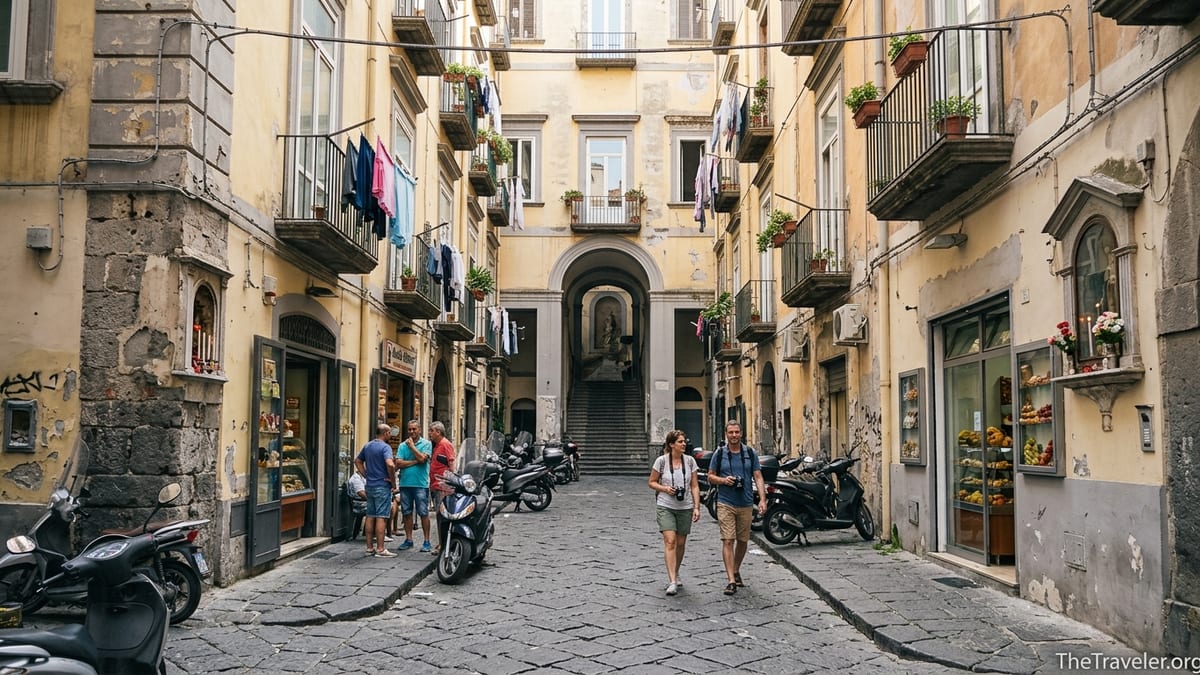
Understanding Rione Sanità’s Reputation and Reality
Rione Sanità sits in a valley just north of Naples’ historic center, cut off from the rest of the city in the 19th century by a high road bridge that quite literally passed over the neighborhood. For decades it was known mainly as a poor, densely populated quarter with high unemployment and entrenched petty crime. Many hotel concierges still reflexively warn guests away, repeating a reputation that grew in the 1980s and 1990s when the Camorra presence here was more visible.
In the last fifteen years, however, the picture has changed markedly. Local cooperatives, parish groups and residents have reclaimed key heritage sites like the catacombs and turned them into community-run attractions, bringing steady visitor income and jobs into the quarter. Walking through Rione Sanità on a typical afternoon today, you are more likely to see groups on guided tours to the Catacombs of San Gennaro or San Gaudioso, art students sketching on Via Vergini, and families queuing at neighborhood pastry shops than you are to encounter overt criminality.
This does not mean Rione Sanità is a polished tourist district. It remains a working-class neighborhood with graffiti, overflowing rubbish at times and the chaotic traffic typical of Naples. But for many travelers who want to understand the city beyond postcard views of the seafront, that is exactly the appeal. The question for visitors is not whether the area is safe in an absolute sense, but whether they are comfortable in lively, authentic urban environments where everyday life plays out in the streets.
Most recent travel reports and city tourism campaigns present Rione Sanità as an example of successful community-led regeneration rather than a no-go zone. If you take normal big-city precautions, visit during daylight or early evening, and stick to the main streets and sights, the neighborhood is perfectly feasible to explore as part of a Naples itinerary.
Why Travelers Are Suddenly Talking About Rione Sanità
One of the main reasons Rione Sanità has shifted onto the tourist map is the reopening and careful management of its early Christian catacombs. The Catacombs of San Gennaro, located on the slope toward Capodimonte, are among the most extensive in southern Italy and now receive regular guided tours in multiple languages. The smaller Catacombs of San Gaudioso beneath the Basilica of Santa Maria della Sanità, right in the heart of the district, offer a more intimate, eerie experience with frescoes and skull-lined walls that reveal how Neapolitans once thought about death and the afterlife.
Both sites are run by a local social cooperative that reinvests ticket revenue into training neighborhood youth as guides and staff. When you buy a standard combined ticket, which typically costs in the range of 10 to 15 euros for adults depending on current offers, you are not just purchasing entrance to two major archaeological sites. You are directly supporting projects that keep young residents employed and streets visibly busier with visitors, which in turn contributes to a feeling of safety.
Rione Sanità has also become a reference point in contemporary Italian culture. It is the birthplace of Totò, Italy’s beloved 20th-century comic actor, and many Italians associate the neighborhood with his films and stage persona. Murals and small monuments to Totò dot the streets, and walking tours often stop at the modest building where he was born. Recent Italian TV series and films set in Naples have used Rione Sanità as a backdrop, underlining its mix of hardship and resilience.
For travelers who want to go beyond the better-known Spaccanapoli and Spanish Quarter, Rione Sanità offers a deeper, less filtered look at Naples’ social fabric. You see children playing football in narrow alleys, grandmothers leaning from balconies, scooters weaving impossible routes between delivery vans and street shrines glowing with votive candles. The atmosphere is intense yet often welcoming, particularly when visitors show genuine interest and respect.
Key Attractions That Make Rione Sanità Worth the Detour
If you are considering whether Rione Sanità deserves half a day in your itinerary, the sheer concentration of unique sights should tip the balance. The Catacombs of San Gennaro are often cited as one of Naples’ most impressive underground experiences, with wide corridors carved into soft tuff rock, early Christian frescoes and the history of the city’s patron saint woven through the guided tour. Nearby, the Catacombs of San Gaudioso provide a striking contrast, with a later burial tradition where the skulls of the deceased were integrated into painted bodies on the walls.
Above ground, the district’s architecture is an attraction in itself. Along Via Vergini and Via Sanità you will find 18th-century palaces whose once aristocratic staircases now open onto laundry-strung courtyards. Palazzo dello Spagnolo, at the end of a busy side street, is a highlight: its double-ramped staircase in warm yellow plaster has become a favorite subject for photographers and architecture lovers. A short walk away, Palazzo Sanfelice offers another dramatic staircase framed by arches, hinting at the flair of the architect Ferdinando Sanfelice who designed both buildings.
The religious heritage of the area adds further depth. The Basilica of Santa Maria della Sanità, built above the catacombs, has a distinctive green-tiled cupola and an interior that combines baroque opulence with the more austere spaces leading down into the underground cemetery. Closer to the exit of the San Gennaro catacombs, the church of San Gennaro Extra Moenia has been repurposed as a cultural space, sometimes hosting concerts and events that draw both locals and visitors.
Even simple street corners can become memorable moments here. A small votive altar lit by candles at dusk, a mural depicting San Gennaro or Totò, or an impromptu card game taking place outside a café all contribute to the sense that Rione Sanità is not a museum district but a living neighborhood layered over extraordinary history.
Safety, Practicalities and When to Go
The most frequent concern among travelers debating a visit to Rione Sanità is safety. Like many dense urban neighborhoods with a history of poverty, it is not entirely free of petty crime. The key is to approach it as you would any busy inner-city area. Visit during the daytime or early evening, avoid displaying expensive jewelry or cameras when not in use, keep your phone secure, and stay on main thoroughfares such as Via Vergini, Via Sanità and the streets directly surrounding the major sights.
Most guided tours to the catacombs begin late morning or early afternoon, when the streets are at their liveliest. If you are nervous about exploring independently, booking a walking tour that combines the catacombs with a short street circuit through Rione Sanità can be a reassuring way to experience the area. Several Naples-based operators and the catacombs cooperative itself routinely organize such visits, and many solo travelers report feeling comfortable on these structured outings.
Logistically, Rione Sanità is relatively easy to reach from central Naples. From the Museo Archeologico Nazionale area, it is roughly a 15 to 20 minute walk, climbing slightly uphill and then descending into the valley where the district lies. City buses and small local minibuses serve stops near the catacombs and along Via Sanità, and taxis or app-based car services will typically bring you from the historic center to the catacombs entrance in about ten minutes depending on traffic. Fares at the time of writing are generally in the low teens in euros for such a short city ride, though you should always confirm current prices locally.
As for timing, late morning is often the best compromise between light for photography and lively street life. In high summer, consider visiting early in the day to avoid the worst heat in the valley, or in the late afternoon when the light softens and families fill the streets. The catacombs provide a cool refuge year-round, but surface-level exploration is more pleasant in spring and autumn when temperatures are moderate and crowds a little thinner than at the peak of July and August.
Food, Local Life and How to Engage Respectfully
Beyond its historical sites, Rione Sanità is an excellent place to experience Neapolitan food culture at street level. Small bakeries sell still-warm sfogliatelle and babà pastries, while friggitorie serve fried snacks like arancini and crocchè wrapped in paper cones. Prices tend to be noticeably lower than in more touristed parts of the city center: a coffee at a basic bar might cost around one euro, a generous slice of pizza fritta only a few euros more. Do not expect polished décor or translated menus everywhere; instead, you will find counter staff who communicate with gestures as readily as with English.
Pizza is, of course, never far away. Several well-regarded pizzerias line the main streets in and around Rione Sanità, often with queues that include as many locals as visitors. While famous names attract food pilgrims citywide, in this district smaller family-run spots can be especially rewarding. A classic margherita at such places usually sits comfortably in the range of 5 to 8 euros, and many visitors comment on the conviviality of sharing a table with strangers in tight, bustling interiors.
Because Rione Sanità is a residential neighborhood first and a tourist destination second, a respectful attitude goes a long way. Ask before photographing people, keep noise levels down near residential doorways, and avoid blocking narrow alleys or staircases while taking pictures of murals or palaces. Buying something small from local shops or stopping for a coffee can also make your presence feel less intrusive and more reciprocal.
Many travelers find that a short conversation with a barista or catacombs guide enriches their understanding of the area far more than any plaque. Listen for how often residents speak about “riscatto,” or redemption, when referring to the neighborhood’s trajectory. Supporting local initiatives, whether by taking a cooperative-led tour or purchasing a souvenir produced by community projects, helps ensure that visitor interest continues to benefit Rione Sanità’s people.
How Rione Sanità Compares to Other Naples Neighborhoods
If you already plan to visit Naples’ Spanish Quarter or walk the long spine of Spaccanapoli, you might wonder whether Rione Sanità adds anything new. In practice, many travelers say it feels distinct. The Spanish Quarter, closer to the seafront and major shopping streets, has seen an earlier wave of visitor attention, with murals dedicated to football star Diego Maradona and a concentration of bars and eateries used to accommodating tourists. Rione Sanità, by contrast, has fewer explicitly tourist-oriented businesses and a stronger sense that you have stepped into a self-contained valley community.
Architecturally, Rione Sanità offers more intact 18th-century palaces and a unique mix of underground and surface monuments in a compact radius. Where the historic center around Via dei Tribunali and Spaccanapoli can feel like an open-air museum of churches and chapels, Rione Sanità confronts you with rawer edges: washing lines across palace courtyards, scooter garages opening directly onto staircases, and shrines wedged between modern apartment blocks and crumbling masonry.
For visitors short on time who can only choose one off-the-beaten-path area, the decision often comes down to priorities. If you are particularly interested in religious history and catacombs, Rione Sanità is the clear choice. If your main focus is nightlife and contemporary street art linked to football culture, the Spanish Quarter or Vomero might suit you better. Many travelers, however, find that dedicating even a single morning to Rione Sanità rounds out their understanding of Naples in a way the more central streets cannot.
In terms of perceived safety, Rione Sanità today is broadly comparable to other busy residential districts in the city. You will encounter the same mix of scooter traffic, street vendors and youth clusters that characterize much of Naples. The presence of organized tours and a visible flow of visitors around the catacombs during opening hours generally reassures cautious travelers.
The Takeaway
So is Rione Sanità worth visiting during your trip to Naples? For travelers seeking a controlled, polished environment, the answer may be more nuanced. This is not a district of boutique hotels and designer shops, and it will not appeal to those who prefer their city breaks neatly packaged. Yet for anyone intrigued by Naples’ layers of history and its ongoing social transformations, Rione Sanità is one of the most compelling areas in the city.
The combination of world-class underground heritage at the Catacombs of San Gennaro and San Gaudioso, dramatic Baroque palaces like Palazzo dello Spagnolo, and the everyday theater of Neapolitan street life creates an experience that feels both intense and authentic. Add in the knowledge that your visit supports locally run initiatives and contributes to the neighborhood’s continued revival, and the detour becomes even more meaningful.
With sensible precautions, visiting during daylight hours and perhaps joining a guided tour if you are apprehensive, Rione Sanità can be a highlight rather than a risk of your Naples itinerary. It offers precisely what many travelers now look for: real neighborhoods, honest food, and encounters that leave you with stories you could not have collected anywhere else.
If you have already committed to exploring the historic center and perhaps seeing Pompeii or the Amalfi Coast, carving out half a day for Rione Sanità will give you a much fuller picture of what Naples has been, is now, and hopes to become.
FAQ
Q1. Is Rione Sanità safe to visit for first-time travelers to Naples?
Rione Sanità is generally safe to visit in daylight and early evening if you take normal big-city precautions, stay on main streets, and avoid displaying valuables. Many first-time visitors choose to join a guided tour for added reassurance and orientation.
Q2. How much time should I plan for Rione Sanità?
A focused visit combining one or two catacomb sites and a short walk through the surrounding streets typically takes three to four hours. If you intend to linger over lunch, photography and additional churches or palaces, allow a half day.
Q3. Can I visit Rione Sanità independently or do I need a tour?
You can walk the neighborhood independently, but access to the catacombs is by guided visit only, which you can book on site or in advance. Many travelers combine the official catacombs tour with some independent exploring before or after.
Q4. What should I wear when visiting the catacombs and churches?
Wear comfortable walking shoes and bring a light layer, as the catacombs stay cool even in summer. Because you will enter churches, it is respectful to have shoulders covered and avoid very short shorts, in line with common Italian dress expectations at religious sites.
Q5. Are there good places to eat in Rione Sanità?
Yes, the district is known for affordable, traditional food. You will find family-run pizzerias, bakeries selling sfogliatelle and babà, and simple trattorias serving pasta and fried snacks, generally at lower prices than in more touristy areas.
Q6. How do I get to Rione Sanità from central Naples?
From the historic center, you can walk about 15 to 20 minutes from the Archaeological Museum area, take city buses that stop along Via Sanità, or use a taxi or car service, which usually takes around ten minutes depending on traffic.
Q7. Is Rione Sanità suitable for children and families?
Families who are comfortable in busy city environments often find Rione Sanità rewarding, especially older children interested in history and underground spaces. Be prepared for uneven pavements, stairs and heavy scooter traffic, and keep a close eye on younger kids.
Q8. What is the best time of day to visit?
Late morning or early afternoon offers a good balance of light, open attractions and lively street life. In high summer, consider early morning or late afternoon to avoid peak heat in the valley while still having enough daylight to explore.
Q9. Do locals welcome tourists in Rione Sanità?
Many residents appreciate respectful visitors, especially as tourism has supported local employment and restoration projects. Simple gestures such as greeting shopkeepers, buying a coffee or pastry, and avoiding intrusive photography help maintain a positive atmosphere.
Q10. Is Rione Sanità worth it if I am only in Naples for one day?
If your time in Naples is extremely limited, you may prioritize the main sights in the historic center. However, if you are particularly interested in the catacombs or want a snapshot of a living neighborhood beyond the usual routes, allocating a few hours to Rione Sanità can still be very rewarding.