


Perched on the hill above central Naples, Vomero feels like a different city: airy, residential and quietly elegant. Many visitors ride up for Castel Sant’Elmo and the Certosa di San Martino, then head straight back down. That is a mistake. Stay a few hours longer and you discover a lived-in neighborhood of shady boulevards, daily markets, hidden stairways, and cafes where locals linger over sfogliatella and strong espresso. This guide focuses on what to do in Vomero beyond Castel Sant’Elmo, with practical, on-the-ground details to help you make the most of this hilltop district.
Get the latest updates straight to your inbox!
Getting to Vomero and Understanding the Neighborhood
Vomero sits high above the historic center, but it is surprisingly easy to reach. Locals rely on three main funicular lines that climb the hill: Centrale, Chiaia and Montesanto. The Central Funicular connects Via Toledo near the Galleria Umberto with Piazza Fuga by Piazza Vanvitelli in around five minutes, making it one of the quickest ways to swap noisy downtown streets for tree-lined hilltop avenues. Standard urban tickets cover the ride, and trains run frequently throughout the day, although services can slow down at night and during strikes or maintenance.
Alternatively, Line 1 of the Naples Metro runs up to Vanvitelli station, right in the heart of Vomero. From Napoli Centrale you usually change at Garibaldi onto Line 1, then ride up through the “art stations” like Toledo and Dante to Vanvitelli. The last stretch emerges into a neighborhood of wide sidewalks, mid-rise apartment blocks, neighborhood churches and a friendly, everyday atmosphere that feels far from the chaotic centro storico below.
Once you arrive, you will find that Vomero is compact enough to walk, though it is built on a slope and some streets are noticeably uphill. Escalators and short elevators help with the steepest bits, and there are clear wayfinding signs to the funiculars, parks and shopping streets. Plan footwear accordingly: pavement can be uneven and you may want to explore stairways and cobbled lanes that are not suitable for delicate shoes.
Geographically, Vomero fans out from the central junction of Piazza Vanvitelli. To the east stretch the main shopping streets of Via Alessandro Scarlatti and Via Luca Giordano, while to the west roads slope gently toward the quiet residential area near Piazza Medaglie d’Oro. To the south, pathways and stairs drop dramatically toward the sea, connecting with Corso Vittorio Emanuele and the Spanish Quarter.
Shopping Arteries: Via Scarlatti and Via Luca Giordano
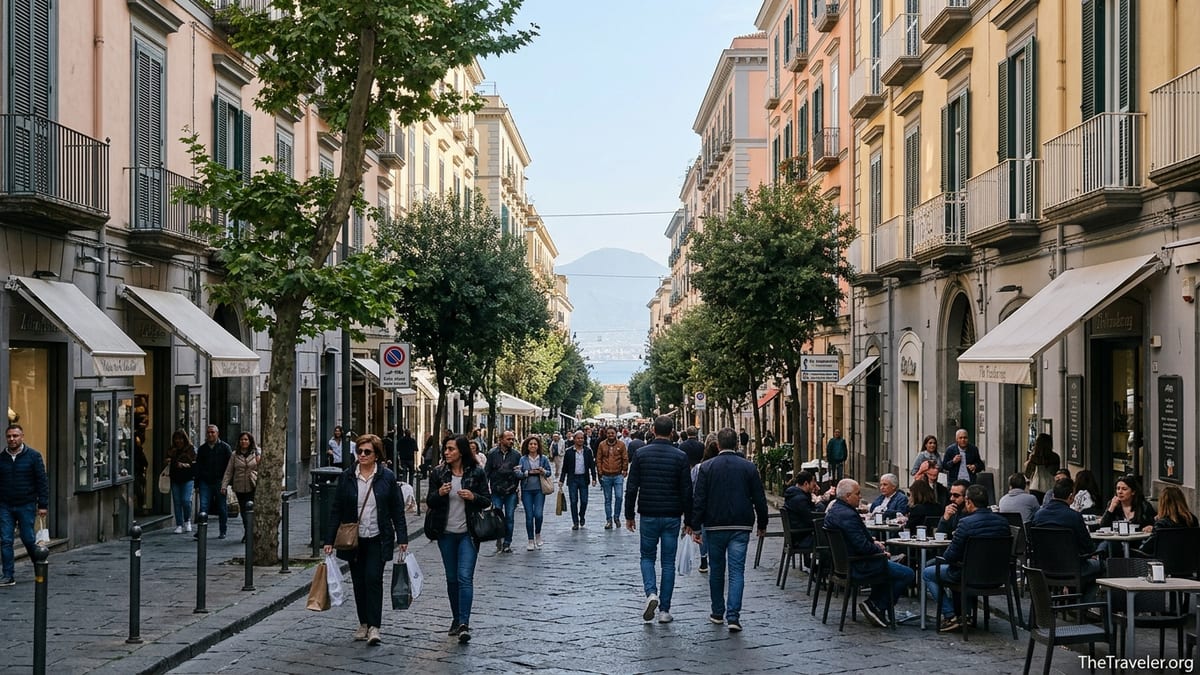
Many Neapolitans ride up to Vomero simply to shop. Via Alessandro Scarlatti and Via Luca Giordano form the district’s elegant commercial spine, a long, mostly pedestrian zone lined with mid-range fashion chains, shoe shops, perfumeries, bookstores and gelaterie. You will find many of the same brands that appear in other European cities, from apparel chains popular with teenagers to international sportswear labels, but there are also local boutiques selling Italian-made leather bags and tailored clothing.
Prices vary widely. You might pay around 25 to 40 euros for a casual summer dress at a fast-fashion store, while a more tailored linen shirt from an independent boutique can run 60 to 90 euros. Shoe shops often advertise seasonal discounts, and winter sales in January or end-of-summer reductions in August can significantly drop prices on last season’s stock. Even if you are not a serious shopper, strolling these streets is a pleasant way to experience Vomero’s daily life, especially in the early evening when families come out for their passeggiata.
Cafes with outdoor tables spill onto the pavements, making it easy to take a break. Order an espresso or a caffè macchiato and a small pastry such as a babà or sfogliatella and expect to pay roughly 2 to 3 euros if you stand at the bar, slightly more if you sit at a table. Some spots specialize in artisan gelato, usually charging by weight or scoop: two flavors in a cone might cost around 3 euros. Use these breaks to people-watch; you will see office workers grabbing a quick coffee, high-school students in groups, and older residents heading home with shopping bags.
Side streets branching off Via Scarlatti and Via Luca Giordano hold quieter surprises, from tiny jewelry shops to long-established household-goods stores that sell everything from moka pots to table linens. Because Vomero is primarily residential, many shops cater to locals rather than tourists, so opening hours sometimes include a long lunch closure. It is wise to do most of your shopping in the morning or from late afternoon onward.
Everyday Life at the Mercato di Antignano
For a glimpse of Vomero’s more down-to-earth side, head to the Mercato di Antignano, the neighborhood’s historic market area near Piazza Medaglie d’Oro and Via Antignano. This is not a polished food hall curated for visitors; it is a busy local market where residents buy fruit, vegetables, fish, meat and household items at competitive prices. Stalls spill along the streets and under permanent metal canopies, with vendors calling out daily offers and regular customers chatting as they shop.
Typical prices reflect local shopping habits. A kilo of seasonal tomatoes might cost 2 to 3 euros, while a bag of oranges can come in slightly cheaper during winter harvest. You can pick up fresh mozzarella di bufala by weight, often sold in plastic tubs filled with whey. Many stalls display prices clearly on handwritten signs, but it is still common to ask the vendor directly, especially when buying small quantities. Paying in cash is still the norm here, so it helps to have coins and small bills ready.
The Mercato di Antignano has gradually expanded beyond food into clothing and household goods. You will see tables piled with jeans, T-shirts and dresses at low prices, sometimes under 10 euros an item, as well as stalls selling children’s clothes, bed linens and inexpensive shoes. Quality can vary, and you should not expect designer labels, but for basic clothing or an emergency extra layer if the weather turns, it can be very practical. Bargaining is limited, but you might receive a small discount if you are buying several items or are clearly undecided and friendly.
Market activity tends to be liveliest from morning until early afternoon on weekdays and Saturdays. Many stalls close by around 2 p.m., and Sunday is usually very quiet or closed. Arrive mid-morning to catch the full energy, then stop in a nearby bar for a quick espresso and cornetto before continuing your exploration of the neighborhood.
Green Space and Views at Villa Floridiana
While Castel Sant’Elmo offers the most famous panoramic view of Naples, Villa Floridiana provides a softer, greener alternative within Vomero itself. This public park spreads down the hillside from an early 19th-century villa, with gravel paths winding through lawns, pine trees and shaded seating areas. Locals use it as a retreat from the dense city: joggers circle the main paths, dog walkers gather near the entrances, and families push strollers to sunny clearings.
One of the main reasons to visit Villa Floridiana is the view. From several terraces you can look out over the rooftops toward the Bay of Naples, with Capri sometimes visible on clear days. On spring and autumn afternoons the light is gentle and the air cooler than down in the city center, making it a comfortable place for a picnic. You will see students with takeaway pizza slices or sandwiches from local bakeries, and couples sharing paper-wrapped fried snacks bought from nearby friggitorie.
The park is officially free to enter, although opening hours can change due to maintenance or weather-related closures, so it is wise to check locally before planning a visit late in the day. Within the grounds stands the Museo Duca di Martina, a decorative arts museum noted for its porcelain and ceramics collection. Entry usually involves a modest ticket fee, and the museum can be a rewarding stop if you enjoy applied arts, though some travelers skip it in favor of lingering outdoors under the trees.
If you are traveling with children, Villa Floridiana is especially useful. There is space to run without traffic, patches of shade for naps, and benches where adults can rest with a coffee or bottled drink from a kiosk just outside the gates. Because the paths slope and include some uneven patches, lightweight strollers with decent wheels are more practical than very small travel buggies.
Cafes, Bakeries and Neighborhood Dining
Vomero’s food scene reflects its identity as a comfortable residential district. Rather than high-end fine dining, you find welcoming neighborhood trattorias, pizzerie and bakeries that primarily serve local families. Menus lean toward familiar Campanian dishes: pasta with ragù Napoletano, seafood linguine, parmigiana di melanzane, and, of course, pizza baked in wood-fired ovens. Prices are often slightly higher than the most basic places in the historic center but still reasonable by major European-city standards.
In a typical pizzeria in Vomero, a classic margherita might cost around 6 to 8 euros, while pizzas topped with provola, salami or seasonal vegetables run a bit more. Many restaurants offer a coperto, a small cover charge per person that includes bread and table setting, usually around 1.50 to 3 euros. House wine by the carafe is common and affordable, and soft drinks are widely available, though tap water is not always offered automatically.
For lighter stops, coffee bars and pastry shops dot the main streets and residential corners. You can order espresso at the banco and down it in a few sips, then move on, or sit outside and add a pastry such as pastiera, caprese al limone or a cream-filled cannoncino. Expect to pay under 2 euros for an espresso and around 1.50 to 3 euros for most pastries. Some contemporary cafes in Vomero also serve brunch plates, bagels or salads, catering to students and office workers who want something different from classic Italian bar snacks.
Evenings in Vomero are relaxed but social. Many residents meet friends for aperitivo, ordering a spritz, glass of wine or local beer and receiving a small plate of snacks: olives, crisps, mini sandwiches. These spreads are usually included in the drink price, which might be around 6 to 8 euros. If you prefer non-alcoholic options, bars typically offer soft drinks and juice, and some prepare alcohol-free cocktails on request. Restaurants begin to fill from about 8 p.m., with the busiest period from 8.30 to 10 p.m., so reservations are advisable at popular spots on weekend nights.
Hidden Stairways and Scenic Walks Connecting Vomero
One of the most memorable ways to experience Vomero is to follow the historic stairways that link the hilltop to the lower city. Several routes begin near the upper stations of the funiculars or near the castle area and descend through quiet, almost rural-feeling corridors framed by stone walls, gardens and occasional glimpses into private courtyards. While the most famous staircases are closer to the castle, you can still access beautiful segments from the main streets of Vomero without visiting the fortress itself.
A typical walk might start around the upper Montesanto funicular station near Via Morghen. From there, you can locate narrow lanes that lead to stepped paths heading downhill toward Corso Vittorio Emanuele. As you descend, the views frequently open out across terracotta rooftops toward the bay and Vesuvius. Although these paths have become more visible on social media, they remain relatively calm compared to the crowded lanes of the old town.
Good shoes are essential. The steps can be steep, uneven and slippery in wet weather, and there are limited handrails. It is best to attempt them in daylight and avoid carrying heavy luggage. Many travelers choose to ride up to Vomero by funicular or metro, explore the neighborhood and then walk down one of these stair routes back toward the center, saving their legs from the hardest climb. Check your route on an offline map before departing because signage is not always consistent and small alleys can be confusing.
Along the way you pass patches of urban quiet that feel far from the usual tourist routes: small shrines built into the walls, potted plants spilling over balconies, laundry lines between buildings, and the occasional bar where locals stop for a quick coffee or beer. Plan at least an hour for a relaxed descent, and carry drinking water, especially in summer when shade can be limited.
Cultural Corners: Small Galleries and Local Life
Beyond major sights, Vomero hides smaller cultural spaces and neighborhood rituals that reward slower travel. Some of the streets off Via Cilea and Via Kerbaker host small galleries and associations that organize photography shows, painting exhibitions or talks, often featuring local artists. Entry is often free or based on voluntary contributions, and opening hours can be irregular, typically concentrated in the late afternoon and early evening.
Bookshops in Vomero are another window into the city’s culture. Many focus on Italian-language titles, from contemporary novels to history and art books about Naples and Campania. It is common to find a dedicated corner for children’s books, and some stores host readings or events with local authors. Even if you do not read Italian fluently, browsing the covers and displays can provide ideas for further exploration, from food guides to photo-essay books that depict daily life in Naples.
On religious feast days and in the weeks before Christmas and Easter, churches throughout Vomero hold special services, processions or concerts. You may stumble on a choir rehearsal or an evening mass accompanied by organ music when wandering side streets. Dress respectfully if you choose to step inside, covering shoulders and avoiding beachwear, and keep your voice low. Most churches are free to enter, though small donations for upkeep are appreciated.
Local life in Vomero also revolves around schools, sports clubs and community centers. Public playgrounds are busy in the late afternoon, and small five-a-side soccer pitches fill with teenagers playing until nightfall. Observing these everyday rhythms, from grandparents chatting on benches to parents pushing strollers after work, gives a sense of Vomero as a living neighborhood rather than just a viewpoint over Naples.
The Takeaway
Vomero is far more than a launchpad for visiting Castel Sant’Elmo. It is a hilltop district where Neapolitans live, shop and relax, offering travelers a different lens on the city. From the buzz of Mercato di Antignano and the polished storefronts of Via Scarlatti to the shade of Villa Floridiana and the steep stairways dropping toward the sea, the neighborhood contains a mix of experiences that balance everyday life with scenic views.
With reliable connections on the funiculars and Metro Line 1, it is easy to weave Vomero into a wider Naples itinerary. Spend a morning browsing local markets, linger over a long lunch in a neighborhood pizzeria, or plan an evening passeggiata followed by aperitivo in a lively bar. By stepping beyond Castel Sant’Elmo, you gain a richer, more grounded sense of the city and the people who call this hill home.
FAQ
Q1. How do I get to Vomero from the historic center of Naples?
From the historic center, the most straightforward options are the Central Funicular from near Via Toledo up to Piazza Fuga by Piazza Vanvitelli, or Metro Line 1 from stations such as Dante or Toledo directly to Vanvitelli. Both options typically take under 15 minutes of travel time once you are in the station.
Q2. Is Vomero safe to visit in the evening?
Vomero is generally considered one of the safer and more residential districts of Naples, with families and students on the streets until late evening, especially around Piazza Vanvitelli and the main shopping streets. Normal city precautions still apply, such as keeping valuables secure and avoiding very quiet side streets late at night.
Q3. What are typical opening hours for shops in Vomero?
Most shops in Vomero open around mid-morning, often from about 9 or 10 a.m., and many close for a lunch break in early afternoon before reopening around 4 or 5 p.m. Larger chains on Via Scarlatti and Via Luca Giordano may stay open through the afternoon and close around 8 or 9 p.m., especially on Fridays and Saturdays.
Q4. When is the Mercato di Antignano busiest?
The Mercato di Antignano is usually busiest on weekday and Saturday mornings, when locals shop for fresh produce, fish and household items. By early afternoon many stalls start to close, and the market is much quieter or closed on Sundays, so plan to visit before lunchtime for the full experience.
Q5. Do I need cash in Vomero, or can I rely on cards?
Most restaurants, cafes and clothing stores in Vomero accept major debit and credit cards, especially on the main streets. However, smaller market vendors at Mercato di Antignano, some bakeries and older bars may prefer or only accept cash, so it is wise to carry a modest amount of euros in small notes and coins.
Q6. Are there good vegetarian options in Vomero restaurants?
Yes, many pizzerias and trattorias in Vomero offer vegetarian-friendly choices such as margherita or vegetable-topped pizzas, pasta with tomato or basil pesto sauces, and side dishes based on grilled or baked vegetables. Strict vegans may need to ask staff to adjust dishes, for example omitting cheese or butter, but it is usually possible to find suitable options with a bit of discussion.
Q7. How much time should I plan to explore Vomero beyond Castel Sant’Elmo?
If you only wish to stroll the main shopping streets and have a meal, two to three hours may be enough. To include Mercato di Antignano, Villa Floridiana, a coffee break, and perhaps a scenic stairway walk down toward the center, you should allow at least half a day and ideally linger into the early evening.
Q8. Is Villa Floridiana suitable for children and strollers?
Villa Floridiana is popular with local families, offering shaded paths, lawns and relatively traffic-free space for children to run. Some paths are sloped and uneven, so a sturdy stroller with decent wheels is recommended, but many areas are manageable, making it a good choice for a relaxed family break from city streets.
Q9. What should I wear for walking around Vomero and its stairways?
Comfortable closed-toe shoes with good grip are important, especially if you plan to use the stairways that connect Vomero to lower neighborhoods. Streets and steps can be steep and occasionally slick, so sandals with thin soles or high heels are best avoided. In summer, light clothing, sunscreen and a hat are helpful due to strong sun on exposed slopes.
Q10. Can I visit Vomero on a budget?
Vomero can be very budget-friendly if you use public transport, focus on free attractions like Villa Floridiana and neighborhood walks, and eat at local pizzerias or bakeries. Simple meals such as pizza, pastries and coffee are typically affordable, and window-shopping along Via Scarlatti and Via Luca Giordano costs nothing while still offering a feel for the district’s atmosphere.